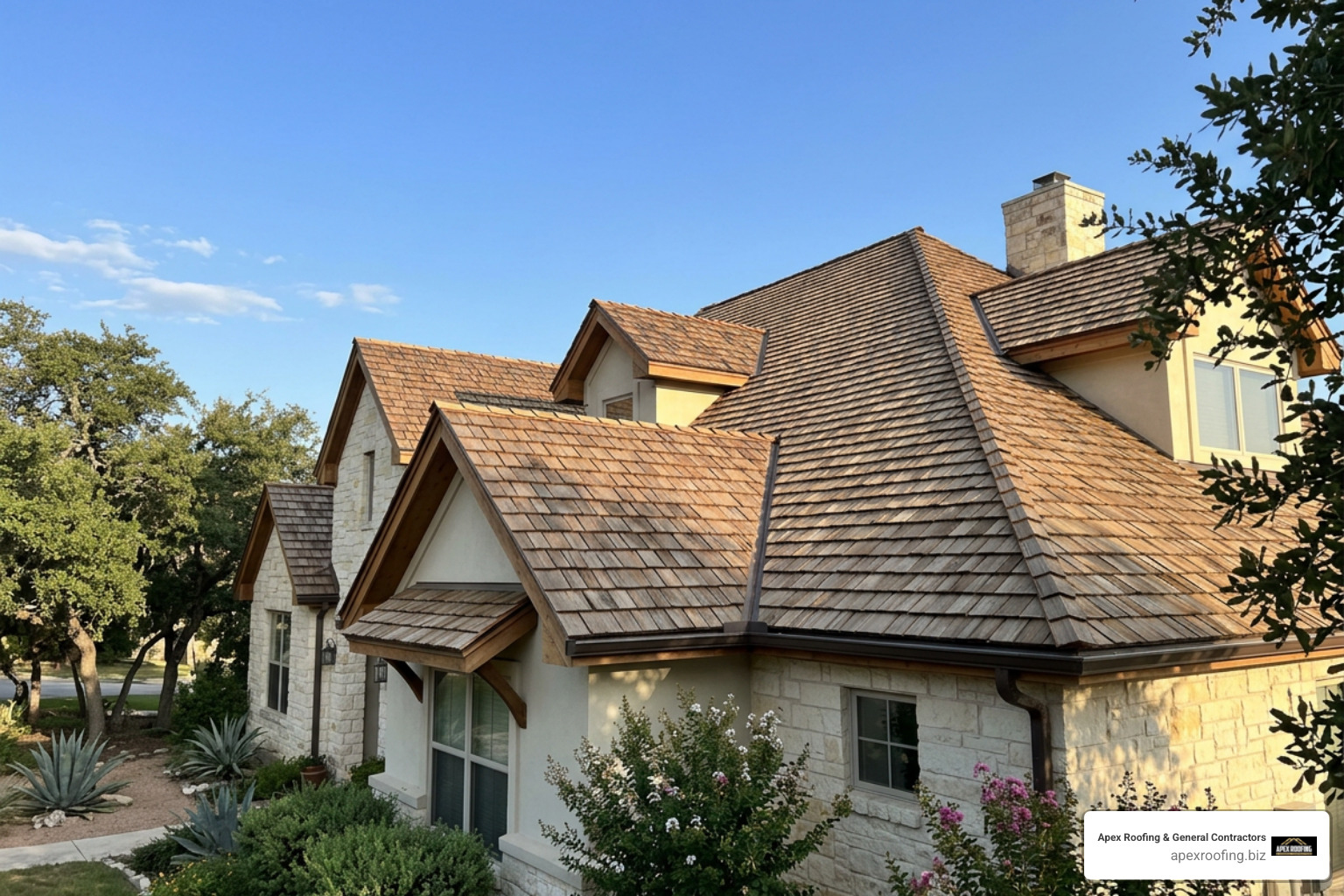
Find Certified Roof Inspectors Near You in San Antonio
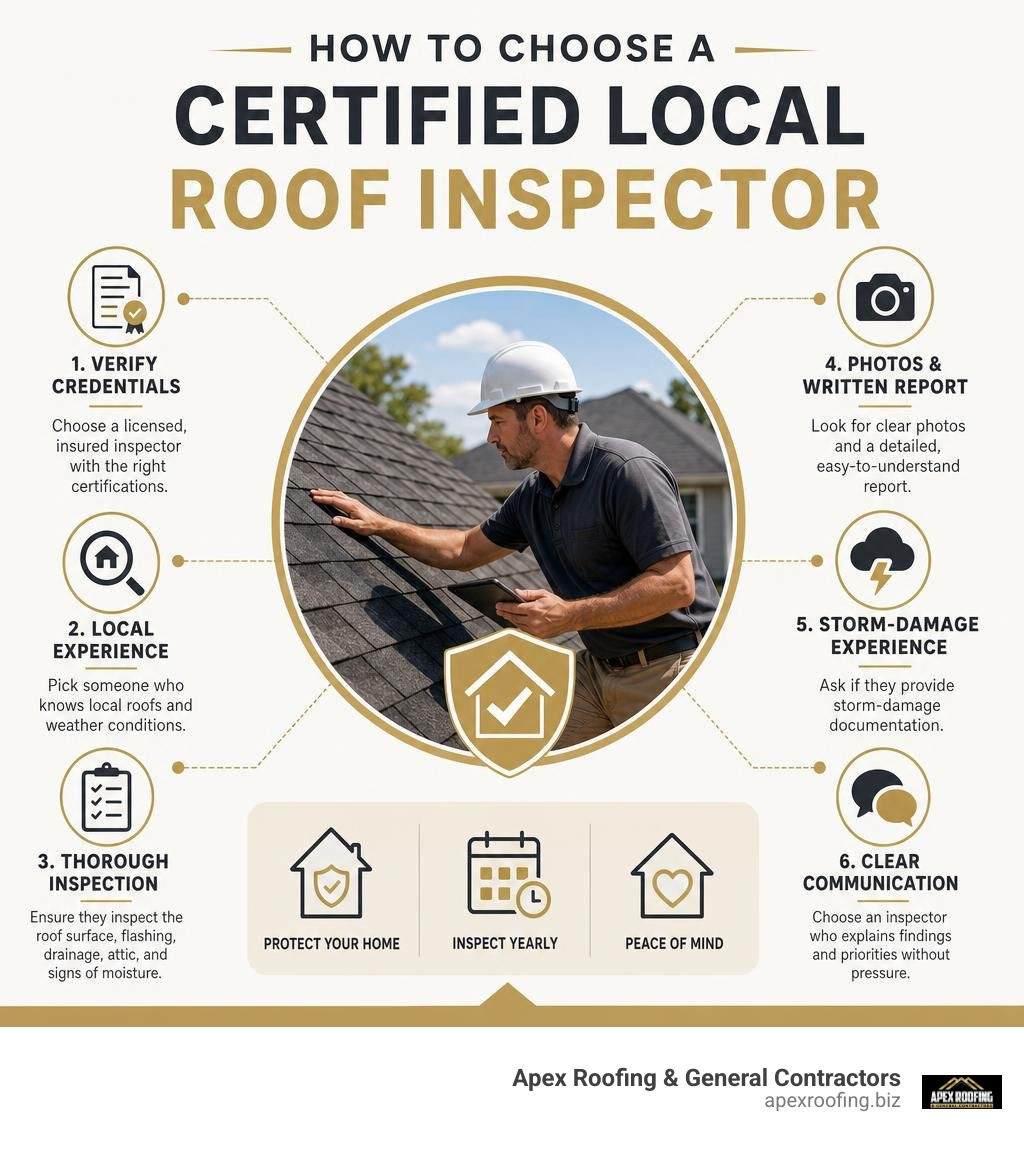
When property owners search for “Roof inspections near me,” choosing a licensed, insured professional who will inspect the roof surface, flashing, drainage, attic, and visible signs of moisture ensures a complete evaluation with photos and a written report. Ask whether the inspection includes storm-damage documentation, whether there is a charge, and whether the inspector can explain repair priorities without pressure.
A strong local inspection finds small problems before they become leaks, mold, damaged decking, or an insurance dispute. For clear communication and a detailed evaluation from a Texas roofing team, explore professional roof inspection services.
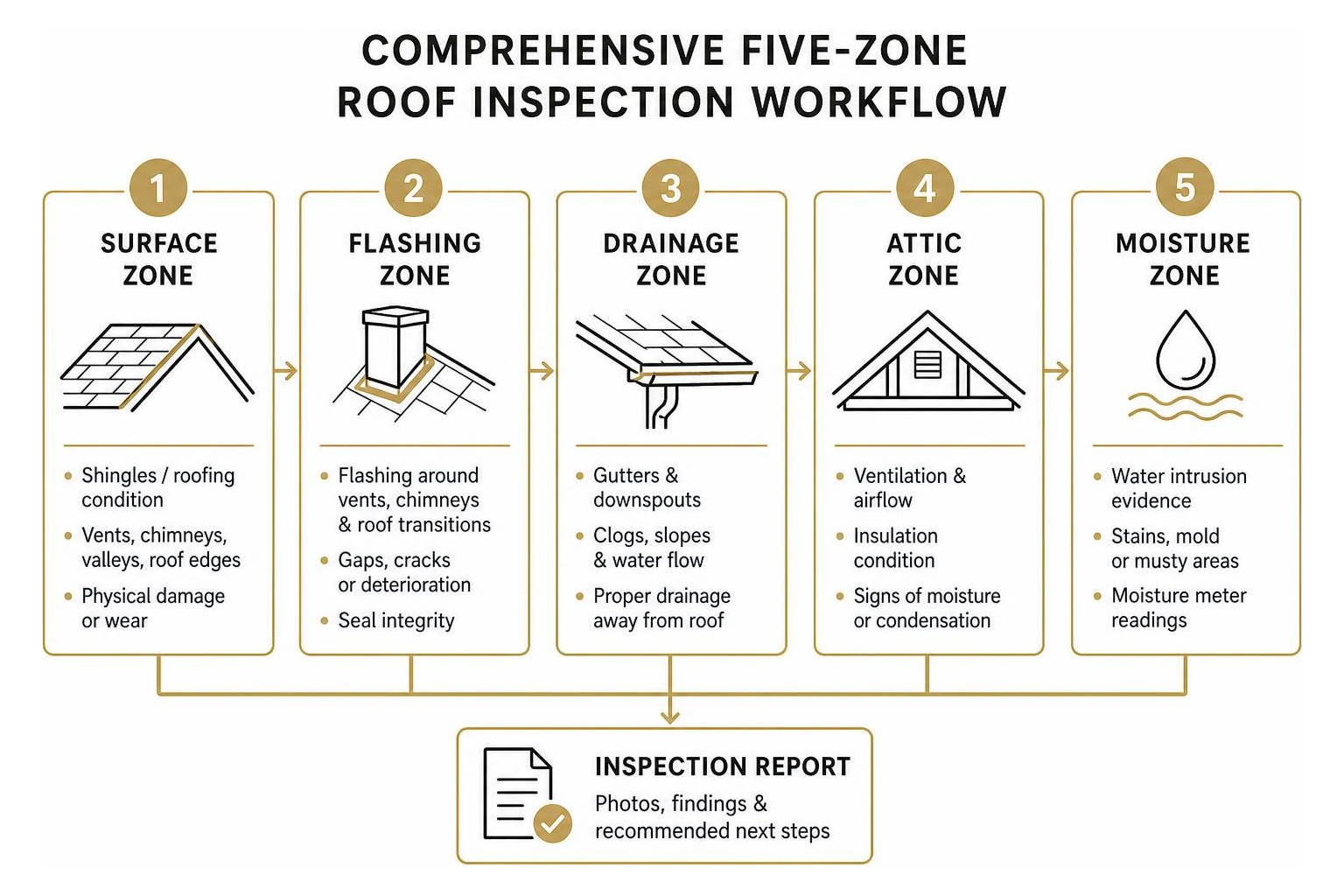
A complete inspection looks beyond shingles. It should assess vulnerable areas around vents, chimneys, valleys, gutters, and roof edges, while also checking attic ventilation and water intrusion where access is safe. This matters after hail or high winds, before a home sale, and as part of annual maintenance.
I am Carlos Yzaguirre, President and Managing Partner of Apex Roofing & General Contractors. Through our residential and commercial roofing work across Texas, I have seen how timely inspections help property owners make informed repair, maintenance, and storm-damage decisions.
Key roofing terms to learn:
What a Comprehensive Roof Evaluation Covers
A professional roof evaluation is a systematic, forensic assessment of your home’s entire weatherproofing envelope, designed to identify structural weaknesses, moisture intrusion, and material degradation before catastrophic interior leaks develop.
Rather than conducting a brief, cursory glance from the curb, certified inspectors follow standardized multi-point protocols to evaluate the interplay between your roofing materials, structural decking, drainage pathways, and attic ventilation systems. Understanding what makes a roof inspection best comes down to thoroughness: combining hands-on physical evaluations with non-destructive diagnostic tools like infrared thermal imaging, calibrated moisture meters, and high-resolution aerial imaging.
In Central and South Texas, your roof endures extreme environmental stress. The unrelenting San Antonio heat and UV load bake asphalt shingles, causing premature brittleness, while rapid temperature shifts make materials expand and contract over shifting foundations set in expansive clay soils. A comprehensive diagnostic assessment analyzes how these factors affect your roof’s total lifespan.
What to Expect During Roof Inspections Near Me
When an experienced technician arrives at your property, the exterior surface evaluation covers every component exposed to the elements. Inspectors meticulously check for:
- Granule Loss and Shingle Integrity: Shingles lose their protective mineral granules from severe UV exposure and hail impacts, exposing the underlying fiberglass mat to moisture and sunlight.
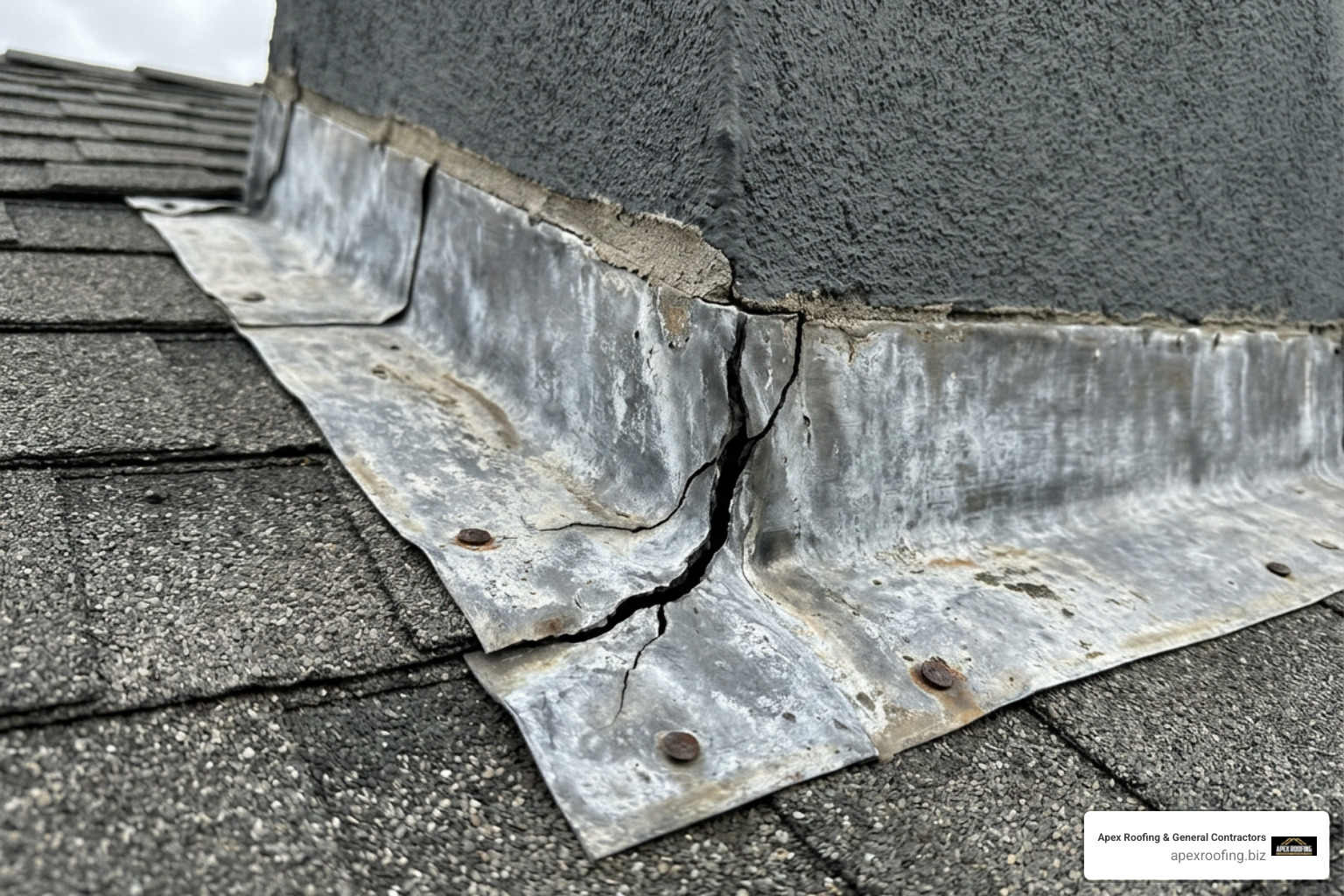
- Flashing Seals and Penetrations: Inspectors review the metal flashing around sidewalls, dormers, skylights, plumbing vent stacks, and chimneys where water shedding transitions occur.
- Valley and Drainage Pathways: Open and closed valleys channel massive volumes of water during torrential cloudbursts; any debris accumulation or seal failure here leads directly to decking rot.
- Chimney Masonry and Caps: Technicians examine mortar joints, counter-flashing, and spark arrestor caps for settling cracks or moisture entry points.
- Gutter Performance and Eaves: Evaluators check gutter slope, fascia board alignment, and drip edge integrity to ensure water discharges away from your foundation without wicking backward under shingles.
Reviewing a detailed roofing inspection report guide shows that professional documentation must always include high-resolution, dated photographs highlighting specific vulnerabilities alongside clear explanations of urgency.
Interior, Attic, and Structural Deck Diagnostics
A roof cannot be properly evaluated from the outside alone. The underside of the roofing system tells the real story of your building envelope’s health.
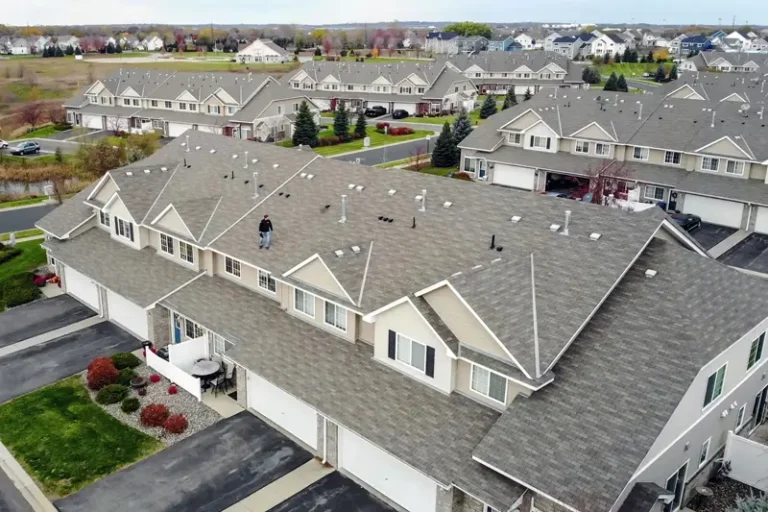
During the attic phase of an evaluation, an inspector steps into the space to evaluate:
- Attic Ventilation Dynamics: Proper continuous airflow requires balanced intake (soffit vents) and exhaust (ridge vents, static louvers, or powered turbines). Poor ventilation traps excessive heat and humidity, which cooks shingles from underneath and degrades insulation performance.
- Moisture and Mold Detection: Inspectors look for dark water rings, rusted roofing nails (a prime indicator of condensation issues), and active biological growth along the rafters.
- Structural Deck Integrity: Evaluators check for sagging plywood, delamination, or daylight showing through roof seams, which indicate rot or wind uplift stress on the fasteners.
Finding Reliable Roof Inspections Near Me: Contractor vs. Independent Inspector
Property owners frequently debate whether to hire an independent roof inspector or a licensed roofing contractor. Both play valuable roles in property maintenance and risk mitigation, but understanding their distinct objectives helps you select the right specialist for your current situation. For an in-depth framework, consult our local roof inspector guide 2026 to evaluate credentials, insurance coverage, and industry certifications.
Independent Inspectors vs. Roofing Contractors
Independent roof inspectors operate strictly as fee-for-service diagnostic evaluators. Because they do not perform repair work or roof replacements, their reports offer zero commercial bias. These specialists often follow forensic standards established by organizations like the National Roof Certification and Inspection Association (NRCIA), making their written findings valuable during legal disputes, mortgage underwriting, or contentious insurance appraisals.
Conversely, licensed roofing contractors evaluate roofs with direct buildability and local code compliance in mind. They possess daily, hands-on experience dealing with municipal building permits, material supply chain standards, and real-world installation challenges. Evaluating the highs and lows of professional roofing contractor inspections clarifies why working with established builders provides immediate estimates and actionable pathways for storm restoration.
| Assessment Feature | Independent Certified Inspector | Licensed Roofing Contractor |
|---|---|---|
| Primary Focus | Forensic condition & real estate certification | Repair feasibility, material lifespan & restoration |
| Direct Repair Execution | No (Assessment and reporting only) | Yes (Provides material, labor, and warranty) |
| Cost Structure | Upfront fee ($250 – $600+) | Often free for storm damage / visual checks |
| Insurance Claim Aid | Unbiased third-party documentation | Damage mapping, adjuster meetings, scope verification |
| Building Code Review | Baseline standard verification | Detailed local code & permitting requirements |
Are Free Roof Inspections Near Me Really Worth It?
Property owners often ask: Are free inspections legitimate, or are they merely aggressive sales tactics?
The answer depends on the integrity and business model of the roofing company you contact. Reputable local contractors provide no-obligation assessments as a community service and a transparent discovery phase. If a roof has several years of serviceable life remaining, an honest contractor will state that clearly in writing.
However, beware of out-of-town “storm chasers” who canvas neighborhoods immediately following severe weather, claiming every roof requires a full replacement. Look for established providers offering a free storm damage roof inspection backed by permanent local physical addresses, solid Better Business Bureau standings, and verified customer testimonials.
When to Schedule an Evaluation and Warning Signs
Waiting for water to drip through your living room ceiling is the most expensive way to discover roof damage. Proactive scheduling preserves structural framing, stops dry rot, and prevents costly insulation replacement.
Review our why you need roof inspection guide to establish an ongoing maintenance schedule that protects your home’s equity.
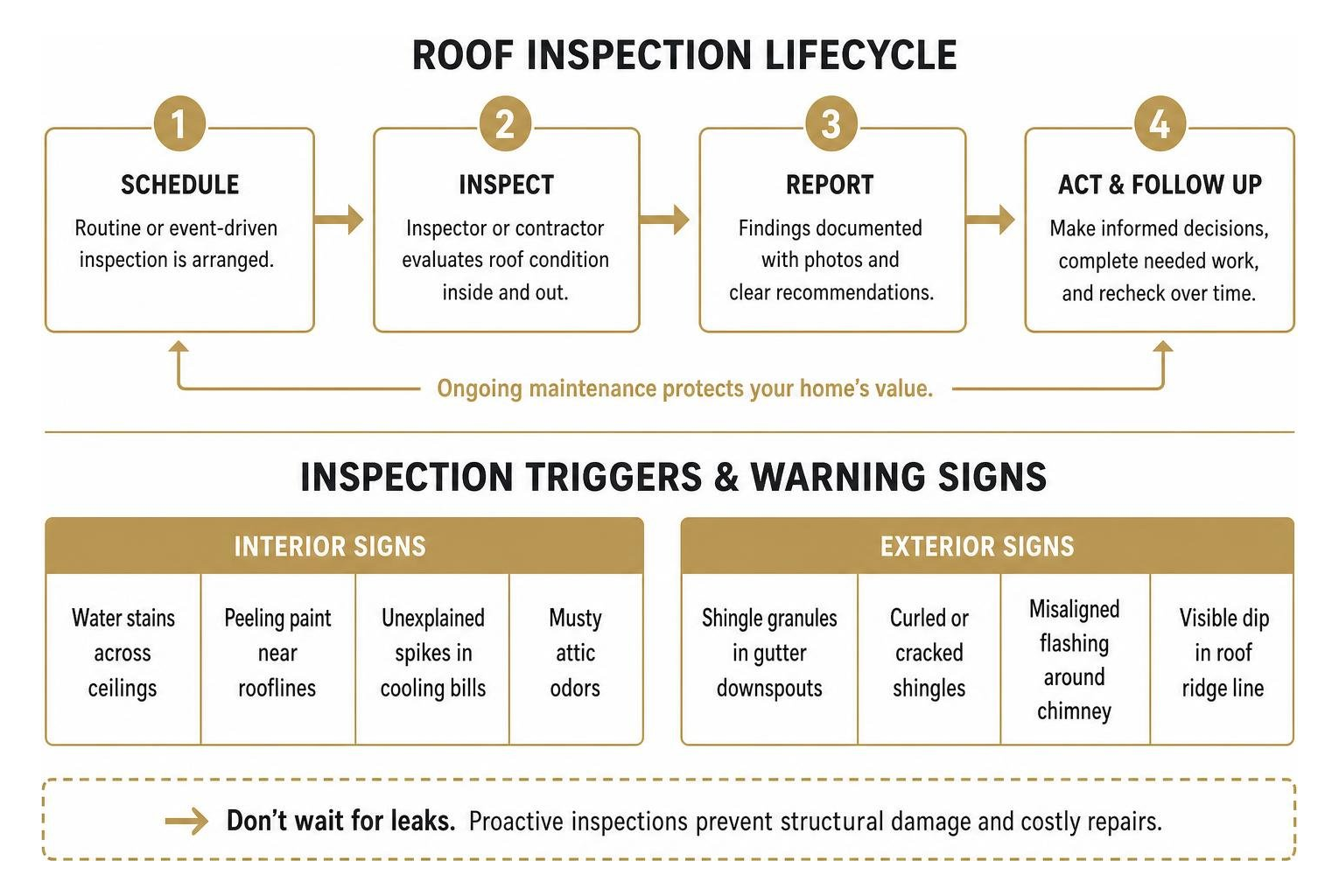
Property owners must watch for key physical warning indicators:
- Interior Signs: Water stains across ceilings, peeling paint near rooflines, unexplained spikes in cooling bills, or musty attic odors.
- Exterior Signs: Shingle granules accumulating in gutter downspouts, curled or cracked shingle tabs, misaligned flashing around the chimney, or standing across the street and noticing a visible dip in the roof ridge line.
Hail, Wind, and Post-Storm Assessment Triggers
Severe weather creates hidden structural vulnerabilities that aren’t always obvious from the driveway. Hail strikes bruise the asphalt matrix beneath the granules, causing localized fractures that allow slow water penetration over subsequent months. High straight-line winds lift shingle tabs, breaking the manufacturer adhesive strip and creasing the shingle at the fastener line.
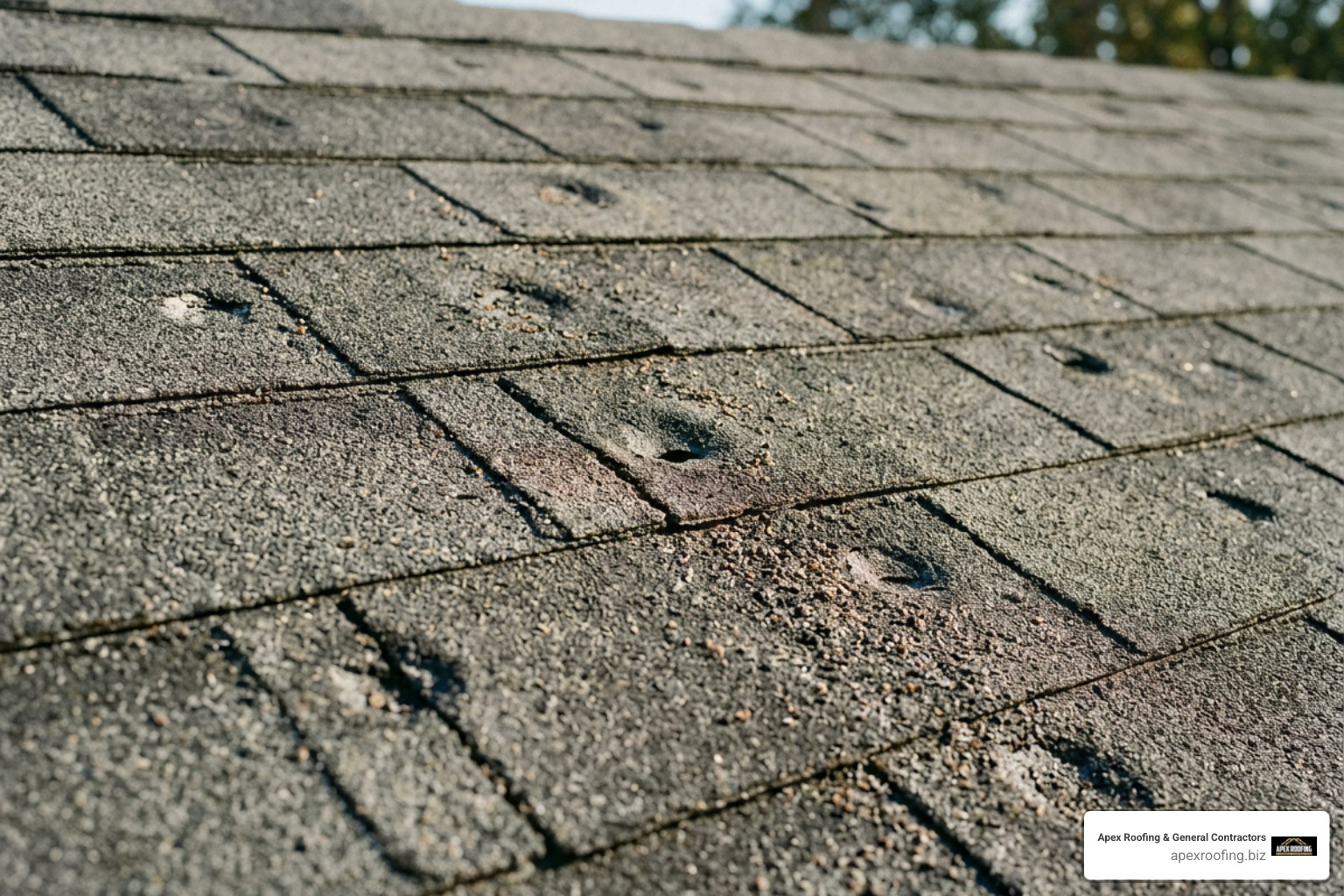
Utilizing our storm damage roof inspection guide ensures that post-weather evaluations take place well within your insurer’s filing deadlines. Capturing forensic proof right after an extreme weather event protects your property from denied claims based on “pre-existing neglect.”
Real Estate Transactions and Roof Certification
During property transactions, standard general home inspections often treat the roof superficially—sometimes inspecting it only from ground level with binoculars. Securing a dedicated roof certification inspection provides clear legal and financial peace of mind for both buyers and sellers.
Lenders and underwriters frequently request formal roof certifications (such as a 2-year LeakFREE® certification) to confirm that the roof will remain watertight throughout the loan initiation period. For sellers, providing an upfront, certified roof inspection report removes contingency roadblocks, eliminates eleventh-hour price renegotiations, and justifies property listing values.
Insurance Claims, Cost Factors, and Post-Inspection Action Steps
Dealing with storm restoration and insurance policies requires systematic documentation. Property owners who leverage thorough diagnostic assessments achieve significantly smoother claim resolutions. Our roof inspection guide near me provides the essential framework for organizing repair scopes and working alongside insurance adjusters.
Navigating Insurance Claims and Damage Reports
Securing an insurance claim approval requires verifiable evidence. Insurance adjusters manage heavy caseloads and strictly follow policy requirements regarding storm-created openings versus standard age-related wear.
A thorough roof assessment provides:
- Date-Stamped, High-Definition Imagery: Clear, close-up documentation of mechanical hail spatter, fractured shingle mats, and wind-creased tabs.
- Damage Mapping: Test squares (typically 10-foot by 10-foot sample areas on each roof slope) detailing the exact strike density per area.
- Collateral Damage Verification: Documenting impacts on soft metals, such as ridge vents, valley flashing, gutter guards, and air conditioning fins to corroborate storm severity.
- On-Site Adjuster Representation: Having your roofing professional meet the carrier’s adjuster on the roof ensures all damaged elements are included in the initial scope of loss, aligning with standardized professional roof inspection protocols.
Industry data indicates that insurance files supported by certified inspection documentation and adjuster meetings achieve up to a 98% claim approval rate on verified storm occurrences, reducing friction and avoiding protracted appraisal disputes.
Pricing Ranges and Post-Inspection Action Plans
The price of a professional roof inspection varies depending on roof square footage, architectural complexity, pitch steepness, and specialized diagnostic technology (such as infrared thermal imaging or aerial drone flight capture):
- Standard Visual & Attic Inspection: Typically $150 – $350 (frequently offered at no charge by local contractors assessing storm damage or repair scopes).
- Comprehensive Drone / Infrared Forensic Inspection: $300 – $600.
- Formal Real Estate Roof Certification (1 to 2-Year Guarantee): $250 – $500+.
Once your inspection is complete and you receive the written report, take these clear steps:
- Review the Urgency Matrix: Differentiate between immediate leak threats (such as missing flashing or exposed underlayment) and routine maintenance recommendations (like resealing pipe boots or clearing debris).
- Secure Multiple Itemized Quotes: If repairs are required, ensure each quote breaks down material grades, labor warranties, disposal fees, and municipal permit costs.
- Check Local Permitting Rules: Central Texas municipalities require building permits for structural re-roofing projects. Never work with an entity that asks you to pull your own homeowner permit.
- Preserve Your Maintenance Log: Keep all dated inspection photos and repair receipts stored digitally. This documentation validates your roof’s maintenance history for future home buyers and protects manufacturer warranties against improper upkeep claims.
Frequently Asked Questions About Roof Inspections
How often should a roof be inspected?
Residential properties should receive a comprehensive professional roof inspection at least once per year—ideally during the fall before winter weather sets in. Additionally, schedule an assessment following any severe hail or wind storm, and perform quick ground-level visual checks once a month. Commercial properties with flat or low-slope membrane systems should be inspected twice a year (spring and fall) and after any third-party HVAC servicing on the rooftop.
How much does a roof inspection cost in 2026?
In 2026, standard professional roof inspections generally range between $150 and $450, depending on roof dimensions, story height, pitch, and physical accessibility. Advanced inspections using thermal infrared leak detection or detailed drone mapping range from $300 to $600. Many licensed local roofing contractors provide free, no-obligation visual inspections for homeowners dealing with suspected storm damage or aging materials.
Can a roof inspection help with my homeowner insurance claim?
Yes. A professional inspection report provides dated photos, mapped hail strike counts, soft metal damage proof, and structural notes that insurance adjusters require to validate claims. Having an experienced roofing professional present during the adjuster’s field inspection ensures all damaged items—including code upgrades and drip edge requirements—are accounted for in the initial insurance settlement.
Conclusion
Your roof is the first line of defense protecting your family, interior belongings, and overall property value. From blistering summer heat to unpredictable severe spring hailstorms, staying proactive with regular roof evaluations stops small water breaches from turning into costly structural repairs. When selecting an expert, prioritize licensed, local professionals who provide clear photographic documentation, honest assessments, and proven local code knowledge.
For dependable, transparent, and comprehensive residential roof inspections across our Texas communities, our team is ready to serve you. Contact Apex Roofing & General Contractors today at (726) 727-7663 to request a free estimate and schedule a free inspection to ensure your home stays protected year-round.