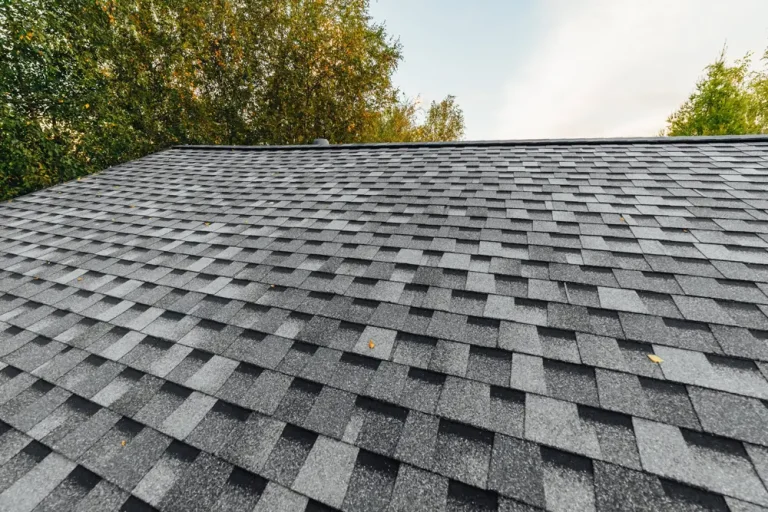
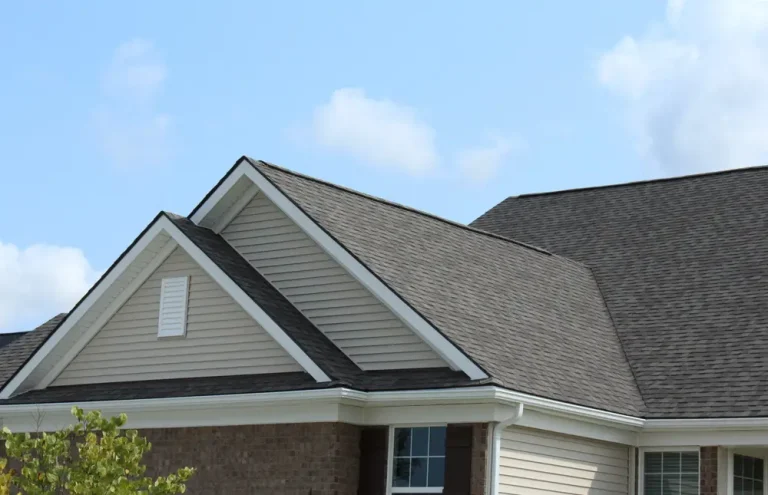
Why Asphalt Shingle Replacement Is One of the Most Important Home Decisions You’ll Make
Asphalt shingle replacement is the process of removing your old roof system and installing a complete new one — including underlayment, flashing, and shingles — to restore your home’s protection, appearance, and structural integrity. As a trusted San Antonio roofing company, we ensure every installation meets the highest standards of safety and durability. For homeowners seeking expert roofers in San Antonio, this guide provides the essential data needed to make an informed decision.
Here’s a quick overview of what the process involves:
| Step | What Happens |
|---|---|
| Inspection | Assess shingle damage, deck condition, and roof age |
| Tear-off | Remove old shingles down to the roof deck |
| Deck repair | Fix or replace damaged sheathing |
| Underlayment | Install moisture barrier layer |
| Shingles | Lay new shingles in staggered courses |
| Flashing & ridge caps | Seal edges, valleys, and peaks |
| Final inspection | Check alignment, ventilation, and cleanup |
Average cost: $6,000 – $9,000 for a typical 1,700 sq. ft. home, with labor making up roughly 60% of that total.
Typical lifespan: 15 – 30 years depending on shingle type, climate, and maintenance.
Asphalt shingles are the most widely used steep-slope roofing material in North America — and for good reason. They’re affordable, durable, and relatively straightforward to replace when the time comes. But knowing when to replace, what to choose, and how the process works can save you thousands of dollars and a lot of headaches.
If you own a home in San Antonio, Texas, the stakes are even higher. The region’s intense summer heat, sudden hailstorms, and high UV exposure can accelerate shingle wear faster than in milder climates. A professional roof replacement done right — with the correct materials and proper installation — is one of the best investments you can make in your home.
This guide walks you through everything: the warning signs, the costs, the step-by-step process, the tools, and the common mistakes to avoid.
I’m Carlos Yzaguirre, President of Apex Roofing & General Contractors, and I’ve overseen hundreds of asphalt shingle replacement projects across San Antonio and throughout Texas since co-founding Apex in 2022. My goal here is to give you the honest, clear information I wish every homeowner had before starting this process.
When to Choose Asphalt Shingle Replacement Over Repair
Deciding whether to patch a leak or commit to a full asphalt shingle replacement is a major financial crossroads. While repairs are tempting for the wallet, they are often just a “band-aid” on a system that has reached its expiration date. In April 2026, with material costs and climate volatility rising, making the right call early can prevent catastrophic interior water damage.
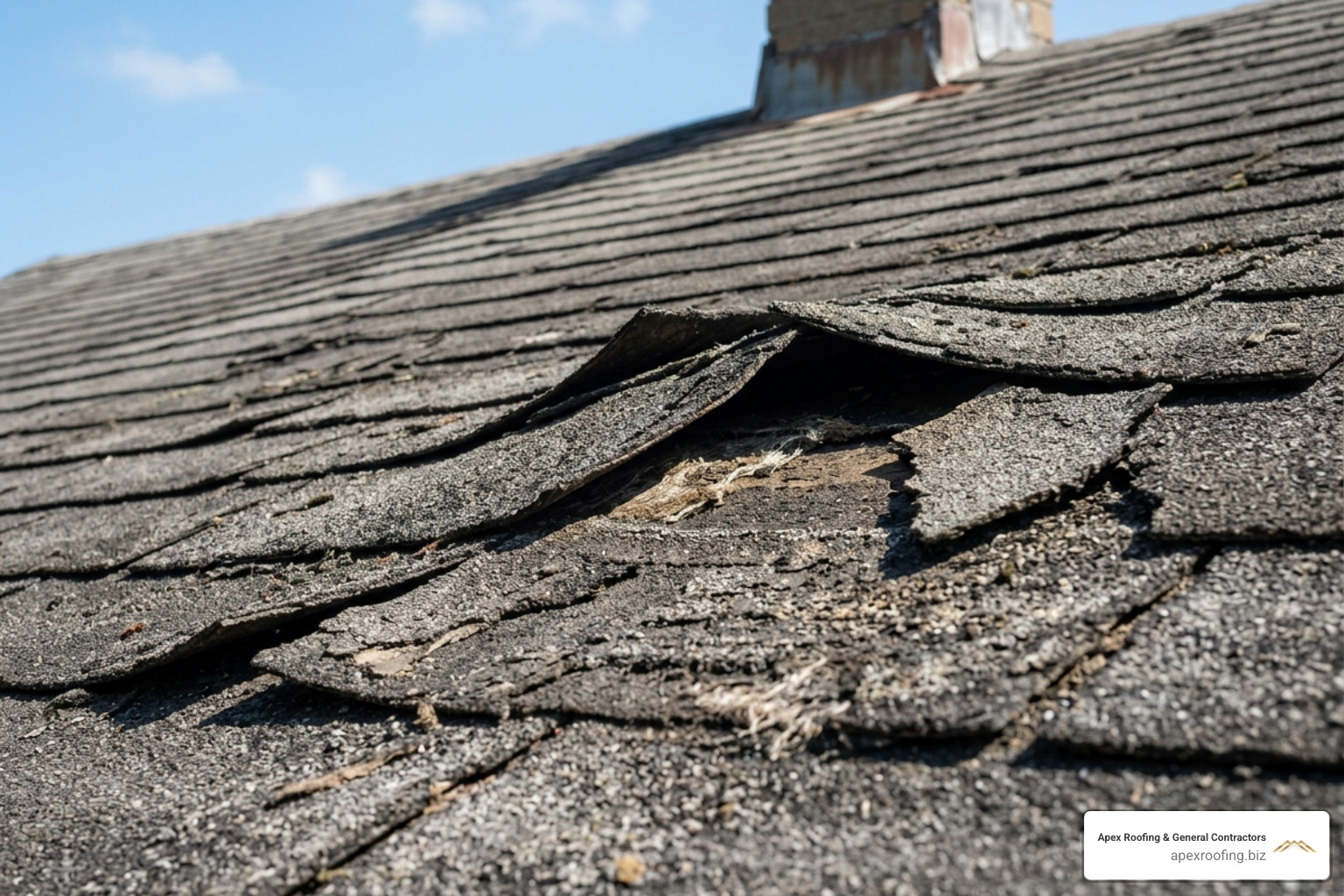
We generally look for several “red flag” symptoms during an inspection. If your shingles are curling, cracking, or have missing tabs, the asphalt has likely become brittle from years of UV exposure. Granule loss is another major indicator; if you find what looks like coarse sand in your gutters, your shingles have lost their protective coating.
More severe signs include:
- Water stains on your ceilings or attic rafters.
- A sagging roof deck, which suggests long-term moisture has compromised the structural sheathing.
- Daylight through roof boards, visible from inside your attic.
- Age: If your roof is approaching the 20-year mark, it’s often safer to replace it before a major storm forces your hand.
For a deeper dive into these symptoms, check out our guide on when your roof needs replacement. If you’re unsure, our team at Apex Roofing & General Contractors can provide a comprehensive assessment.
Determining Repairability vs. Full Overhaul
Is your roof truly “done,” or can it be saved? Isolated damage, such as a few shingles blown off by a high-wind event, is often repairable. Asphalt shingles are designed for independent repair; we can perform a manual unsealing of the surrounding tabs to slide in a new shingle.
However, aesthetic matching is a challenge. Even if we find the same color name, new shingles will look darker than the weathered ones on your roof. We weigh the cost-effectiveness of repeated repairs against a full overhaul. If more than 20-25% of the roof is damaged, or if the shingles are too brittle to be manipulated without breaking, a full replacement is the only responsible path. You can learn more about these nuances in our shingle repair ultimate guide.
Warning Signs of Imminent Roof Failure
Beyond the shingles themselves, keep an eye out for moss growth and algae streaks. While algae (those black streaks) are mostly cosmetic, moss traps moisture against the shingle surface, causing it to rot. Frequent leaks, even small ones, are a cry for help from your roofing system. In San Antonio, environmental wear is accelerated by the sun, making shingles brittle much faster than the national average. If you’ve recently experienced heavy winds, read our tips on how to repair blown off roof shingles to see if a quick fix is viable.
The Financial Breakdown: Costs and Shingle Types in 2026
Budgeting for a new roof requires understanding “roofing squares.” One square equals 100 square feet. Most American homes require between 20 and 35 squares for a full replacement.
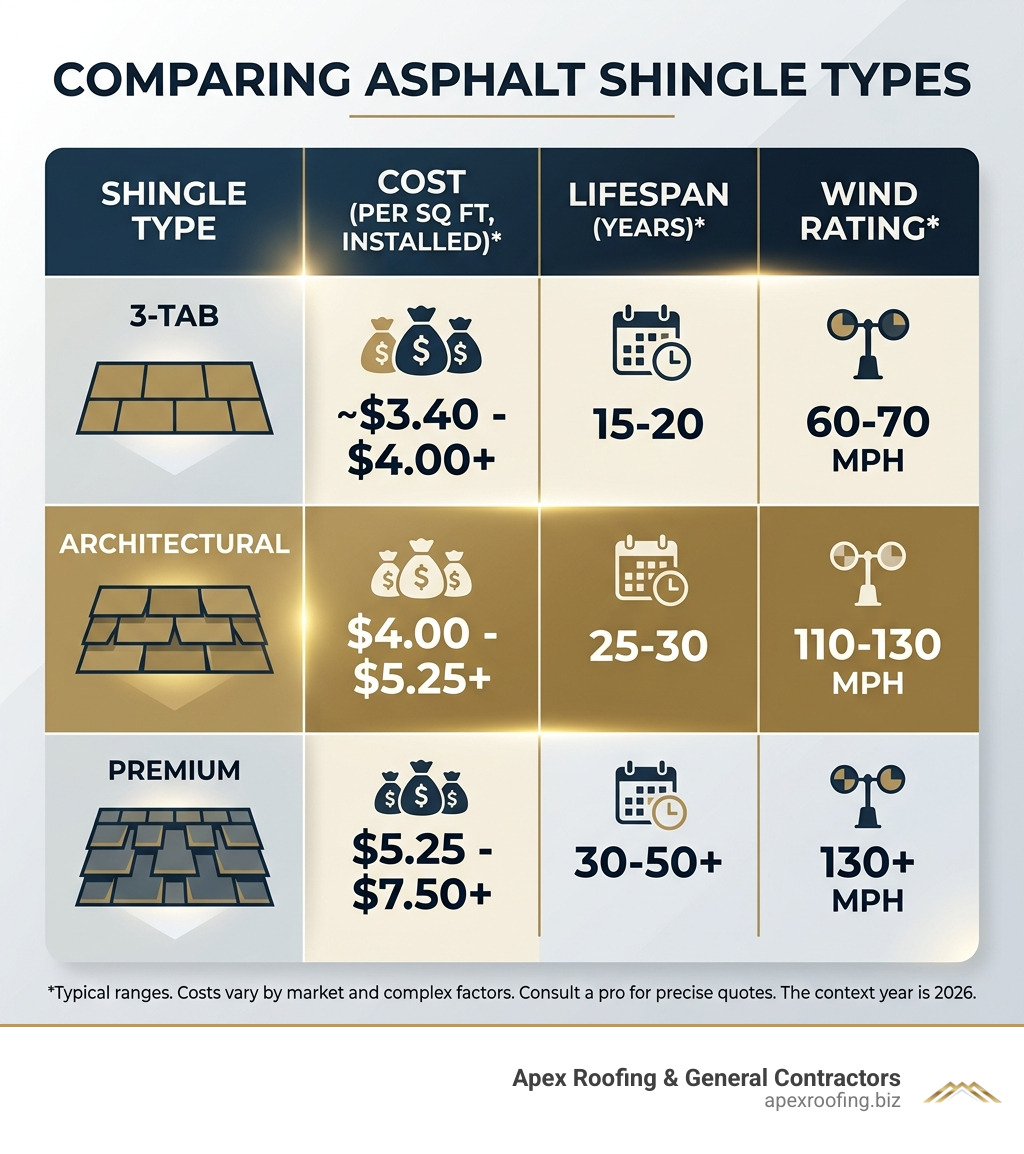
Labor typically accounts for 60% of your total bill. In 2026, we see national averages for a 1,700 sq. ft. roof landing between $6,000 and $9,000, but local factors matter immensely. For instance, Illinois has a construction cost multiplier of 1.10, while San Antonio’s costs are influenced by specific climate-grade material requirements. For local pricing, see our asphalt roof cost San Antonio guide.
How much does asphalt shingle replacement cost in 2026?
On average, homeowners are paying between $3.40 and $5.95 per square foot for a standard replacement. This total includes:
- Permit fees: Usually ranging from $50 to $300 depending on local municipality codes.
- Removal costs: Tearing off old asphalt usually costs between $0.39 and $0.53 per square foot.
- Disposal: Landfill fees for heavy asphalt debris.
If your decking is rotted, expect an additional $2.20 to $3.00 per square foot to replace the wood sheathing. For a quick look at minor fix costs, see our breakdown of the cost to fix roof shingles.
Comparing 3-Tab, Architectural, and Premium Shingles
Not all shingles are created equal. Your choice impacts both the look of your home and how well it stands up to Texas hail.
- 3-Tab Shingles: The budget-friendly option. They are flat, single-layer shingles with a 15–20 year lifespan. While affordable, they are becoming less common due to lower wind resistance. See our guide on installing 3-tab asphalt shingles for more details.
- Architectural (Dimensional) Shingles: The standard for modern homes. These feature two or more layers of fiberglass, creating a multi-dimensional look. They offer superior wind resistance (often up to 130 mph) and generally last 25–30 years.
- Premium/Luxury Shingles: These mimic the look of slate or wood shakes. They are much thicker, offer the highest impact ratings, and often include advanced features like SureNail technology for better fastening and enhanced algae resistance.
The Step-by-Step Asphalt Shingle Replacement Process
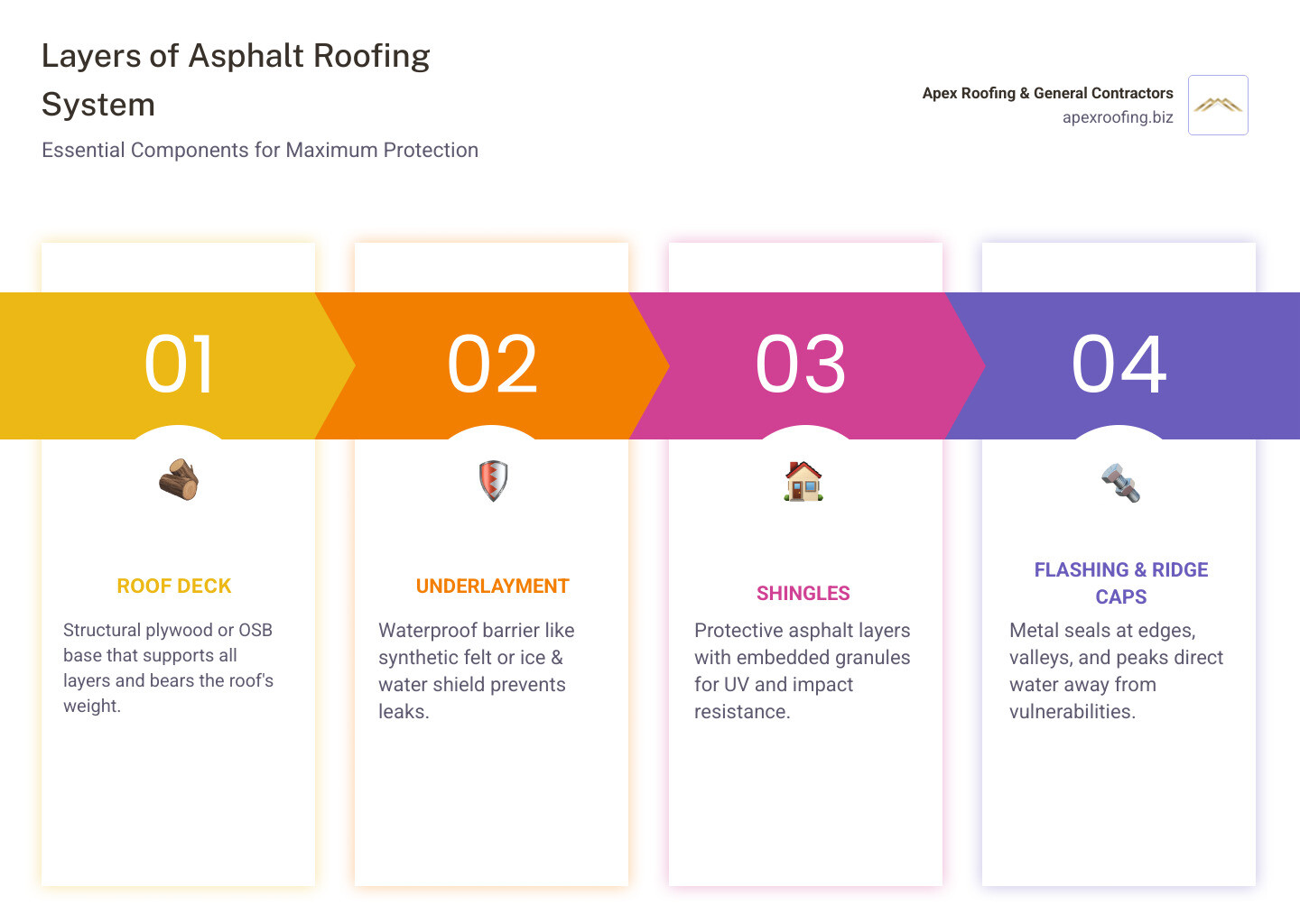
A successful asphalt shingle replacement isn’t just about nailing down new pieces of plastic and stone. It is a systematic process that ensures every layer of the “roofing sandwich” is airtight and watertight.
1. The Tear-Off
We start by removing all old shingles and underlayment down to the bare wood. This is the only way to perform a true deck inspection. We check for rot, soft spots, or “delamination” in the plywood.
2. Deck Preparation and Underlayment
Once the deck is clean and repaired, we install the drip edge along the eaves to direct water into the gutters. Then comes the underlayment. While old-school felt paper was the norm, we now primarily use synthetic underlayment because it doesn’t tear and provides a much better moisture barrier. In valleys and near penetrations, we apply an “ice and water shield”—a self-adhering leak barrier that acts as a second line of defense. For more on this, see asphalt shingles installation.
3. The Starter Course
We lay a special “starter shingle” at the eaves. This ensures there is shingle coverage under the gaps and joints of the first visible row of shingles, preventing wind uplift and water infiltration at the roof’s edge.
4. Shingle Installation
We install the main shingles in staggered courses. This “staggering” ensures that the seams don’t line up, which would create a direct path for water to reach the deck. We use a specific fastener pattern—usually 4 to 6 nails per shingle depending on the roof’s pitch and local wind requirements.
5. Flashing and Ridge Caps
New flashing is installed around chimneys, vents, and in valleys. Finally, we install ridge caps along the peaks of the roof to seal the topmost joints and allow for proper attic ventilation. For a complete walkthrough, refer to this step-by-step guide or our page on residential roof replacement.
Final Inspection and Site Cleanup
The job isn’t done until the yard is clean. We perform a “nail sweep” using high-powered magnetic brooms to pick up stray fasteners that could harm tires or pets. We also conduct a final ventilation check to ensure your attic can “breathe,” which is vital for shingle longevity in San Antonio. Our San Antonio roof replacement experts take pride in leaving your property cleaner than we found it.
Essential Tools and Materials for Success
If you’re looking into what it takes to get the job done right, the equipment list is surprisingly extensive. Professional crews use specialized tools to ensure speed and accuracy.
- Tear-off Shovel or Pitchfork: To efficiently pry up old layers.
- Pneumatic Nailer: For consistent nail depth and speed.
- Utility Knife: With hook blades for cutting shingles.
- Chalk Line: To ensure every row is perfectly straight.
- Safety Harness and Sturdy Ladder: Non-negotiable for working on steep slopes.
- Hammer Stapler: For securing underlayment quickly.
- Galvanized Nails: Specifically 1.25 to 1.5 inches to resist corrosion.
- Roofing Cement: For sealing flashing and high-wind areas.
For a look at how the pros handle these tools, This Old House has excellent visual resources.
Critical Components Beyond the Shingles
A roof is a system, not just a surface. During an asphalt shingle replacement, we often replace:
- Decking: The structural wood base.
- Flashing: The metal bits that seal “breaks” in the roof (chimneys, walls).
- Ridge and Soffit Vents: These work together to pull cool air in and push hot air out.
- Starter Shingles: The foundation of the first row.
Replacing these components is standard in a high-quality asphalt shingle roof replacement.
Is DIY asphalt shingle replacement recommended?
We get asked this a lot. While you can DIY a roof, we rarely recommend it for a full replacement. The safety risks are high, and most homeowners don’t have the fall-protection gear required for steep slopes. Furthermore, many manufacturer warranties are only valid if the roof is installed by a certified contractor.
Incorrect nail placement—even by an inch—can lead to roof failure or voided insurance claims. If you’re considering the DIY route, please read our roof shingle replacement complete guide to understand the technical skills required.
Frequently Asked Questions about Asphalt Shingle Replacement
How long does a typical asphalt shingle replacement take?
Most residential projects in San Antonio take between 1 and 3 days. A simple “up and over” gable roof might be finished in a single day, while complex roofs with many valleys, dormers, and a steep pitch can take up to 5 days. Weather is the biggest variable; we never uncover a roof if there’s a high chance of rain.
What warranties should I look for in a new roof?
You should expect two types of protection:
- Manufacturer Warranty: This covers defects in the shingles themselves (typically 25 years to “Lifetime”).
- Workmanship Warranty: This is provided by us, the contractor, and covers the actual installation. At Apex, we emphasize transparent communication regarding these coverages so you know exactly what is protected.
Can I install new shingles over an existing layer?
While building codes often allow for two layers of shingles (known as an “overlay”), we strongly advise against it. An overlay adds immense weight to your home’s structure and prevents us from inspecting the decking for rot. Additionally, most modern architectural shingles will not lay flat over old 3-tab shingles, leading to a bumpy appearance and a significantly shorter lifespan for the new layer.
Conclusion
Your roof is the most important shield your home has against the unpredictable Texas weather. Whether it’s the scorching July sun or a sudden April thunderstorm, a proper asphalt shingle replacement ensures your family stays safe and dry.
At Apex Roofing & General Contractors, we specialize in providing San Antonio homeowners with certified, reliable service that respects both your budget and local building codes. We don’t just “slap on shingles”; we install complete roofing systems designed to last for decades.
Ready to protect your investment? Don’t wait for the next leak to turn into a major repair bill. Explore our asphalt roofing San Antonio ultimate guide for more information. We look forward to helping you secure your home for the long haul. Contact us today for a free estimate and call (726) 727-7663 to schedule your free inspection.