Why Choosing the Right Metal Roof Companies Matters More Than You Think
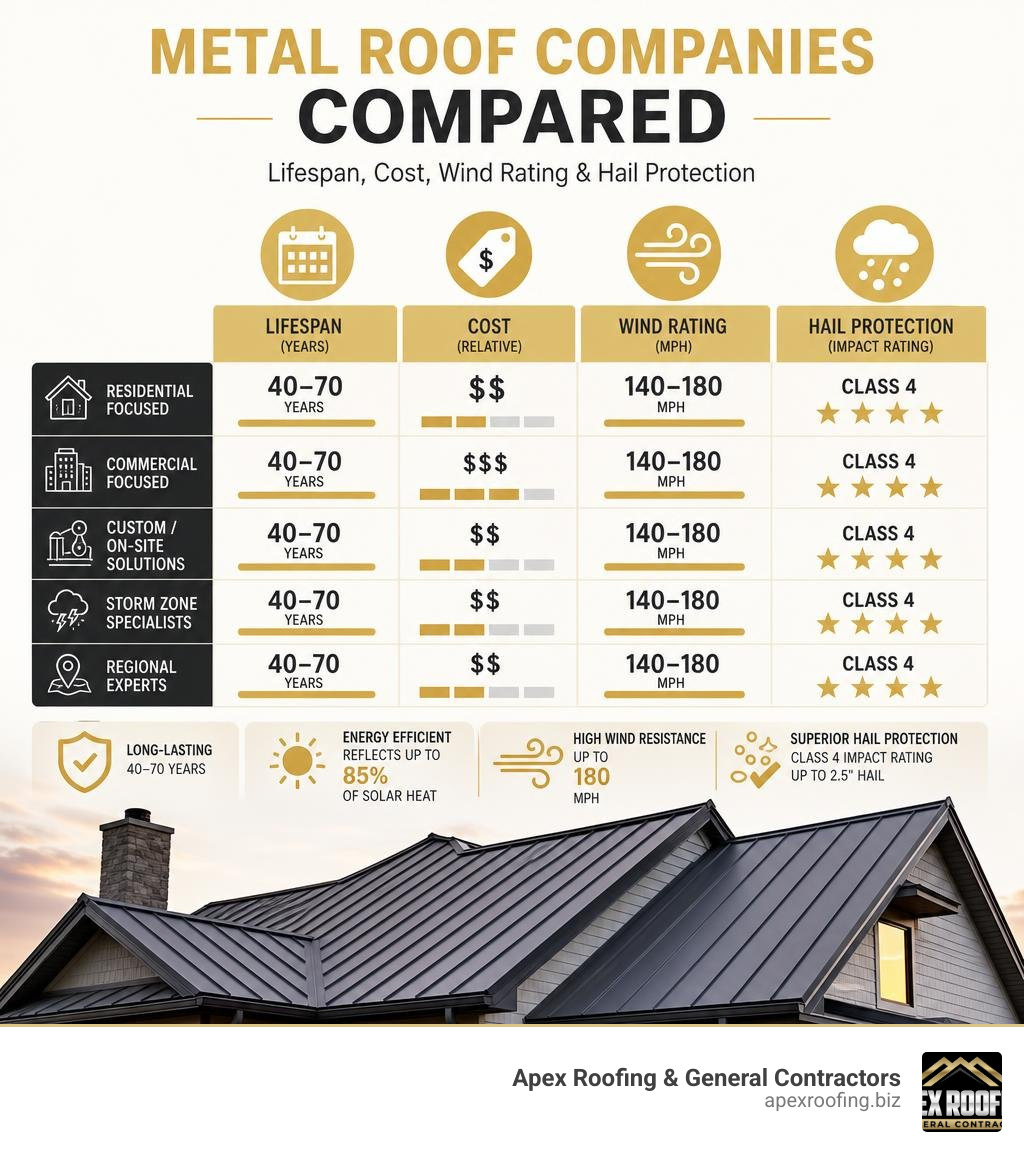
Metal roofs last 40 to 70 years, reflect up to 85% of solar heat, and withstand winds of 140 to 180 mph — making them the highest-performing residential roofing system available today. Choosing the right metal roof companies is the single most important decision in that investment, because even the best metal panel fails without expert installation. If you’re searching for a trusted metal roofing installer in San Antonio, understanding which manufacturers and contractors consistently deliver is your first step toward a roof that truly lasts.
Here are the top metal roof companies worth knowing in 2026:
| Company | Specialty | Best For |
|---|---|---|
| McElroy Metal | Manufacturing, widest product range | Residential & commercial |
| DECRA Metal Roofing | Stone-coated steel | Aesthetic-focused homeowners |
| Englert | Standing seam & gutters | Commercial & institutional |
| Berridge Manufacturing | Architectural metal systems | Commercial & residential |
| Sheffield Metals | Engineered standing seam | Architectural & commercial |
| Drexel Metals | Standing seam systems | Residential & commercial |
These companies can withstand winds of 140 to 180 mph and carry Class 4 impact ratings against hail up to 2.5 inches in diameter. These aren’t just selling points — they’re the reason demand for metal roofing has surged across Texas, Florida, the Midwest, and beyond.
But here’s the thing: even the best metal roofing product fails without the right installation. The company you choose matters just as much as the material.
I’m Carlos Yzaguirre, President of Apex Roofing & General Contractors in San Antonio — and evaluating metal roof companies for quality, reliability, and long-term value is something I do every day. In this guide, I’ve compiled the manufacturers and contractors across the country that consistently deliver on their promises.
Have questions? Call us directly at [(726) 727-7663] for a free consultation.
Basic metal roof companies vocab:
Major Types of Metal Roofing Systems and Materials
Choosing the right metal roof starts with understanding the systems and materials available. Not all metal roofs are created equal; they differ wildly in performance, cost, and appearance.

Standing Seam (Concealed Fastener)
Standing seam is the gold standard of residential metal roofing. This system features vertical panels joined by raised seams that conceal the fasteners underneath. Because the screws are completely protected from the elements, standing seam roofs are highly leak-resistant and allow the metal to expand and contract naturally with temperature changes. This is the ultimate option for a clean, modern aesthetic.
Exposed Fastener (Screw-Down Panels)
Exposed fastener systems (like R-Panel or Tuff Rib) are secured with screws driven directly through the face of the metal panel. While they are significantly cheaper than standing seam, they require more maintenance. The rubber washers on the thousands of exposed screws will eventually degrade, crack, and require replacement to prevent leaks. These are most commonly used for agricultural barns, detached garages, and budget-conscious industrial buildings.
Stone-Coated Steel
If you love the look of traditional clay tile, wood shakes, or architectural shingles but want the indestructible nature of steel, stone-coated steel is your answer. Manufacturers like DECRA embed natural stone granules onto structural steel sheets. This gives you Class A fire resistance and incredible storm protection without the heavy weight of clay or slate.
Material Profiles: Aluminum, Copper, Zinc, and Steel
The base metal you choose dictates the lifespan and cost of your system:
- Steel (Galvalume & Galvanized): The most common option. Galvanized steel is coated in zinc to prevent rust, while Galvalume uses an aluminum-zinc alloy coating for superior corrosion resistance, especially in humid climates. According to the Metal Roofing Alliance, Galvalume-coated steel is the industry standard for residential standing seam systems.
- Aluminum: Lightweight, completely rust-proof, and highly reflective. It is excellent for coastal environments but softer than steel, making it slightly more susceptible to denting.
- Copper: A true legacy material that can last upwards of 100 years. It naturally oxidizes over time, developing a beautiful green patina. It is incredibly expensive but requires zero maintenance.
- Zinc: Considered a lifetime roof that heals itself from scratches over time. It is highly resistant to corrosion and can easily last over 80 years.
Here is a quick look at how these options stack up:
| Material / Panel Type | Average Lifespan | Wind Resistance | Cost Tier | Best Suited For |
|---|---|---|---|---|
| Standing Seam (Steel/Alum) | 50–70 Years | Up to 180 MPH | High | Modern Homes, Coastal Areas |
| Exposed Fastener (Steel) | 30–40 Years | Up to 120 MPH | Low | Agricultural & Outbuildings |
| Stone-Coated Steel | 50+ Years | Up to 120 MPH | Medium-High | Traditional Neighborhoods |
| Copper / Zinc | 80–100+ Years | Premium | Ultra-Premium | Historical & Luxury Estates |
When planning a high-end project, we always recommend reviewing Steeling the Show: A Guide to Top Metal Roof Manufacturers to see how different steel profiles perform over time. If you are in our local Texas market, utilizing San Antonio’s Metal Roof Manufacturer – Berridge provides access to world-class, commercial-grade architectural metal systems manufactured right in our backyard.
Key Benefits and Performance in Extreme Weather
Why are homeowners in San Antonio and across the country moving away from traditional asphalt shingles? The answer lies in how metal roofs perform when the weather gets ugly.
Wind and Hurricane Resistance
High winds can easily rip asphalt shingles off a roof deck, leaving the underlayment exposed to water damage. Metal roofing systems, particularly standing seam, are engineered to withstand winds between 140 and 180 mph. The interlocking panels act as a unified shield, preventing wind uplift from compromise.
Hail Protection and Class 4 Impact Ratings
In Texas, hail is an annual threat. Metal roofs carry a Class 4 impact rating—the highest rating possible from Underwriters Laboratories. This means they can withstand impacts from hailstones up to 2.5 inches in diameter without cracking or puncturing. While severe hail can cause cosmetic dimpling on some metals, the structural integrity of the roof remains completely intact.
Class A Fire Resistance
Metal is non-combustible. A metal roof provides Class A fire resistance, protecting your home from airborne embers during nearby wildfires. This safety feature is a major reason why insurance companies favor metal over wood shakes or standard shingles.
Solar Panel Compatibility
Metal roofs are the most compatible systems for solar panel installation. On a standing seam roof, solar brackets can clamp directly onto the metal seams without drilling a single hole through your roof deck. Because the roof outlasts the solar panels (which typically last 25–30 years), you won’t have to pay thousands of dollars to remove and reinstall your solar panels for a roof replacement down the road.
To see how these benefits apply to our local climate, read our Metal Roofing San Antonio Complete Guide.
Cost Breakdown: Materials, Panels, and Installation Methods
While the long-term savings are undeniable, the upfront investment in a metal roof is higher than asphalt. Understanding how metal roof companies price these projects helps you make an informed decision.
Cost Per Square Foot
- Standing Seam Metal Roof: Typically costs between $8 and $10 per square foot for standard materials and installation.
- Metal Roof Overlay: Installing metal panels directly over existing shingles typically ranges from $10 to $12 per square foot.
- Retrofit / Complete Replacement: A complete tear-off, deck prep, and new installation generally costs between $12 and $16 per square foot.
Long-Term ROI and Home Insurance Premium Impact
A metal roof is a “one-and-done” investment. Because it lasts 2 to 3 times longer than asphalt, you avoid the cycle of reroofing every 15 years. Furthermore, many insurance carriers offer premium discounts of up to 35% for homes with Class 4 impact-rated metal roofs, particularly in storm-prone regions.
When you combine these insurance savings with a reduction in cooling costs (up to 25% due to solar heat reflection), the roof easily pays for itself over its lifespan. For a deeper dive into budgeting and finding affordable local options, consult our guide on how to Find the Best Metal Roof Companies Near Me Without the Headache.
How to Evaluate National and Local Metal Roof Companies
Finding the right manufacturer is only half the battle; finding a qualified installer is what guarantees your roof will perform.
When vetting metal roof companies, ensure they meet these strict standards:
- Manufacturer Certifications: Top manufacturers do not let just anyone install their products. Look for contractors certified by brands like McElroy Metal, Berridge, or DECRA.
- Workmanship Warranties: A material warranty only covers defects in the metal itself. You need a robust workmanship warranty from the contractor to cover installation errors.
- Local Building Code Compliance: Ensure the contractor pulls permits and complies with local wind uplift and fire codes.
- On-Site Roll Forming: Premium installers use portable roll-forming machines to extrude metal panels directly at your job site. This ensures custom, seamless panels cut to the exact length of your roof, minimizing waste and potential leak points.
If you are looking for verified local experts in our area, you can easily connect with certified roofers in San Antonio who understand the unique demands of South Texas weather. You can also explore Close to Home: The Best Local Metal Roofing Manufacturers to learn about regional supply chains, or read The Ultimate Guide to Finding a Metal Roof Company in San Antonio for a step-by-step contractor checklist.
Key Offerings of Top Metal Roof Companies
The best national manufacturers offer extensive resources to help you design your project:
- 3D Visualizers & Color Charts: Tools that let you upload a photo of your home and test different metal profiles and colors (such as cool-roof rated whites, grays, or bronze).
- Instant Quoting Tools: Interactive software used by suppliers to generate rapid, accurate material estimates.
- Turnkey Credits: Contractor programs that streamline ordering, delivery, and certified installation support.
Red Flags When Hiring Metal Roof Companies
Watch out for these common installation errors and contractor warning signs:
- Lack of General Liability Insurance: Never work with an uninsured crew.
- Heavy Subcontractor Reliance: Ensure the company’s core crew is factory-trained in metal roofing, not general laborers.
- Improper Flashing & Over-Torqued Screws: On exposed fastener roofs, screws driven too tight will crack the neoprene washers, while loose screws invite leaks.
- No High-Temp Underlayment: Metal roofs get incredibly hot. Standard tar felt paper will degrade and stick to the metal. A quality contractor always installs a high-temperature synthetic ice and water shield as an underlayment.
The National Roofing Contractors Association (NRCA) recommends verifying a contractor’s insurance, licensing, and manufacturer certifications before signing any contract. For more local hiring advice, check out our Metal Roofing Contractor San Antonio Tips.
Frequently Asked Questions About Metal Roofing
Can a metal roof be installed over my existing shingles?
Yes. In many jurisdictions, building codes allow a metal roof to be installed directly over one layer of existing asphalt shingles (known as a retrofit or overlay). This avoids the labor and disposal costs of a complete tear-off. However, the installer must first verify that your roof deck is structurally sound and free of rot.
Do metal roofs attract lightning or make excessive noise?
No. While metal conducts electricity, it does not “attract” lightning any more than other roofing materials. If struck, a metal roof safely disperses the electrical charge across its surface, and because it is non-combustible, it will not catch fire.
Regarding noise, when installed with solid sheathing and high-quality underlayment, a metal roof is no noisier during rainstorms than an asphalt shingle roof. The attic space and home insulation act as highly effective sound barriers.
How long do metal roofs last compared to asphalt shingles?
Standard asphalt shingles last between 15 and 30 years on average and are highly susceptible to storm damage. A quality steel or aluminum metal roof easily lasts 40 to 70 years. Premium metals like copper and zinc are considered lifetime roofs, often lasting upwards of 100 years with minimal maintenance.
Conclusion
Investing in a metal roof is one of the smartest decisions you can make for your property’s long-term value, energy efficiency, and storm protection. However, the performance of your roof is entirely dependent on the quality of its installation.
At Apex Roofing & General Contractors, we provide certified, reliable local service backed by transparent communication and strict compliance with local building codes. We treat every home as if it were our own.
If you are ready to upgrade to a lifetime roof, explore our residential metal roofing installation services to schedule your free, no-pressure consultation. Contact us today for a free estimate and call us directly at (726) 727-7663 for a free inspection.