What to Do After Hail Damages Your San Antonio Roof
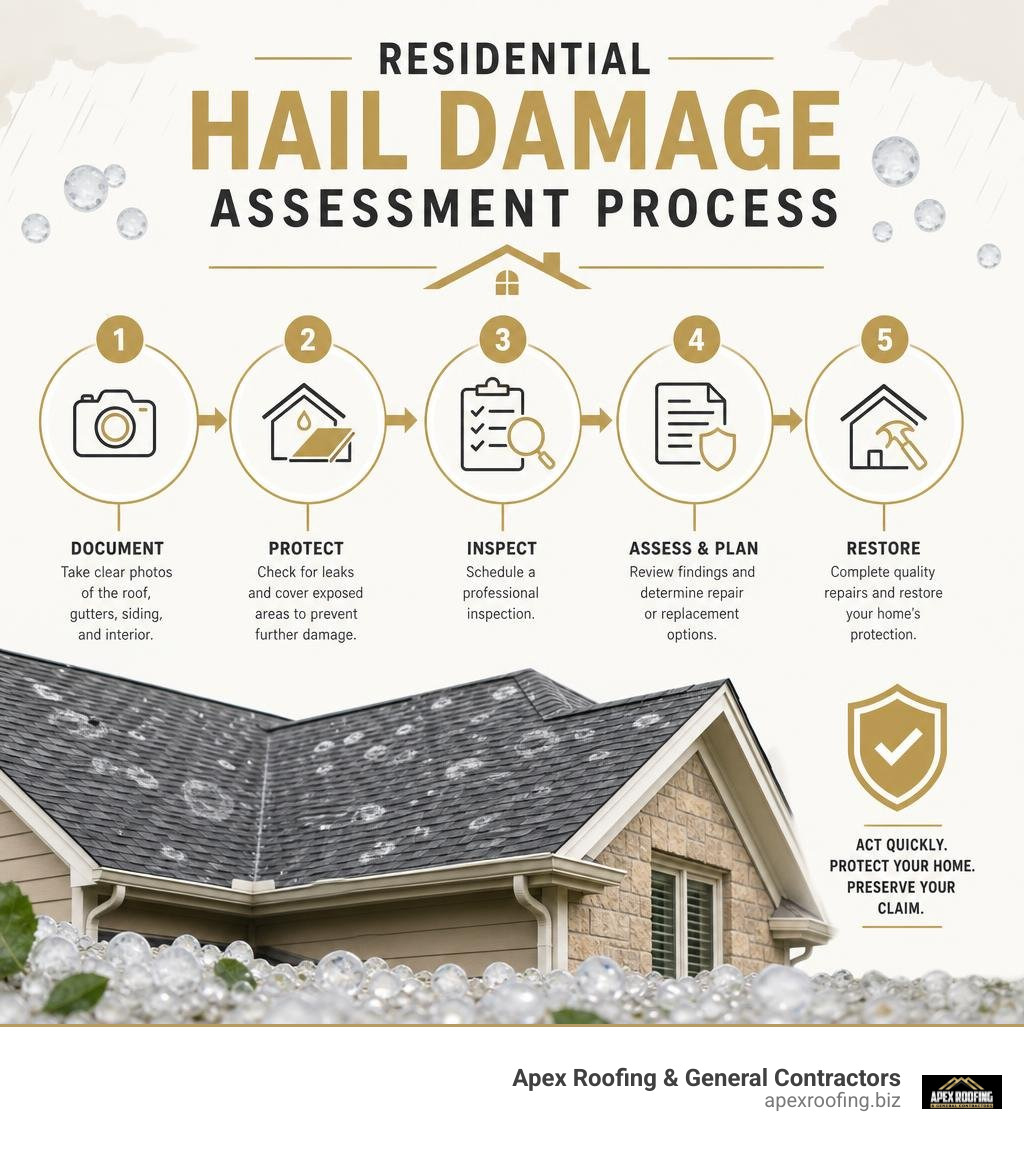
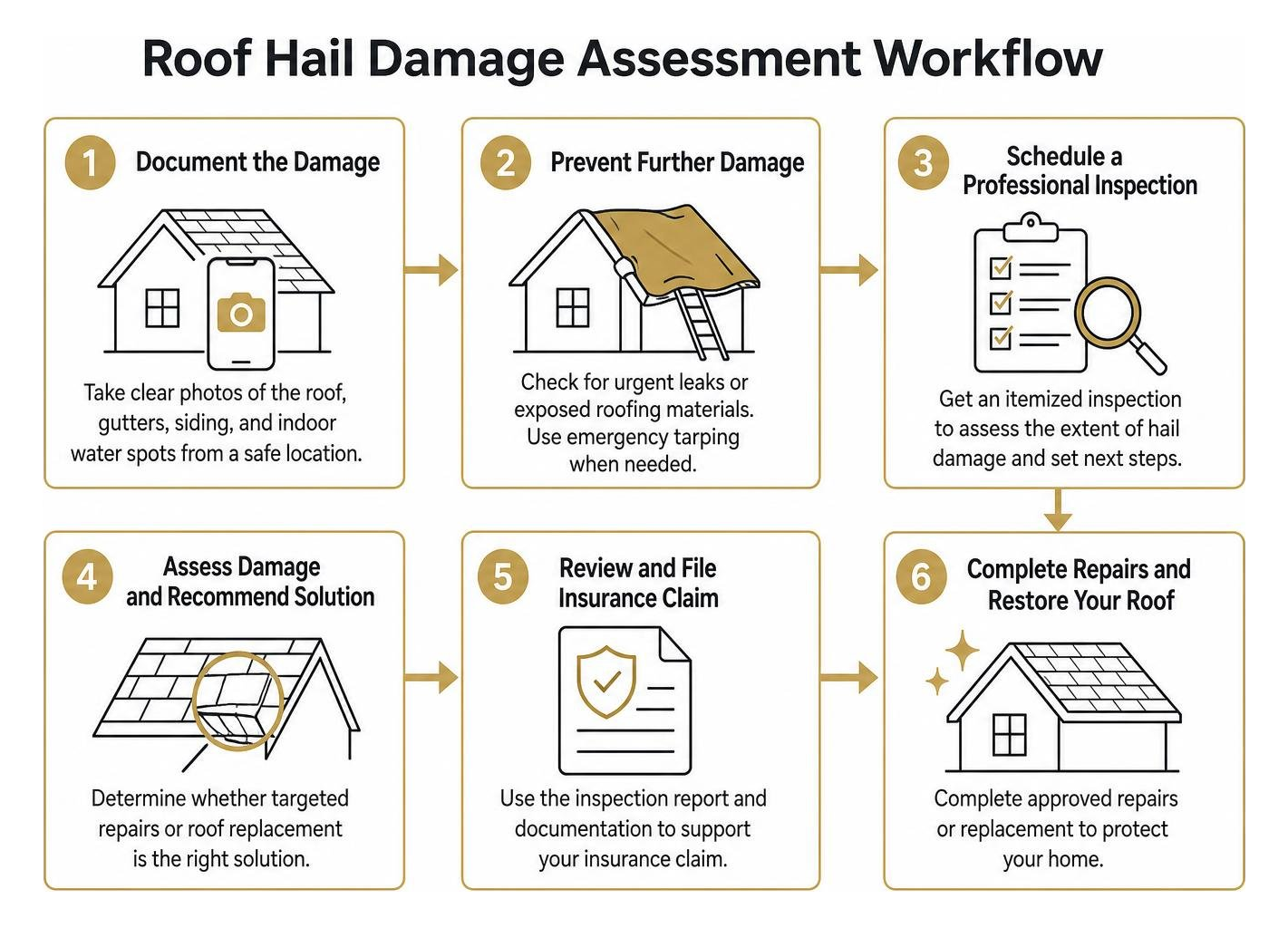
For Hail damage repair San Antonio homeowners can trust, act quickly: document the storm damage, prevent water from entering the home, and schedule a professional roof inspection before filing or settling an insurance claim. Hail can bruise shingles, knock loose protective granules, crack flashing, and damage gutters even when the roof does not leak right away.
- Take clear photos of the roof, gutters, siding, and any indoor water spots from a safe location.
- Check for urgent leaks or exposed roofing materials. Use emergency tarping when needed to limit further damage.
- Get an itemized inspection that explains whether targeted repairs or roof replacement are the right solution.
San Antonio storms can produce fast, forceful hail that weakens roofing materials and shortens their service life. A prompt inspection helps protect your property, preserve claim evidence, and avoid hidden moisture damage. For clear guidance after a storm, San Antonio hail damage repair specialists can assess the condition of your roof and explain the next steps without hiding the scope of work.
I am Carlos Yzaguirre, President and Managing Partner of Apex Roofing & General Contractors, a San Antonio-based roofing firm I co-founded in 2022. Our work in Hail damage repair San Antonio focuses on honest inspections, quality storm restoration, and clear communication from the first assessment through completion.
Hail damage repair San Antonio word guide:
Identifying Roof and Exterior Hail Damage Across San Antonio Properties
Hail damage occurs when downdrafts in convective supercells propel dense ice stones toward Earth at terminal velocities exceeding 50 to 90 miles per hour. When these projectiles strike a roof, their kinetic energy transfers directly into the building materials. In San Antonio, where humid Gulf moisture repeatedly collides with cooler dry fronts moving over the Texas Hill Country, intense spring hail storms are an annual reality. In addition, the region’s expansive clay soils shift significantly between drought and sudden heavy storm saturation, adding structural stress to foundations and roof decking that can exacerbate underlying hail impacts.
Understanding what does hail damage look like on a roof is essential because storm strikes rarely leave neat, uniform holes. Instead, impact severity depends directly on stone density, wind velocity, and roof pitch. Determining what hail size causes roof damage requires knowing that stones measuring just one inch in diameter (quarter-sized) routinely fracture standard asphalt shingles, while stones reaching 1.75 inches (golf ball-sized) or larger can crack underlayments and dent structural decking. Using proven guidelines to assess hail damage is your roof safe helps homeowners identify early warning signs across their property before water enters the living spaces.
Spotting Shingle Bruising, Granule Loss, and Fractures
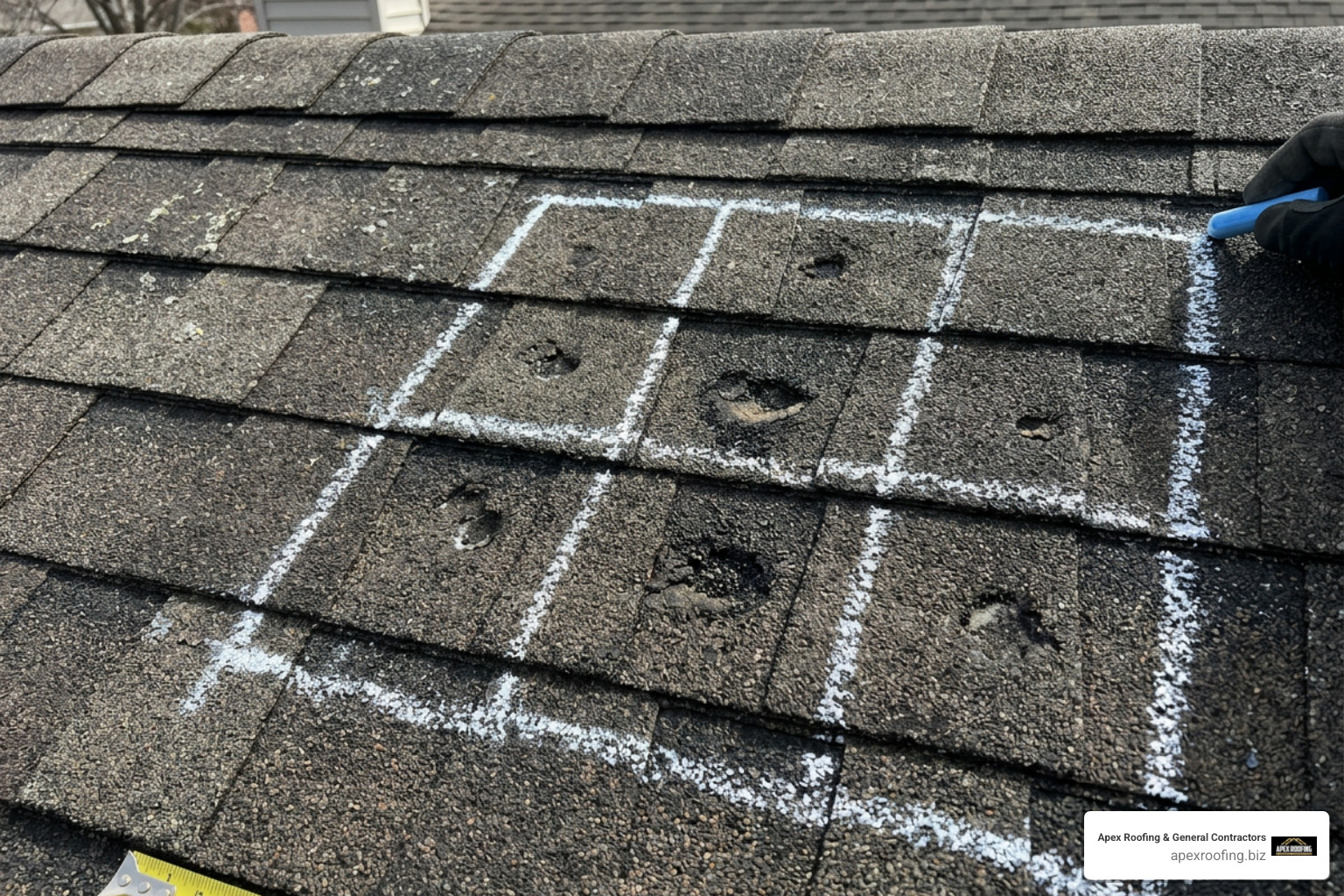
Asphalt shingle bruising is the most common consequence of hail impact. When ice strikes an asphalt shingle, the force compresses the underlying asphalt layer and dislodges the ceramic mineral granules embedded on the surface. These granules protect the petroleum-based asphalt coating from ultraviolet (UV) radiation. Once stripped away, the sun’s intense Texas heat quickly dries out and degrades the exposed asphalt.
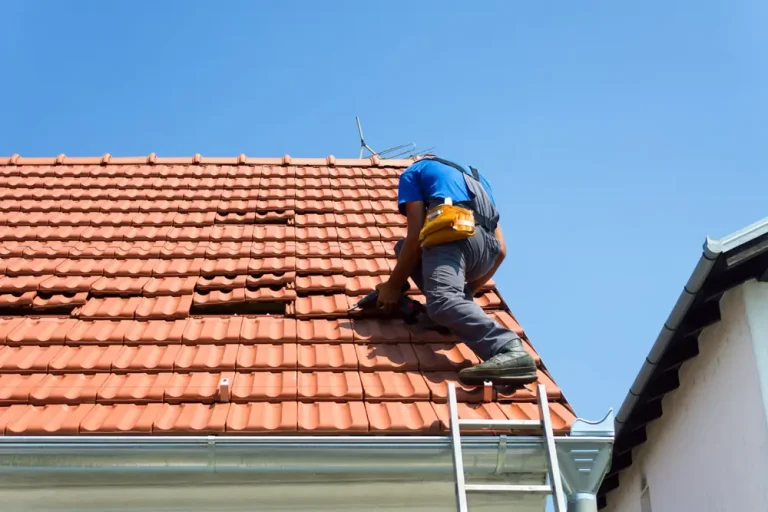
Shingle damage typically manifests in three distinct ways:
- Circular Granule Loss (Bruises): Dark, indented areas where the surface granules were scrubbed off by impact. These spots often feel soft or spongy under light thumb pressure.
- Fiberglass Mat Fractures: Severe strikes crack the internal fiberglass reinforcement mat on the underside of the shingle, destroying its structural tear resistance.
- Thermal Shock Cracking and Accelerated Aging: Rapid temperature drops during sudden downpours, combined with mechanical impacts, cause micro-fissures that allow moisture to seep through during subsequent rainstorms.
After a storm, check ground-level downspout runoffs. Heavy accumulations of dark mineral granules in your driveway or garden beds are a primary indicator that your roof shingles experienced significant impact displacement.
Evaluating Flashing, Metal Trim, and Gutter Impacts
Roof components made of light-gauge metals act as reliable indicators of storm severity across Bexar County properties. Because metals exhibit permanent deformation upon impact, inspecting them provides objective evidence of hail size and directionality.
Inspect these collateral components for storm impact:
- Dented Aluminum Gutters and Downspouts: Hail strikes leave rounded dimples on gutter troughs and split downspout seams.
- Distorted Roof Vents and Exhaust Caps: Soft metal turtle vents, ridge caps, and furnace exhaust flues readily dent under hail impacts, occasionally breaking weather seals.
- Damaged Valley and Step Flashing: Dents along roof valleys or sidewall flashing can compromise soldered seams, allowing water to bypass shingles.
- HVAC Compressor Fins and Condenser Caps: Bent heat-exchange fins on outdoor air conditioning units restrict airflow and reflect impact force.
- Siding and Window Wrap Indentations: Vinyl, aluminum, and fiber-cement sidings often show spattering, chipping, or micro-cracking along windward elevations.
Comprehensive Process for Hail Damage Repair in San Antonio
Restoring a storm-compromised roof requires a structured, code-compliant approach. We coordinate every stage of storm damage roof repair San Antonio TX to ensure roof systems meet all strict San Antonio building codes. Our crews evaluate the roof deck, replace compromised synthetic underlayments, and restore proper drip-edge and flashing details.
The table below outlines the criteria we use to evaluate whether isolated shingle repair or full roof replacement is necessary:
| Evaluation Factor | Isolated Shingle Repair Criteria | Full Roof Replacement Criteria |
|---|---|---|
| Damage Density | Fewer than 3 to 5 isolated hits per 100 sq. ft. test square | 8 to 10+ distinct functional bruises per test square across multiple slopes |
| Fiberglass Integrity | Matting intact; granules loose only on surface | Punctured or fractured fiberglass substrate allowing direct water passage |
| Roof Age & Condition | Under 8 to 10 years old; flexible, unweathered shingles | Over 12 to 15 years old; brittle shingles that break when manipulated |
| Decking & Underlayment | Moisture barriers dry; decking structurally sound | Saturated decking panels, widespread dry rot, or torn underlayment |
| Code Compliance | Localized repair permissible under Bexar County guidelines | City code mandates complete re-roofing if over 25% of the roof is repaired |
Professional Hail Damage Repair San Antonio Inspection Steps
A proper evaluation requires an on-roof, physical inspection. Scheduling a free storm damage roof inspection provides an objective, engineered look at your property’s exterior.
Our certified inspectors execute a four-part evaluation:
- Collateral Property Survey: We document ground-level collateral markers, including air conditioning coils, fence boards, window trim, and mailbox covers.
- 100-Square-Foot Test Squares: We mark 10-foot by 10-foot sections on every directional slope of the roof using surveyor’s chalk. Inside each square, every distinct hail strike is circled, counted, and photographed.
- Flashing and Penetration Audit: We examine pipe boots, chimney flashings, valley liners, and skylight perimeter frames for cracked seals or impact tears.
- Attic and Decking Moisture Scan: We check the interior attic spaces for displaced decking nails, water staining along rafters, or insulation dampness.
Emergency Tarping and Immediate Moisture Mitigation
When severe supercells puncture roofs or blow away shingles, preventing interior water damage is the immediate priority. Utilizing emergency roofing services protects structural framing, drywall ceilings, and personal belongings from costly secondary damage.
Our rapid response teams install heavy-duty, UV-resistant synthetic poly-tarps secured with wooden batten strips screwed directly into roof trusses. We avoid driving nails directly through good shingles, ensuring the temporary envelope stays secure against high San Antonio winds until permanent restoration commences.
Navigating Insurance Claims for Hail Damage in Bexar County
Most Texas homeowners policies cover sudden storm strikes under comprehensive, act-of-nature provisions. Consulting our hail damage roof claim complete guide helps clarify rights, deductibles, and documentation obligations. Handling roof insurance claims in San Antonio requires meticulous attention to detail to ensure insurers approve an accurate repair scope.

Documenting Storm Evidence and Filing Timelines
Navigating insurance paperwork requires verifiable, organized proof. Follow these essential documentation steps after a severe weather event:
- Record the Date of Loss: Note the exact date and approximate time the hailstorm occurred over your neighborhood.
- Capture High-Resolution Photos: Safely take wide-angle and close-up photographs of ground-level damage, fallen branches, and exterior fixtures.
- Cross-Reference Storm Data: We pull Doppler radar weather records and National Weather Service reports to verify hail diameter footprints for your exact address.
- Review Policy Terms: Check whether your homeowner policy provides Replacement Cost Value (RCV) or Actual Cash Value (ACV), and note your specific wind/hail deductible percentage.
- Notify Your Carrier Promptly: File your claim within the timelines specified in your policy to maintain valid coverage.
- Obtain a Contractor Scope: Secure an itemized assessment from our certified team before the adjuster performs their evaluation.
Adjuster Walkthroughs and Scope Approval
When your insurance company assigns an adjuster to inspect your roof, having your roofing contractor present ensures all damage is accounted for. We walk the slopes alongside the adjuster, pointing out subtle granule bruising, compromised underlayments, and dented metal accessories that quick glances might miss.
If the initial estimate excludes critical items like code-mandated drip edges, ridge caps, or adequate labor allowances, we submit detailed line-item supplements. These include photographic evidence and local building code references to secure an aligned, accurate final scope of work.
Evaluating Repair vs. Replacement and Material Longevity
Choosing between targeted repairs and full roof replacement depends on roof age, shingle condition, and the extent of storm impacts. For extensive damage or older systems, reviewing our metal roofing complete guide highlights how durable materials deliver lasting weather resilience across Texas.
Cost Factors Influencing Hail Damage Repair San Antonio Projects
The total investment required to restore a storm-damaged roof depends on several variables:
- Roof Square Footage and Pitch: Larger footprints and steep slopes require additional safety equipment, labor hours, and staging.
- Material Selection: Standard 3-tab shingles, heavy architectural laminates, SBS-modified shingles, and standing seam metal panels each have distinct price points.
- Decking Replacement Needs: Rotted, cracked, or water-damaged plywood decking must be replaced before installing new underlayment.
- Flashing and Ventilation Upgrades: Replacing valley metals, ridge vents, lead pipe jacks, and step flashing adds to material requirements.
- Municipal Permitting Fees: Bexar County and City of San Antonio safety permits are required for major re-roofing projects to ensure full structural compliance.
Impact-Resistant Shingles and Metal Roofing Upgrades
Homeowners seeking long-term protection against recurring Texas hail storms often upgrade to Class 4 impact-resistant roofing materials.
These materials undergo Underwriters Laboratories (UL) 2218 testing, which drops a 2-inch steel ball from a height of 20 feet twice onto the same spot without fracturing the backing layer:
- SBS-Modified Asphalt Shingles: Formulated with rubberized polymers, these shingles absorb and dissipate hail impact energy without cracking or shedding granules.
- Standing Seam Metal Roofing: Heavy-gauge 24- or 26-gauge steel panels offer superior puncture resistance and stand up to severe convective weather.
- Insurance Premium Savings: Most major Texas insurance carriers provide annual homeowner premium discounts between 10% and 25% for homes protected by certified Class 4 roofing materials.
Frequently Asked Questions About Hail Damage Repair in San Antonio
How do I know if roof hail damage warrants a full replacement?
A full replacement is warranted when an inspection finds 8 to 10 or more distinct hail bruises per 100-square-foot test square across multiple roof slopes, or when the underlying fiberglass matting has fractured. In addition, local municipal building codes require a complete replacement if damaged areas exceed 25% of the total roof surface within a 12-month period.
Does homeowners insurance cover complete hail restoration?
Yes, provided your policy includes comprehensive storm/wind/hail peril coverage and you have an active Replacement Cost Value (RCV) policy. You are responsible for paying your policy’s deductible out of pocket, while your insurer covers approved replacement costs, building code upgrades, and supplemental labor required to return the property to pre-storm condition.
What is the typical timeline for completing storm repairs?
Emergency dry-in tarping is typically completed within 24 hours. The insurance claim approval and adjuster negotiation phase generally takes 1 to 3 weeks. Once scopes are approved, materials are delivered, and municipal permits are pulled, our professional roofing crews complete standard residential installations in just 1 to 2 days.
Conclusion
Severe Texas storms demand dependable, code-compliant restoration. Protecting your home requires swift action, thorough photo documentation, and a certified evaluation to prevent hidden water leaks from undermining your roof deck. For durable, long-term property protection, trust the experienced team at Apex Roofing & General Contractors.
Whether you need targeted shingle restoration or a full impact-resistant replacement, we deliver honest communication and expert craftsmanship. Explore our dedicated hail damage roof repair San Antonio services to schedule your comprehensive storm assessment and protect your home before the next storm arrives.