Why Affordable Roof Leak Repair Matters More Than You Think
Getting affordable roof leak repair done quickly is one of the smartest financial decisions a homeowner can make. When you need to protect your property, partnering with a trusted San Antonio roofing contractor helps ensure your home remains safe and dry. A small drip today can become rotted decking, ruined insulation, and toxic mold within weeks, turning a $300 fix into a $10,000 problem.
If you need a fast answer before reading further, here it is:
How to get affordable roof leak repair – quick answers:
| Your Situation | Best Action |
|---|---|
| Minor leak around vent or flashing | Targeted repair: $150-$400 |
| Leak after a storm | Call a licensed roofer and document damage for insurance |
| Multiple leaks on an older roof | Consider replacement over repeated patching |
| Active drip inside your home | Contain water, move valuables, call a roofer today |
| Want to prevent future leaks | Schedule an annual roof inspection |
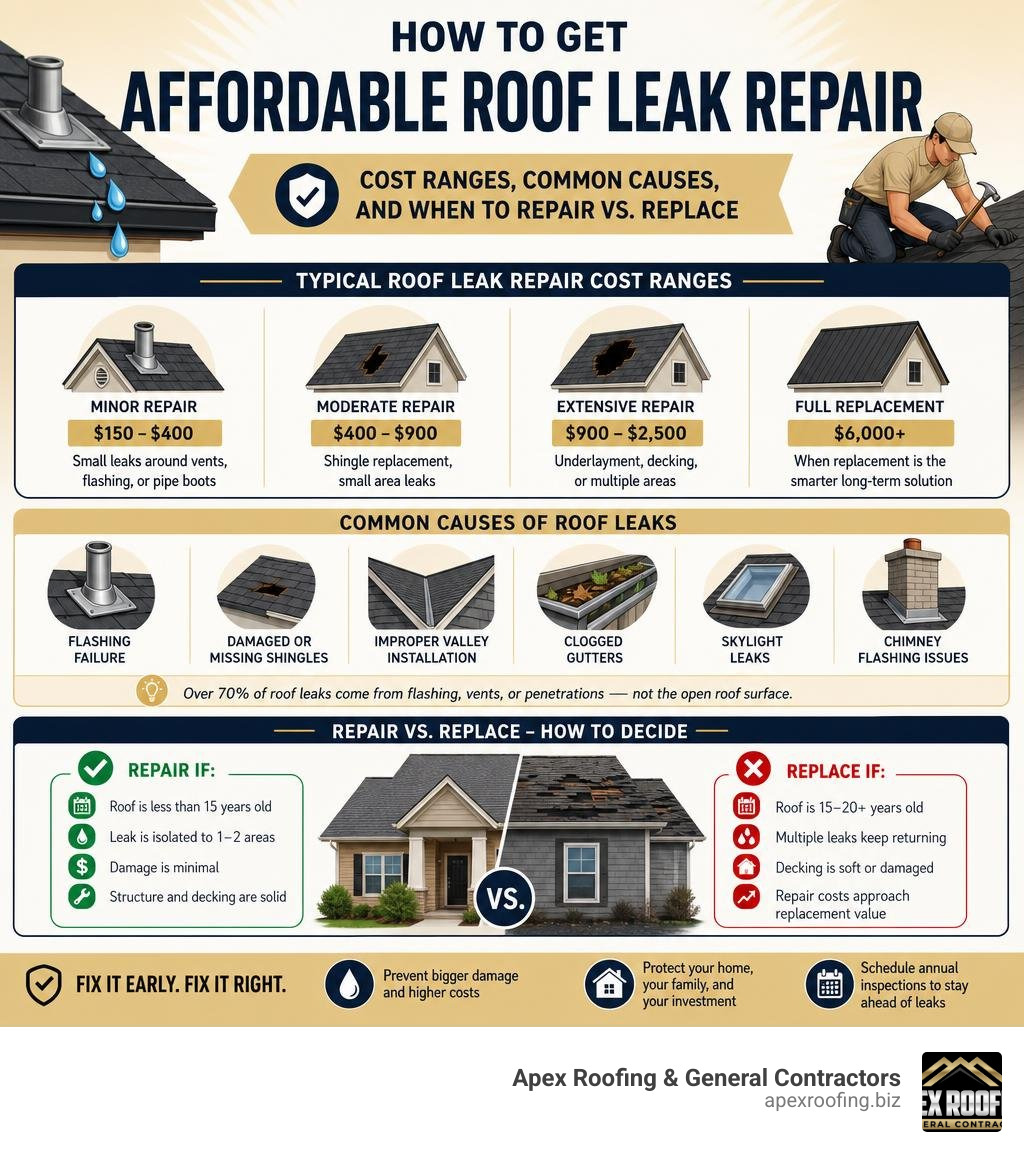
The core rule: fix it early and fix it right. Roof leaks account for roughly 30% of all residential insurance claims in the U.S., and the ones that cost the most are the ones homeowners waited too long to address.
Over 70% of roof leaks originate from flashing, vents, or penetrations, not the open roof surface. That means most leaks can be repaired with a targeted fix rather than a full replacement, keeping costs manageable when caught early.
If you’re in Texas, our residential roof repair services are built for exactly this situation: fast diagnosis, honest pricing, no pressure.
I’m Carlos Yzaguirre, President of Apex Roofing & General Contractors, and since co-founding the company in 2022 I’ve helped hundreds of San Antonio homeowners navigate affordable roof leak repair without the hidden costs or runaround that other contractors are known for. Whether it’s a storm-damaged shingle or a failing flashing detail, my team brings the same A+ BBB-rated standards to every job, big or small.
Quick look at affordable roof leak repair:
How to Determine If You Need a Simple Repair or a Full Replacement
When water starts dripping from your ceiling, your first instinct might be to panic and assume you need a brand-new roof. Fortunately, this is rarely the case. Most leaks can be resolved with a targeted, budget-friendly fix. To make the smartest financial decision, you must evaluate the age of your roof, the extent of the damage, and the overall health of its structural components.
The Direct Answer
To determine if your roof needs a simple repair or a full replacement, assess its overall age and the distribution of the damage. If your roof is under 15 years old and the leak is confined to a single area, a targeted, affordable repair is your best option. However, if the roof is past 15 to 20 years of age, has multiple active leaks across different rooms, or shows widespread decking rot, a full replacement is the most cost-effective choice in the long run.
Understanding the Key Factors
When we evaluate a roof in San Antonio, we look at three critical indicators:
- Roof Age: Asphalt shingle roofs generally last 15 to 25 years. If your roof is only 8 years old, a repair will easily extend its life. If it is 22 years old and shedding granules rapidly, patching it is like putting a band-aid on a dam.
- The Scope of Damage: A tree branch puncturing a small section of shingles is a perfect candidate for a spot repair. Conversely, if high winds have stripped away shingles from multiple slopes, the integrity of the entire system is compromised.
- Decking and Underlayment Health: Water that has seeped into the wooden decking boards (sheathing) causes dry rot and sagging. If the structural wood beneath the shingles is soft or rotting, a simple patch will not hold up.
For homeowners looking to understand their options thoroughly, utilizing a detailed Roof Leak Repair Guide is an excellent way to learn how professional roofers inspect these components.
Repair vs. Replacement Scenarios
To help you visualize where your roof stands, we have compiled a direct comparison table outlining common scenarios, average material lifespans, and the most logical financial actions.
| Roofing Material | Expected Lifespan | Choose Targeted Repair If… | Choose Full Replacement If… |
|---|---|---|---|
| Asphalt Shingles | 15–25 Years | The roof is under 12 years old; damage is localized to one valley, vent boot, or a few missing shingles. | The roof is over 18 years old; shingles are curling, bald, brittle, or leaking in multiple separate areas. |
| Metal Roofing | 40–70 Years | Leaks are caused by backed-out fasteners, dried-out rubber washers, or loose flashing details. | The metal panels are severely rusted through, structurally buckled, or have widespread seam failures. |
| Clay / Concrete Tile | 50–100 Years | A few tiles are cracked or broken, but the underlying waterproof felt underlayment is still intact. | The heavy underlayment beneath the tiles has completely rotted out, causing systemic leaks despite intact tiles. |
If your system falls into the replacement category, investing in a high-quality roof replacement is the only permanent way to protect your home’s structural integrity and avoid wasting money on endless patches.
Key Factors That Influence the Cost of Affordable Roof Leak Repair
No two roof leaks are identical, which is why estimates can vary. Understanding the primary cost drivers helps you avoid surprises and ensures you receive a fair price from your contractor.
1. Repair Depth
The visible damage on your ceiling is often just the final stop of a long water path. The true cost of a repair depends on how deep the water has penetrated.
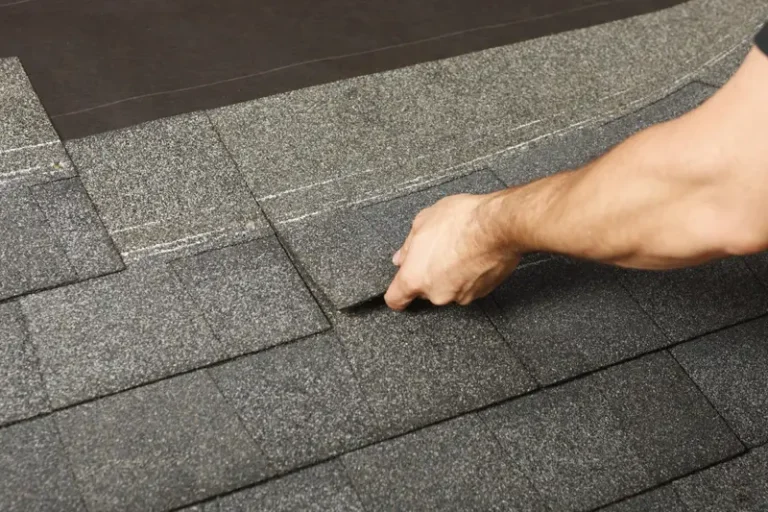
- Surface-Level Fixes: Simply replacing a few torn shingles or resealing a pipe boot is highly affordable, usually costing a few hundred dollars.
- Mid-Level Repairs: If water has bypassed the shingles and saturated the underlayment, we must remove the surrounding shingles, replace the waterproof barrier, and reinstall the shingles.
- Deep Structural Reconstruction: When a leak is ignored, water rots the plywood decking and rafters. This requires structural carpentry, which significantly increases labor and material costs.
2. Flashing Details
Flashing is the thin metal installed to redirect water away from critical areas where the roof meets a wall, chimney, valley, or skylight. Because over 70% of leaks occur at these transition points, flashing reconstruction is incredibly common. Rebuilding flashing is highly precise work. It requires carefully removing the surrounding roofing material, installing new metal flashing, and sealing the joints. While more labor-intensive than patching flat shingles, proper flashing repair is essential to stop recurring leaks.
3. Roof Pitch and Accessibility
The slope (pitch) of your roof directly impacts how safe and easy it is for technicians to work.
- Low-Pitch / Flat Roofs: Easier to walk on, reducing labor times, though flat systems require specialized materials like TPO or modified bitumen.
- Steep-Pitch Roofs: High-slope roofs require specialized safety harnesses, scaffolding, and slower, more meticulous movement. This added safety preparation increases the overall cost of labor.
- Access Limitations: If your home is multi-story or surrounded by dense landscaping that prevents easy ladder placement, material transport takes longer, affecting the final estimate.
4. Material Costs
The type of roof you have determines the price of replacement materials. Sourcing matching asphalt shingles is generally very cost-effective. However, specialty materials like clay tiles, slate, or custom-cut metal panels carry higher material costs.
For a complete breakdown of how these factors combine to form your final quote, read our Roof Leak Repair Estimate Complete Guide.
Why Early Detection is Key to Affordable Roof Leak Repair
Early detection reduces roof leak repair costs by up to 70% because it stops water before it can bypass your shingles and rot your home’s wooden framing, ruin attic insulation, or trigger expensive toxic mold remediation.
When a leak first begins, it is often invisible from your living room. Water slowly saturates the roof underlayment, then the plywood decking, and finally the attic insulation. By the time a brown stain appears on your ceiling drywall, the leak has likely been active for weeks or even months.
By scheduling routine inspections and acting the moment you suspect an issue, you prevent:
- Structural Wood Rot: Wood rot weakens your rafters and decking, which can lead to localized roof collapse.
- Insulation Ruin: Wet fiberglass or cellulose insulation loses its R-value permanently, driving up your heating and cooling bills.
- Mold and Mildew Growth: Mold thrives in dark, damp attics. Remediation can cost thousands of dollars and pose severe health risks to your family.
You can learn how to spot these early warning signs yourself by reading Why Is My Roof Leaking Causes and Effective Roof Leak Repair Strategies to Protect Your Home.
Choosing the Right Contractor for Affordable Roof Leak Repair
The most affordable roofing contractor is not the one who submits the lowest bid; it is the licensed, insured professional who accurately diagnoses the root cause of the leak, uses high-quality materials, and backs their work with a written warranty.
Hiring an unlicensed “handyman” or a “storm chaser” who offers an unbelievably low price often backfires. Cheap repairs frequently fail during the next heavy rain, forcing you to pay a professional contractor to do the job right the second time.
When searching for a trustworthy partner, keep these best practices in mind:
- Verify Licensing and Insurance: A reputable roofer will gladly provide proof of general liability insurance and workers’ compensation. This protects you from financial liability if an accident occurs on your property.
- Demand a Photo-Documented Estimate: Never accept a verbal quote or a one-line estimate. A professional contractor will provide photos of the roof damage alongside a detailed, written scope of work.
- Look for Local Reviews and Physical Offices: Choose a contractor with an established local presence and strong community reviews. A reputable local contractor will have a physical office and verifiable feedback from homeowners in your area.
- Ask About Warranties: Always ask for a written workmanship warranty. If a contractor is unwilling to guarantee their repair work for at least one to two years, look elsewhere.
To protect yourself from common industry tricks and high-pressure sales tactics, review our Roof Leak Repair Estimate Tips.
Common Causes of Roof Leaks in Southern California and Texas Homes
While homes across the country face standard wear and tear, the extreme weather patterns in Southern California and Texas create distinct challenges for residential roofing systems. In San Antonio, our roofs must endure blistering summer heat, sudden hailstorms, and violent wind gusts.
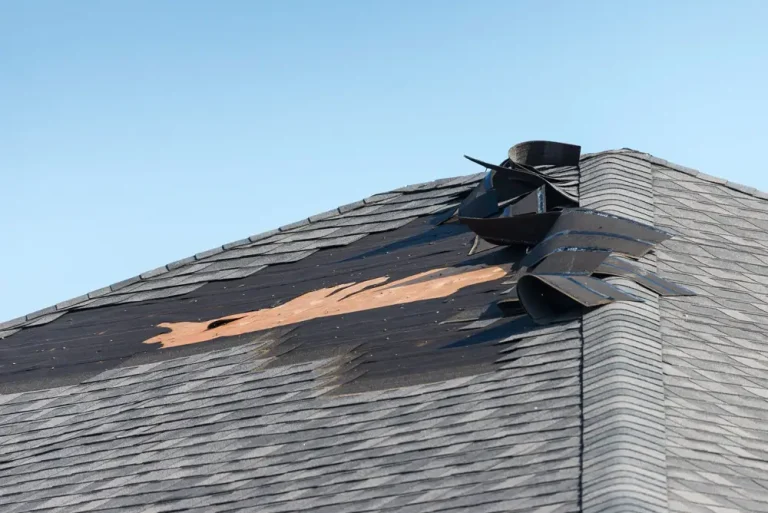
1. Wind Damage
High winds during seasonal storms can easily lift, crease, or completely tear away asphalt shingles. When a shingle is missing or broken, the underlying felt underlayment and wood decking are directly exposed to rain. Wind-driven rain can push water horizontally underneath loose shingles, causing leaks far from the initial point of entry.
2. Extreme Heat Cycles
The intense Texas sun causes roofing materials to expand and contract daily. This thermal expansion places immense stress on sealants, plastic components, and metal flashing. Over time:
- Rubber Pipe Boots: The rubber seals around plumbing vent pipes dry out, crack, and split, creating an open pathway for water.
- Asphalt Shingles: High heat accelerates granule loss, making shingles brittle and prone to cracking.
3. Clogged Gutters
When gutters are filled with leaves, twigs, and debris, rainwater has nowhere to go. During heavy downpours, water backs up over the edge of the gutter and pools under the eave shingles. This standing water quickly rots the wooden fascia boards, soffits, and the edge of the roof decking.
4. Flashing Failure
Metal flashing around chimneys, dormers, and valleys is secured with fasteners and sealed with specialized caulking. Over time, wind, rain, and heat can cause the metal to warp, lift, or corrode. Once the seal is broken, water flows directly behind the flashing and into your home’s walls.
If your home has recently experienced severe weather, don’t wait for a drip to appear. Contact our local roofers in San Antonio to schedule a professional, photo-documented inspection to catch damage early.
Addressing Specific Roof Types: Metal, Flat, and Tile
Different roofing materials require specialized repair techniques. A method that works perfectly on an asphalt shingle roof can permanently damage a metal or tile system.
Metal Roofs
Metal roofing is incredibly durable, but it is still susceptible to leaks. Most metal roof leaks do not occur through the metal panels themselves. Instead, they happen at the fasteners. Over years of thermal expansion, screws can back out slightly, or the neoprene rubber washers can dry rot and crack. Water then runs down the screw shank directly into the attic.
To resolve this, we replace the old fasteners with oversized screws equipped with fresh, weather-resistant washers. For more details on maintaining metal systems, read How to Repair Metal Roof Leaks or explore our guide on Leaky Metal Roof 4 Simple Steps to a Watertight Solution.
Flat Roofs
Flat and low-slope roofs do not shed water as quickly as sloped roofs. This makes them highly vulnerable to ponding water (water that sits on the roof for more than 48 hours). Flat roofs commonly leak at the seams, around drains, or along the edges where the membrane meets the roof line.
Repairing a flat roof requires specialized membrane patches, heat-welding, or elastomeric coatings. To learn how we keep flat systems watertight, check out Stop the Drip and Fix Your Leaking Flat Roof and Flat Roof Leaking at Edge.
Tile Roofs
Clay and concrete tile roofs are beautiful and long-lasting, but they are unique because the tiles themselves are not the primary waterproof barrier. The real waterproofing happens underneath the tiles, where a heavy-duty felt underlayment lies.
If this underlayment degrades due to age or trapped moisture, the roof will leak even if the tiles look perfect from the ground. Repairing a tile roof leak involves carefully removing the tiles in the affected area, replacing the damaged underlayment, and then reinstalling the tiles securely.
What to Do in a Roof Leak Emergency
When water is actively pouring through your ceiling, every second counts. Knowing how to react immediately can save you thousands of dollars in interior repair costs.
The Direct Answer
In an active roof leak emergency, your immediate priority is to contain the indoor water to protect your ceilings and floors, move all valuables out of the affected area, and call a professional roofing contractor to apply a temporary emergency tarp or patch until weather conditions allow for a permanent repair.
Step-by-Step Mitigation
- Contain the Water: Place buckets, plastic bins, or pots directly under the drip. If water is pooling behind your ceiling drywall and causing it to sag, place a bucket underneath and use a small screwdriver to poke a hole in the center of the sag. This drains the water safely, relieves the weight, and prevents the entire drywall panel from collapsing.
- Protect Your Belongings: Move furniture, electronics, rugs, and family heirlooms out of the room. Cover larger items that cannot be moved with heavy plastic sheeting.
- Inspect the Attic Safely: If you can safely access your attic, look for the leak source. Do not step off the wooden ceiling joists onto the drywall, as you will fall through the ceiling. If you find the leak, place a small bucket on a joist to catch the water before it hits the drywall.
- Do Not Climb on a Wet Roof: Never climb onto a wet, slippery roof during a rainstorm. It is incredibly dangerous, and professional roofers cannot perform permanent repairs on wet surfaces anyway.
- Call for Professional Help: Contact a trusted local roofer immediately. They will dispatch a crew to apply a heavy-duty, secure tarp over the exterior leak source as soon as it is safe to do so.
For a detailed walkthrough on handling sudden storm damage, refer to our guide on Emergency Roof Leak Fix.
Frequently Asked Questions About Budget-Friendly Roof Repairs
How much does a typical roof leak repair cost?
On average, minor roof leak repairs cost between $150 and $400. These minor fixes typically include replacing a few damaged shingles, resealing a pipe boot, or patching a small section of flashing.
More complex repairs, such as rebuilding a leaking roof valley, replacing rotted wood decking, or repairing flashing around a chimney, generally range from $1,000 to $3,000 depending on the severity of the water damage and the materials required. For a comprehensive look at national averages and historical cost data, you can consult the Forbes Home Roof Repair Cost Guide.
Will homeowners insurance cover my roof leak repair?
Homeowners insurance covers roof leak repairs if the leak was caused by a sudden, accidental, and verifiable peril, such as a severe windstorm, hail, a fallen tree limb, or wildlife damage.
Insurance policies strictly exclude coverage for leaks that result from general wear and tear, lack of maintenance, or aging materials. To ensure your claim is processed smoothly, always take photos of the storm damage immediately, keep all repair receipts, and work with a contractor who provides clear, photo-documented damage reports for your insurance adjuster.
How long does a professional roof leak repair take?
Most minor roof leak repairs can be completed in 2 to 4 hours. This includes the time needed to locate the exact entry point, prep the surface, and install the replacement materials.
More extensive repairs that involve removing large sections of shingles, replacing water-damaged plywood decking, or reconstructing complex flashing systems typically take 1 to 2 days. A professional contractor will always provide a clear timeline in their written estimate so you know exactly what to expect.
Conclusion
A leaking roof can feel overwhelming, but it doesn’t have to drain your savings. By acting quickly, choosing targeted repairs over premature replacement, and partnering with a licensed local professional, you can keep your home dry and your budget intact.
At Apex Roofing & General Contractors, we specialize in providing honest assessments, transparent pricing, and dependable, code-compliant repairs for homeowners throughout San Antonio. We never push for unnecessary replacements, and we back our workmanship with clear, written guarantees.
Don’t wait for a small drip to become a major structural headache. Contact us today at (726) 727-7663 to schedule your free inspection and receive a free estimate, or Schedule a Professional Roof Repair with our certified team online.