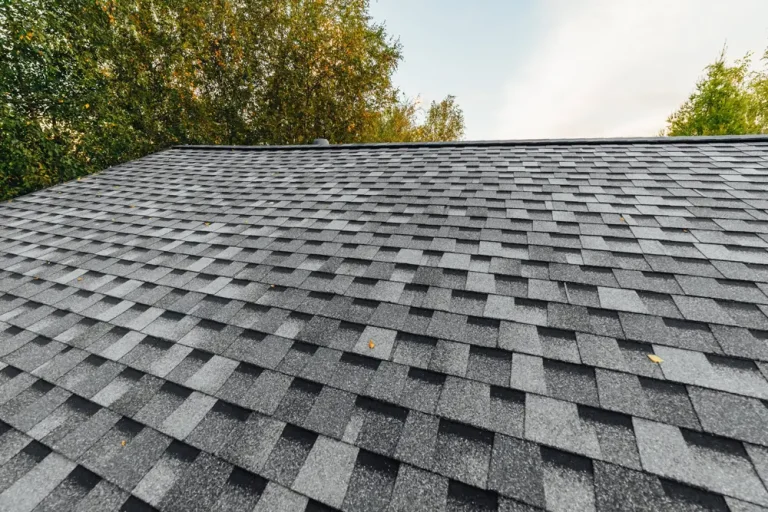
When Hail Hits Hard: What Every San Antonio Homeowner Needs to Know
Metal roof hail damage is one of the most misunderstood threats facing Texas homeowners today. After a storm, you might see dents and wonder: Is my roof still protecting my home, or is it quietly failing? Getting a professional evaluation from a trusted San Antonio roofing company right after a storm is the single most important step you can take to protect your investment.
Here is a quick answer before we dive deeper:
| Question | Quick Answer |
|---|---|
| Does hail damage metal roofs? | Yes, but usually as cosmetic dents — not punctures |
| Is a dented metal roof still functional? | Often yes, if seams, coatings, and fasteners are intact |
| What makes damage “functional”? | Punctures, seam gaps, cracked coatings, loose fasteners |
| Does insurance cover hail dents? | Depends on your policy — cosmetic exclusions are common |
| What should you do first? | Get a professional inspection before contacting your insurer |
Hailstorms account for 70% of all insured losses from severe storms in the U.S. Texas leads the nation in hail damage claims — with nearly 638,000 claims filed in just three years between 2017 and 2020. If you own a home in South Texas, hail is not a question of if — it is a question of when.
The challenge with metal roofs specifically is that the damage is not always obvious. Unlike asphalt shingles — which show clear signs like missing material or granule loss — a metal roof can look mostly fine from the ground while hiding real problems at its seams, fasteners, and protective coating. That hidden damage, left unaddressed, is what eventually leads to leaks, corrosion, and costly repairs.
I’m Carlos Yzaguirre, President of Apex Roofing & General Contractors, and I’ve worked with hundreds of San Antonio homeowners navigating metal roof hail damage claims and repairs across Texas. In this guide, I’ll walk you through exactly what hail does to metal roofing, how to tell cosmetic dents from real functional damage, and how to protect yourself when dealing with your insurance company.
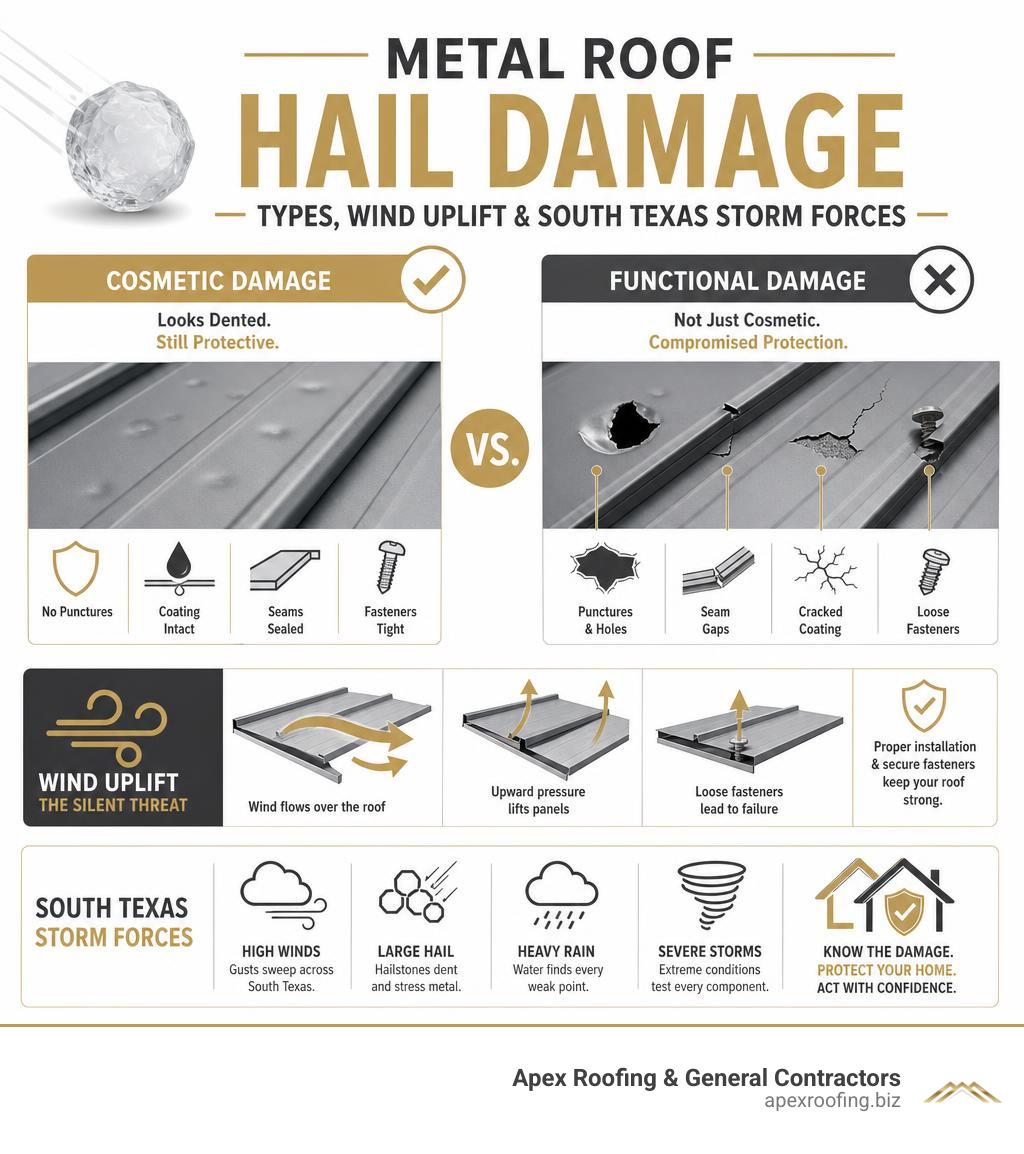
Basic metal roof hail damage vocab:
The Mechanics of Metal Roof Hail Damage and Wind Uplift
When a severe storm rolls through San Antonio, it rarely delivers just one type of weather. Instead, we experience a chaotic mix of high-velocity winds and rapidly falling ice. To understand how your metal roof responds, we have to look at the physics of the storm.
Unlike traditional asphalt shingles, which are brittle and easily fractured by direct impacts, metal panels are highly ductile. This means they are designed to flex, bend, and absorb energy.
When a hailstone strikes an asphalt shingle, it immediately knocks loose the protective ceramic granules, exposing the underlying fiberglass mat to solar UV radiation. Over a short period, this leads to rapid deterioration and leaks.
In contrast, when hail strikes a high-quality metal panel, the metal simply deforms. It creates a localized depression—a dent—while keeping the overall barrier intact.
However, the real danger occurs when hail damage is compounded by wind uplift. As severe winds sweep over a roof, they create zones of low pressure above the panels, pulling them upward. If a previous hailstone impact has already loosened a fastener, compromised a seam, or deformed a panel’s interlocking rib, the wind has an entry point.
Once wind gets underneath a compromised panel, it can easily bend or tear the metal away from the roof deck. To understand if your home is currently vulnerable to these combined forces, check out our detailed guide on Is Your Home at Risk? Understanding Hail Damage in San Antonio.
Identifying Functional vs. Cosmetic Metal Roof Hail Damage
In the roofing and insurance industries, the debate always circles back to one core question: Is the damage functional or is it merely cosmetic?
- Cosmetic Damage: This refers to minor surface dimples, shallow dents, or paint scuffs that do not affect the roof’s structural integrity, water-shedding capabilities, or expected lifespan.
- Functional Damage: This is defined as any physical impact that compromises the roof’s ability to shed water, keep the home sealed, or shortens its service life. This includes punctures in the metal, fractured protective coatings, disengaged seams, and damaged fasteners.
A critical study hosted by Rowe Consultants, Inc., titled A Deep Dive into Hail-Caused Dents, confirms that minor cosmetic dents rarely affect the long-term corrosion resistance of Galvalume coatings. However, if the impact is severe enough to crack the protective paint or alloy coating, the underlying steel is left exposed to moisture and oxygen, which triggers premature rust.
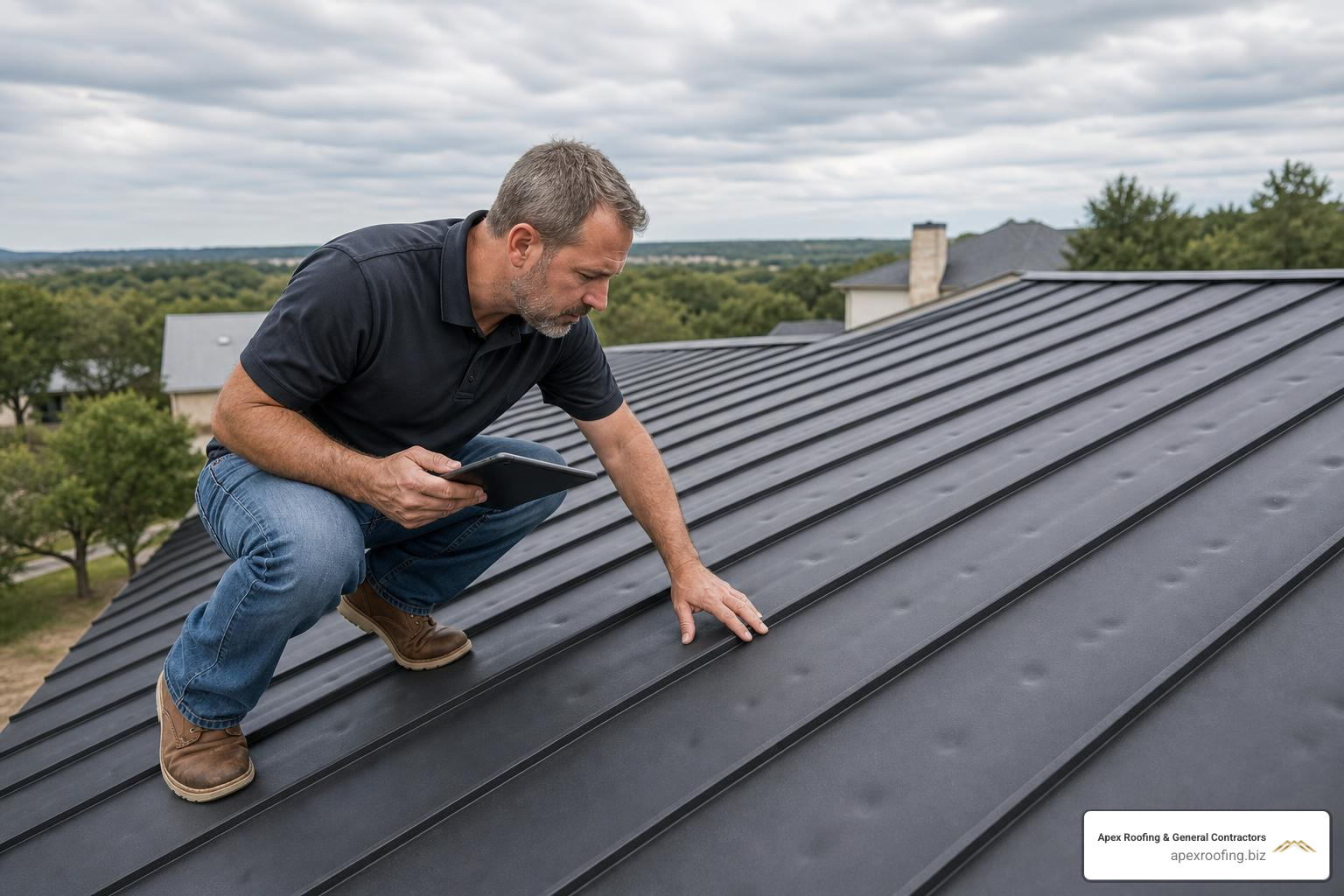
When we inspect a metal roof after a San Antonio storm, we look for these key indicators of functional damage:
- Fractured or Cracked Coatings: Microscopic fractures in the paint finish or the zinc-aluminum protective layer that expose bare steel.
- Deformed Ribs and Seams: Creased or flattened standing seams that prevent panels from interlocking properly, allowing wind-driven rain to bypass the water barrier.
- Back-Out or Loose Fasteners: Screws that have been shifted or partially pulled out by the impact, destroying the rubber neoprene washer seal.
- Punctures or Tears: Visible holes where large, dense hail has completely pierced the metal panel.
- Deformed Flashings and Valley Liners: Dents in critical drainage paths that collect standing water instead of shedding it.
How Metal Thickness and Gauge Affect Metal Roof Hail Damage
Not all metal roofs are created equal. The single most important factor determining how well a metal roof resists hail dents is its thickness, which is measured in gauge.
In the metal roofing world, gauge numbers work backward: the lower the number, the thicker and stronger the metal.
| Metal Gauge | Thickness (Inches) | Dent Resistance | Best Use Case |
|---|---|---|---|
| 24-Gauge | 0.0250″ | Excellent | Premium residential standing seam roofs in hail-prone areas |
| 26-Gauge | 0.0187″ | Good | Standard residential and commercial metal panels |
| 29-Gauge | 0.0142″ | Poor | Economy, agricultural, or light utility panels (highly prone to denting) |
A 24-gauge steel roof is roughly 75% thicker than a thin 29-gauge panel. This extra thickness provides the structural rigidity needed to absorb high-energy impacts without deforming.
Additionally, the structural support beneath the metal panels plays a massive role in dent prevention. Metal panels installed over solid wood decking (such as plywood or OSB) perform significantly better than those installed over open framing or purlins. The solid decking acts as an anvil, absorbing the impact energy from the hailstone and preventing the metal from stretching or tearing.
Evaluating Storm Severity and UL 2218 Class 4 Impact Ratings
When analyzing a storm’s impact on your property, we must look at both the physical properties of the hail and the engineered ratings of your roof. Hail size, density, fall velocity, and wind speed all dictate the level of destruction. To understand the exact thresholds of ice-driven damage, read our breakdown on What Hail Size Causes Roof Damage?.
To help homeowners choose materials that can survive severe weather, the roofing industry relies on the UL 2218 Class 4 Impact Resistance Rating. This is the gold standard for testing how well a roofing material handles impact.
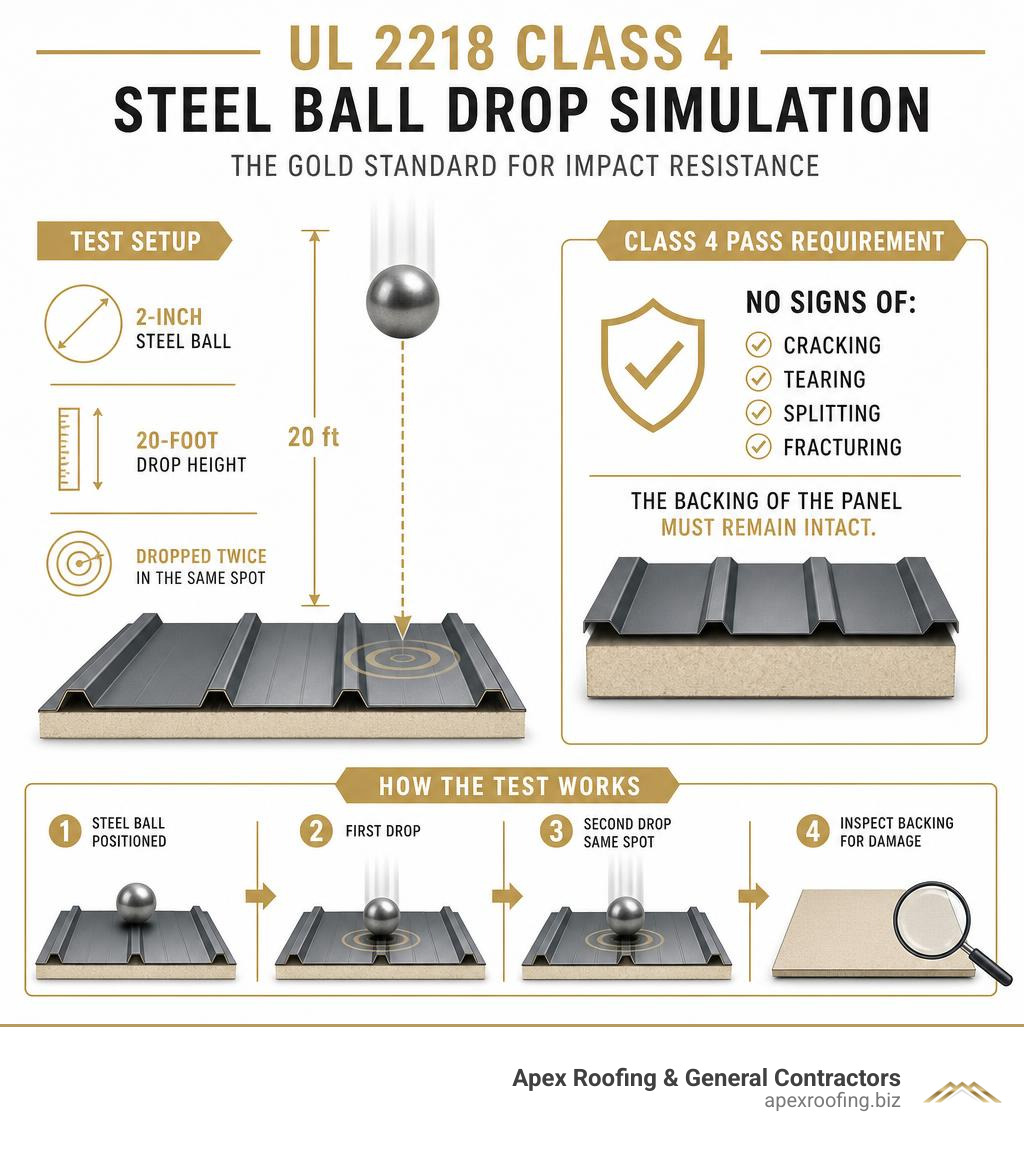
During a UL 2218 Class 4 test, laboratory technicians drop a 2-inch steel ball from a height of 20 feet directly onto the roofing material twice in the exact same spot. To pass and receive a Class 4 rating, the backing of the panel must show no signs of cracking, tearing, splitting, or fracturing.
Because steel is incredibly resilient, high-quality 24-gauge and 26-gauge metal roofs easily secure this rating. Decades of research, including the Fall Exclusive: A Deep Dive into Hail-Caused Dents study published by IIBEC, show that Class 4 systems routinely survive intense hail storms with only minor cosmetic marking. This resilience is just one of the Top 5 Benefits of Using a Metal Roof in San Antonio, offering unmatched long-term value and structural security.
Navigating Insurance Claims and Cosmetic Damage Waivers
Filing an insurance claim for a damaged metal roof in Texas can feel like navigating a minefield. The biggest hurdle homeowners face is the cosmetic damage exclusion or cosmetic damage waiver.
Many insurance carriers offer premium discounts to homeowners who install impact-resistant metal roofs. However, in the fine print of these policies, there is often a clause stating that the insurer will not pay to repair or replace panels that have sustained “cosmetic-only” damage. If your roof is dented but not leaking, they may deny your claim entirely.
This is why proving functional damage is so critical. If a storm has dented your roof, you need a professional team to look for microscopic cracks in the paint, compromised seams, or loose fasteners that qualify the damage as functional. To prepare yourself for this process, read The Ultimate Playbook for Your Roof Insurance Claim and learn more about what policies cover in Does Homeowners Insurance Cover a New Roof?.
To ensure a smooth and successful claims process, follow these essential steps:
- Document the Date and Time: Write down exactly when the storm hit and take photos of any hail on the ground next to a tape measure or common household object (like a coin) for scale.
- Take Ground-Level Photos: Capture wide shots of your property, including dented gutters, damaged siding, torn window screens, and dented AC units. These act as “collateral damage” evidence for your adjuster.
- Schedule a Professional Inspection: Before calling your insurance company, have a certified metal roofing contractor inspect the roof. They will document the functional damage that an insurance adjuster might overlook.
- File the Claim Promptly: Contact your insurer with your storm date, policy number, and our professional inspection report.
- Be Present for the Adjuster’s Visit: Ensure your trusted roofing contractor is on-site when the insurance adjuster arrives to point out the specific functional issues, such as micro-fractured coatings or compromised seams.
Frequently Asked Questions About Metal Storm Damage
Can small hail damage a metal roof?
Yes, small hail (under 1 inch in diameter) can cause minor surface scuffs, paint discoloration, or light cosmetic denting on softer metals (like aluminum or copper) and thin 29-gauge steel. However, small hail rarely causes functional damage to a properly installed 24-gauge or 26-gauge steel roof. If you are concerned about minor markings on your roof, consulting with professional metal roofers in San San Antonio can help clarify whether those marks are purely aesthetic or structurally concerning.
Do metal roofs rust after sustaining hail dents?
Not automatically. High-quality steel roofs are protected by a Galvalume coating, which is a specialized alloy of 55% aluminum and 45% zinc. This coating provides galvanic protection, meaning it actively resists rust even if the surface is lightly scratched or dented. Rust only becomes an issue if the impact is severe enough to deeply fracture the protective metal alloy layer and expose the raw steel core to persistent moisture.
Will my insurance pay for cosmetic dents on a metal roof?
It depends entirely on the specific language in your homeowners insurance policy. If you signed a cosmetic damage waiver to lower your monthly premiums, your insurer will likely deny coverage for dents that do not cause leaks or structural compromise. If you have a standard policy without this exclusion, they should cover the replacement of dented panels, though you may have to fight to prove that the dents affect the overall value and lifespan of your home.
Conclusion
Recovering from a major South Texas storm doesn’t have to be an overwhelming or stressful experience. While severe weather can leave behind hidden issues, taking fast, proactive steps is the best way to protect your home’s structure, maintain its market value, and secure your insurance rights.
At Apex Roofing & General Contractors, we specialize in identifying the critical differences between simple cosmetic dents and dangerous functional failures. Our team provides the reliable inspections, transparent communication, and local building code compliance you need to restore your home with complete confidence.
Don’t leave the safety of your home to guesswork. If your property has recently been hit by severe weather, contact us today to schedule a professional metal roof inspection with our expert team. We offer free estimates and you can call us at (726) 727-7663 for a free inspection.