A Leaking Flat Roof Can Cause Thousands in Damage – Here’s What to Do Right Now
Flat roof leaking repair is an urgent necessity because water infiltration can compromise the structural integrity of your building within hours. If you suspect a leak, consulting with professional roofing services in San Antonio is the most effective way to mitigate damage and avoid costly interior repairs. Water doesn’t wait, and neither should you.
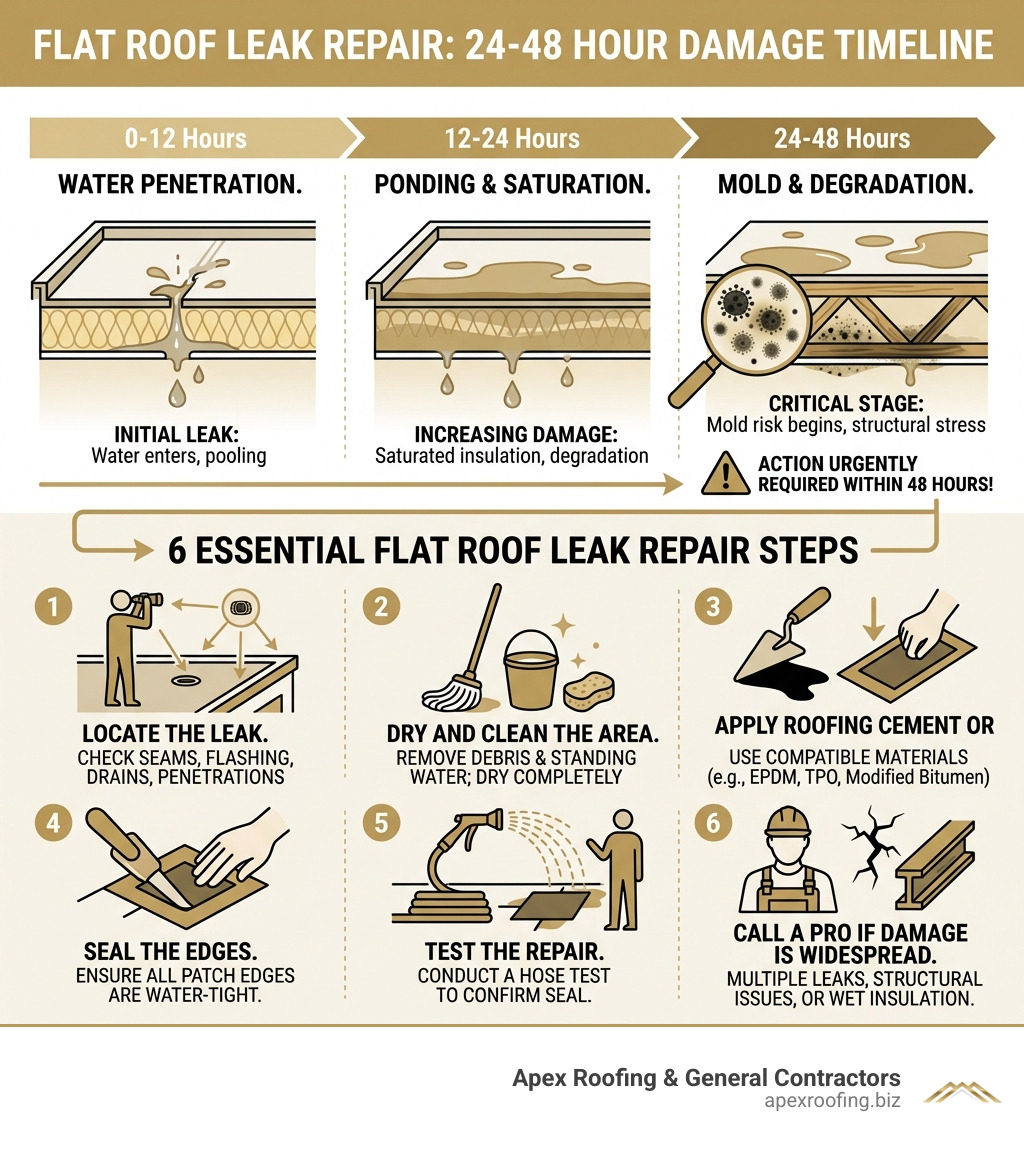
Quick answer – how to repair a leaking flat roof:
- Locate the leak – check seams, flashing, drains, and roof penetrations; the source is often several feet from the interior stain
- Dry and clean the area – remove debris and standing water; let the surface dry completely
- Apply roofing cement or a patch – use materials compatible with your membrane type (EPDM, TPO, Modified Bitumen, etc.)
- Seal the edges – press firmly and seal all patch edges to prevent water from sneaking underneath
- Test the repair – run a hose test to confirm the leak is sealed
- Call a pro if damage is widespread – structural damage, saturated insulation, or multiple leaks need professional attention
You have 24 to 48 hours before a minor flat roof leak turns into major structural damage. Ponding water degrades the membrane, saturates insulation, and can cause mold to appear within that same window. In San Antonio’s punishing heat and storm season, a small drip can spiral fast.
Our team at Apex Roofing & General Contractors has seen what happens when flat roof leaks are ignored – or patched with the wrong materials. This guide gives you a clear, honest path forward, whether you’re handling a minor repair yourself or deciding when to call in a professional.
I’m Carlos Yzaguirre, President and Managing Partner of Apex Roofing & General Contractors. Since co-founding the company in 2022, I’ve overseen hundreds of flat roof leaking repair projects across San Antonio and throughout Texas. I’ll walk you through exactly what works – and what to avoid.
Identifying Warning Signs and Common Causes of Leaks
Before we can jump into the flat roof leaking repair process, we need to understand what we’re up against. Flat roofs are unique; unlike pitched roofs that shed water instantly, flat roofs rely on a slight 1/4-inch slope to move water toward drainage points. When this system fails, water lingers, testing every seam and seal.
Ponding Water: The Silent Killer
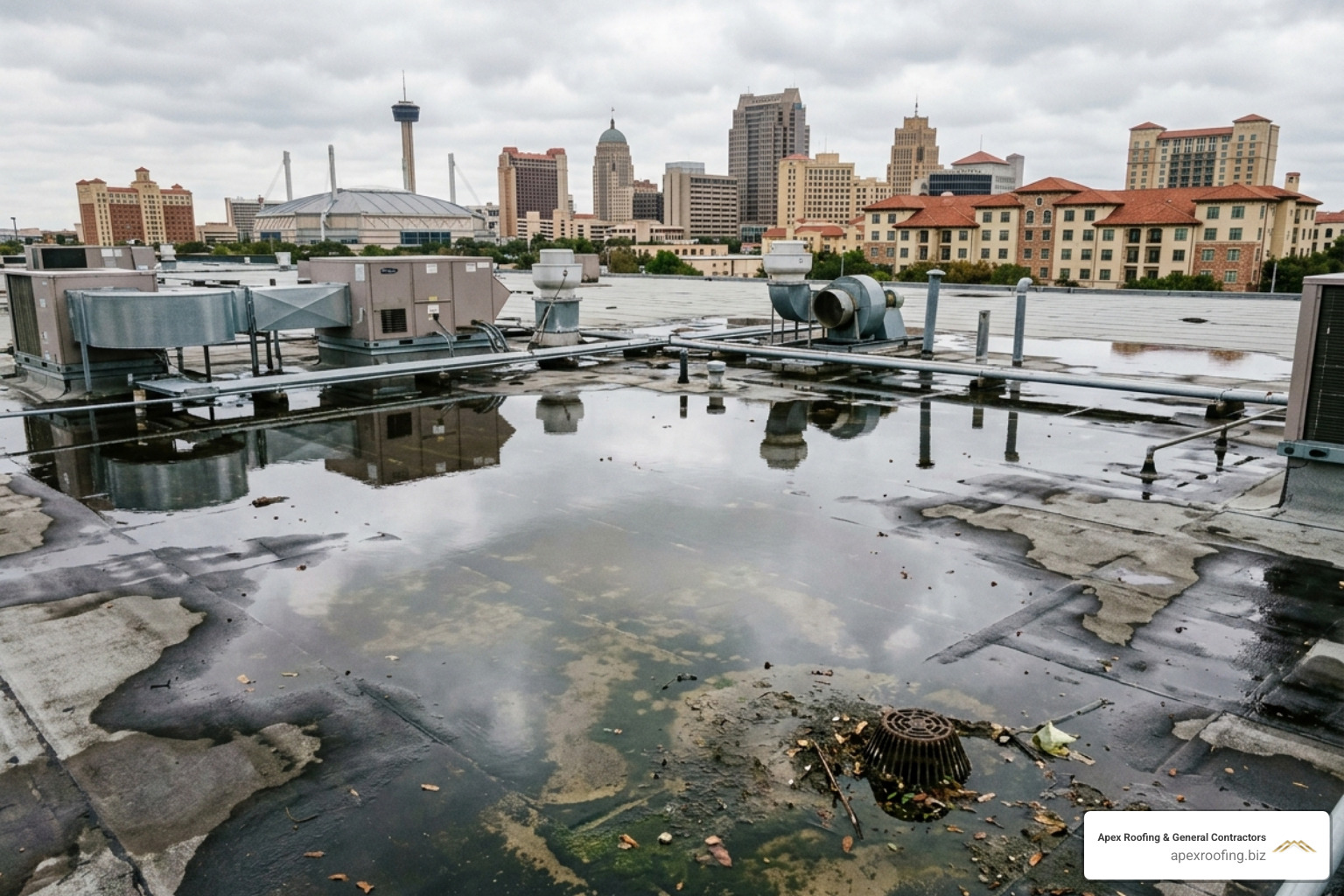
If you see puddles remaining on your roof more than 48 hours after a rainstorm, you have “ponding water.” This is a primary precursor to leaks. The weight of the water can compress insulation, creating deeper dips that hold even more water. Over time, this standing water degrades the membrane through UV magnification and thermal stress.
Debris and Clogged Drains
San Antonio winds often dump leaves, twigs, and trash onto rooftops. When this debris clogs your scuppers or drains, water backs up. We often find a flat roof leaking at edge points simply because the water had nowhere else to go but over the flashing.
Membrane Punctures and Seam Failures
Whether it’s a fallen branch or a technician dragging HVAC equipment across the surface, punctures are common. Furthermore, the 3 types of commercial flat roofs (Single-ply, Bituminous, and BUR) all rely on seams. Thermal expansion—the constant growing and shrinking of materials in the Texas sun—can cause these seams to pop or flashing to crack.
Early Warning Signs to Watch For:
- Blistering: Bubbles in the membrane indicating trapped moisture.
- Alligatoring: A cracked, scaly appearance in bitumen roofs caused by UV degradation.
- Interior Stains: Yellow or brown rings on your ceiling.
- Soft Spots: A “spongy” feel when walking on the roof, suggesting the insulation underneath is saturated.
For a deeper dive into these indicators, check out the Flat Roof Leak Repair Guide 2026.
How to Accurately Locate the Source of a Leak
Finding a leak on a flat roof is notoriously difficult because water rarely travels in a straight line. It often enters at one point, travels horizontally along the insulation or roof deck, and drips into your building 10 to 20 feet away.
Internal Benchmarking
Start inside. Measure the distance from the interior drip to the two nearest exterior walls. Transfer those measurements to the roof. This gives you a “benchmark” starting point. However, the actual entry point is almost always “up-slope” from where you see the stain.
The Professional Toolkit
At Apex Roofing, our San Antonio roofers use advanced tech to find hidden moisture:
- Moisture Meters: To detect dampness beneath the surface.
- Infrared Thermography: Infrared cameras detect temperature differences. Since wet insulation holds heat longer than dry insulation, the leak source literally glows on our screens at night.
The Hose Test
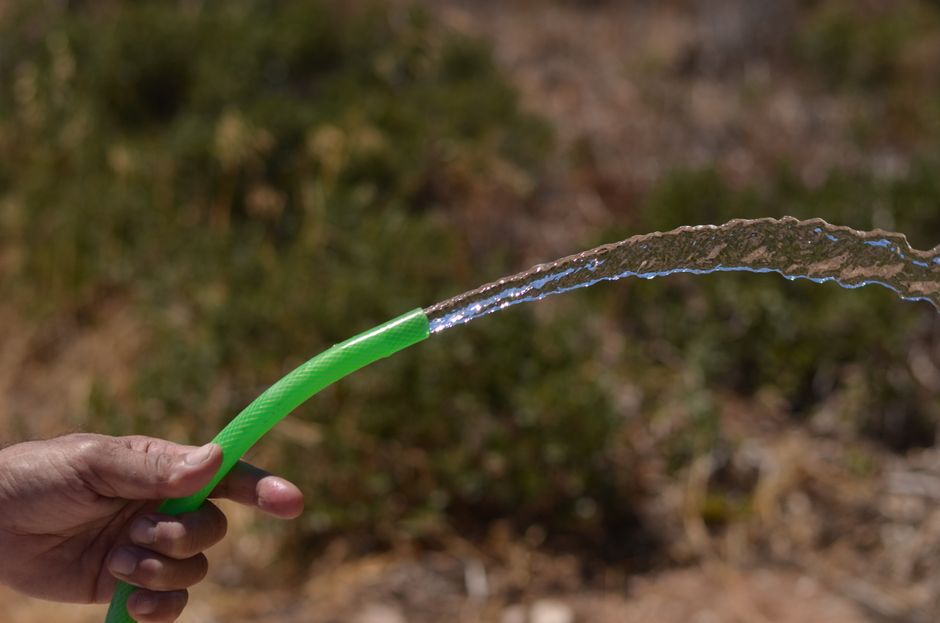
If you’re DIY-ing, use a garden hose on a dry day. Start at the lowest point of the roof (the drains) and work your way up. Have someone inside watch for the drip. Spend at least 15 minutes on each section, especially around roof penetrations like vents, pipes, and HVAC units. For more on this method, see the Ultimate Guide to Repairing a Flat Roof Leak.
The Complete Step-by-Step Process for Flat Roof Leaking Repair
Once you’ve pinpointed the hole, it’s time for the flat roof leaking repair. The goal is a permanent, watertight seal that can withstand the San Antonio climate.
1. Surface Preparation
Adhesion is everything. You cannot patch a dirty or wet roof.
- Sweep away gravel and debris.
- Scrub the area with a stiff brush and a dedicated cleaner (like an EPDM cleaner).
- Ensure the area is bone-dry. Use a leaf blower if necessary.
2. The Patching Process
Depending on your roof type, you’ll likely use a EPDM flat roof repair kit or a compatible membrane patch.
- Apply Primer: Most modern membranes require a primer to “soften” the surface for the adhesive.
- Cut the Patch: Round the corners of your patch so they don’t catch and peel. The patch should extend at least 6 inches beyond the damage in all directions.
- Apply Adhesive: Use a bonding adhesive or roofing cement.
- Press and Roll: Use a seam roller to press out air bubbles and ensure 100% contact.
3. Final Sealing
Apply a bead of lap sealant around the edges of the patch. For added protection, many owners apply a reflective coating over the repair to prevent UV damage.
Essential Repair Tools Checklist:
- Utility knife
- Stiff-bristle brush
- EPDM/TPO cleaner and primer
- Membrane patch material
- Roofing cement or bonding adhesive
- Seam roller
- Caulk gun and lap sealant
Temporary Fixes for Emergency Flat Roof Leaking Repair
If it’s currently pouring rain, you can’t do a permanent repair. Instead:
- Roofing Tar: Can be applied to wet surfaces to slow the flow.
- Weighted Tarps: Use sandbags to hold a tarp over the area. Never nail a tarp into a flat roof membrane.
- Peel-and-Stick Tape: Specialized emergency tapes can provide a 24-hour stop-gap.
Avoiding Costly Mistakes During Flat Roof Leaking Repair
The most common mistake we see is material incompatibility. For example, putting petroleum-based roofing tar on an EPDM (rubber) roof will actually dissolve the membrane, turning a small hole into a massive disaster. Always match your repair materials to your specific roof type. Also, never patch over “spongy” areas without checking for underlying rot; you’re just trapping moisture that will eat your roof deck from the inside out.
Material-Specific Repair Methods for EPDM, TPO, and Bitumen
Not all flat roofs are created equal. The method we use for a leaking rubber roof is vastly different from how we handle a warehouse with a TPO system.
| Membrane Type | Common Repair Method | Professional Insight |
|---|---|---|
| EPDM (Rubber) | Adhesive-backed patches & primer | Avoid all petroleum-based products; they dissolve rubber. |
| TPO / PVC | Heat-welding a new membrane patch | Seams are heat-welded at 800°F+, making them stronger than the roof itself. |
| Modified Bitumen | Torch-down or cold-applied adhesive | Great for high-traffic areas; handle temperature shifts well. |
| Built-Up (BUR) | Multiple layers of felt and hot tar | Often requires removing gravel surfacing before the repair. |
For those attempting a DIY approach, this DIY Guide to Flat Roof Repair provides excellent visual aids for these different materials.
When to Choose Professional Repair vs. Full Replacement
We know a new roof is a major investment, and we always aim for residential roof repair whenever possible. However, there is a point of no return.
The 30% Rule
If more than 30% of your roof surface is damaged or showing signs of failure (like widespread blistering), a replacement is usually more cost-effective than constant patching.
When to Replace:
- Chronic Leaks: If you’ve patched the same area more than five times, the membrane integrity is gone.
- Insulation Saturation: If the “core” of your roof is wet, a patch won’t help. The moisture will lead to mold and structural sagging.
- Age: Most flat roofs last 15–25 years. If yours is over 20, it’s likely time.
- Structural Damage: If the roof deck is rotting or dipping significantly, you need a full tear-off to ensure safety and building code compliance.
Frequently Asked Questions about Flat Roof Maintenance
How much does a typical flat roof leak repair cost in 2026?
In April 2026, minor local repairs typically start between $400 and $600. For more extensive repairs that involve replacing sections of wet insulation, you can expect to pay between $1,200 and $1,500. A full replacement for a standard residential flat roof generally ranges from $3,000 to $10,000+, depending on the material chosen.
Can I walk on my flat roof to inspect for leaks safely?
Yes, but exercise extreme caution. Wear soft-soled shoes with good grip. Avoid “soft” or “bouncy” spots, as these indicate weakened structural decking. If the roof is icy or covered in algae, it will be incredibly slippery—in these cases, it’s best to call a professional who has proper fall-protection harnesses.
How often should I clear my flat roof drains to prevent ponding?
We recommend a thorough cleaning at least twice a year—once in the spring and once in the fall. However, in San Antonio, you should also check your drains after any major windstorm or heavy rain event to ensure debris hasn’t blocked the flow. Keeping drains clear can prevent 80% of common flat roof failures.
Conclusion
A leaking flat roof is a race against time. Whether you are dealing with a minor puncture or major ponding, taking action within the first 48 hours is the difference between a simple patch and a total structural rebuild.
At Apex Roofing & General Contractors, we understand the unique demands the San Antonio weather puts on your property. From the scorching UV rays that bake membranes to the sudden downpours that test your drainage, we provide the certified, reliable service you need to stay dry.
Don’t let a small drip become a big disaster. Schedule a professional roof repair with our team today for a free estimate. Call us at (726) 727-7663 for a free inspection. We’ll provide a transparent assessment and a repair that actually lasts.