When Storm Damage Strikes: What Leon Valley Homeowners Need to Know About Roof Tarping
Roof tarping Leon Valley is an emergency protective measure that covers damaged sections of your roof with a heavy-duty waterproof tarp to stop water intrusion until permanent repairs can be made. If your roof was just hit by a storm, here’s what matters most:
Quick Answer: Emergency Roof Tarping in Leon Valley
| Situation | What To Do |
|---|---|
| Active leak or missing shingles | Call a licensed roofer immediately for emergency tarping |
| Fallen tree or structural damage | Stay out of affected rooms; call for professional help |
| Hail or wind damage | Document with photos, then arrange tarping before next rainfall |
| Insurance claim pending | Tarp first — most policies require you to mitigate further damage |
| Unsure of damage extent | Request an emergency inspection from San Antonio roofing experts |
Leon Valley sits in the heart of Bexar County, where hail, high winds, and sudden severe storms are a fact of life. A damaged roof — even one with just a few missing shingles — can let in enough water to cause mold growth, ruined insulation, and structural damage within hours. The window between a storm hitting and the next rainfall is often the most critical time to act. If you need immediate assistance, call (210) 864-6058 for 24/7 emergency support.
Waiting too long isn’t just risky for your home. It can also complicate your insurance claim.
I’m Carlos Yzaguirre, President of Apex Roofing & General Contractors, a San Antonio-based firm with hands-on experience handling emergency roof tarping in Leon Valley and across Bexar County. In this guide, I’ll walk you through exactly what to do — step by step — to protect your home fast.
Explore more about roof tarping Leon Valley:
Why Emergency Roof Tarping in Leon Valley is Critical After a Storm
In Leon Valley, we are no strangers to the volatile weather that sweeps through Central Texas. When a severe storm hits, your roof is the first line of defense. However, once that defense is breached by large hailstones or high-velocity winds, the clock starts ticking. Roof tarping Leon Valley is not just a suggestion; it is a critical emergency intervention designed to stabilize your property.
The primary reason tarping is essential is the prevention of secondary damage. In the San Antonio area, humidity levels are often high. When water enters your attic or living space through a compromised roof, it creates a breeding ground for mold and mildew in as little as 24 to 48 hours. Furthermore, saturated insulation loses its R-value, and water-logged drywall can lead to ceiling collapses. By installing a professional-grade tarp, we create a temporary “skin” over your home that directs water away from the vulnerable interior.
Common Signs You Need Emergency Roof Tarping in Leon Valley
Not all roof damage is as obvious as a fallen oak tree on your ridge. Often, the need for roof tarping Leon Valley is subtle but just as urgent. You should seek emergency protection if you notice:
- Missing or Displaced Shingles: If you can see “bald spots” on your roof from the ground, the underlayment is exposed and will leak during the next rain.
- Active Leaks or Water Stains: New spots on your ceiling or walls are definitive proof that the roof’s integrity has failed.
- Daylight in the Attic: If you go into your attic and can see beams of light coming through the roof deck, water will follow that same path.
- Fallen Tree Limbs: Even if there isn’t a massive hole, the impact of heavy branches can crack the underlying decking.
- Sagging Roof Deck: This indicates structural compromise or significant water weight, requiring immediate professional assessment and stabilization.
How Tarping Protects Your Insurance Claim
One of the most overlooked benefits of prompt tarping is its role in your insurance claim process. Most homeowners insurance policies include a “Duties After Loss” clause. This clause requires the homeowner to take “reasonable steps” to protect the property from further damage.
If you fail to tarp a known hole and a subsequent rainstorm ruins your $5,000 sofa, the insurance company may deny the claim for the sofa, arguing that the damage was preventable. By arranging for roof tarping Leon Valley immediately, you demonstrate “mitigation of loss.” This proactive step helps ensure that your roof hail damage claim remains straightforward. Always take clear photos of the damage before the tarp goes on to provide the adjuster with evidence of the initial storm impact. For more insights on navigating these challenges, see our Leon Valley homeowner’s guide to damage repair.
How to Properly Execute Roof Tarping Leon Valley
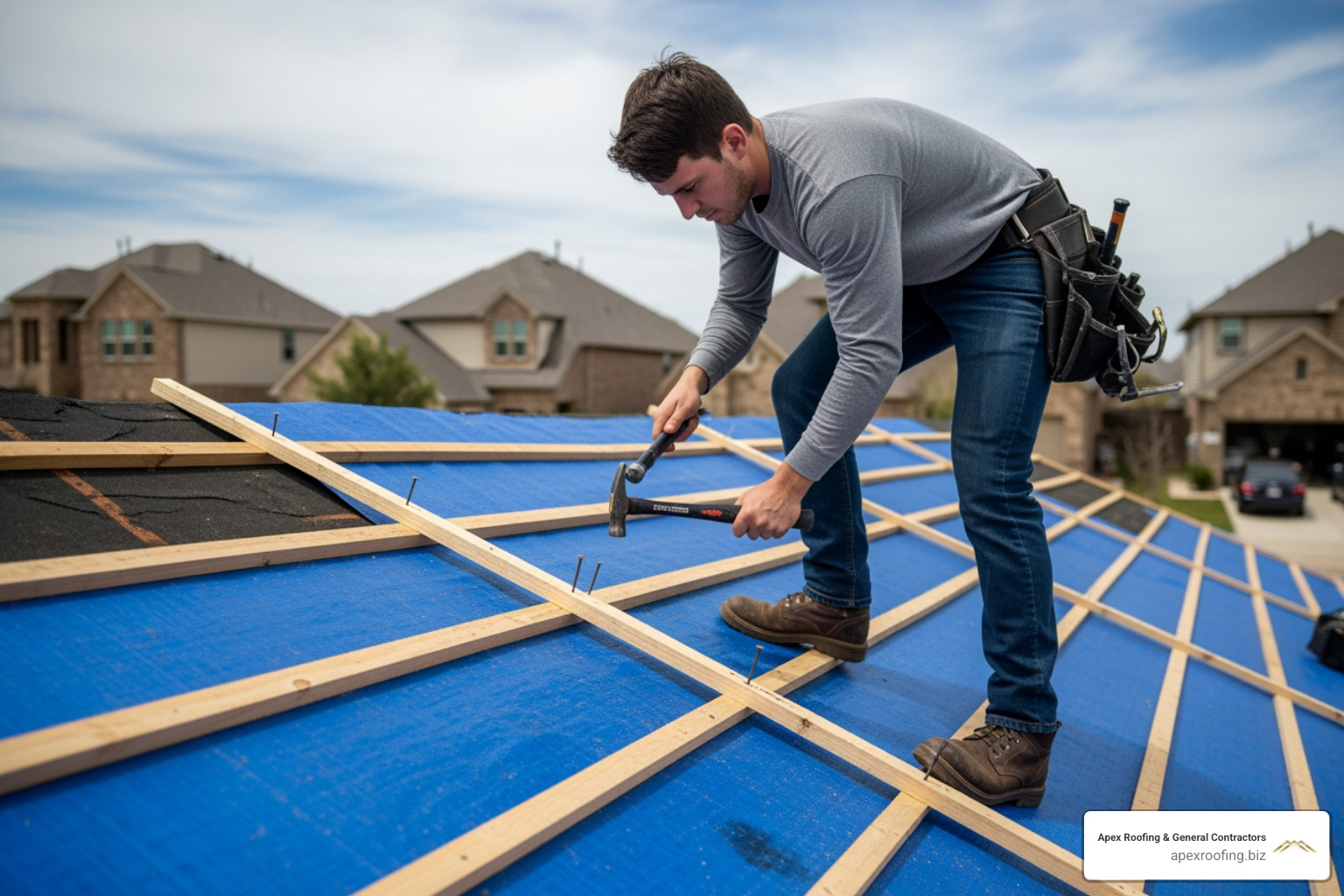
Effective roof tarping is more than just throwing a blue plastic sheet over a hole and weighing it down with bricks. In the high winds common to Bexar County, a poorly secured tarp will quickly become a sail, potentially tearing away and causing even more damage. Professional roof tarping Leon Valley involves mechanical fastening and specific geometry to ensure the home stays dry.
The goal is to create a taut, waterproof barrier that allows water to flow downward into the gutters without pooling or getting underneath the edges of the tarp.
Essential Materials for Durable Roof Tarping in Leon Valley
To withstand Texas storms, you cannot rely on the thin tarps found in the gardening section of a big-box store. We use specific materials designed for the rigors of roofing:
- Heavy-Duty Polyethylene Tarp: These are typically thicker (10-mil or higher) and UV-resistant to prevent degradation from the intense San Antonio sun.
- Furring Strips (Battens): 1×2 or 2×4 wooden boards used to anchor the tarp to the roof.
- 1-Inch Cap Nails or Screws: Cap nails provide a wider surface area to hold the tarp down without tearing the plastic.
- 3/8-Inch Plywood: Essential for covering large holes or structural breaches before the tarp is applied to prevent water from pooling in the “dip.”
- Roofing Tape: Used for sealing edges and handling penetrations like vent pipes.
Step-by-Step Professional Roof Tarping in Leon Valley
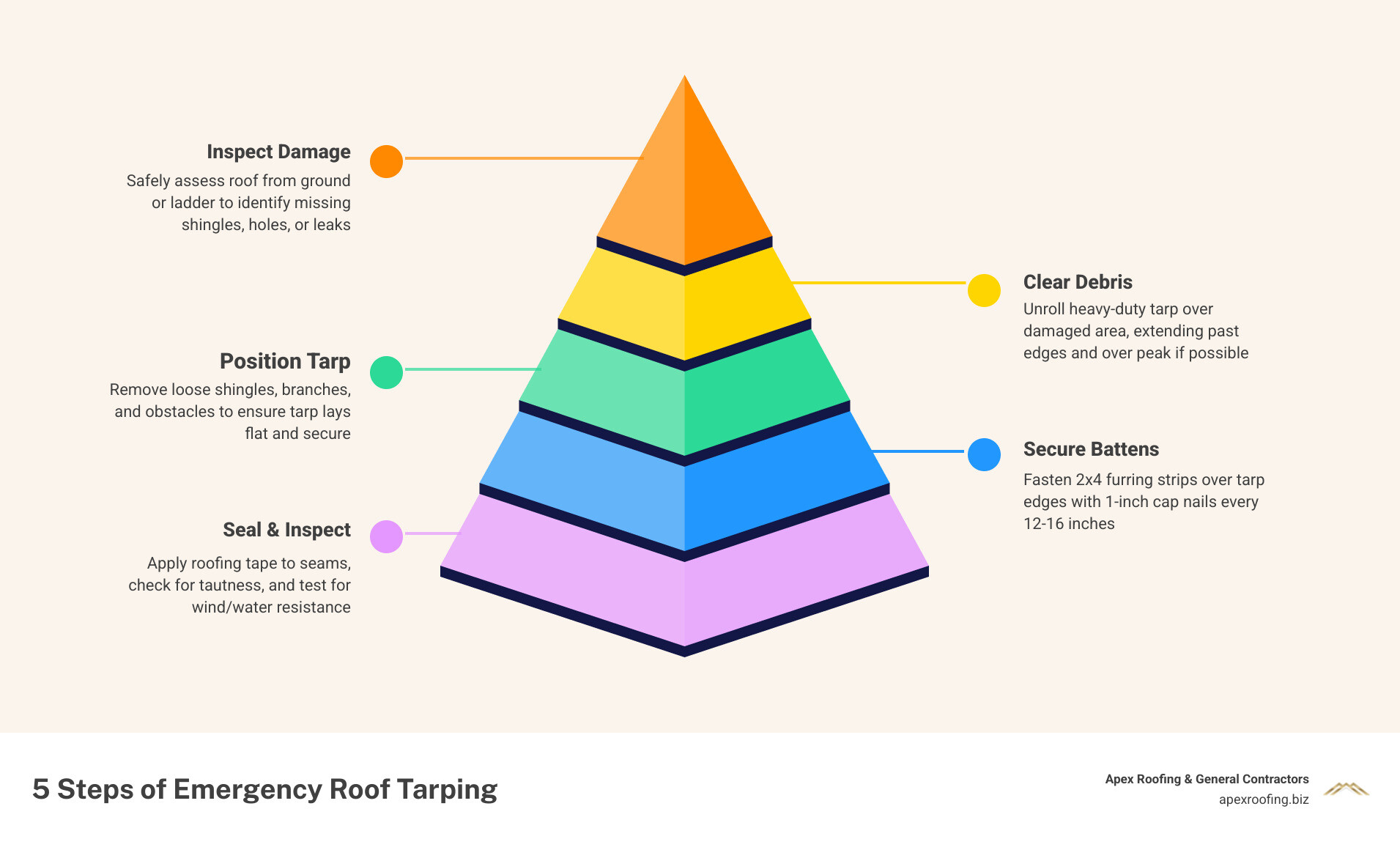
If you are attempting this yourself or supervising a crew, follow this step-by-step guide to emergency tarping:
- Safety First: Never climb a roof during an active storm, in high winds, or if the roof is wet. Ensure you are at least 10 feet away from power lines.
- Clear Debris: Remove branches, loose shingles, and silt from the area. A tarp will not seal correctly over a pile of trash.
- Measure and Size: Your tarp should extend at least 3 to 4 feet past the damaged area on all sides to prevent “blow-back” leaks.
- Cover Large Holes: If there is a structural hole, screw a piece of 3/8-inch plywood over it first. This creates a flat surface so water doesn’t pool and eventually seep through.
- Overhang the Peak: This is the most important step. Always run the top edge of the tarp over the ridge (peak) of the roof and secure it on the other side. This prevents water from running under the top edge of the tarp.
- Secure with Battens: Wrap the edges of the tarp around furring strips. This “sandwich” technique prevents the wind from ripping the grommets out of the tarp. Screw the furring strips directly into the roof rafters or decking.
- Seal the Perimeter: Ensure the sides and bottom are pulled tight. If the tarp is wide, add intermediate furring strips every 6 feet to prevent the plastic from flapping.
For a deeper look at the repair process following these steps, check out our article on emergency roof repair Leon Valley.
When to Choose Professional Services Over DIY
While the “Do-It-Yourself” spirit is strong in Texas, roof tarping Leon Valley is one of those tasks where the risks often outweigh the savings. Thousands of ladder and roof-related injuries occur every year. If your roof is steep, two stories high, or shows signs of structural instability, you should always call for emergency roofing services.
Professional roofers have the safety equipment — harnesses, roof anchors, and specialized footwear — to work safely on surfaces that would be treacherous for a homeowner. Furthermore, we can provide 24/7 availability, which is crucial when a storm hits at 2 AM on a Tuesday. Our Leon Valley roofing experts are trained to identify hidden damage that a homeowner might miss, such as hairline cracks in the flashing or compromised valley liners.
Risks of Improper Tarping Techniques
Improperly installed tarps can actually cause more damage than the storm itself. Here are common pitfalls we see when tarping is done incorrectly:
- Water Pooling: If the tarp isn’t taut or doesn’t have plywood support over holes, water will collect in the low spots. The weight of the water can eventually cause the ceiling to collapse.
- Wind Uplift: If the edges aren’t wrapped in battens, the wind can get under the tarp, turning it into a parachute that pulls up shingles or even sections of the roof deck.
- Fastener Leaks: If you nail a tarp down haphazardly, every nail hole is a potential new leak. Professionals know where to place fasteners to minimize further damage.
- Voided Warranties: Some manufacturers may void your shingle warranty if the roof is subjected to improper temporary repairs. Following best tips for Leon Valley roofers ensures your long-term protection remains intact.
Avoiding Post-Storm Roofing Scams
Unfortunately, severe weather often brings out “storm chasers” — unlicensed contractors who travel from state to state looking for quick insurance payouts. They often offer “free” tarping or high-pressure sales tactics. To protect yourself, always verify:
- Local Licensing and Insurance: Ensure the company is based in the San Antonio area and carries both general liability and workers’ compensation insurance.
- BBB Ratings: Check for a history of satisfied local customers.
- Transparent Pricing: Avoid anyone who refuses to give a written estimate or asks for the full insurance check upfront.
- Manufacturer Certifications: Companies with certifications like GAF Master Elite or Owens Corning Platinum Preferred are held to higher standards.
For more advice on vetting contractors, read our Leon Valley roofing guide.
Frequently Asked Questions About Roof Tarping
How long can a roof tarp stay on?
A roof tarp is strictly a temporary fix. Generally, a high-quality, professionally installed tarp can last between 30 to 90 days. However, the intense UV rays in Texas can cause plastic to become brittle and crack over time. If the damage is structural, the tarp should not stay on for more than 30 days. You should use this time to finalize your insurance claim and schedule permanent repairs as quickly as possible.
How much does emergency roof tarping cost in Leon Valley?
The cost of roof tarping Leon Valley varies based on several factors:
- Roof Pitch: Steeper roofs require more safety equipment and time.
- Damage Size: Larger areas require more materials and labor.
- Emergency Timing: Emergency calls in the middle of the night or during an active storm event may carry a premium.
- Materials: Using advanced solutions like shrink wrap (which uses heat to seal a plastic membrane to the roof) is more expensive than traditional tarping but offers superior protection.
Most homeowners find that these costs are reimbursable by their insurance company as part of the mitigation process. We also offer roofing financing in Leon Valley to help bridge the gap while waiting for insurance payouts.
Does a tarp prevent all water damage?
A tarp is a water-resistant barrier, not a waterproof roof. While a professionally installed tarp will stop the vast majority of water intrusion, extremely heavy or wind-driven rain can sometimes find its way through. This is why professional installation is so important — experts know how to seal the edges and overhang the ridge to minimize these risks. Think of a tarp as a sturdy umbrella for your house; it keeps you dry, but you still need to get under a real roof as soon as possible.
Conclusion
When the clouds clear over Leon Valley after a major storm, your priority is protecting your family and your investment. Roof tarping Leon Valley is the single most effective way to hit the “pause” button on storm damage, giving you the breathing room to handle insurance adjusters and plan for a quality repair.
At Apex Roofing & General Contractors, we pride ourselves on being a certified, reliable partner for Bexar County homeowners. We understand the local building codes, we know how to navigate the insurance process, and we are committed to transparent communication from the first emergency call to the final shingle.
Don’t wait for the next rain cloud to appear. We are your local roofers near Leon Valley, ready to help you weather the storm.