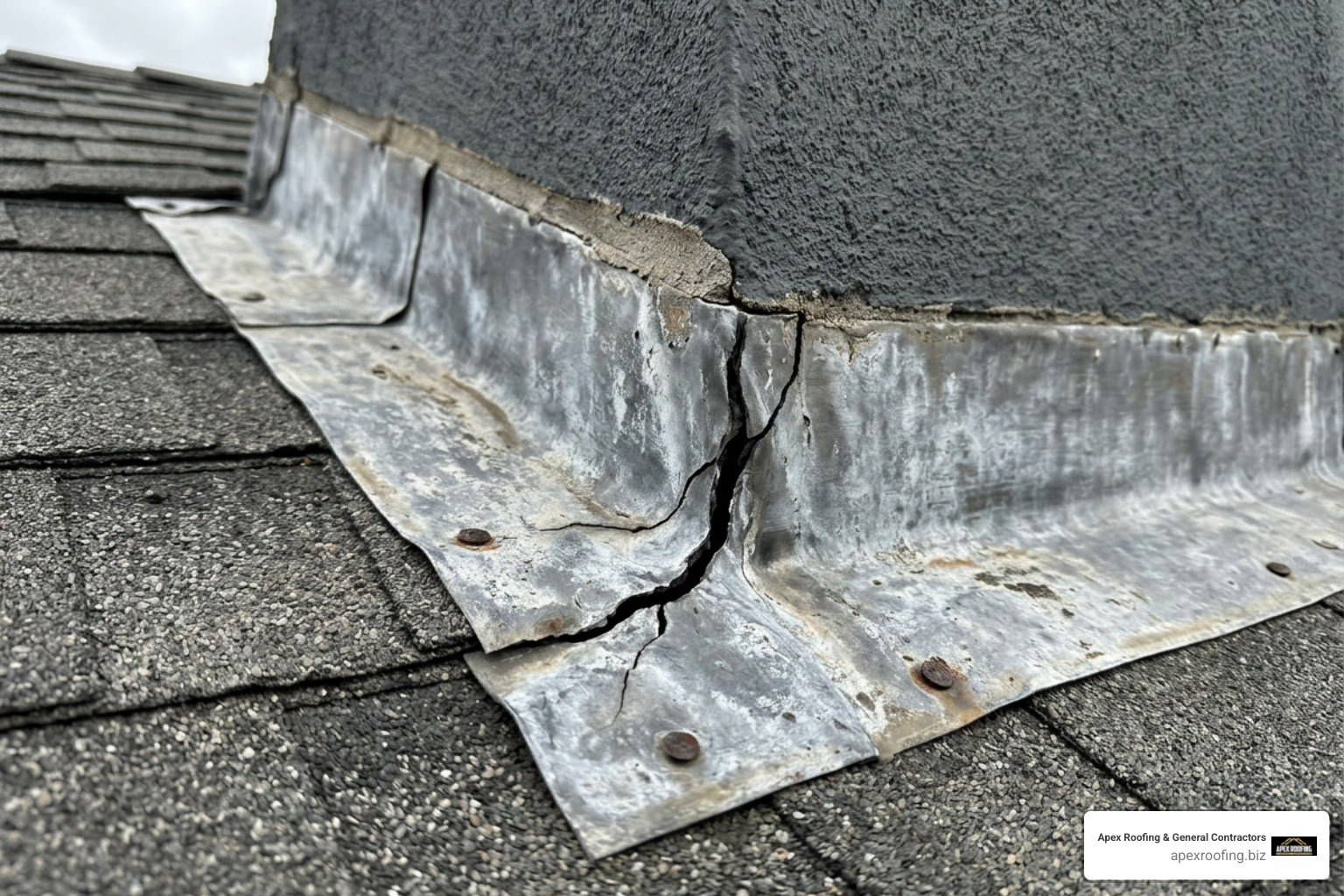
Why Understanding San Antonio Building Codes is Crucial for Your Project
San Antonio building codes keep your project safe and legal, and knowing the basics helps you avoid delays and failed inspections. Whether you are a homeowner planning a re-roof or a contractor on a commercial job, you need to know which code set applies, when you need a permit and who inspects the work. If your project is a roof, our San Antonio roofers know the city’s process and pull permits for every job that needs one.
Quick answer: San Antonio builds to the 2024 International Code Council (ICC) codes, which the City Council adopted on January 30, 2025, with local amendments. The energy code is the exception and stays on the 2021 edition. Permits and inspections run through the city’s Development Services Department (DSD).
- Current codes: 2024 ICC codes (building, residential, existing building, fire, mechanical, plumbing, fuel gas); 2021 energy code. Source: DSD Codes & Ordinances.
- Who enforces them: Development Services Department, 1901 S. Alamo Street.
- Permits: needed for most construction, alterations and major repairs, including a full re-roof. Start on the city’s residential permits page.
- Online: BuildSA is the city portal for applying and scheduling inspections.
- Roofing help: see roof replacement in San Antonio and roof repair in San Antonio.
San Antonio adopts ICC model codes with local amendments custom to our climate and community needs. These amendments address specific regional challenges such as extreme heat, soil conditions, and wind loads that are unique to South Texas. Plan reviews, permits, and inspections are managed by DSD to ensure compliance and safety throughout the construction process. The department processes thousands of permits annually, maintaining strict standards while working to streamline the approval process for contractors and homeowners alike.
If you pulled a permit before the 2024 codes took over, your project follows the code in place when the permit was issued. New permits follow the 2024 codes. When in doubt, ask DSD which edition applies to your permit.
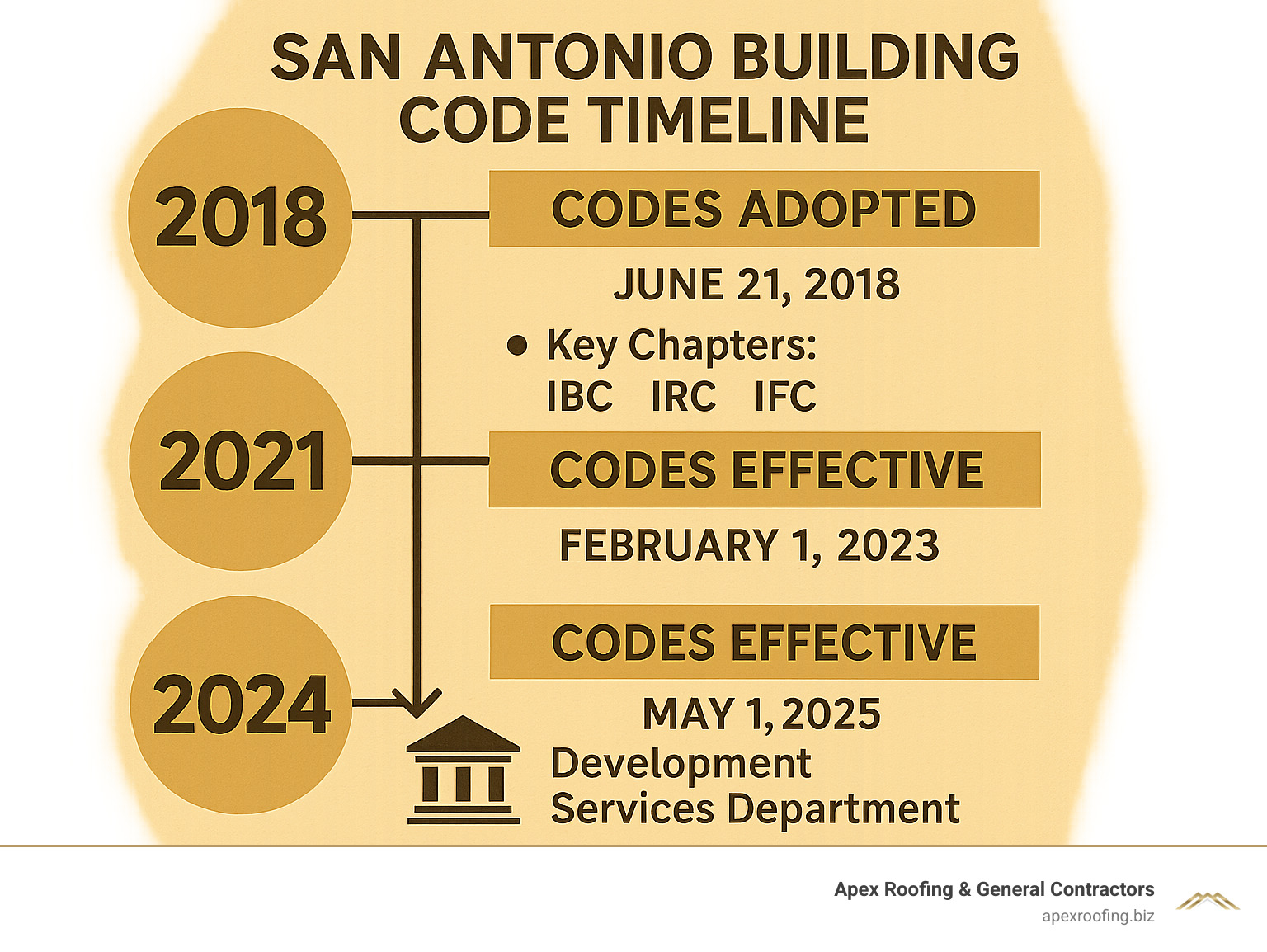
Understanding the Core San Antonio Building Codes
When you plan any construction in San Antonio, compliance with the citys adopted codes isnt optionalits how you protect people, property, and your budget. Whether youre working with professional roofing contractors or managing a commercial build, understanding the code family, local amendments, and where to find official language will save time and money.
Current Adopted Codes
On January 30, 2025, the San Antonio City Council adopted the 2024 ICC codes and the 2024 San Antonio Property Maintenance Code. The International Energy Conservation Code was left out of that cycle and stays on the 2021 edition. The set includes:
- 2024 International Building Code (IBC)
- 2024 International Residential Code (IRC), which covers most houses and their roofs
- 2024 International Existing Building Code (IEBC)
- 2024 International Fire Code (IFC)
- 2024 International Mechanical Code (IMC)
- 2024 International Plumbing Code (IPC)
- 2024 International Fuel Gas Code (IFGC)
- 2021 International Energy Conservation Code (IECC)
The city lists its adopted codes and local amendments on the DSD Codes & Ordinances page.
For the exact language and local amendments, see the full text of Chapter 10 – Building-Related Codes.
Key Aspects of the San Antonio Building Codes
- Local amendments: San Antonio modifies the ICC codes to address regional conditions (heat, soil, wind) and administrative processes.
- Development Services Department (DSD): The Director serves as the Building Official, overseeing interpretations, plan review, permits, and inspections.
- Unified Development Code (UDC): beyond the building codes, the UDC covers zoning, subdivision, tree preservation and landscaping. For business properties, see our commercial roofing page.
State Regulations and Local Compliance
Texas empowers cities to adopt and amend building codes, but local rules must align with state law. Two statewide programs commonly affecting projects are:
- Texas Department of Licensing and Regulation (TDLR) Architectural Barriers Program, which enforces accessibility under the Texas Accessibility Standards (TAS) (effective March 2012). Projects must meet the stricter of TAS or local provisions.
- TDLR Elevator and Escalator Safety standards (updates effective November 2018) for vertical transportation systems.
The result is a coordinated system: local enforcement of San Antonio building codes plus statewide consistency on accessibility and life-safety.
The Permitting and Enforcement Process
Once you understand the codes, your next step is permits, reviews, and inspections with the Development Services Department (DSD). Working with experienced San Antonio contractors streamlines submittals and helps you avoid delays. The permitting process serves as a critical quality control mechanism, ensuring that all construction work meets minimum safety standards and complies with local regulations. Understanding each phase of this process – from initial application through final inspection – can significantly reduce project delays and unexpected costs.

Role of the Development Services Department
The DSD (1901 S. Alamo Street) handles building-related permits in San Antonio. Its job includes:
- Reviewing construction plans against the adopted codes
- Issuing permits
- Inspecting work at required stages
- Issuing Certificates of Occupancy where needed
- Answering code questions from contractors and owners
Review times change with workload, so check with DSD when you apply.
The department also offers pre-submittal meetings for complex projects, allowing developers and contractors to discuss code requirements and potential challenges before formal plan submission. This proactive approach can save weeks in the review process and prevent costly redesigns.
Learn more: The official DSD website.
Obtaining a Building Permit
Permits are typically required to construct, enlarge, alter, repair, move, demolish, or change occupancy, and for most electrical, gas, mechanical, and plumbing work. The permit process ensures that qualified professionals review your plans and that work is inspected at critical stages. Here’s what you need to know:
- Submittals: Provide dimensioned, scaled plans showing the location, nature, and extent of work. Complex projects may require a registered design professional. Electronic submissions through the BuildSA portal can expedite review times.
- Timing: Follow DSD timelines carefully; abandoned applications (inactive for 180 days) and expired permits (no inspections for 180 days) can add significant cost and delay to your project.
- Annual permits: Available for routine maintenance (e.g., MEP) in certain R-2 occupancies, these permits streamline ongoing maintenance work for property managers.
- Emergency repairs: the code lets you start emergency work right away to protect life or property, then apply for the permit promptly afterward. Ask DSD for the exact deadline.
- Fees: Permit fees are based on project valuation and are due at issuance. Additional fees may apply for plan review, re-inspections, and after-hours inspections.
For roofing, a full re-roof needs a permit in San Antonio. Smaller repairs may not, depending on the work. A licensed roofer will tell you which applies before the job starts. (You may see a “25% rule” online. That is a Florida rule, not a Texas one.) See how a permitted job runs on our roof replacement page, or our roof repair page for smaller fixes.
Work Exempt from Permits
While many projects require permits, certain minor work is exempt to reduce regulatory burden on homeowners. Examples often exempt from permits include:
- One-story detached accessory structures under 200 sq. ft. (sheds, playhouses)
- Fences not over 7 ft. high (though zoning rules and HOA restrictions may still apply)
- Cosmetic work like paint, wallpaper, tile, carpet, and countertops
- Minor electrical repairs not involving new circuits or service upgrades
- Portable appliances and window air conditioning units
- Prefabricated swimming pools under 24 inches deep
However, it’s important to note that structural changes, major roof work (re-roofing/structural alterations), most MEP installations/alterations, and occupancy changes generally require permits. Even exempt work must comply with applicable codes and may require inspections if it connects to permitted systems. When in doubt, call DSD at (210) 207-1111 for clarification – a quick phone call can prevent costly violations and ensure your project proceeds smoothly.
Inspection Process and Requirements
Once your permit is issued, inspections become the next critical phase. San Antonio requires inspections at specific construction milestones to verify code compliance. Common inspection types include foundation, framing, MEP rough-in, insulation, and final inspections. Schedule inspections at least 24 hours in advance through the BuildSA portal or by calling the inspection request line. Failed inspections require correction and re-inspection before work can proceed, potentially delaying your project timeline. Working with experienced contractors who understand inspection requirements can minimize failed inspections and keep your project on schedule.
Key Resources
- DSD Codes & Ordinances (adopted codes and local amendments)
- Residential permits (City of San Antonio)
- Texas Accessibility Standards (TAS)
- Free roof inspection in San Antonio
- Storm damage roof repair
- Emergency roof repair
- Roof replacement cost in San Antonio
- Attic ventilation in San Antonio (the code sets minimum attic venting)
Need a roofer who pulls the right permit? Apex Roofing & General Contractors offers free estimates. Call (726) 727-7663.