Plan Your Roof Budget With a Re Roofing Cost Calculator
A re roofing cost calculator gives you a fast planning range before you request bids. Start with your actual roof surface area – not just your home’s floor area – then add your material, pitch, number of stories, old-roof removal, and local labor costs. For 2026, asphalt-shingle roof replacements commonly run about $4.50 to $8.50 per square foot installed, while a 2,000-square-foot roof often lands between $9,000 and $16,500 before major repairs or premium materials.
For a more useful starting estimate:
- Estimate roof area, including overhangs and slope.
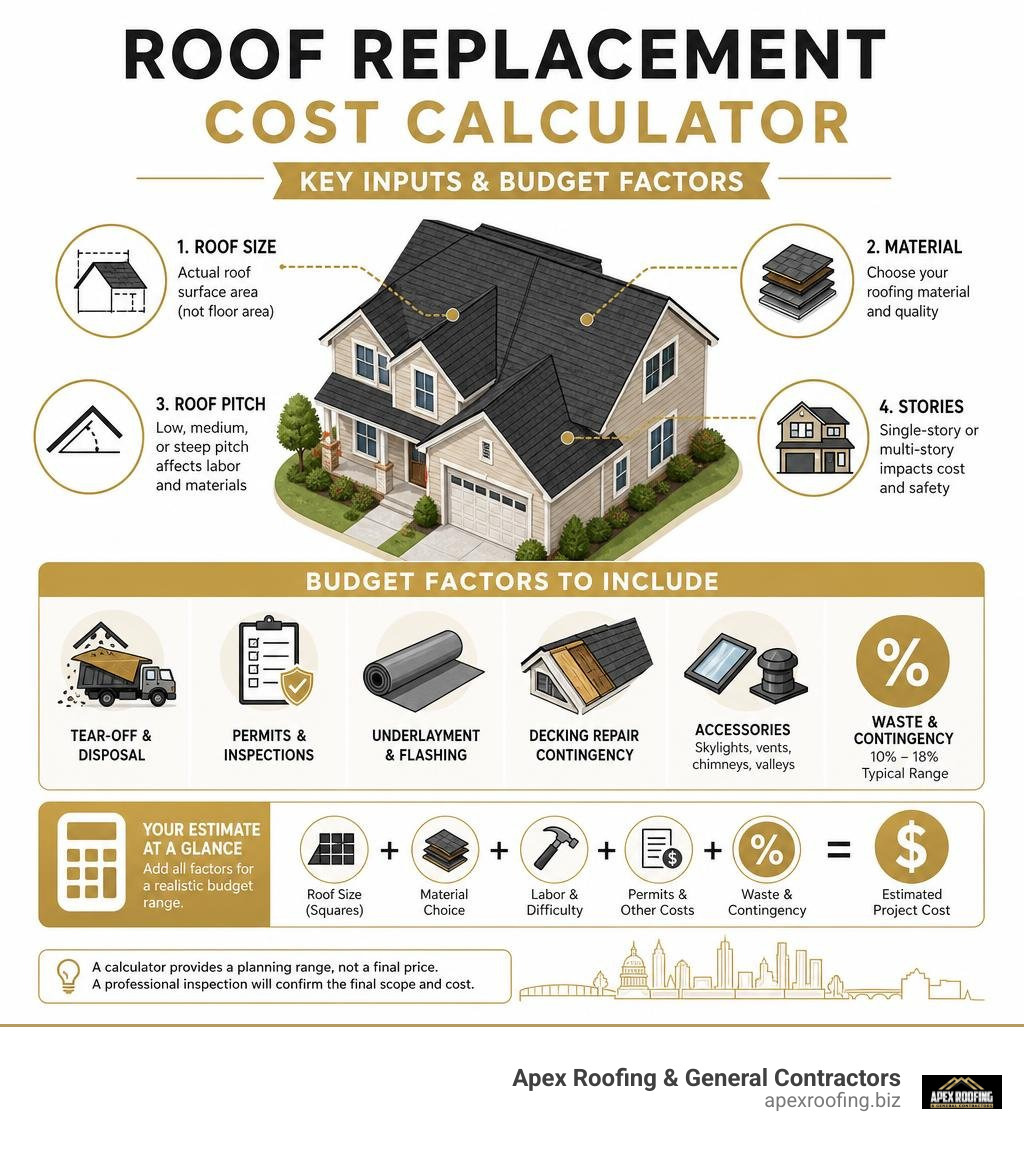
- Choose the roofing material and include 10% to 18% for waste on cut-heavy roofs.
- Add tear-off, disposal, permits, underlayment, and a contingency for damaged decking.
- Compare the result with at least three itemized local bids from San Antonio roof replacement professionals.
A calculator is a budget tool, not a final price. Steep slopes, multiple stories, valleys, skylights, code-required ventilation, and concealed wood rot can all change the final number after an on-site inspection. Labor alone often represents roughly 50% to 60% of a replacement project’s total cost.
I’m Carlos Yzaguirre, President and Managing Partner of Apex Roofing & General Contractors, and I help Texas property owners turn a re roofing cost calculator estimate into a clear, practical scope of work. Since co-founding Apex in 2022, I have focused on honest pricing, quality workmanship, and straightforward communication for roof repairs and replacements.
How to Use a Re Roofing Cost Calculator to Budget Your Project
Online estimation tools calculate roof replacement pricing by converting your home’s ground dimensions into roofing squares and applying material, labor, and difficulty multipliers. In the roofing trade, one “square” equals exactly 100 square feet of roof surface. Using a data-backed roof replacement calculator establishes an accurate starting baseline before you schedule physical roof evaluations.
Every reliable calculation relies on basic geometric factors:
- Roofing Squares: Total roof surface area divided by 100.
- Pitch Multiplier: A roof pitch reflects the vertical rise over a 12-inch horizontal run. Steeper slopes expand the physical surface area beyond the home’s flat footprint. For example, a 4/12 pitch adds roughly 5% more surface area (1.054 multiplier), a 7/12 pitch adds about 16% (1.157 multiplier), and a steep 12/12 pitch increases the true surface area by 41.4% (1.414 multiplier).
- Waste Factor: Complex roofs with hips, valleys, and dormers require angled cuts, requiring a 10% to 18% material waste allowance.
Step-by-Step Inputs for an Accurate Re Roofing Cost Calculator Estimate
To ensure your budget remains realistic, gather several core project dimensions before estimating your baseline project cost:
- Ground Footprint and Stories: Ground floor square footage multiplied by the number of levels gives a foundation measurement, adjusted upward by 20% to 30% for standard eaves and pitch overhangs.
- Roof Slope and Architecture: Identify whether the roof features simple gable lines or intricate hip sections, dormers, and skylight penetrations.
- Material Preference: Select between standard architectural asphalt, standing seam metal, concrete tile, or natural slate.
- Tear-Off Requirements: Factor in the removal and hauling fees of existing shingle layers, which generally add $1.00 to $2.00 per square foot per layer.
Re Roofing Cost Calculator vs In-Person Contractor Quotes
An automated calculator provides a reliable initial range, but an in-person physical assessment uncovers critical site-specific conditions that digital tools cannot detect. When evaluating average roof replacement cost, on-site variables heavily dictate the final price.
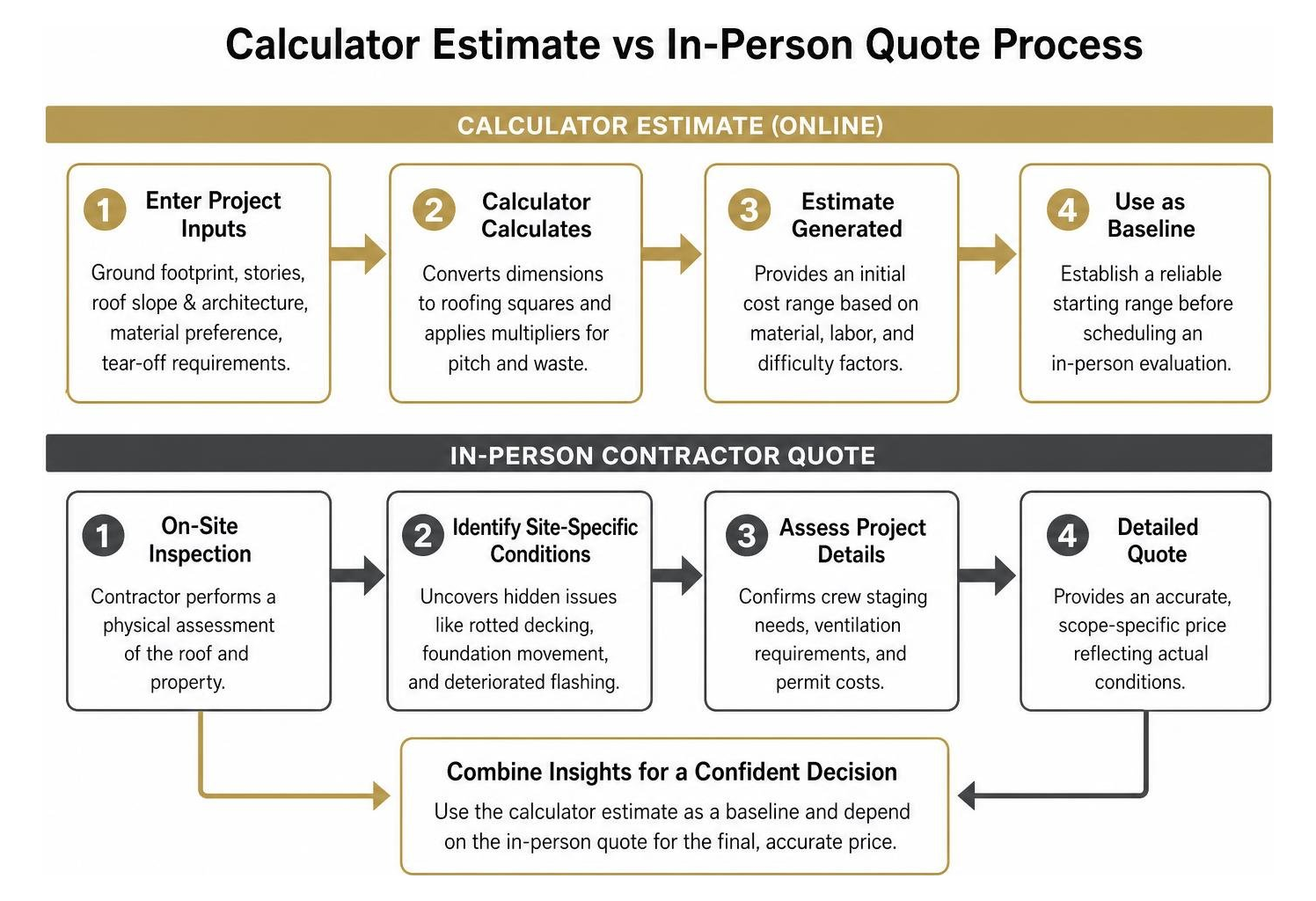
Professional roofing assessments reveal concealed issues, including rotted decking around eaves, localized foundation settlement shifting the roof framing, deteriorated flashing around chimneys, and specific municipal permit costs across San Antonio TX, Boerne TX, and New Braunfels TX. On-site evaluations ensure accurate crew staging and precise ventilation assessments.
Key Factors That Drive Roof Replacement Costs in 2026
Total project pricing reflects roofing material performance, local labor rates, structural access, and regional environmental challenges. Labor accounts for 50% to 60% of total project costs, averaging $2.50 to $6.00 per square foot depending on installation complexity.
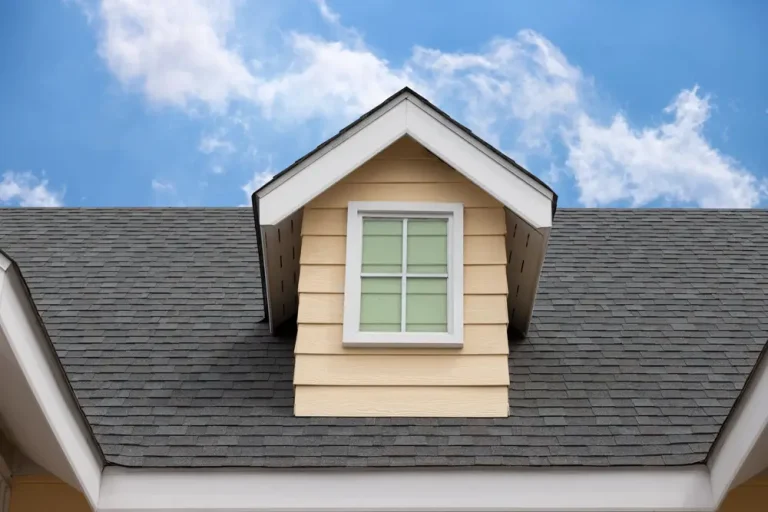
In South Central Texas, intense UV loads, high summer heat, spring hail events, and strong windstorms accelerate wear, making high-durability materials and impact-resistant designs a critical investment.
| Roofing Material | Typical Installed Cost / Sq. Ft. | Estimated Lifespan | Labor & Installation Complexity |
|---|---|---|---|
| 3-Tab Asphalt Shingles | $3.50 – $5.50 | 15 – 20 Years | Low (Standard fast installation) |
| Architectural Shingles | $4.50 – $8.50 | 25 – 30 Years | Moderate (Standard crew workflow) |
| Standing Seam Metal | $10.00 – $18.00 | 40 – 70 Years | High (Specialized seaming labor) |
| Concrete / Clay Tile | $11.00 – $22.00 | 50 – 100 Years | High (Requires reinforced decking) |
| Natural Slate | $18.00 – $30.00+ | 75 – 150 Years | Extremely High (Heavy structural loads) |
Material Options and Price Per Square Foot
Material selection serves as the primary driver of your total investment. Reviewing national 2026 material price benchmarks demonstrates the wide variation in long-term performance:
- Architectural Asphalt Shingles: Priced at $4.50 to $8.50 per square foot installed, architectural shingles provide strong wind resistance and proven multi-layered durability.
- Standing Seam Metal: Costing $10.00 to $18.00 per square foot, metal roofing reflects solar radiant heat effectively, lowering cooling loads in hot climates while offering exceptional hail resistance.
- Concrete and Clay Tile: Running $11.00 to $22.00 per square foot, tiles resist extreme heat and fire but require verified structural load support.
- Natural Slate: At $18.00 to $30.00+ per square foot, slate represents an ultra-premium, lifetime investment.
Roof Pitch, Stories, and Architectural Complexity
Roof geometry directly impacts labor speed and safety requirements. Our professional installation guide highlights why complex roof structures command higher installation rates:
- Steep Pitch Labor Multipliers: Roofs with a slope above 6/12 require specialized safety ropes, harnesses, and staging brackets, which adds 25% to 45% to standard labor costs.
- Two- and Three-Story Structures: Multi-story homes require extended staging, crane material drops, and slower ground-to-roof transport.
- Valleys, Hips, and Dormers: Roof penetrations demand hand-fitted underlayment, step flashing, and custom metal work to prevent water entry.
Hidden Expenses and Tear-Off Considerations
Hidden expenses surface once the old roofing material is stripped down to the wooden decking. Budgeting an extra 10% to 15% contingency protects homeowners from unexpected structural issues during tear-off. Following proven strategies for navigating competitive roofing bids ensures that line items like sheathing replacement and dumpster rentals remain transparent.
Common hidden expenses include:
- Damaged Decking: Water-damaged plywood or OSB sheathing costs $65 to $105 per sheet installed ($2.20 to $3.00 per square foot).
- Upgraded Underlayment: Heavy-duty synthetic underlayment and self-adhering ice-and-water membranes add $1.50 to $2.50 per square foot.
- Flashing and Pipe Boots: Replacing corroded chimney flashing, wall step-flashing, and plumbing boots costs $65 to $150 per penetration.
- Municipal Permits & Dump Fees: Local permit fees range from $150 to $500, while dedicated disposal bins cost $450 to $800 per pull.
Tear-Off vs. Layover: What Saves Money?
Installing a new layer of shingles over an existing roof (a layover) saves between $1.00 and $2.00 per square foot upfront in tear-off labor. However, layovers create significant long-term structural and financial drawbacks:
- Concealed Wood Rot: Layovers prevent roofers from inspecting the underlying deck for softened wood, sagging rafters, or hidden moisture rot.
- Trapped Heat: Multiple shingle layers trap excess summer heat, accelerating shingle decay and degrading the new asphalt compound prematurely.
- Structural Dead Weight: Adding a second layer places thousands of pounds of extra load on the rafters, which is particularly risky on homes situated on shifting clay soils.
- Voided Manufacturer Warranties: Leading material manufacturers limit or completely void their comprehensive system warranties on overlay installations.
Essential Code Upgrades and Decking Repairs
Building codes mandate specific roof assembly upgrades during a full replacement. We replace rotted sheathing immediately to establish a solid structural nailing base. Modern municipal building standards require continuous drip edges along eaves and rakes, synthetic weather-resistant underlayment, self-sealing valley barriers, and balanced intake-and-exhaust attic ventilation to reduce heat accumulation.
Frequently Asked Questions About Roof Replacement Costs
How much does a typical 2,000 sq ft roof replacement cost in 2026?
A full replacement for a 2,000-square-foot home costs between $9,000 and $16,500 for standard architectural shingles in mid-cost markets. A 2,000-square-foot living footprint translates to roughly 22 to 25 roofing squares (2,200 to 2,500 square feet of surface area) after accounting for overhangs, gables, and pitch multipliers. Premium standing seam metal installations on the same footprint range from $22,000 to $45,000.
Does homeowners insurance cover full roof replacement?
Homeowners insurance policies cover roof replacements caused by sudden, accidental peril damage, such as hail impacts, windstorm blow-offs, and falling tree limbs. Insurance does not cover gradual wear-and-tear, poor maintenance, or age-related shingle failure. In storm scenarios, policyholders pay their agreed deductible (commonly 1% to 2% of insured home value in storm-prone regions), while the insurer covers the remaining approved Replacement Cost Value (RCV).
How long does a full residential roof replacement take?
A standard architectural asphalt shingle replacement on a 2,000-square-foot single-family home takes a professional crew 1 to 3 working days. Complex architectural designs, steep multi-story access, extensive plywood decking rot, or heavy tile materials can extend the replacement timeline to 4 to 7 business days. Inclement weather conditions will also pause operations to maintain watertight structural integrity.
Conclusion
Using a roof replacement cost calculator provides a clear baseline for material options, labor rates, and project variables. However, an automated digital estimate cannot replace a comprehensive, hands-on structural inspection that evaluates deck integrity, attic ventilation, and flashings.
For property owners throughout San Antonio TX, Boerne TX, New Braunfels TX, Bulverde TX, and Alamo Heights TX, Apex Roofing & General Contractors provides accurate scopes of work, code-compliant installations, and transparent communication. Contact us today for a free estimate or schedule a free inspection through our expert roof replacement services to protect your home for decades.