Why the Best Storm Damage Roof Repair Starts With Choosing the Right Contractor
When searching for the best storm damage roof repair, the single most important decision you’ll make is who you hire — not just what materials they use.
Here’s a quick summary of what separates quality storm restoration from a costly mistake:
- Local expertise — A contractor who knows your regional weather patterns spots damage that out-of-towners miss.
- Thorough inspection — Hidden hail bruising, granule loss, and compromised flashing require more than a visual ground check.
- Honest repair vs. replacement guidance — A trustworthy contractor tells you what you actually need, not what costs more.
- Insurance claim support — Proper photo documentation and adjuster coordination can mean thousands more in coverage.
- Workmanship warranty — Local contractors stand behind their work long after the job is done.
If a storm has just hit your San Antonio home, start with a professional roofing inspection before calling your insurance company. Getting an independent damage assessment first gives you stronger documentation and a clearer picture of what repairs are actually needed.
Every year, Texas storms leave homeowners scrambling to find reliable help fast. The pressure to act quickly — combined with a flood of door-to-door contractors showing up after major weather events — makes it easy to hire the wrong person. A bad choice can mean poor repairs, denied insurance claims, or damage that quietly worsens for months before you notice a leak.
The stakes are real. Unaddressed roof damage can lead to structural repairs exceeding $20,000, according to industry data. Even a minor leak, left unchecked, can cause mold growth within 24 hours in a humid climate like San Antonio’s.
This guide walks you through five compelling reasons why working with a trusted local roofing contractor is the smartest move you can make after storm damage — and what to look for at every step of the process.
I’m Carlos Yzaguirre, President and Managing Partner of Apex Roofing & General Contractors, and I’ve spent years helping San Antonio homeowners navigate the full storm restoration process — from identifying hidden damage to closing out insurance claims for the best storm damage roof repair outcomes possible. Our team has earned an A+ BBB rating by doing this work with integrity, and in this guide, I’ll share exactly what that process looks like from start to finish.
Best storm damage roof repair further reading:
1. Local Experts Understand Regional Weather Patterns and Hidden Vulnerabilities
Local expertise is the foundation of high-quality roof restoration. Every region faces distinct weather profiles, and a roofing system must be engineered to withstand those specific forces. In San Antonio, our homes are routinely subjected to intense heat, high-velocity winds, and sudden, severe hailstorms.
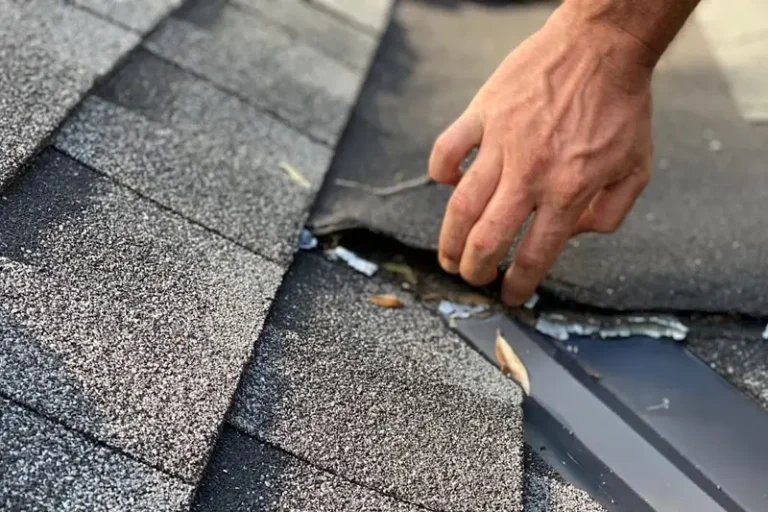
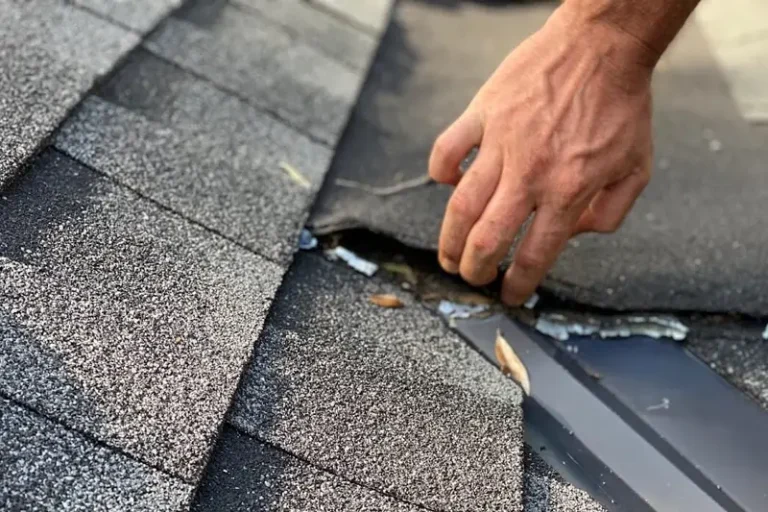
When a storm hits, it doesn’t just cause obvious, dramatic damage. It creates micro-fractures, weakens seals, and initiates slow-brewing failures. Wind uplift can easily break the adhesive seal strips beneath your shingles without blowing them off entirely. Once that seal is broken, subsequent winds lift the shingles repeatedly, creasing the asphalt and exposing the underlayment to wind-driven rain.
Similarly, hail damage often goes unnoticed because it rarely punctures a shingle completely on day one. Instead, hailstones bruise the shingles, knocking away the protective mineral granules and exposing the underlying asphalt to the harsh Texas sun. Over the following months, UV radiation degrades the exposed asphalt, leading to cracking, water intrusion, and eventual structural rot. Out-of-town contractors who do not understand these regional climate realities often overlook these subtle, slow-acting vulnerabilities, leaving your home unprotected.
Why Local Knowledge is Essential for the Best Storm Damage Roof Repair
To understand how regional climates shape roofing needs, we can look at severe weather records across the country. In the Midwest, states like Wisconsin experience massive hailstorms. For example, Milwaukee saw record-setting 3.00-inch hail in August 2015, Madison recorded 2.75-inch hail in April 2011, and Appleton was battered by baseball-sized hail measuring up to 4.00 inches in September 2021.
While those northern records are staggering, Texas is no stranger to extreme hail and severe wind events. Our local storms routinely produce hailstones large enough to dent metal valley flashing, crack ridge caps, and destroy standard asphalt shingles.
A contractor without local roots may not understand how local microclimates and building codes interact. For instance, wind load requirements and specific installation techniques (such as using a six-nail fastening pattern instead of the standard four-nail pattern) are critical in wind-prone areas. By working with a team that has a deep understanding of local conditions, you ensure your repairs are executed to withstand our specific climate. For a detailed breakdown of how we execute these high-standard restorations, check out our storm damage repair guide.
Identifying Hidden Roof Damage Before Leaks Occur
The most dangerous roof damage is the kind you cannot see from the ground. While a homeowner might look up after a storm and see all their shingles in place, severe damage could still be lurking.
Professional storm restoration relies on advanced diagnostic tools to identify these hidden issues before they manifest as active water leaks. Our comprehensive inspection methodology includes:
- Granule Loss Analysis: We check your gutters, downspouts, and the base of your valleys for accumulated shingle granules. Extreme granule loss strips shingles of their primary defense against UV rays.
- Tactile Hail Bruising Checks: Hail impacts leave soft spots, or “bruises,” in the shingle backing. We physically inspect the roof surface, feeling for these soft areas where the fiberglass mat has fractured beneath the asphalt.
- Drone Mapping and Aerial Photography: High-definition drones allow us to capture orthomosaic maps of your entire roof, documenting impact patterns and wind uplift indicators safely and precisely.
- Thermal Imaging and Moisture Meters: Infrared cameras detect temperature anomalies on your roof deck. Because wet insulation and wood hold heat differently than dry materials, thermal imaging reveals active, hidden moisture paths before water stains appear on your ceiling.
- Attic Health Inspections: We don’t just look at the top of your roof; we inspect the underside. Checking the attic allows us to evaluate the roof decking for soft spots, water tracking along rafters, and compromised insulation.
Catching these issues early prevents minor leaks from turning into major, mold-inducing disasters. If you suspect your home has been hit by recent severe weather, you can secure peace of mind by scheduling a free roof inspection with our team.
2. Navigating the Complexity of Repair vs. Full Replacement
Determining whether your roof requires targeted repairs or a complete replacement is one of the most critical decisions in the storm restoration process. Making the wrong choice can lead to wasted money on short-term fixes or unnecessary expenses for a full replacement when a repair would have sufficed.
Several factors guide this decision, starting with the age of your roof. Standard asphalt shingle roofs have an expected lifespan of 20 to 25 years. If your roof is over 15 years old and suffers moderate storm damage, investing in repairs is often a poor financial decision. Older shingles become brittle, making it incredibly difficult to replace individual sections without damaging the surrounding shingles. In these cases, a full replacement is the most cost-effective, long-term solution.
We also evaluate the structural integrity of the roof deck. If wind-driven rain or hail has compromised the underlying plywood decking, a simple shingle patch will not solve the problem. Additionally, if the cost of localized repairs approaches 50% of the cost of a new roof, insurance guidelines and financial logic strongly favor a complete storm damage roof replacement.
Key Indicators That Demand the Best Storm Damage Roof Repair
When is a repair the right call? We recommend targeted storm damage repairs when the damage is highly localized, the roof is relatively young, and the surrounding materials remain pliable and healthy.
Key indicators that we can resolve your issues with a targeted repair include:
- Localized Shingle Loss: If a high-wind event has blown off a small, isolated section of shingles (fewer than 10-15 shingles on a single slope) and the surrounding shingles are in excellent condition, we can easily install matching replacements.
- Minor Flashing and Valley Damage: Wind can sometimes loosen the metal flashing around chimneys, dormers, or valleys. If the shingles themselves are undamaged, we can rebuild and reseal these transitions to restore water tightness.
- Failing Vent Boots: Cracked or weathered plastic and rubber plumbing vent boots are common leak sources after high winds. Replacing these boots is a straightforward, highly effective repair.
- Isolated Wind-Driven Rain Leaks: Sometimes, extreme wind pushes water up and under shingle tabs where the seal strip has failed, even if no shingles are missing. We can locate these entry points, reinforce the underlayment, and reseal the affected shingles to stop the leak in its tracks.
3. Maximizing Insurance Claims with Accurate, Local Documentation
Navigating a homeowners insurance claim can be an overwhelming and confusing experience. Many policyholders assume that filing a claim is as simple as calling their agent and waiting for a check. In reality, the success of your claim depends entirely on the quality, accuracy, and thoroughness of your damage documentation.
Insurance adjusters are busy, especially after a major regional storm. They may only spend 15 to 20 minutes inspecting your roof, making it easy for them to miss hidden hail bruising, wind-lifted shingles, or compromised valley flashing. To ensure you receive a fair settlement that covers the true cost of restoration, you need an independent, professional documentation package.
Our team uses industry-standard estimating software like Xactimate—the same program used by the vast majority of insurance adjusters. This allows us to present our findings in a format adjusters understand, complete with line-by-line itemized costs, GPS-tagged photo evidence, and clear code-compliance requirements.
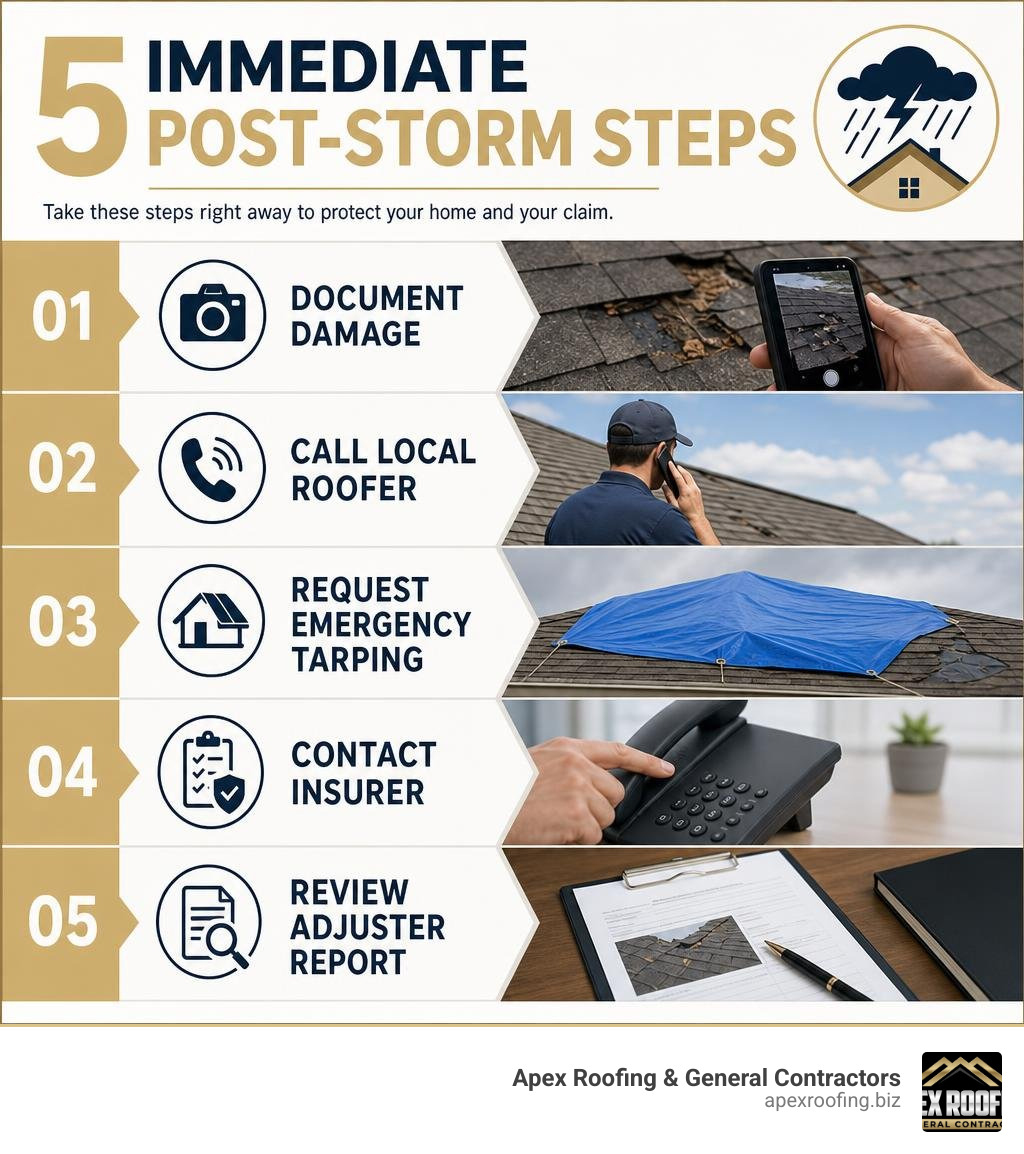
To help you protect your property and support your claim immediately after a storm, follow this step-by-step checklist:
- Prioritize Safety First: Never climb onto your roof to inspect damage yourself. Keep your family safe and leave the climbing to licensed professionals.
- Document from the Ground: Take wide-angle photos of your home’s exterior from the ground, noting any visible damage, fallen tree limbs, or scattered shingles in your yard.
- Check Your Property at Eye Level: Take photos of eye-level damage, such as dented gutters, damaged window screens, bruised siding, or chipped paint on your deck.
- Record the Date and Time: Note the exact date and approximate time the storm occurred. Insurance companies require an accurate “date of loss” to process your claim.
- Call a Trusted Local Roofer First: Schedule an independent professional inspection. Having a detailed damage report in hand before you file your claim prevents delays and underpayments.
- Request Emergency Tarping if Needed: If you have active leaks, your policy requires you to take immediate action to mitigate further damage. Professional emergency tarping satisfies this requirement.
- File Your Claim Promptly: While most policies allow one to two years to file, submitting your claim within 30 days of the storm is highly recommended for faster processing.
If you want to cross-reference reputable local contractors or check business reviews in our area, you can consult the San Antonio local business directory to verify our standing in the community.
4. Avoiding the Financial and Structural Risks of Out-of-Town Storm Chasers
In the immediate aftermath of a severe storm, our neighborhoods are often flooded with out-of-town contractors, commonly known as “storm chasers.” These companies follow weather radar patterns across the country, moving from city to city to sign up as many homeowners as possible.
While they may promise quick turnarounds or offer to “waive” your deductible (which is illegal in Texas), hiring a storm chaser carries severe financial and structural risks:
- Substandard Workmanship: Storm chasers rely on high-volume, rapid installations. They often hire temporary, local sub-contractors who are rushed to complete multiple roofs a day, leading to missed details, improper nailing, and code violations.
- Lack of Accountability: Once the storm chaser has collected their final check, they pack up and move to the next storm zone. If your roof develops a leak six months later, you will find their phone number disconnected, leaving you with no way to enforce their “warranty.”
- Insurance Fraud Schemes: Some unscrupulous door-to-door sales representatives engage in fraudulent practices, such as intentionally damaging shingles during their “inspection” to mimic hail hits, or inflating estimates in ways that violate state laws.
- Unlicensed and Uninsured Operations: Many out-of-state contractors do not carry proper general liability insurance or workers’ compensation that is valid in Texas, leaving you financially liable if an worker is injured on your property.
By contrast, working with an established, local storm damage roofing company ensures that you are partnering with a business that relies on its local reputation. We live and work in the San Antonio community, we pull all required local permits, and we are always here to stand behind our workmanship warranties.
5. Proactive Maintenance and Upgrades to Prevent Future Devastation
While we cannot control the weather, we can control how well our homes are prepared to handle it. Proactive maintenance and strategic material upgrades are the most effective ways to minimize future storm damage and protect your family.
Regular maintenance should include annual professional inspections, clearing debris from valleys, and keeping your gutters clean. Clogged gutters trap water, causing it to back up under the lower edge of your roof deck, rotting the fascia boards and compromising your eave protection.
If you are replacing your roof after a storm, upgrading to high-performance materials is a highly smart investment. The gold standard for storm protection is the Class 4 impact-resistant shingle. These shingles are engineered with SBS-modified asphalt (commonly called “rubberized asphalt”), which gives them incredible flexibility. When a hailstone strikes a Class 4 shingle, the material absorbs and dissipates the impact energy rather than cracking or fracturing.
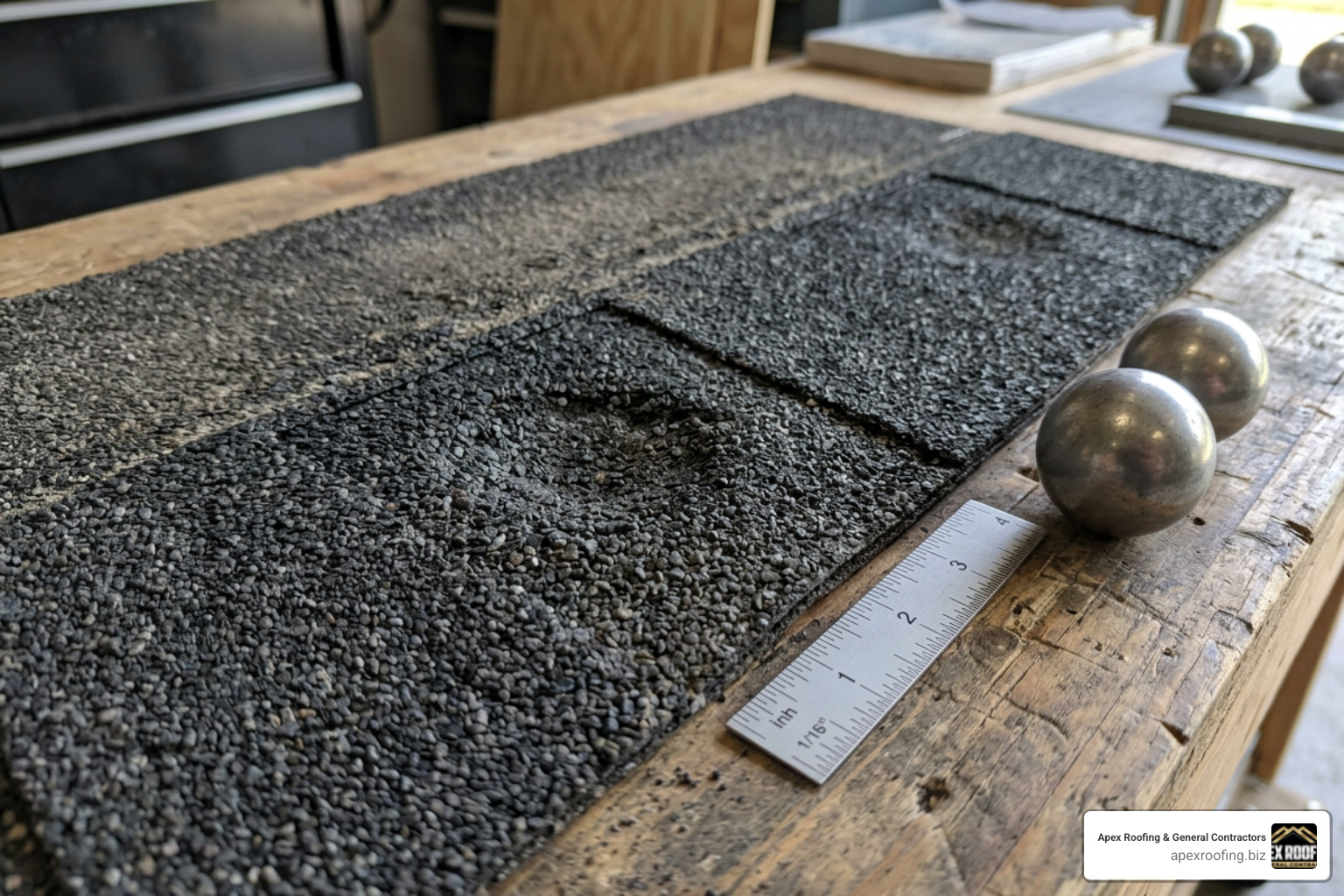
Upgrading to Class 4 shingles provides three major benefits:
- Superior Hail Resistance: Class 4 shingles are tested to withstand the impact of a 2-inch steel ball dropped from a height of 20 feet without cracking.
- Enhanced Wind Ratings: Many Class 4 roofing systems are rated to withstand winds up to 130 mph, providing peace of mind during severe Texas windstorms.
- Insurance Premium Discounts: Because Class 4 shingles drastically reduce the likelihood of future storm damage claims, many insurance carriers in Texas offer premium discounts of 15% to 30% for homes with certified Class 4 roofs.
To learn more about how to protect your home before the next storm system rolls through, explore our comprehensive storm damage roof inspection guide.
The Best Storm Damage Roof Repair: What to Expect During Restoration
Understanding the timeline and steps of a professional storm restoration project helps eliminate stress and allows you to plan accordingly. A typical roof restoration project follows a structured, transparent workflow:
- Day 1: Comprehensive Inspection & Emergency Mitigation: We assess the damage, document our findings, and install heavy-duty, 10-mil polyethylene tarps secured with wooden battens to protect your home from active leaks.
- Weeks 1–3: Insurance Coordination & Approval: We work alongside you and your insurance adjuster, providing detailed photo reports and Xactimate estimates to ensure your claim is fully approved, including any necessary code upgrades.
- Days 3–5 (Construction Phase): Tear-Off & Deck Repair: Once materials are delivered, our crew begins by stripping away all old roofing materials down to the bare wood deck. We inspect the decking, replace any rotted or damaged plywood, and install self-adhering waterproof underlayments in valleys and eaves.
- Days 4–7: Shingle Installation & Ventilation Upgrades: We install your new shingles using code-compliant, high-wind fastening patterns. We also install synthetic ridge vents and check your attic ventilation to ensure proper thermal equilibrium.
- Day 8+: Final Walkthrough & Warranty Registration: We perform a thorough magnetic sweep of your yard to collect stray nails, conduct a 50-point quality inspection, and register your manufacturer and workmanship warranties.
Roof Material Performance Comparison
| Feature / Specification | Standard 3-Tab Asphalt Shingles | Class 4 Impact-Resistant Shingles |
|---|---|---|
| Average Lifespan | 15 to 20 Years | 25 to 30+ Years |
| Wind Resistance Rating | Up to 60 mph | Up to 110 to 130 mph |
| Hail Impact Resistance | Class 1 or 2 (Prone to cracking under 1″ hail) | Class 4 (Withstands up to 2″ hail impacts) |
| Material Composition | Standard oxidized fiberglass-backed asphalt | SBS-modified “rubberized” polymer asphalt |
| Average San Antonio Cost | $350 to $450 per square | $425 to $550 per square |
| Insurance Discount Eligibility | No | Yes (Typically 15% to 30% premium savings) |
Frequently Asked Questions About Storm Damage Restoration
How long do I have to file an insurance claim after a storm?
While most homeowners insurance policies in Texas allow between one and two years from the date of the storm to file a property damage claim, you should never wait. We strongly recommend filing your claim within 30 days of the storm.
Filing quickly prevents secondary damage (like mold or structural rot) from worsening, which insurers may refuse to cover if they determine you delayed repairs. Additionally, documentation is freshest and most convincing immediately after the weather event occurs.
Can wind-driven rain cause a leak if no shingles are missing?
Yes. High winds can easily push rain horizontally, forcing water up and under shingle tabs. If the adhesive seal strips beneath your shingles have failed or aged, wind-driven rain will find its way under the shingles, bypassing your primary roof barrier.
This type of leak can cause significant water damage to your decking, insulation, and ceiling drywall without ever blowing a single shingle off your roof.
What is the average insurance payout for a storm-damaged roof?
The national average insurance payout for a storm-damaged roof claim is approximately $12,000, though this varies widely based on the size of your home, the roofing materials used, and your geographic location.
It is also important to note that 60% to 70% of storm restoration projects require “insurance supplements.” Supplements are additional claims submitted during construction for hidden damage (such as rotted decking) or local building code upgrades that were not visible or included in the adjuster’s initial estimate.
Conclusion
When severe weather hits San Antonio, your home deserves the highest standard of protection. Securing the best storm damage roof repair means partnering with a certified, local contractor who understands our regional climate, complies fully with local building codes, and prioritizes transparent communication.
At Apex Roofing & General Contractors, we are committed to restoring your peace of mind alongside your roof. We handle every step of the process with integrity — from our initial 50-point damage assessment to final warranty registration.
Don’t leave your home’s structural integrity to chance. If your property has recently been affected by severe weather, contact our expert team today to schedule your free inspection and receive a free estimate. Explore our residential roof repair services or call us directly at (726) 727-7663 for rapid, reliable local assistance.