Why Finding the Right Local Roof Inspector Matters
A local roof inspector is a certified professional who examines your roof’s condition, identifies hidden damage, and provides a detailed report. Hiring one protects your home from costly water damage and extends your roof’s lifespan. In San Antonio, where intense sun, hail, and high winds are common, a professional inspection catches problems early—before a small crack becomes a major leak. For homeowners seeking peace of mind, the expert team at a trusted San Antonio roofing contractor provides comprehensive roofing services to keep your home safe and secure.
Most homeowners only think about their roof when something goes wrong, but a proactive approach saves money and prevents emergencies. When you need an expert, look for a qualified inspector by:
- Verifying certifications (Haag Certified, NRCIA, etc.)
- Checking local licensing and insurance
- Reading recent Google and BBB reviews
- Asking for local references
- Confirming they provide detailed reports with photos
As Carlos Yzaguirre, President of Apex Roofing & General Contractors, I’ve spent years helping San Antonio homeowners steer the inspection process. Our team is committed to providing transparent assessments that empower you to make informed decisions.
Why and When to Schedule a Professional Roof Inspection
Your roof is constantly under attack from sun, wind, and rain, leading to issues that often develop out of sight. A local roof inspector catches these problems while they are still small and manageable, preventing a minor fix from becoming an expensive nightmare. Some damage is obvious, but many issues are only visible to a trained professional. Staying ahead of trouble is always smarter than reacting to it.
Signs of Roof Damage
Your roof will often signal when it needs help. Be on the lookout for these common warning signs:
- Leaks or Water Stains: The most obvious cry for help, especially in your attic. Even a small brown spot can indicate a serious issue.
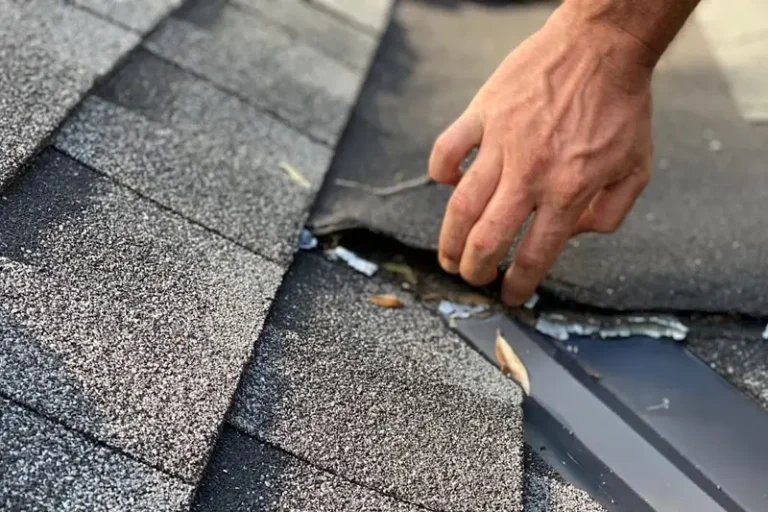
- Missing or Cracked Shingles: After a windy day, check your yard for shingles or look for bare patches on the roof.
- Granule Loss: If you see sand-like particles in your gutters, your shingles are losing their protective layer and aging faster.
- Sagging Roof Deck: A dipping or sagging roofline is a serious structural concern that requires immediate attention.
- Deteriorated Seals: Worn spots, rust on flashing, or cracked rubber boots around vent pipes are common entry points for water.
Benefits of Regular Inspections
Think of a roof inspection as preventative medicine for your home. The benefits are significant:
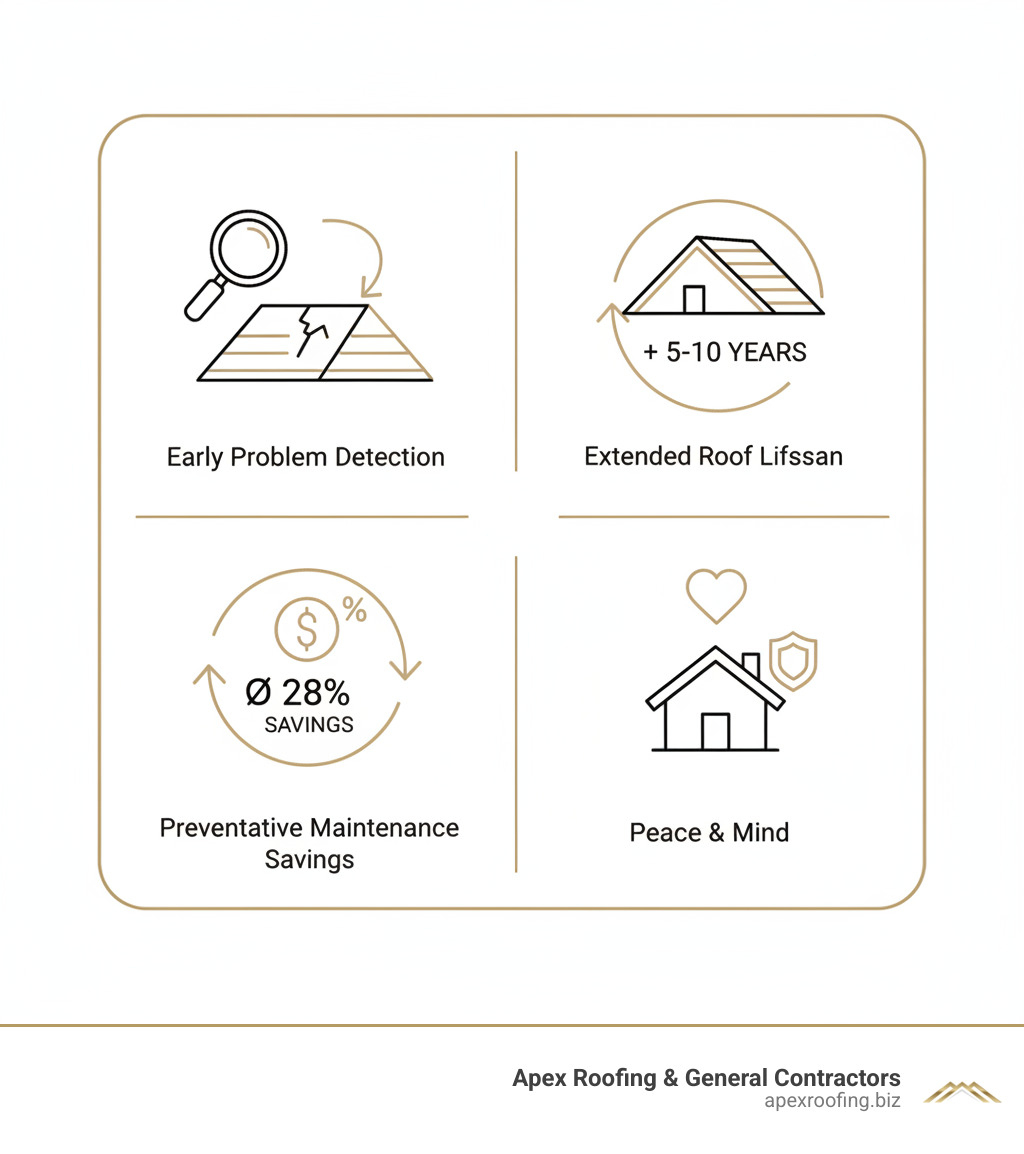
- Early Problem Detection: A skilled inspector spots loose flashing, tiny cracks, and worn seals before they become major leaks.
- Extended Roof Lifespan: Proper maintenance based on inspection findings can help your roof meet or exceed its expected lifespan.
- Saves Money on Repairs: Proactive maintenance saves homeowners an average of 28% compared to those who only react to problems.
- Peace of Mind: Knowing a professional has certified your roof as secure lets you rest easy during the next storm.
- Insurance Claim Support: Regular inspection reports provide crucial documentation of your roof’s condition when filing a storm damage claim.
Inspection Frequency
So, how often should you schedule an inspection? Follow these guidelines:
- Annually: A yearly check-up in the spring or fall is the best way to catch routine wear and tear.
- After a Major Storm: Hail and high winds can cause subtle damage that worsens over time. An inspection is critical even if you don’t see obvious issues.
- When Buying or Selling a Home: An unbiased assessment of the roof’s condition is non-negotiable for any real estate transaction.
For more detailed guidance, check out this comprehensive roof inspection guide near me.
San Antonio Weather Impact
Living in San Antonio and surrounding areas like Helotes, Leon Valley, and Alamo Heights means dealing with weather that is tough on roofs. Hail damage is a primary concern, as even small hailstones can bruise shingles and cause granule loss that leads to future leaks. High winds can lift, tear, or remove shingles, compromising your roof’s integrity. Finally, the intense sun exposure bakes roofing materials, making them brittle and shortening their lifespan. These local challenges make working with a qualified local roof inspector in San Antonio essential.
What to Expect from a Comprehensive Roof Inspection
A professional roof inspection is a detailed examination of your entire roofing system, not just a quick glance from a ladder. At Apex Roofing & General Contractors, our comprehensive inspections provide a complete picture of your roof’s health so you can make informed decisions.
Comprehensive Inspection Process
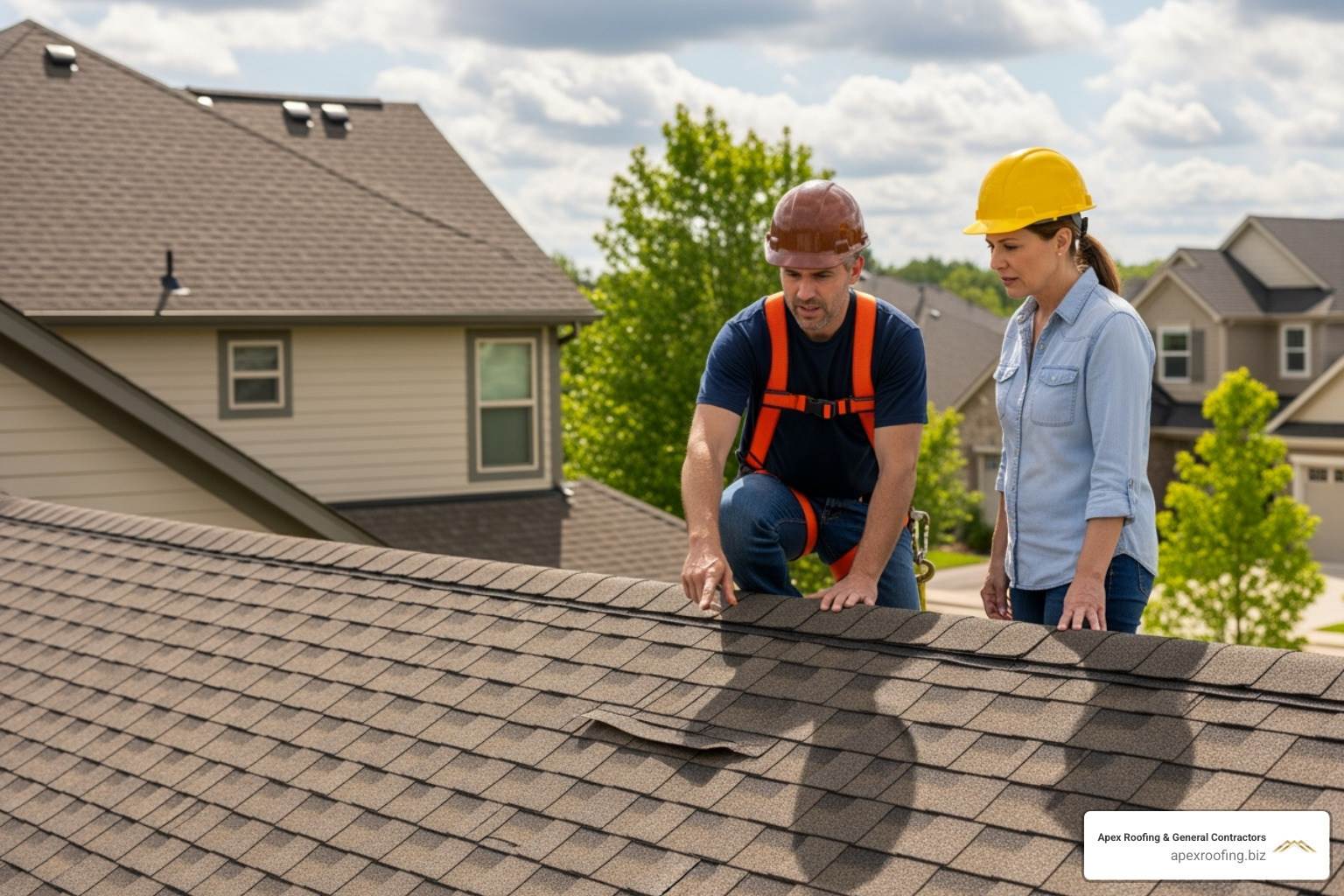
A professional inspection follows a systematic approach to evaluate every component of your roof:
- Exterior Inspection: The inspector physically walks the roof to check for cracked or missing shingles, granule loss, and damage to flashing around chimneys, skylights, and vents. Gutters and downspouts are also examined.
- Interior Attic Inspection: Inside the attic, the inspector looks for water stains, mold, sagging insulation, and signs of poor ventilation, which can damage your roof from the inside out.
- Structural Assessment: The overall structure is checked for sagging, unevenness, or damage to the roof deck, rafters, and trusses.
- Workmanship Quality Check: The inspector verifies that the roof was installed according to industry standards, as poor workmanship can cause premature failure.
Common Issues Detected
Our experienced team frequently identifies issues like damaged flashing, deteriorated pipe boots, poor ventilation, and hidden hail or wind damage. We also look for general material deterioration, debris obstructions, and structural problems with the roof deck or rafters.
What’s in the Report
After the inspection, you receive a clear, actionable report that includes:
- Detailed Findings: A written explanation of all observed conditions, categorized by severity.
- High-Resolution Photos: Visual evidence of any damage or areas of concern.
- Repair Recommendations: Clear, prioritized suggestions for addressing any problems.
- Cost Estimates: A transparent breakdown of costs for recommended work.
Inspection Costs
We offer free, no-obligation inspections for assessing storm damage or potential repairs. For situations requiring a formal roof certification, such as a real estate transaction, a fee may apply. Paid inspections for standard residential properties typically range from free to around $200, while more complex assessments can cost up to $900.
For more information, learn more about our professional roof inspection services.
Different Types of Roof Inspections
Not all inspections are the same. The right approach depends on your property and needs.
| Type of Inspection | Best For | Tools Used | Key Focus |
|---|---|---|---|
| Residential | Homeowners, routine maintenance | Ladder, binoculars, moisture meter, camera | General wear & tear, storm damage, leaks, shingle integrity, flashing, gutters, attic ventilation. |
| Commercial | Business owners, property managers | Ladder, moisture meter, infrared camera, drone | Flat roof drainage, membrane integrity, HVAC unit damage, parapet walls, building codes. |
| Drone | Steep pitches, large roofs, safety concerns | Drones with high-resolution cameras | Safe access to dangerous areas, quick visual overview, documenting storm damage. |
| Thermal | Leak detection, insulation issues | Infrared thermal camera | Identifying hidden moisture, insulation deficiencies, and energy loss without invasive methods. |
Residential inspections focus on protecting your living space, while commercial inspections address the unique challenges of larger properties and stricter building codes. Drone technology provides safe access to steep or hard-to-reach roofs, and thermal imaging uses infrared cameras to detect hidden moisture before it causes visible damage.
Choosing a Qualified Local Roof Inspector
Finding the right local roof inspector is crucial for protecting one of your home’s biggest investments. A qualified professional can save you thousands by catching issues early, while an inexperienced one might miss critical damage.

Vetting an Inspector
Before scheduling an inspection, do your homework to ensure you hire a qualified and insured professional.
- Check Licenses: Verify the inspector or their company holds the proper licenses to operate legally in Texas.
- Verify Insurance: Confirm they carry both general liability and workers’ compensation insurance. This protects you from liability in case of accidents.
- Read Online Reviews: Check Google, the Better Business Bureau, and other platforms for feedback on their professionalism, communication, and thoroughness.
- Ask for Local References: A confident inspector will gladly provide contact information for recent clients in the San Antonio area.
You can also find a certified inspector through the National Roof Certification and Inspection Association, which maintains a directory of qualified professionals.
Key Qualifications for a Local Roof Inspector
Certain credentials signal an inspector has advanced training and proven expertise.
- Haag Certified Inspector: This rigorous training focuses on identifying and assessing weather-related damage, which is especially valuable in San Antonio.
- NRCIA Certification: This shows an inspector follows standardized protocols for comprehensive, professional reports. Learn more in our guide to certified roof inspectors in San Antonio.
- Licensed Adjuster Credentials: An inspector with an All Lines Adjuster License understands how insurance companies process claims, which is a major advantage for homeowners.
- Manufacturer Certifications: Credentials like GAF Master Elite® show that a company meets strict standards for installation and customer satisfaction.
Roof Inspection vs. Roof Certification
These terms are often confused, but they serve different purposes.
A roof inspection is a detailed assessment of the roof’s current condition to identify existing damage and recommend repairs. It’s a health check-up for your roof.
A roof certification is a formal document that verifies the roof’s structural integrity and estimates its remaining lifespan, typically for 3-5 years. Certifications are often required for real estate transactions, especially for FHA loans, to assure lenders the roof is in good condition. Learn more about roof certification inspections.
The Post-Inspection Process: From Report to Resolution
An inspection is the first step. Understanding what comes next, from reviewing the report to resolving any issues, is key to protecting your home.
Scheduling an Inspection
Scheduling your inspection is simple. You can fill out a quick contact form on our website or call us directly at (210) 566-2273. A typical residential inspection takes about one to two hours, depending on the roof’s size and complexity.
What to Do If Damage Is Found
Finding damage is the first step toward a solution. Here’s how to proceed:

- Review the Report: Carefully examine the findings and photos provided by your local roof inspector. Ask questions about anything that is unclear.
- Discuss Repair Options: We will explain the severity of each issue, discuss what is urgent, and outline your options without pressure.
- Schedule Necessary Work: Once you approve the estimate, you can schedule the work. Acting promptly prevents small problems from becoming major ones. Our team is ready to help with expert roof repair services.
Navigating Insurance Claims with your local roof inspector
After a storm, a qualified local roof inspector is your most valuable asset in the insurance claims process.
- Documenting Damage: Our inspection report provides the detailed descriptions and high-resolution photos needed to serve as crucial evidence for your claim.
- Meeting with the Adjuster: We can meet with your insurance adjuster on-site to point out all documented damage, ensuring nothing is overlooked. Our team includes professionals with an All Lines Adjuster License who speak the insurance industry’s language.
- Advocating for You: If an insurer tries to minimize or deny a claim, we act as your advocate, using our technical expertise and evidence to challenge unfair assessments and ensure you get the coverage you deserve.
- Considering Upgrades: If your roof needs replacement, upgrading to Class 4 impact-resistant shingles can make it more resilient to future storms. Many insurance providers offer significant premium discounts—some homeowners save an average of 28%—for this upgrade.
Frequently Asked Questions about Local Roof Inspections
We’ve gathered the most common questions we hear from homeowners to provide you with straightforward, honest answers.
How long does a roof inspection take?
A typical residential roof inspection takes 1-2 hours. The exact time depends on the roof’s size, complexity, and whether we are documenting extensive storm damage. A thorough local roof inspector will take the necessary time to do the job right without rushing.
Can I inspect my own roof?
While you can spot obvious issues like missing shingles from the ground, we do not recommend inspecting your own roof. Climbing onto a roof is dangerous without proper safety equipment and training. Furthermore, a professional inspector is trained to spot subtle signs of damage—like hail bruising or deteriorated flashing—that an untrained eye would likely miss. It’s safer and more effective to hire a professional.
How much does a roof inspection cost?
Many reputable contractors, including Apex Roofing, offer a free, no-obligation roof inspection to assess for storm damage or potential repairs. This gives you a clear understanding of your roof’s condition at no cost. A formal roof certification, which is often required for real estate transactions, typically involves a fee ranging from $200 to $900, depending on the property’s size and complexity.
Conclusion
A regular, professional roof inspection is one of the smartest investments you can make to protect your home’s value and structural integrity. By working with a qualified and trusted local roof inspector, you gain peace of mind and a clear plan to prevent minor issues from becoming costly disasters. This proactive approach is essential in San Antonio’s challenging climate.
For homeowners throughout the San Antonio area—including Helotes, Leon Valley, Alamo Heights, Fair Oaks Ranch, Shavano Park, Terrell Hills, and all of Bexar County—Apex Roofing & General Contractors offers the expertise and transparent communication you deserve. We provide honest assessments and straightforward recommendations to help you protect your home.
If your inspection reveals damage, our experienced team is ready to help with everything from minor fixes to complete replacements. Don’t wait for a small problem to become a big headache. We offer free estimates. Call us today at (726) 727-7663 for your free inspection. Your roof protects everything you love—let us help you protect your roof.