Why Finding the Right Roofer Matters for Your Home
When homeowners need to find a roofer, they’re making a critical decision that directly impacts their property’s structural integrity, market value, and energy efficiency for the next 20-30 years. Your roof serves as the primary defense system protecting your family and possessions from severe weather events including wind speeds up to 130 mph, torrential rain, baseball-sized hail, and extreme UV exposure reaching 110°F surface temperatures in summer. Selecting an unqualified contractor results in an average of $8,500 in additional repair costs within the first five years, according to insurance claim data. Professional installation by a certified company like Apex Roofing & General Contractors’ roof replacement services ensures compliance with International Building Code standards, manufacturer specifications, and local permit requirements.
A properly installed roofing system consists of seven integrated components: roof decking, ice and water shield, synthetic underlayment, starter strips, field shingles, hip and ridge caps, and a balanced ventilation system with a 1:300 net free area ratio. Professional roofers install these components following a 42-point quality checklist that addresses nail placement (6 nails per shingle in high-wind zones), proper overlap measurements (5-inch minimum exposure), and flashing details at all penetrations and transitions. Substandard installation voids 100% of manufacturer warranties, triggers insurance claim denials in 73% of storm damage cases, and reduces expected roof lifespan by 40-60%.
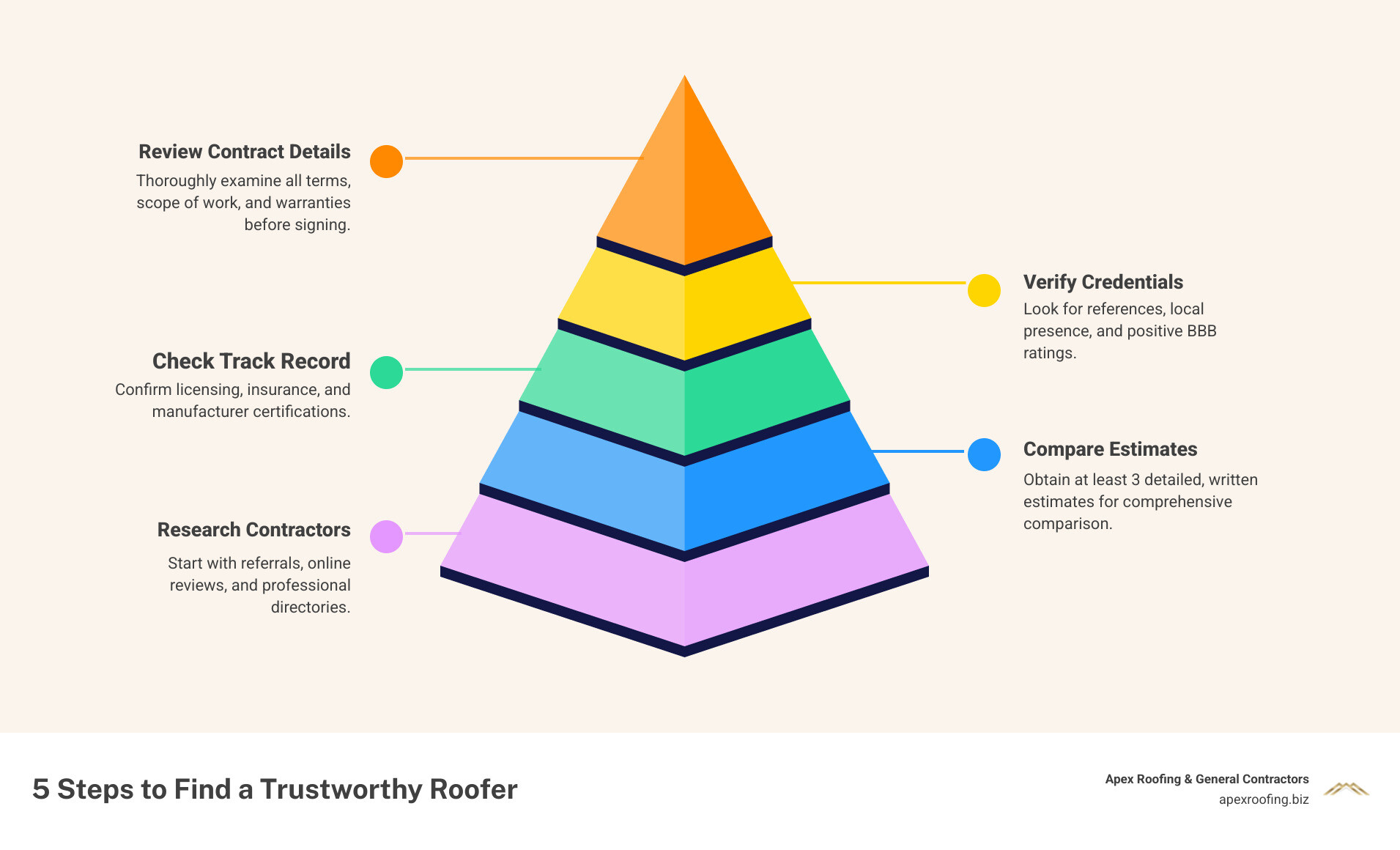
5-Step Process to Find a Qualified Roofer:
Verify Professional Credentials – Legitimate contractors maintain active state licensing (verified through official databases), carry minimum $2 million general liability insurance plus workers’ compensation, and hold manufacturer certifications from companies like GAF, Owens Corning, or CertainTeed. Request physical copies of these documents before signing any agreement.
Analyze Local Market Reputation – Established roofers maintain BBB ratings of A or higher, accumulate 50+ verified Google reviews with 4.5+ star averages, and provide references from projects completed within your ZIP code during the past 12 months. The Better Business Bureau’s contractor directory offers verified complaint histories and resolution rates.
Compare Detailed Written Proposals – Professional estimates specify exact measurements (total square footage, number of penetrations, linear feet of edges), material specifications (brand, series, color, warranty level), and line-item pricing for tear-off, disposal, decking repairs, and additional components. Legitimate bids vary by no more than 15-20% for identical scope.
Evaluate Company Stability Indicators – Trustworthy contractors operate from permanent commercial facilities (not residential addresses), maintain dedicated office staff, own specialized equipment (dump trailers, safety gear, pneumatic nailers), and demonstrate minimum 5-year local operating history through business registration records.
Review Contract Protection Terms – Legal agreements must include start/completion dates, payment schedules tied to progress milestones (never 50% upfront), lien waiver provisions, detailed warranty terms covering both materials (20-50 years) and workmanship (5-10 years), and specific remedies for defective work.
Measurable Indicators of Contractor Reliability:
Professional roofing contractors demonstrate competence through quantifiable metrics:
- GAF Master Elite® certification (achieved by only 2% of U.S. contractors)
- Minimum 1 million square feet of installed roofing annually
- Zero unresolved BBB complaints in the previous 36 months
- Documented safety record with OSHA incident rates below 3.0
- Response time under 24 hours for emergency repairs
- 98% or higher customer satisfaction scores from verified surveys
Residential roof replacements require 8-24 labor hours for completion depending on size and complexity. Standard 2,000 square foot homes typically complete in 1-2 days. Emergency repairs address active leaks within 2-4 hours of initial contact. Minor repair costs range $350-$1,000 for localized damage under 100 square feet. Major repairs addressing structural issues cost $1,000-$5,000. Complete replacements range from $8,000-$25,000 based on material selection and roof configuration.
The roofing industry experiences 5,000+ fraudulent contractor cases annually, with homeowners losing an average of $7,500 to storm chasers who collect deposits then abandon projects. These transient operators target disaster areas, use high-pressure sales tactics, demand large upfront payments, and operate without proper licensing or insurance. Legitimate contractors never solicit door-to-door immediately after storms, always provide verifiable local references, and maintain permanent business operations.
Asphalt shingle roofs deliver 20-25 years of service life when properly installed and maintained. Annual professional inspections identify minor issues before they escalate into structural damage costing 10-15 times more to remediate. Common maintenance items include resealing pipe boots ($75-$150), replacing damaged shingles ($150-$400), and clearing debris from valleys and gutters ($200-$500).
I’m Carlos Yzaguirre, President of Apex Roofing & General Contractors in San Antonio, Texas, with 15+ years managing over 10,000 residential roofing projects. Call us at (726) 727-7663 for immediate assistance. This comprehensive guide provides the exact framework our team uses to help homeowners find a roofer who delivers quality workmanship, honors warranties, and protects your investment through proper installation techniques.
Understanding Your Roofing Needs: Repair or Replacement?
Before you even start to find a roofer, it’s crucial to accurately assess the current state of your roof. Are you dealing with a minor, isolated issue that needs a simple repair, or are you facing a systemic failure that requires a full replacement? Knowing the difference is the first step toward making a cost-effective and long-term decision. The age of your roof, the materials it’s made from, and the visible signs of wear are all key indicators that will guide you.
Telltale Signs You Need Roofing Work
Your roof is in a constant battle with the elements, especially the intense San Antonio sun, heavy rains, and sudden hailstorms. Over time, this wear and tear will manifest in visible ways, signaling that it’s time to call in a professional. Ignoring these signs can turn a manageable repair into extensive, expensive structural damage.
Here are the critical indicators that your roof is crying out for attention:
- Curling or buckling shingles: Asphalt shingles should lie flat. If you see edges turning upward (curling) or wavy, uneven patches (buckling), it’s a definitive sign of aging and moisture intrusion. Curled shingles are easily caught by the wind and torn off, while buckled shingles indicate movement in the roof deck itself, both of which compromise the roof’s ability to shed water.
- Missing shingles or bald spots: After a storm, it’s common to find shingles in your yard. Any missing shingle creates a direct path for water to penetrate the underlayment and roof deck. Similarly, “bald spots” where the protective granules have worn off are a serious concern. These granules shield the shingle from UV ray degradation; without them, the shingle becomes brittle and deteriorates rapidly.
- Excessive shingle granules in gutters: Finding a large accumulation of these sand-like particles in your gutters is a clear sign that your roof is nearing the end of its lifespan. While some granule loss is normal, a significant amount indicates that the shingles are losing their primary layer of protection against the sun and weather.
- Ceiling water stains or discoloration: This is the most urgent warning sign, as it means water has already breached your roof and is damaging your home’s interior. These stains, often yellowish or brown, may appear in corners or as bubbles in the paint. Do not ignore them; they point to an active leak that requires immediate professional attention to prevent mold growth and structural rot.
- A spongy or soft feeling when walking on the roof: Warning: Only walk on your roof if you can do so safely. If you notice a bouncy, soft, or spongy feel underfoot, it strongly suggests that the underlying roof decking has been saturated with moisture and is beginning to rot. This is a serious structural issue that compromises the integrity of the entire roof system.
- Roof age exceeding 20 years: A typical asphalt shingle roof has an average lifespan of 15 to 25 years. If your roof is approaching or has surpassed this age—even if it looks okay from the ground—it’s wise to schedule a professional inspection. Proactively replacing an aging roof is far less expensive than dealing with the emergency cleanup and repairs from a sudden, catastrophic failure.
Common Roofing Materials: Pros, Cons, and Lifespan
The choice of roofing material significantly impacts your home’s curb appeal, energy efficiency, durability, and overall cost. When we help you find a roofer, we’ll discuss the best options for your San Antonio home, considering both performance in our climate and your budget. Here’s a brief overview of common materials:
| Material | Average Lifespan | Pros | Cons |
|---|---|---|---|
| Asphalt Shingles | 15-25 years | – Most affordable option – Wide variety of colors and styles – Easy to install and repair | – Shorter lifespan than other materials – Susceptible to wind and hail damage – Can be less energy-efficient |
| Metal Roofing | 40-70 years | – Extremely durable and long-lasting – Highly resistant to wind, fire, and hail – Energy-efficient (reflects solar heat) – Lightweight | – Higher upfront cost – Can be noisy during rain without proper insulation – Installation requires specialized skill |
| Slate & Tile | 50-100+ years | – Best longevity and classic beauty – Highly resistant to fire, rot, and insects – Low maintenance | – Very expensive – Extremely heavy, may require structural reinforcement – Brittle and can break if walked on improperly |
Contact us today for a free estimate. Call (726) 727-7663 to schedule your free inspection.