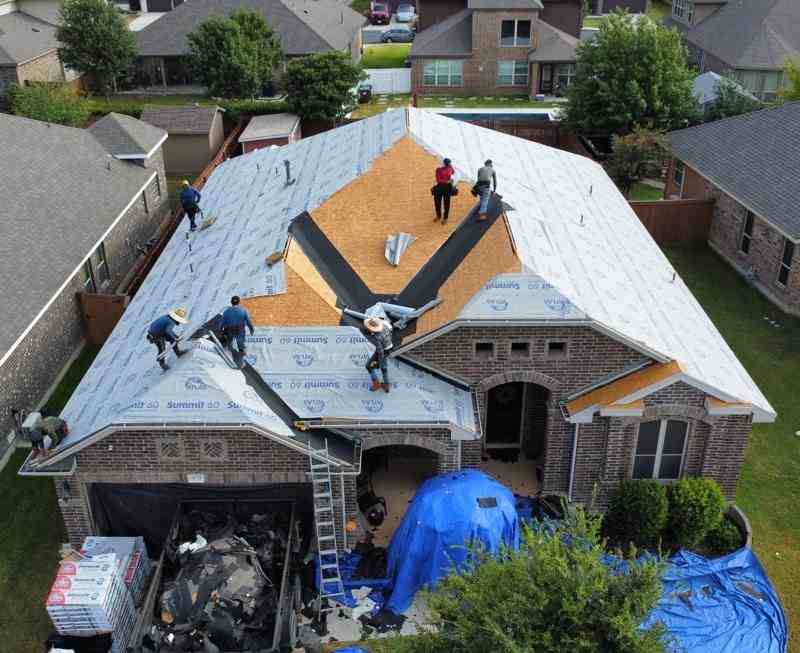
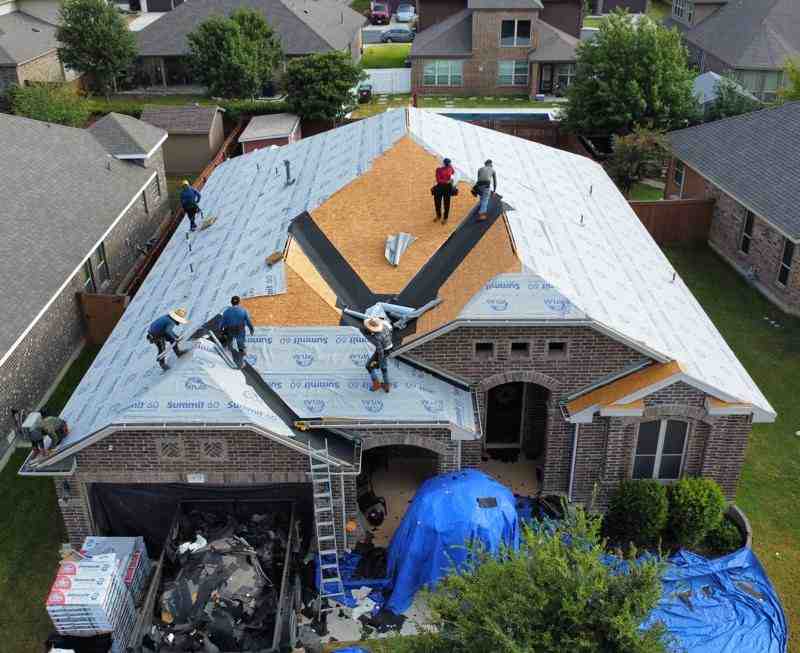
Why Commercial Roof Repair San Antonio TX Can’t Wait
Commercial roof repair in San Antonio, TX is one of the most overlooked — and most costly — maintenance decisions a business owner can make. If you need a quick answer, here’s what you should know right now:
Quick answers for San Antonio commercial property owners:
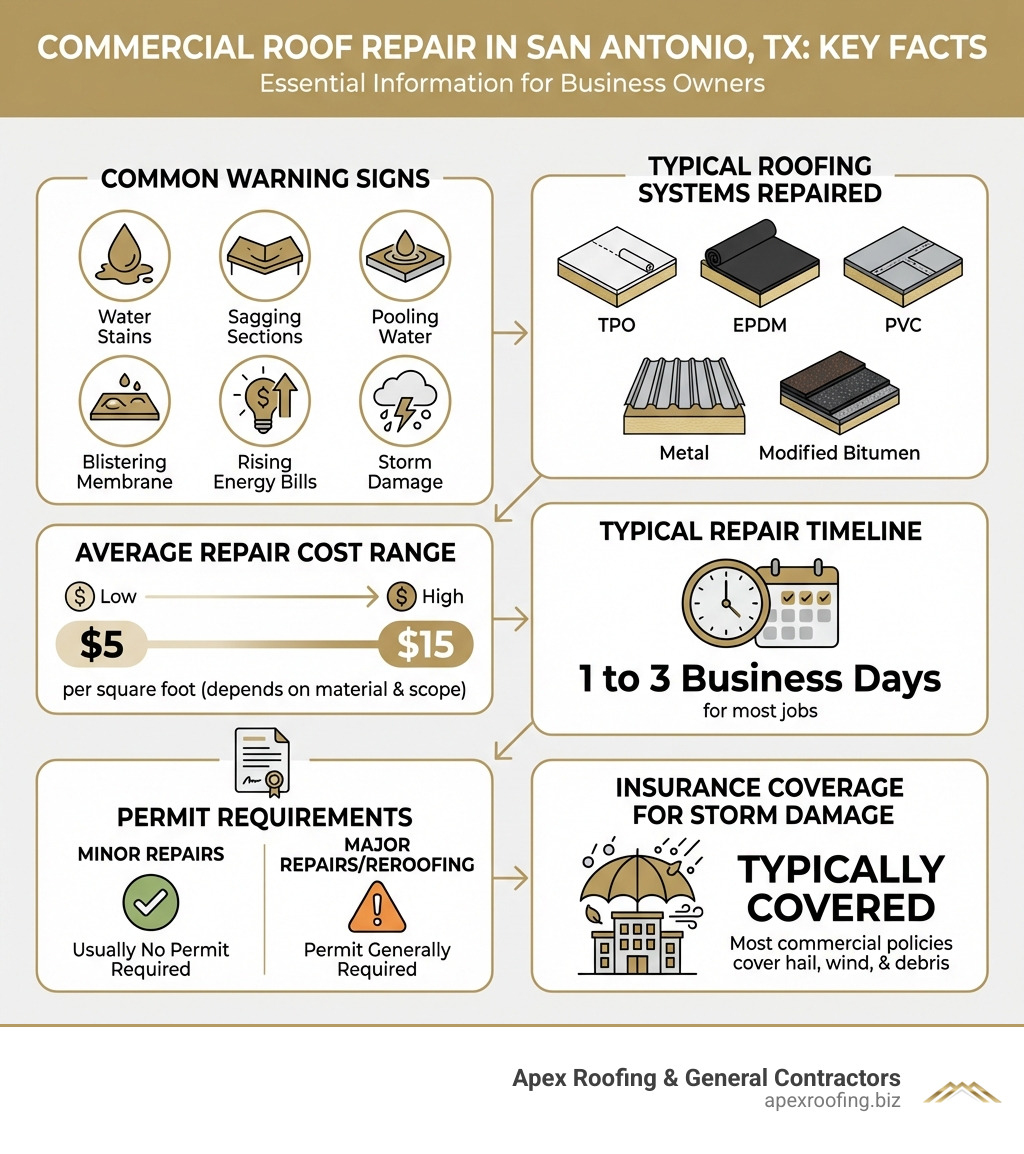
- Signs you need repair: Water stains, sagging sections, pooling water, blistering membrane, rising energy bills, storm damage
- Common roof types repaired: TPO, EPDM, PVC, metal, modified bitumen, built-up roofing (BUR)
- Typical repair cost: $5.00–$15.00 per square foot depending on material and damage scope
- Time to repair: Most jobs are completed in 1–3 business days
- Permits: Minor repairs usually don’t require one; major reroofing projects do
- Insurance: Most commercial policies cover storm-related damage (hail, wind, debris)
San Antonio’s intense heat, sudden hailstorms, and high winds make commercial roofs work harder than almost anywhere else in Texas. Flat roofs — the most common style on commercial buildings — are especially vulnerable. Pooling water, UV degradation, and torn membrane seams can quietly destroy a roof from the inside out, long before a drip ever hits your floor.
As one commercial roofing contractor put it bluntly: those unexpected ceiling leaks always seem to appear right above your expensive equipment or inventory. That’s not just frustrating — it’s a real financial risk.
I’m Carlos Yzaguirre, President of Apex Roofing & General Contractors — a San Antonio-based firm with an A+ BBB rating and hands-on experience in commercial roof repair in San Antonio, TX across a wide range of building types and roofing systems. In this guide, I’ll walk you through exactly how to identify damage early, understand your repair options, and protect your business from unnecessary costs.
Discover more about commercial roof repair san antonio tx:
Identifying the Red Flags: When to Call for Commercial Roof Repair San Antonio TX
If your roof were a patient, San Antonio’s weather would be the ultimate stress test. Between the blistering July sun and the sudden “blue northers” that bring hail, your building’s hat takes a beating. Recognizing the early warning signs of defects or damage is the difference between a simple patch and a budget-busting replacement.
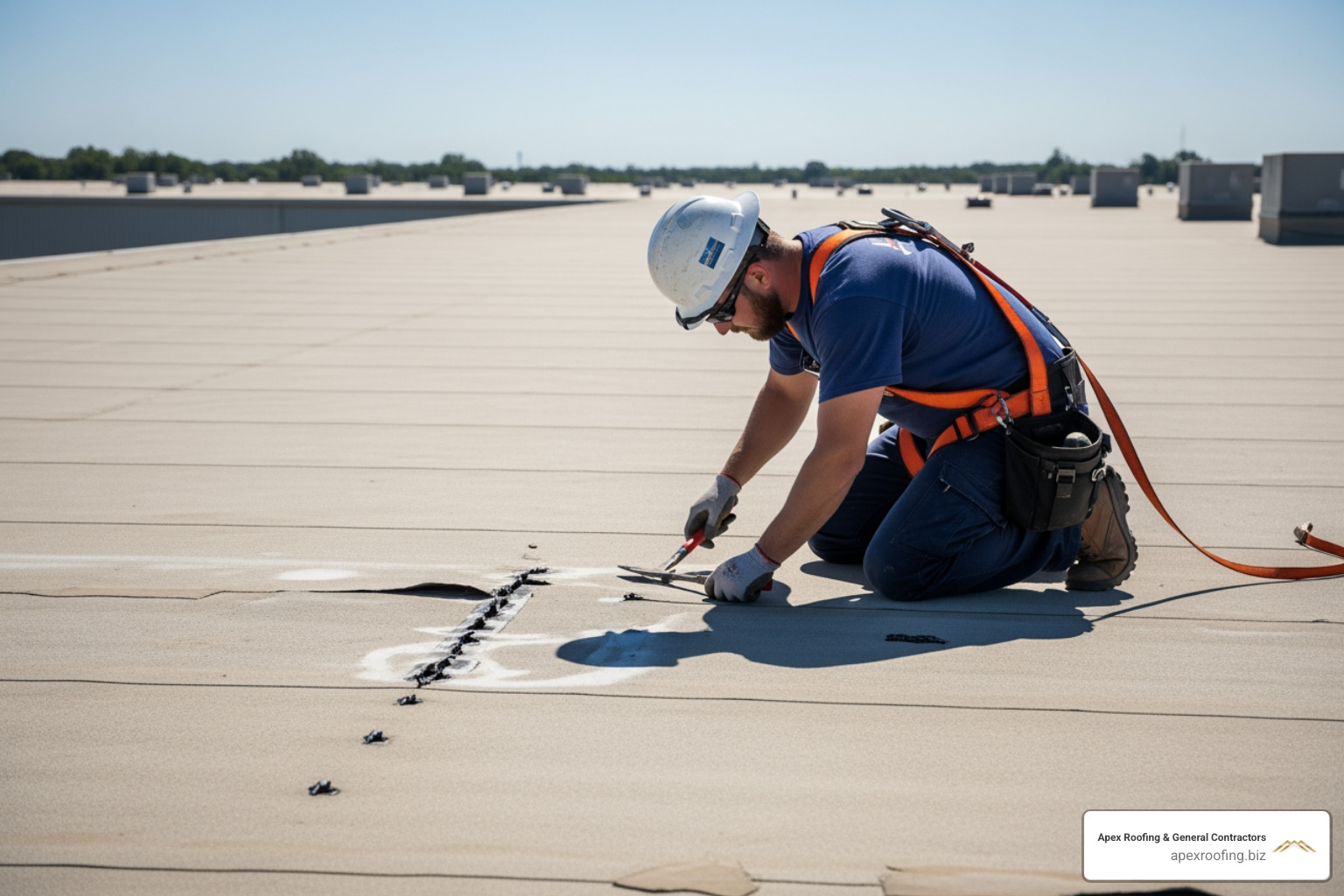
The most obvious sign is water leaks. If you see buckets in the hallway or water stains on ceiling tiles, the damage is already well underway. However, many issues are more subtle:
- Interior Stains: Discoloration on walls or ceilings often indicates slow, seeping leaks that can lead to mold growth.
- Sagging Sections: This is a major red flag. If parts of your roof are dipping, it suggests structural weakening or heavy water buildup (ponding) that the deck can no longer support.
- Standing Water: On a flat roof, water should drain within 48 hours. If you see “mini-lakes” long after the rain stops, your drainage system is failing.
- Punctured Membranes: Dropped tools, heavy HVAC maintenance, or flying debris during a storm can create small holes that act as straws for moisture.
- Blistering: Bubbles in the roof membrane mean air or moisture is trapped underneath, stretching the material and ruining its insulation value.
- Increased Utility Costs: If your AC is working overtime but the building stays warm, your roof’s reflective properties or insulation may be compromised.
- Storm Damage: After a typical South Texas hailstorm, visible dents in metal or cracks in membranes require immediate emergency commercial roof repair.
Common Signs of Membrane Failure
Membranes like TPO and EPDM are the skin of your building. When they fail, the “organs” (your inventory and equipment) are at risk. We frequently see torn seams where the heat-welded or glued edges have pulled apart due to thermal expansion.
UV degradation is another silent killer in San Antonio. Constant sun exposure causes membranes to become brittle, leading to cracking and shrinkage. In TPO systems, keep an eye out for punctures from hail, while EPDM (rubber) systems often suffer from thinning as the material wears down over 15 to 20 years.
Structural Warning Signs in South Texas
Beyond the membrane, the bones of your roof need attention. In Bexar County, we often find rusted metal panels or fasteners on older industrial buildings. If your drains are clogged with debris or bird nests, water backs up, leading to damaged flashing (the metal transitions around vents and walls).
When moisture stays trapped, mold growth follows quickly in our humid climate, which can rot out wooden support structures or degrade gypsum boards. If you suspect your building’s structure is at risk, consulting Commercial Roofers San Antonio TX for a professional core sample or infrared scan is the safest move.
The “How-To” of Commercial Roofing Systems: Repairing TPO, EPDM, and Metal
Every commercial roof is unique, and a “one size fits all” repair approach is a recipe for failure. Whether you have a modern warehouse or a historic downtown office, the repair technique must match the material.
Specialized Techniques for Commercial Roof Repair San Antonio TX Flat Roofs
Flat roofs are the bread and butter of San Antonio’s commercial landscape. Because they don’t shed water as easily as sloped roofs, the repair methods focus on creating a 100% waterproof seal.
- Heat Welding: For TPO and PVC membranes, we use robotic or hand-held welders to fuse new patches to the existing roof using hot air. This creates a bond stronger than the original material.
- Patching and Sealants: EPDM rubber roofs are typically repaired using specialized adhesive tape or liquid “lap sealants” to cover punctures.
- Drainage Correction: If ponding water is the issue, we may install “tapered insulation” to create a slight slope, directing water toward existing scuppers or drains.
- Core Sampling: Not sure if the insulation is wet? We take a small “core” of the roof to inspect the layers underneath.
- Infrared Thermography: We use thermal cameras to find “hot spots” where moisture is trapped under the membrane, allowing us to target repairs precisely without tearing up the whole roof.
| Roofing System | Expected Lifespan | Repair Difficulty | Common San Antonio Issue |
|---|---|---|---|
| TPO | 15–25 Years | Moderate | Seam failure & punctures |
| EPDM | 15–20 Years | Easy | Shrinkage & adhesive failure |
| PVC | 20–30 Years | Moderate | Chemical/Grease damage |
| Metal | 40–50 Years | High | Rust & loose fasteners |
| Modified Bitumen | 10–20 Years | Easy | Cracking & UV damage |
Metal Roof Restoration and Maintenance
Metal roofs are incredibly durable but require a different set of skills. Thermal movement is the biggest challenge; as the Texas sun heats the metal, it expands and contracts, which can back out screws and open up seams.
Our restoration process usually involves rust treatment to stop corrosion in its tracks, followed by fastener tightening or replacement with oversized “repair” screws. We then apply seam sealing tape or liquid coatings to ensure the joints are watertight. For older metal buildings, retrofit systems—installing a new roof directly over the old one—can be a cost-effective way to upgrade without a total tear-off.
Navigating Costs, Permits, and Insurance in Bexar County
Talking about money isn’t always fun, but being informed prevents “sticker shock.” In San Antonio, the average commercial roofing price falls between $5.00 and $15.00 per square foot.
Several factors influence this range:
- Material: TPO and EPDM are generally more affordable, while high-end metal or PVC systems cost more.
- Complexity: A roof with 50 AC units and vents (penetrations) takes much longer to repair than a wide-open warehouse roof.
- Labor: Specialized skills like heat welding or liquid-applied coatings require certified technicians.
San Antonio Permits and Building Codes
Do you need a permit? For minor patches or routine maintenance, the answer is usually no. However, if you are replacing more than 25% of the roof or doing structural work, the City of San Antonio Development Services Department requires a permit. We handle the paperwork to ensure your project meets the latest International Energy Code requirements, such as specific R-values for insulation.
Insurance Claims: Hail and Wind Damage
Texas leads the nation in storm damage. If a hailstorm or high winds hit your property, your business insurance should cover the storm damage roof repair. It is important to remember that in Texas, a contractor cannot legally act as your insurance adjuster, but we can provide the detailed documentation and thermal imagery your adjuster needs to process the claim fairly.
Minimizing Business Disruption During Major Repairs
We know you have a business to run. A roofing project shouldn’t mean a “Closed” sign on your front door. Our goal is to be seen but not heard (as much as possible).
To minimize downtime, we employ several strategies:
- Strategic Scheduling: We can plan major work during your off-hours or weekends to avoid peak customer times.
- Safety Protocols: We use safety flags, cones, and “catch-all” systems to keep your employees and customers safe from falling debris.
- Noise Reduction: We limit the use of heavy machinery during business hours and use quiet, electric tools where possible.
- Entrance Protection: We build temporary “tunnels” or scaffolding over entrances so your customers can enter and exit without worry.
- Staging Areas: We keep our materials and dumpsters in a designated, out-of-the-way spot to preserve your parking spaces.
Choosing a Reliable Partner for Commercial Roof Repair San Antonio TX
Don’t trust your multi-million dollar asset to a “storm chaser.” When looking for certified commercial roofing, verify their credentials. Look for a GAF Certified Contractor with a solid BBB A+ rating. A reliable partner will offer workmanship warranties that go beyond the manufacturer’s material warranty, giving you peace of mind that the labor is just as durable as the product.
Frequently Asked Questions about Commercial Roof Repair
How long do commercial roof repairs typically take?
Most minor to moderate commercial roof repairs in San Antonio are completed within 1 to 3 business days, depending on weather conditions and the complexity of the roofing system. Larger projects, such as a partial restoration or complex flashing replacement, may take longer, but we always provide a clear timeline in our comprehensive estimates.
Does business insurance cover roof repairs after a storm?
Yes, most commercial policies cover repairs necessitated by “sudden and accidental” events like hail, high winds, or fallen debris, though routine wear and tear is typically excluded. We recommend having a professional inspection immediately after a storm to document damage before it leads to secondary issues like mold or interior water damage.
Do I need a permit for commercial roof repairs in San Antonio?
Minor repairs usually do not require a permit, but significant structural work or a full reroofing project requires a permit from the City of San Antonio Development Services Department to ensure code compliance. Working with a licensed contractor like Apex ensures that all local building codes and safety regulations are strictly followed.
Conclusion
Your commercial roof is a high-performance system that requires expert care. While it might be tempting to ignore that small ceiling stain, proactive commercial roof repair in San Antonio, TX can actually double the lifespan of your roof. Research shows that 80% of commercial roof replacements are unnecessary—they could have been avoided with timely restoration or minor repairs.
At Apex Roofing & General Contractors, we believe in building relationships, not just roofs. Whether you need a simple patch for a TPO leak or a full metal roof restoration, we provide transparent communication and reliable service that keeps your business dry and your budget intact.
Don’t wait for the next San Antonio downpour to turn your workspace into an obstacle course of buckets. Protect your investment today.
Contact us for free estimates and call (726) 727-7663 for a free inspection today.