Why San Antonio Homeowners Are Choosing Tile Roofs
Tile roof installation in San Antonio is one of the smartest long-term investments a homeowner can make in South Texas. If you’re researching whether tile is right for your home, here’s what you need to know upfront:
Quick answers at a glance:
| Question | Answer |
|---|---|
| How much does it cost? | $800–$1,200 per square ($12–$30 per sq ft) |
| How long does it last? | 50–100+ years with proper maintenance |
| Best tile types in San Antonio? | Clay and concrete (most popular) |
| Is my home structurally ready? | Needs professional assessment first |
| Typical install timeline? | 2–3 weeks after materials are confirmed |
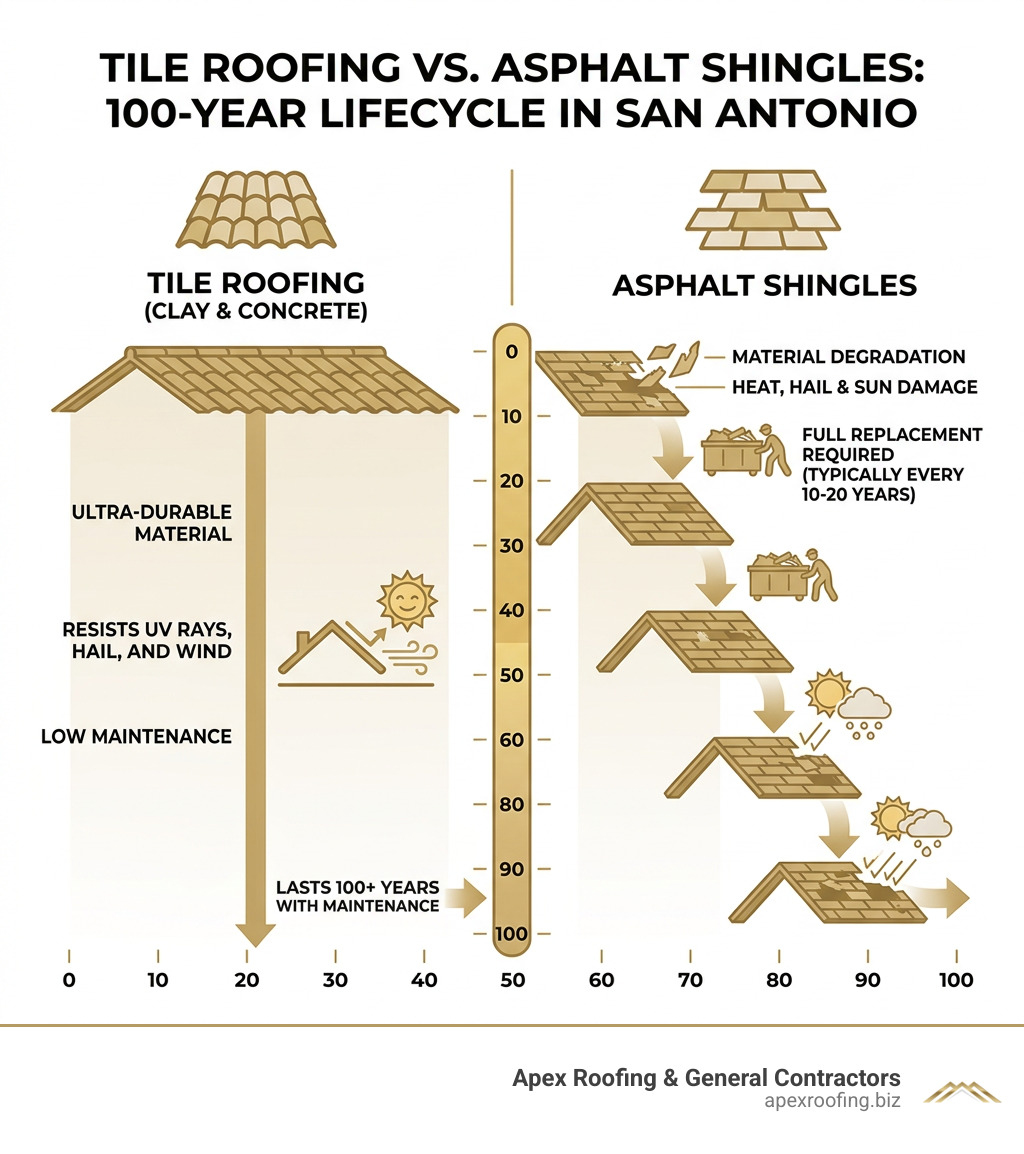
San Antonio’s brutal summers, hail-prone spring seasons, and Spanish-Mediterranean architecture make tile one of the most practical and beautiful roofing choices available. Unlike asphalt shingles — which typically need replacing every 6–10 years — a well-installed tile roof can protect your home for generations.
For homeowners who’ve dealt with contractors who overpromise and underdeliver, getting the right roofing experts in your corner makes all the difference.
I’m Carlos Yzaguirre, President of Apex Roofing & General Contractors, and I’ve guided countless San Antonio homeowners through the process of tile roof installation in San Antonio — from structural assessments to final ridge cap placement. In this guide, I’ll walk you through everything you need to make a confident, informed decision.
Basic tile roof installation in san antonio terms:
- Commercial roofing Helotes
- Certified roofing professionals
- EPDM roofing installation services San Antonio TX
Why Tile Roof Installation in San Antonio is a Superior Choice

When we talk about residential roofing in San Antonio, tile consistently sits at the top of the list for durability. In a region where a single spring storm can pelt your home with golf-ball-sized hail, tile offers a level of protection that standard asphalt shingles simply cannot match. Most concrete tiles are rated to withstand high-impact hail, often qualifying homeowners for significant insurance discounts.
Beyond impact resistance, tile roofs carry a Class-A fire rating, which is the highest level of protection against external fire spread. This is a critical safety feature for homes in more rural or brush-heavy areas of Bexar County. Furthermore, the sheer thermal mass of clay and concrete provides incredible UV protection and insulation. Because tiles are installed individually and often on a batten system, they create a natural air cushion that prevents heat from transferring directly into your attic.
Benefits for the Texas Climate
The San Antonio sun is relentless. A major benefit of tile roof installation in San Antonio is heat reflection. While asphalt absorbs heat and radiates it into the home, tiles reflect a large portion of solar radiation. This natural ventilation system, combined with the material’s pest and rot resistance, makes it the ultimate “set it and forget it” solution for the South Texas environment. When you choose a professional residential roof installation, you are essentially building a thermal shield over your living space.
Long-Term Financial Value
While the upfront cost is higher than other materials, the long-term financial outlook is excellent. A tile roof can last 50 to 100 years, meaning you may never have to pay for a full roof installation in San Antonio again in your lifetime. This longevity significantly boosts your home’s resale value. Potential buyers in neighborhoods like Alamo Heights or The Dominion view a tile roof as a premium asset that eliminates the “roof replacement” worry from their future budget.
Clay vs. Concrete: Choosing the Right Tile Material
Choosing between clay and concrete is one of the most important decisions you’ll make during the planning phase. Both offer incredible durability, but they cater to different aesthetic and budgetary needs.
| Feature | Clay Tiles | Concrete Tiles |
|---|---|---|
| Average Lifespan | 100+ Years | 50+ Years |
| Cost | Higher (Premium) | Moderate |
| Color Retention | Permanent (Kiln-fired) | May fade slightly over decades |
| Weight | Very Heavy | Heavy |
| Styles | Traditional, Barrel, Slate-look | Wood-shake, Flat, Mediterranean |
Clay Tile Characteristics
Clay tiles are the gold standard for new roof installation in San Antonio. These tiles are baked in high-temperature kilns, which locks in the color forever. Whether you prefer the classic Spanish barrel style or a more modern flat profile, clay offers a natural thermal resistance that is hard to beat. Some clay roofs in Europe have lasted for centuries, proving that this material is truly a multi-generational investment.
Concrete Tile Advantages
If you love the look of tile but are watching your budget, concrete is a fantastic alternative. Concrete tiles are highly versatile and can be manufactured to mimic the appearance of wood shakes or expensive slate. They offer a high impact rating and an interlocking design that provides excellent wind resistance. For many looking for roofers near me in San Antonio, concrete tile represents the perfect balance of performance and price.
The Technical Process of Tile Roof Installation in San Antonio
Installing a tile roof is not like slapping on shingles; it is a precision engineering project. Because of the weight and the way water flows over the tiles, every step must be handled with extreme care to prevent leaks and structural issues.
The Step-by-Step Tile Roof Installation in San Antonio Process
- Structural Inspection: We begin by ensuring your home can handle the load (more on this below).
- Underlayment Application: This is the most critical part of the system. We use high-grade, self-adhering underlayment (often called “ice and water shield”) to provide a secondary waterproof barrier.
- Batten System: We install a grid of wood or metal strips (battens) that the tiles hook onto. This creates the air gap that provides insulation.
- Flashing and Valleys: We use premium materials like WakaFlex or heavy-duty lead/copper flashing in valleys and around chimneys to ensure 100% water tightness.
- Tile Layout and Fastening: Tiles are laid out according to a specific “course” to ensure perfect alignment and wind resistance.
- Ridge Caps and Trim: The peaks of the roof are sealed with specialized ridge tiles to finish the aesthetic and the seal.
Our roof installation services focus on these technical details to ensure the roof lasts as long as the tiles themselves.
Structural Considerations for Tile Roof Installation in San Antonio
One of the most frequent questions we get at Apex Roofing is: “Is my home strong enough?” A standard tile roof can weigh between 600 and 1,100 pounds per “square” (a 10×10 area). By comparison, asphalt shingles weigh about 250 pounds.
Before we begin, we must ensure your home complies with San Antonio building codes. This often requires an engineering certification. If your home wasn’t originally built for tile, we may need to perform rafter strengthening or add structural reinforcement. We never guess when it comes to the safety and integrity of your home’s frame.
Cost Analysis and Investment Expectations
Let’s talk numbers. Tile roof installation in San Antonio is a premium service. For a standard home, you can expect the cost to range from $800 to $1,200 per square. For a typical 3,000-square-foot roof, this could mean an investment between $24,000 and $36,000, though high-end custom clay can go higher.
Factors Influencing Total Price
Several variables can shift the final estimate:
- Roof Pitch: Steeper roofs require more safety equipment and slower labor.
- Complexity: The number of chimneys, dormers, and valleys increases the amount of custom cutting and flashing required.
- Structural Upgrades: If your rafters need reinforcement, this adds to the labor and material cost.
- Material Selection: Imported clay tiles from Spain or Portugal will naturally cost more than locally sourced concrete tiles.
Financing and Insurance Support
We understand that this is a major investment. That’s why we offer flexible payment plans and financing options to help make the “forever roof” a reality for more families. Additionally, if you are replacing your roof due to a storm, we provide comprehensive insurance support. We can work with your adjuster to ensure that the full scope of a proper roof replacement in San Antonio is covered, including the high-quality underlayment and flashing that tile requires.
As one satisfied customer, Matthew Karagich, noted: “The job sites are clean and orderly. The roofers are professionals.” That level of detail is what you should expect when investing in a premium roof.
Maintenance and Signs for Repair
While tiles are incredibly durable, they are not indestructible. Walking on a tile roof incorrectly can crack the tiles, and the underlayment beneath the tiles eventually wears out even if the tiles themselves look perfect.
Common Signs Your Tile Roof Needs Attention
- Water Stains on Ceilings: This usually points to a failure in the underlayment or flashing, even if the tiles look fine.
- Slipped or Missing Tiles: High winds or poor original installation can cause tiles to slide out of place, exposing the underlayment to the sun.
- Clogged Valleys: Leaves and debris can trap water, causing it to “back up” under the tiles and into your home.
- Cracked Tiles: Hail or falling branches can chip or break tiles, which should be replaced immediately to prevent UV damage to the underlayment.
If you notice these issues, it’s time to call a residential roofing contractor near me for a professional inspection.
The Tile “Relay” Process
One of the unique benefits of tile is the “relay.” If your tiles are still in good shape but your underlayment has reached the end of its 25-30 year life, we can perform a relay. We carefully remove and salvage your existing tiles, replace the underlayment and flashing, and then reinstall the original tiles. This is a cost-effective way to get another 30 years of life out of your roof without the cost of new tiles.
Frequently Asked Questions about Tile Roofing
Is my home strong enough for a tile roof?
Most modern homes can be reinforced to handle the weight, but older homes require a thorough structural engineering check. We look at the size of your rafters and the load-bearing walls to ensure everything meets San Antonio building codes.
How long does a tile roof actually last in Texas?
In the San Antonio climate, you can expect at least 50 years from concrete and 100+ years from clay. The main variable is the quality of the underlayment used during the initial tile roof installation in San Antonio.
How does tile compare to metal roofing?
Tile offers superior noise insulation (you won’t hear the rain as much) and a more traditional aesthetic. While metal is also durable, tile has a higher thermal mass, which can be more effective at stabilizing indoor temperatures during 100-degree San Antonio days.
Conclusion
At Apex Roofing & General Contractors, we pride ourselves on being the most reliable choice for residential roof installation in the region. We don’t just “lay tiles”; we engineer roofing systems designed to protect your family for the next century. From ensuring strict compliance with local building codes to providing transparent, honest communication throughout the project, our goal is your total peace of mind.
If you’re ready to upgrade to the beauty and durability of a tile roof, let’s talk. For expert consultation, free estimates, and to schedule your free inspection, contact our team at (726) 727-7663. We look forward to helping you build a roof that lasts a lifetime.