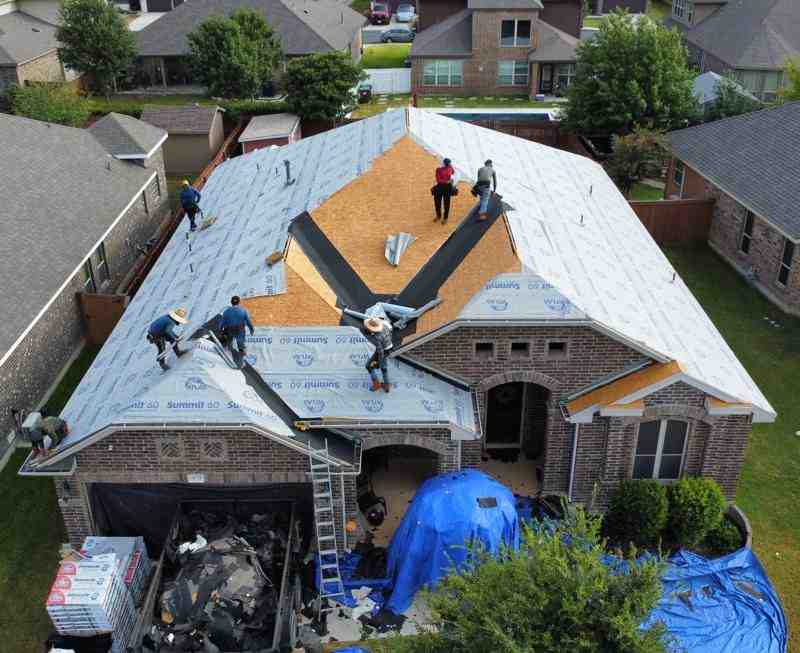
Why Protecting Your San Antonio Home Starts with Your Roof
Your roof is your home’s first line of defense against San Antonio’s unpredictable weather, making a timely damaged shingles repair essential for protecting your investment. A single compromised shingle can allow water to seep into your underlayment, causing costly interior damage, mold, and structural issues. While many minor fixes are manageable for a DIYer, knowing when to call for professional roof repair can save you thousands. As a leading San Antonio roofing company, we believe an informed homeowner is a protected homeowner.
Quick Answer: How to Repair Damaged Shingles
- Assess the damage – Look for missing, cracked, curled, or blistered shingles
- Gather your tools – Pry bar, hammer, roofing nails, sealant, and replacement shingles
- For minor damage – Apply roofing cement under curls or over small cracks
- For missing shingles – Remove surrounding nails, slide out the damaged shingle, install a new one, and seal it down
- Know your limits – Call a professional if more than 2-3 shingles are damaged or you see interior leaks
This vigilance is especially critical in Texas, which accounted for nearly a quarter of all U.S. properties affected by hailstorms in 2021. Bexar County alone saw an estimated 93,766 properties damaged, and around 17% of Texas properties will experience hail damage annually. A roof is only as strong as its weakest point, making quick action essential.
What makes a shingle repair successful:
- Timing – Address damage immediately after storms
- Proper materials – Match your existing shingles and use quality sealant
- Right conditions – Work on warm, dry days when shingles are pliable
- Safety first – Use proper equipment or hire professionals for steep roofs
- Thorough inspection – Check for hidden damage beneath visible problems
As Carlos Yzaguirre, President of Apex Roofing & General Contractors in San Antonio, I’ve guided countless homeowners through the damaged shingles repair process since 2022, helping them understand when a DIY fix will suffice and when professional intervention is the smarter, safer choice. This guide will walk you through everything you need to know to make that decision confidently and protect your most valuable investment.
Damaged shingles repair terminology:
First, Identify the Damage: What to Look For
Before any repair can begin, a thorough inspection is necessary to understand the extent of the problem. Damage isn’t always obvious from the ground, but knowing the signs can help you spot trouble early. After a storm, especially in areas like Bexar County which sees significant hail, a roof check is essential.
Texas is a hotspot for hailstorms, with nearly a quarter of all U.S. properties affected in 2021. Bexar County alone experienced an estimated 93,766 properties impacted in the same year. This means that as a San Antonio homeowner, understanding how to identify roof damage is not just helpful, it’s crucial. We recommend a visual inspection of your roof at least twice a year, ideally in spring and fall, and always after any significant weather event.
What are the common signs of damaged roof shingles?
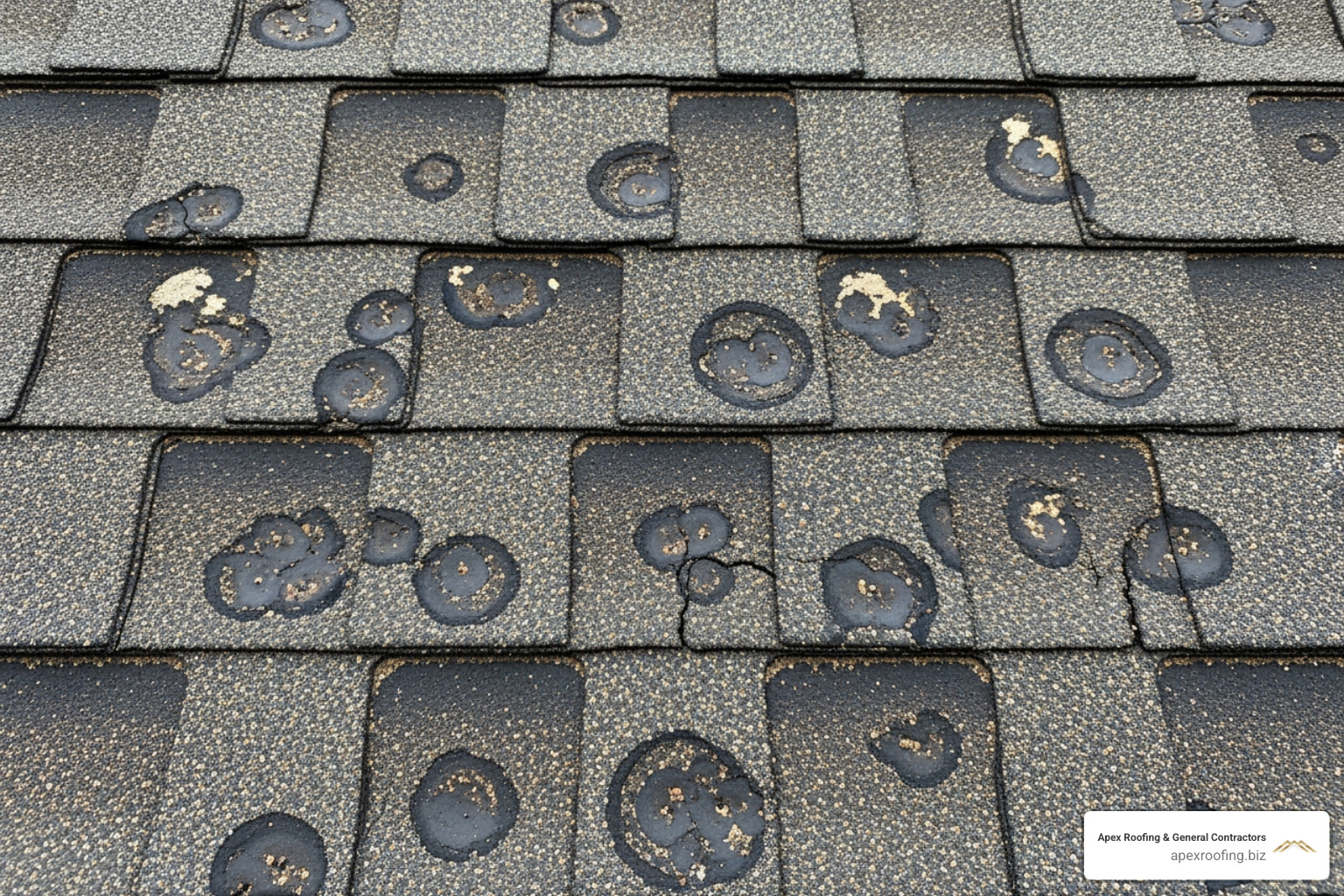
- Visible Dents and Bruises: After a hailstorm, look for dark, circular “bruises” on your shingles. These are impact marks where hail has compressed or fractured the shingle’s surface. These can expose the underlying fiberglass mat, leading to premature deterioration.
- Granule Loss: Check your gutters and downspouts for an accumulation of asphalt shingle granules. These small, sand-like particles protect your shingles from UV rays and weathering. Their loss exposes the asphalt to direct sunlight, accelerating aging.
- Cracks or Breaks: Shingles can crack or split due to thermal expansion and contraction, wind stress, or impact damage. These cracks compromise the shingle’s integrity and allow water to seep beneath.
- Curling or Lifting Edges: Shingles that curl upwards at the edges or “claw” in the middle are often a sign of aging, moisture absorption, or inadequate attic ventilation. This can lead to wind uplift and water infiltration.
- Missing Shingles: High winds can lift and tear shingles completely off the roof, leaving exposed sections of underlayment. This is an obvious vulnerability for water leaks.
- Blistering: Blisters appear as raised bubbles on the shingle surface, typically caused by trapped moisture or excessive heat. These can pop, creating small craters that expose the shingle’s core.
- Damaged Roof Vents and Flashings: Don’t forget to check metal components like vents, flashing around chimneys, and skylights. Hail can dent these, and wind can loosen them, creating pathways for water.
- Water Stains in the Attic: If you see discoloration or moisture on your attic ceiling or walls, it’s a clear indicator of a roof leak. Water often travels, so the stain may not be directly below the source of the leak.
- Debris in Gutters: Beyond granules, large pieces of shingle or other roof debris in your gutters signal that your roof has sustained damage.
Understanding these signs is your first step in effective damaged shingles repair. For a closer look at specific hail damage, you can refer to our guide on What hail damage looks like on a roof.
Common Types of Shingle Damage
When we talk about damaged shingles repair, we’re often addressing specific types of wear and tear. Each type of damage has its own characteristics and implications for your roof’s health.
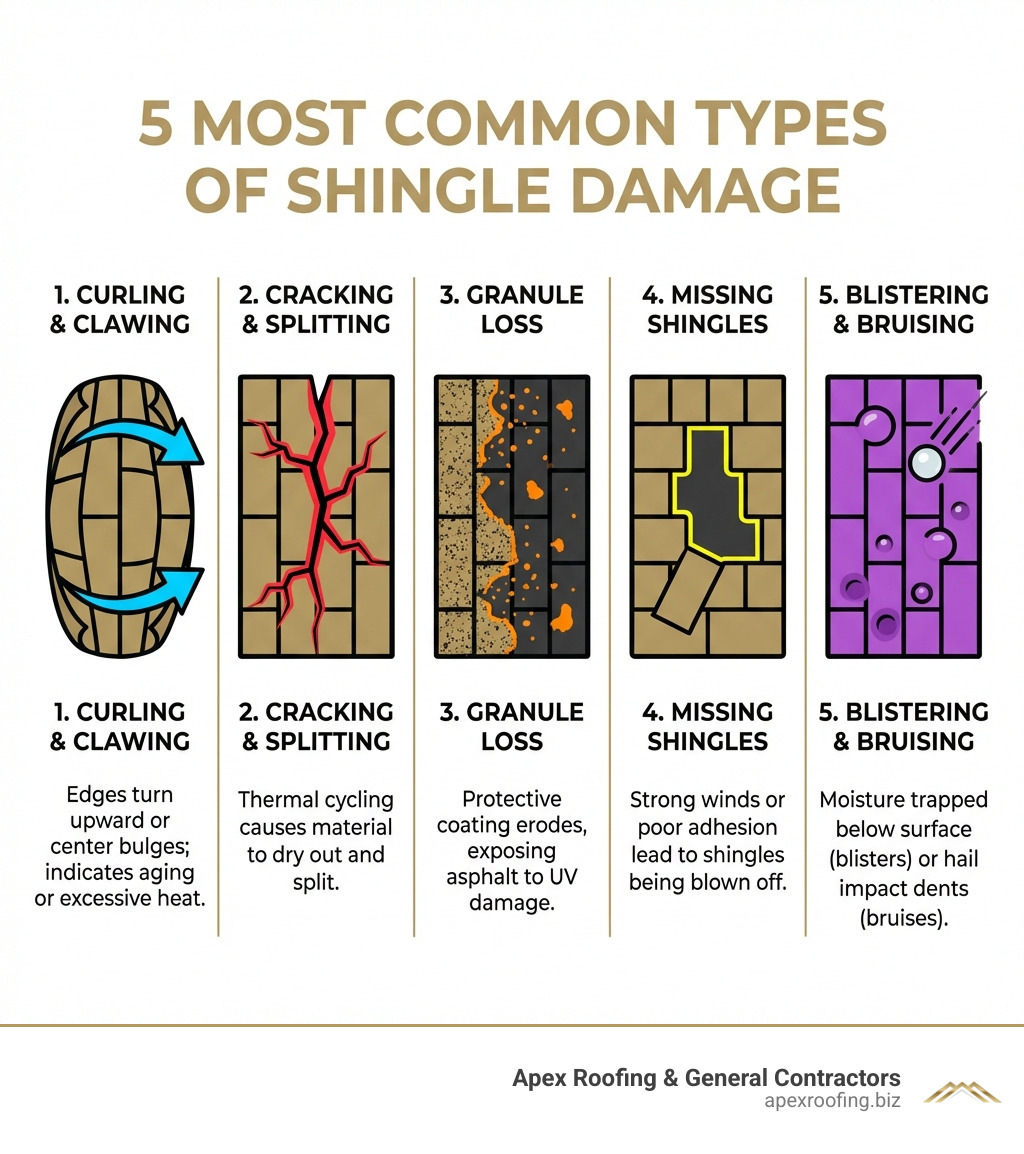
- Curling & Clawing: Shingle edges begin to curl upwards or the tabs lift, often due to age, moisture absorption, or improper attic ventilation. This compromises the shingle’s ability to shed water and makes it susceptible to wind uplift.
- Cracking & Splitting: Caused by wind, thermal expansion/contraction, or impact, these cracks can range from hairline fractures to significant splits. They leave the underlying roof deck vulnerable to water intrusion and expose the shingle’s core to the elements.
- Granule Loss: Hail, strong winds, and the natural aging process can strip away the protective mineral granules that cover the asphalt layer of your shingles. This exposes the asphalt to damaging UV rays, accelerating its deterioration. You’ll often find these granules accumulating in your gutters.
- Missing or Blown-Off Shingles: High winds, especially during strong Texas storms, can lift and tear shingles completely off the roof, leaving an obvious gap in your home’s defense. This immediately exposes the underlayment and potentially the roof deck to rain and sun.
- Blistering & Bruising: Blisters look like bubbles on the shingle’s surface, usually from trapped moisture during manufacturing or excessive heat in the attic. These can pop and create small craters. Bruises from hail appear as dark, soft spots where granules have been knocked loose, often indicating a hidden fracture in the shingle mat.
DIY vs. Professional Repair: Making the Right Call
Deciding whether to tackle a damaged shingles repair yourself or call a professional depends on the extent of the damage, your comfort level with heights, and safety. While a single cracked shingle might be a manageable DIY project, widespread issues often require an expert eye.
Here’s a quick comparison to help you weigh your options:
| Factor | DIY Repair | Professional Repair |
|---|---|---|
| Cost | Lower initial material cost | Higher upfront cost, but often more cost-effective long-term |
| Time | Can be time-consuming for inexperienced homeowners | Efficient and typically quicker due to expertise |
| Safety | High risk of injury without proper training/equipment | Minimized risk due to professional safety protocols |
| Warranty | May void existing roof warranty; no repair warranty | Work often comes with a warranty; preserves existing roof warranty |
| Quality of Repair | Varies based on skill; potential for improper fixes | Consistent, high-quality repair with lasting results |
The Risks of DIY and When to Call a Pro
Safety is the primary risk when considering DIY damaged shingles repair; working on a roof, especially a steep one, can be dangerous without proper equipment like a harness and non-slip shoes. Always ensure your ladder is sturdy and secure, using the 4-to-1 rule (1 foot out for every 4 feet up) and having a helper to steady it. Never attempt repairs during bad weather, high winds, or when shingles are wet. An improper repair can also void your roof’s warranty or cause more significant leaks, turning a small problem into a costly disaster.
You should call for professional help if you notice:
- More than 2-3 damaged shingles in one area: This often indicates a larger underlying issue or a significant weather event that might have caused latent damage to surrounding shingles.
- Damage is widespread across the roof: If numerous shingles are affected, a full roof assessment is needed, and a piecemeal DIY approach won’t be effective.
- The roof is sagging: This is a serious structural issue that requires immediate professional attention and is far beyond any DIY repair.
- You see signs of a leak inside your home: Water stains on ceilings or walls indicate a breach in your roof system. Finding the exact source can be tricky, as water often travels before manifesting.
- You’re unsure of the damage source: Sometimes, damage isn’t obvious, or you can’t tell if it’s from hail, wind, or just age. Licensed roof inspectors can identify underlying issues you might miss.
- Damage to flashing or vents: These are critical areas for water diversion, and their repair often requires specialized knowledge.
The Role of a Professional Inspection
A professional assessment provides a comprehensive understanding of your roof’s condition. Experts use their experience to spot subtle, latent damage that could become a major problem later. For example, hail damage might not immediately cause a leak but can weaken the shingle, leading to premature failure years down the line. Professional roofers can also use advanced tools like moisture meters or thermal imaging to detect hidden issues not visible to the naked eye.
Many reputable companies, like Apex Roofing & General Contractors, offer a free roof inspection in San Antonio to give you a clear picture before any work begins. This allows us to document the damage with photos, assess the extent, and provide a detailed, written estimate, which is crucial for insurance claims. You should never have to pay for a roof inspection; if a roofer charges for it, it’s often best to look elsewhere.
Your Step-by-Step Guide to Damaged Shingles Repair
For minor, isolated damage, a DIY damaged shingles repair is possible with the right tools and techniques. Always perform roof work on a clear, dry, and warm day (temperatures above 45 degrees Fahrenheit are ideal for sealants to bond) when shingles are more pliable. Avoid working in high winds or when the roof is wet.
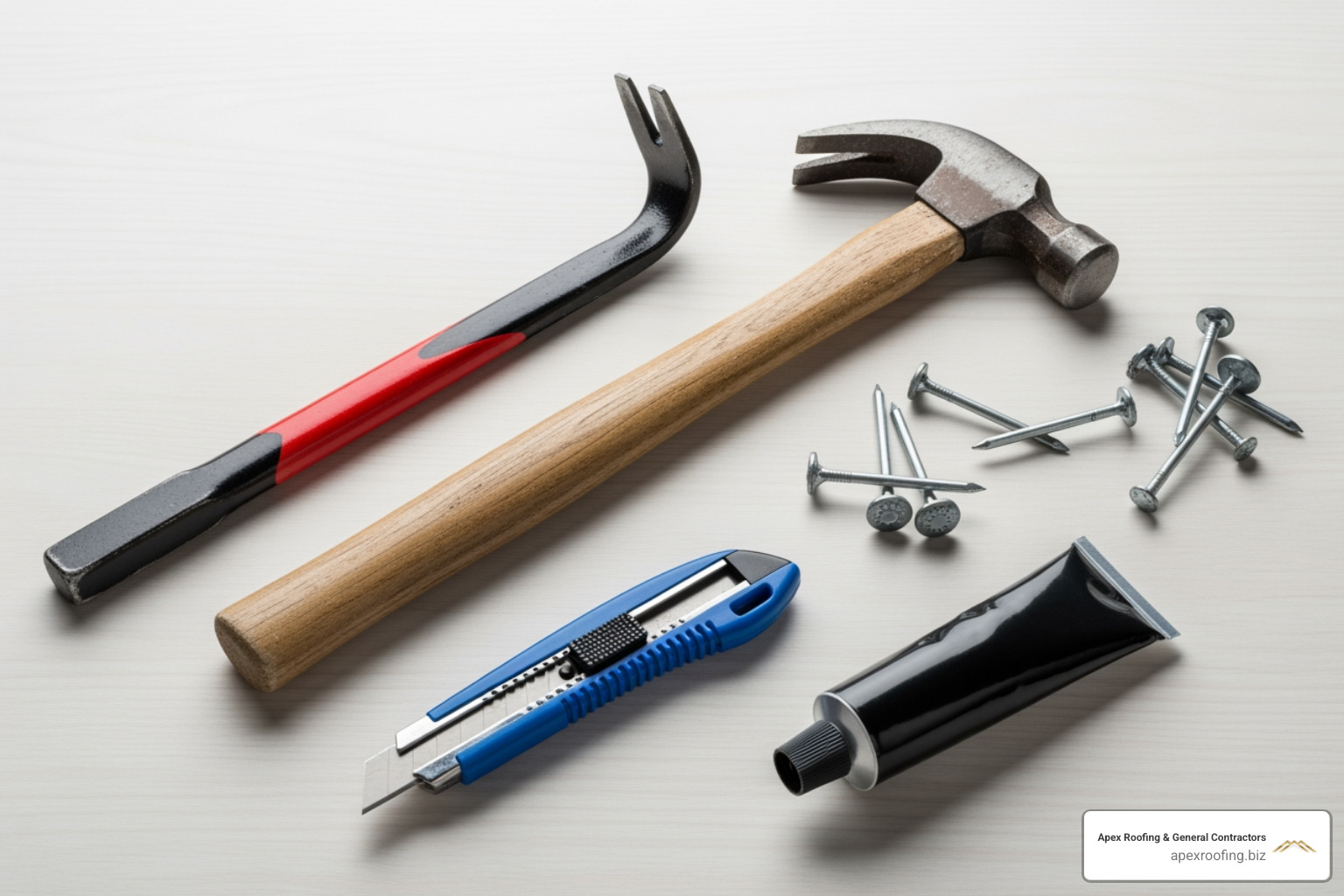
Tools and Materials for Damaged Shingles Repair
Before climbing on your roof, gather everything you’ll need. Running up and down a ladder repeatedly is not only inefficient but also increases safety risks.
- Safety Gear: Non-slip shoes (with good grip), safety harness (especially for steep roofs), gloves (to protect your hands), safety glasses (to protect from flying debris).
- Tools: Flat pry bar (essential for lifting shingles and removing nails), hammer, utility knife (for cutting shingles), putty knife (for spreading sealant), caulking gun (for applying roofing cement/sealant), sturdy extension ladder.
- Materials: Replacement shingles (ensure they match your current roof in color, type, and size; it’s always good to keep a few spares), 1 ¼-inch galvanized roofing nails (galvanized prevents rust), roofing cement/sealant (asphalt-based for asphalt shingles), and a small brush or rag for cleaning.
How to Replace a Missing or Damaged Shingle
Replacing a missing or severely damaged shingle is one of the most common damaged shingles repair tasks. Follow these steps carefully:
- Safety First: Secure your ladder, put on all your safety gear, and ensure you have a helper if needed. Never work alone on a roof.
- Break the Seals: Gently slide a flat pry bar under the shingle directly above the damaged one to break its sealant bond. Do the same for the shingles on either side of the damaged one. This makes it easier to access the nails without damaging surrounding shingles. Doing this on a cooler day can make the sealant more brittle and easier to shear, but be careful not to distort the shingles.
- Remove the Nails: With the overlying shingle lifted, use the pry bar to carefully remove the 4-6 nails holding the damaged shingle in place. Ensure you get all the nails.
- Remove the Old Shingle: Once all nails are out and seals are broken, carefully slide the damaged shingle out from under the overlying shingles.
- Inspect the Underlayment: Before installing the new shingle, check the underlayment beneath for any moisture or damage. If it’s wet or compromised, you might have a larger issue that requires professional attention.
- Install the New Shingle: Slide the new shingle into position, ensuring it aligns perfectly with the surrounding shingles and has the same exposure (the part of the shingle visible).
- Nail it Down: Lift the overlying shingle and secure the new one with four galvanized roofing nails. Place the nails about one inch above the shingle cutouts, ensuring they go through the tar strip for proper adhesion and are covered by the overlapping shingle above. Avoid over-driving the nails.
- Seal Everything: Apply a small dab of roofing cement over each new nail head to seal the holes. Then, apply a bead of roofing sealant (asphalt plastic roof cement) under the tabs of the newly replaced shingle and any other shingles whose seals you broke. Press down firmly to create a strong bond.
For more detailed guidance on handling roof penetrations or larger holes, check out our guide on how to repair a hole in a shingle roof.
How to Fix Curled or Cracked Shingles
Minor curling or cracking can often be fixed without full shingle replacement, especially if the shingle mat is still intact.
- For Curled Shingles: On a warm day when the shingles are most pliable, gently lift the curled edge. Clean any debris or dirt from underneath. Apply a thick bead of roofing sealant (using your caulking gun) underneath the curled section. Press the shingle down firmly, ensuring good contact with the sealant. To ensure a strong, lasting bond, place a brick or other heavy, flat object on top of the repaired section for at least 24 hours while the sealant cures.
- For Cracked Shingles: For small cracks or splits, you can often seal them. First, ensure the area is clean and dry. Apply roofing sealant directly into the crack with your caulking gun, then use a putty knife to spread it evenly and firmly into the crack. Press the shingle down to close the crack as much as possible. Apply another thin layer of sealant over the top of the crack, feathering it out at the edges to blend. For a less noticeable repair, you can collect matching granules from your gutters and sprinkle them over the wet sealant. This helps protect the sealant from UV rays and matches the shingle’s texture.
Repair or Replace? Knowing When It’s Time for a New Roof
Sometimes, a simple damaged shingles repair isn’t enough. Continuing to patch an old, failing roof can be more costly in the long run than a full replacement. As your roof ages, individual repairs become less effective and more frequent, eventually signaling that a complete overhaul is necessary.
When is Damaged Shingles Repair Not Enough?
A full roof replacement is generally the better option when:
- Widespread Damage: If more than 30% of your roof is damaged, replacing individual shingles becomes inefficient and uneconomical. This threshold often indicates that the entire roof system has been compromised by age or severe weather.
- Age: Your roof is approaching or has exceeded its typical lifespan. For asphalt shingles, this is usually 20-25 years. Trying to repair an old roof often means that nearby shingles, equally aged, will soon fail, leading to continuous repairs.
- Multiple Leaks: If you’re experiencing recurring leaks in different areas of your home, it suggests a systemic failure of your roofing system, not just isolated shingle damage.
- Cost-Effectiveness: The cumulative cost of continuous repairs is adding up to a significant fraction of a full replacement cost. At some point, investing in a new roof provides better long-term value and peace of mind.
- Interior Warning Signs: Persistent high electric bills, significant water damage inside your home, or fungal growth in your attic are all strong indicators that your roof’s protective capabilities are severely diminished.
- Structural Issues: If you notice sagging spots on your roof or visible damage to the roof deck, it’s a sign of serious structural compromise that requires a full replacement and underlying repairs.
- Unavailability of Matching Shingles: Over time, shingle colors fade, and manufacturers discontinue styles. If you can’t find replacement shingles that match, a full replacement might be necessary for aesthetic consistency, especially if the repairs would look spotty.
For a comprehensive understanding of this decision, our Roof Shingle Replacement Complete Guide offers further insights.
Proactive Care: Preventing Future Damage
The best repair is the one you never have to make. Regular maintenance can significantly extend the life of your roof and prevent minor issues from becoming major headaches. Proactive care is especially important in San Antonio, where intense sun and sudden storms can accelerate roof wear.
- Regular Inspections: Visually inspect your roof at least twice a year (ideally in spring and fall) and always after major storms, especially those involving hail or high winds. Look for any of the signs of damage we discussed earlier. Document any changes with photos and notes.
- Keep it Clean: Regularly clear debris like leaves, branches, and pine needles from your roof surface. Accumulated debris can trap moisture, promote mold and moss growth, and even create weak points where wind can catch and lift shingles.
- Gutter Maintenance: Ensure your gutters and downspouts are clean and clear. Clogged gutters prevent proper water drainage, leading to water backing up under your shingles or overflowing, which can cause fascia and siding damage. Good drainage is key to preventing water-related shingle damage.
- Trim Trees: Keep overhanging tree branches trimmed back from your roof. This reduces the risk of branches falling and damaging shingles during storms, minimizes debris accumulation, and prevents critters from gaining easy access to your roof.
- Address Ventilation: Ensure your attic has proper ventilation. Inadequate attic ventilation can lead to excessive heat buildup, which can cook your shingles from the underside, accelerating curling, cracking, and granule loss.
- Professional Roof Inspections: Even with diligent DIY inspections, we recommend hiring a professional every few years. They can spot latent damage and potential issues that might be invisible to the untrained eye, ensuring your roof remains in optimal condition. This role of professional inspection is crucial for long-term roof health.
Need Help with Your Roof?
Fixing a few damaged shingles can be a rewarding DIY project that saves you money and protects your home. However, knowing your limits is key to staying safe and ensuring a quality, long-lasting repair. For widespread damage, complex issues, or if you simply want the peace of mind that comes with a professional job, don’t hesitate to reach out. The certified team at Apex Roofing & General Contractors is here to help with everything from minor repairs to full replacements. We pride ourselves on transparent communication and compliance with local building codes, ensuring your roof is not just repaired, but restored to its optimal condition.
Contact us today for a free estimate. Call (726) 727-7663 to schedule your free inspection.