Don’t Let a Small Drip Become a Big Problem
A leaking rubber roof can quickly escalate from a minor issue to a costly nightmare. Whether you see water stains or subtle separated seams, prompt action is crucial to prevent expensive water damage. Rubber (EPDM) roofs have an average lifespan of 20 to 25 years, but leaks can occur due to seam failure or punctures. For comprehensive help with any roofing challenge, explore our professional roofing services designed to keep San Antonio properties protected year-round.
Quick Fix Guide for a Leaking Rubber Roof:
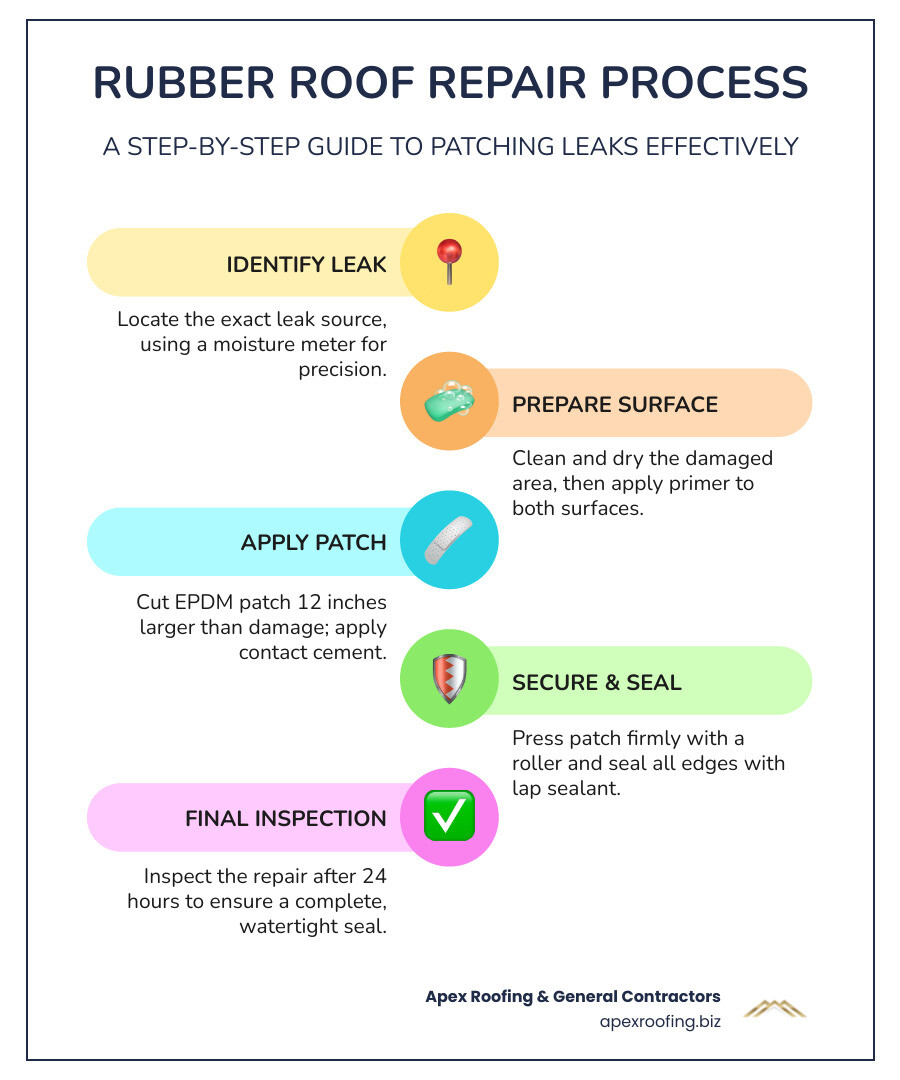
- Identify the leak: Look for water stains, bulges, wrinkled membrane, or attic moisture.
- Clean the area: Remove debris and use a membrane cleaner.
- Apply the patch: Cut EPDM patch material 12 inches larger than the damage.
- Seal completely: Use rubber-to-rubber contact cement and lap sealant on the edges.
- Inspect regularly: Check your roof twice a year to catch problems early.
This guide will walk you through identifying, repairing, and preventing leaks in your rubber roof. I’m Carlos Yzaguirre, President of Apex Roofing & General Contractors, and I’ve helped countless San Antonio property owners prevent minor leaks from becoming major structural problems. This article provides the knowledge you need to make the right decisions for your property.
Spotting the Signs: How to Find a Leak in Your Rubber Roof
A leaking rubber roof doesn’t always announce itself with a drip. Subtle signs like a bulge in the membrane or a separated seam can be easy to miss. Early detection is your best defense against turning a minor issue into a major expense. Knowing what to look for makes spotting trouble much easier. For more tips on identifying these issues, see our blog post: 5 Tips to Help You Identify and Repair Roof Leaks in Rubber Roof Coatings.
Obvious vs. Overlooked Leak Indicators
Some signs are obvious, while others are subtle. Understanding both can save you from extensive water damage.
Obvious Signs:
- Water stains: Dark, discolored patches on ceilings or walls.
- Active drips: Water dripping during or after rain.
- Mold growth: Found in attics, closets, or along wall corners.
- Musty odors: An earthy smell indicating hidden moisture.
Overlooked Signs:
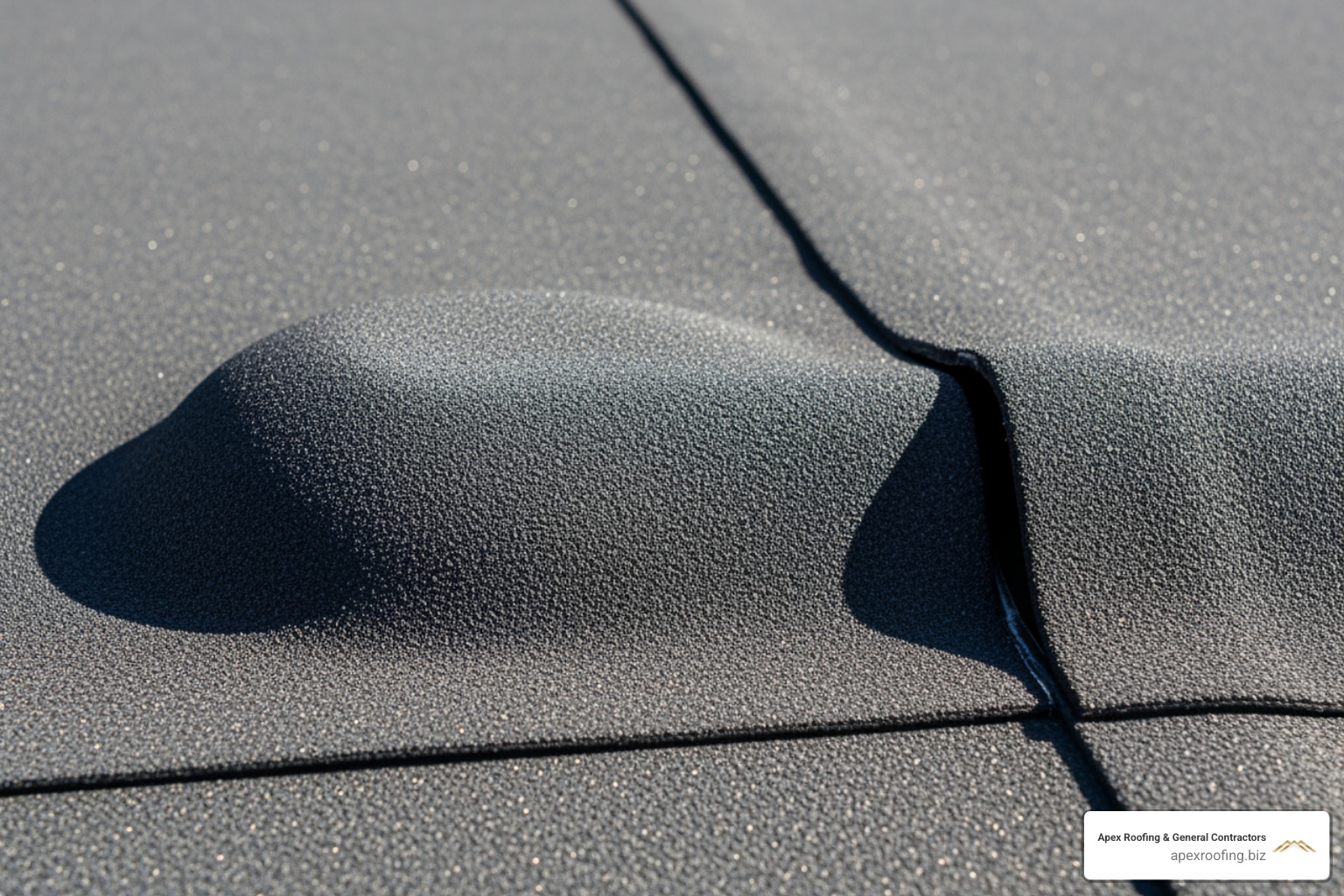
- Bulging membrane: Indicates moisture has degraded the insulation underneath.
- Low spots or dips: Subtle depressions signaling deteriorated insulation.
- Wrinkled membrane: Means moisture has seeped under the membrane, degrading the adhesive.
- Loose rubber: Lifting or bubbling at seams and edges indicates lost adhesion.
- Water squeezing from seams: Pressing on seams after rain may reveal hidden failures.
The Primary Causes of a Leaking Rubber Roof
Understanding why rubber roofs leak helps with prevention and repair. Most failures trace back to a few common causes.
- Seam failure: The most common culprit. Adhesive degrades over time from UV exposure and temperature changes, allowing seams to separate.
- Lost adhesion: The membrane lifts or bubbles from the substrate, creating pockets for water.
- Punctures and tears: Caused by foot traffic, falling branches, hail, or dropped tools.
- Shrinkage: The EPDM membrane can shrink over time, pulling away from flashings and stressing seams.
- Damaged flashing: Flashing around chimneys, vents, and walls can corrode or lose its seal, creating an entry point for water.
- Ponding water: Standing water accelerates material degradation and stresses seams.
- Improper installation: Poor surface prep, incorrect adhesive application, or other errors can lead to premature failure.
- UV degradation: Over many years, sun exposure can make the membrane brittle and prone to cracking.
For more detailed information on leak causes, read: Why is My Roof Leaking? Causes and Effective Roof Leak Repair Strategies to Protect Your Home.
How to Fix a Leaking Rubber Roof: Repair Methods Explained
Once you’ve found a leaking rubber roof, the next step is choosing the right repair. Most leaks can be fixed, adding years to your roof’s life. Repair options range from DIY patch kits to professional-grade coatings. Matching the technique to the damage is key. For a detailed breakdown of various repair approaches, see: EPDM Flat Roof Repair.
Step-by-Step Guide to Patching a Leaking Rubber Roof
For small punctures or tears, a proper patch is an effective DIY repair. Success depends on careful preparation.
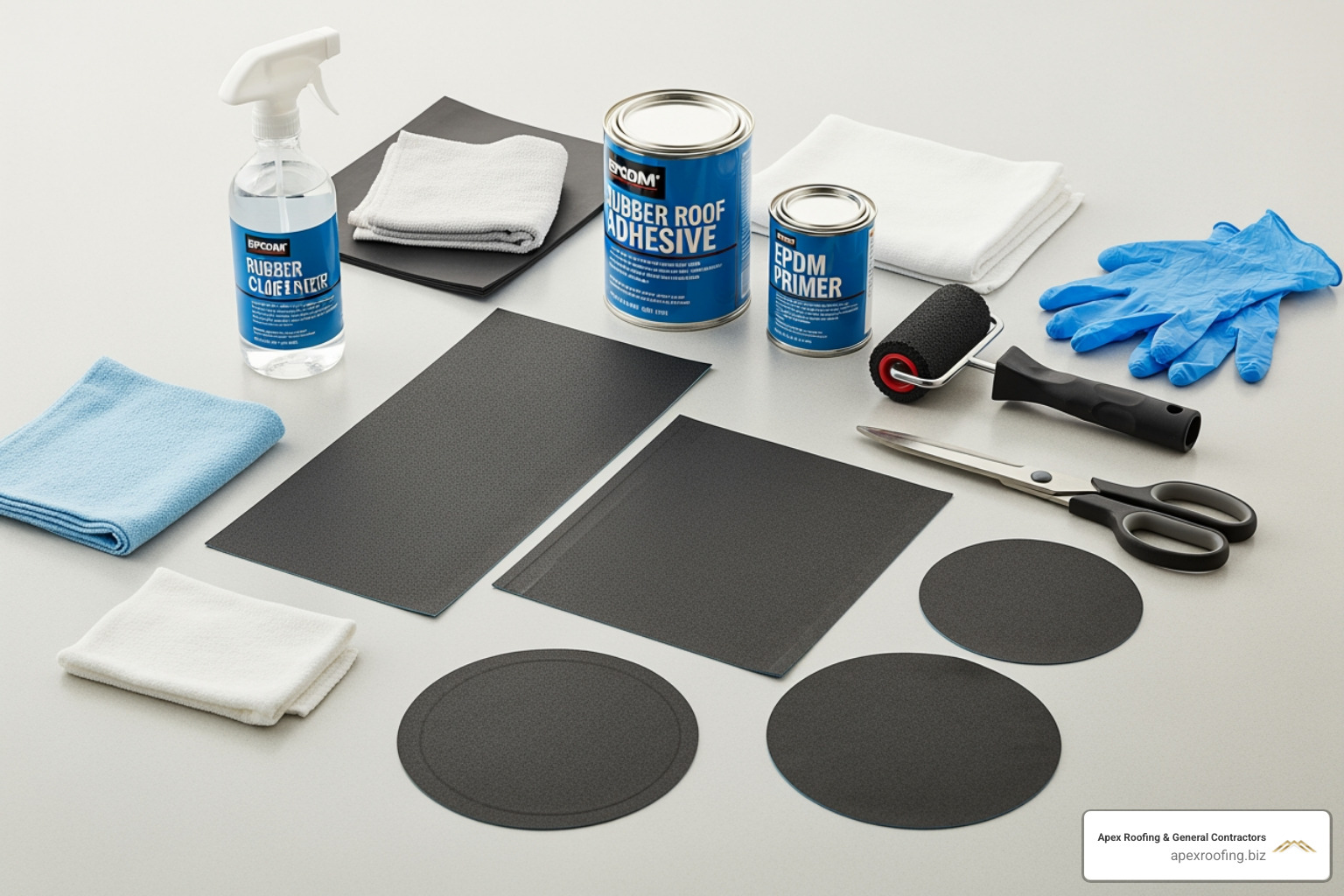
What You’ll Need: EPDM patching material, membrane cleaner, rubber-to-rubber contact cement (or primer/adhesive), lap sealant, utility knife, brush, hand roller, and safety gear. If insulation is damaged, you’ll also need fiberboard substrate and fasteners.
The Repair Process:
- Assess Damage: If insulation is wet, cut out the damaged section and replace it with new fiberboard.
- Clean Thoroughly: Clean the damaged area and at least 6-12 inches around it with membrane cleaner. The surface must be completely clean and dry for the patch to adhere.
- Cut the Patch: Cut the EPDM patch material about 12 inches larger than the damaged area on all sides. Round the corners to prevent lifting.
- Apply Adhesive: Apply primer or contact cement to both the roof surface and the underside of the patch. Let it become tacky according to the manufacturer’s instructions.
- Position the Patch: Carefully place the patch over the damage, pressing from one edge to avoid air bubbles. Do not stretch the rubber.
- Roll Firmly: Use a hand roller to apply firm pressure from the center outward, ensuring full contact.
- Seal the Edges: Apply a continuous bead of lap sealant around the entire perimeter of the patch to create a waterproof barrier.
A properly applied patch can last 10 years or more. For a full walkthrough, visit: How To Patch a Leaking Rubber Roof.
Using Rubber Roof Coatings for Repair and Protection
Rubber roof coatings offer a comprehensive solution, sealing minor imperfections and protecting the entire membrane from UV rays and weather. Reflective coatings can also provide significant energy savings.
- Silicone Coatings: Offer superior waterproofing and reflectivity but require a commitment to silicone for future recoats.
- Acrylic Coatings: A budget-friendly option with good UV protection, best for roofs without ponding water issues.
Important Rule: Coatings must only be applied after all leaks are repaired and the surface is thoroughly cleaned. A coating is a protective shield, not a fix for an active leak. Reinforce all seams before applying the main coating for best results. A professional coating system can add 10-15 years to your roof’s life. For more, see: How to Repair Rubberized Commercial Roofing.
Addressing Ponding Water and Drainage Issues
Ponding water (standing for over 48 hours) accelerates roof degradation. It adds weight and attacks seams and adhesives.
Solutions for Drainage:
- Install Tapered Insulation: Creates a slope to guide water toward drains.
- Improve Drainage: Ensure you have enough drains (one per 1,000 sq. ft. is a general rule) and that they are clear of debris.
- Maintain Gutters and Scuppers: Keep these clear to prevent water from backing up onto the roof.
- Remove Debris: Regularly sweep leaves and dirt off the roof to prevent water from being trapped.
Addressing ponding water is critical to preventing a leaking rubber roof. For specific guidance, read: Flat Roof Leaking at Edge.
DIY vs. Professional Repair: Making the Right Choice
When you find a leaking rubber roof, you must decide: fix it yourself or call a professional? The answer depends on the damage severity, your comfort with roof work, and your long-term goals. A key fact to consider is that professionally repaired flat roofs can last up to 50% longer than DIY-fixed ones.
While a DIY patch kit costs $50-$100, professional repairs start around $300 and include expert diagnosis, commercial-grade materials, and a warranty. A simple patch is a manageable DIY project, but improper application can worsen the problem. Safety is also a major factor; professionals have the right equipment and training to work safely at heights. For a detailed cost breakdown, see: Roof Leak Repair Estimate Complete Guide.
When to Call a Professional Roofer
Certain situations demand professional expertise. Call a roofer for:
- Extensive damage or multiple leaks: If you’re chasing several leak points or find large tears, it may signal a systemic issue.
- An aging roof: If your roof is over 20 years old, repairs may only be a temporary fix. A professional can assess if replacement is more cost-effective.
- Structural concerns: Saturated insulation or a rotting roof deck requires professional intervention to replace compromised layers of the roof system.
- Complex or inaccessible areas: Leaks around skylights, HVAC units, and chimneys involve intricate flashing that is difficult to seal correctly.
- Mystery leaks: Professionals use tools like moisture meters and thermal cameras to trace leaks that are hard to find.
For urgent situations, see: Emergency Leak Detection. If you’re in the San Antonio area, our team is ready to help. Learn more on our San Antonio roofing services page.
Deciding Between Repair and Replacement for a Leaking Rubber Roof
This is a tough decision. Consider these factors to make an informed choice:
- Roof Age: A young roof (5-15 years) with localized damage is a prime candidate for repair. An older roof (20+ years) may be nearing the end of its life, making replacement a smarter investment.
- Extent of Damage: Isolated tears are repairable. Widespread degradation, multiple seam failures, or saturated insulation often point toward replacement.
- Repair Frequency: If you are constantly calling for repairs, the cumulative cost and stress may outweigh the one-time cost of a replacement.
- Energy Efficiency: Replacement offers an opportunity to upgrade insulation and install a modern, reflective membrane, which can lead to significant energy savings.
A professional assessment is the best way to decide. An experienced roofer can evaluate the entire system and provide transparent recommendations. For commercial properties, see: Commercial Roof Replacement San Antonio.
Prevention is Key: Maintaining Your Rubber Roof
Proactive maintenance is the most effective way to prevent a leaking rubber roof and maximize its lifespan. Regular check-ups can save you thousands in emergency repairs. Most major roof failures start as small, fixable issues. For more on maintenance, read: Roof Maintenance Top-Level Priority.
Essential Maintenance and Inspection Checklist
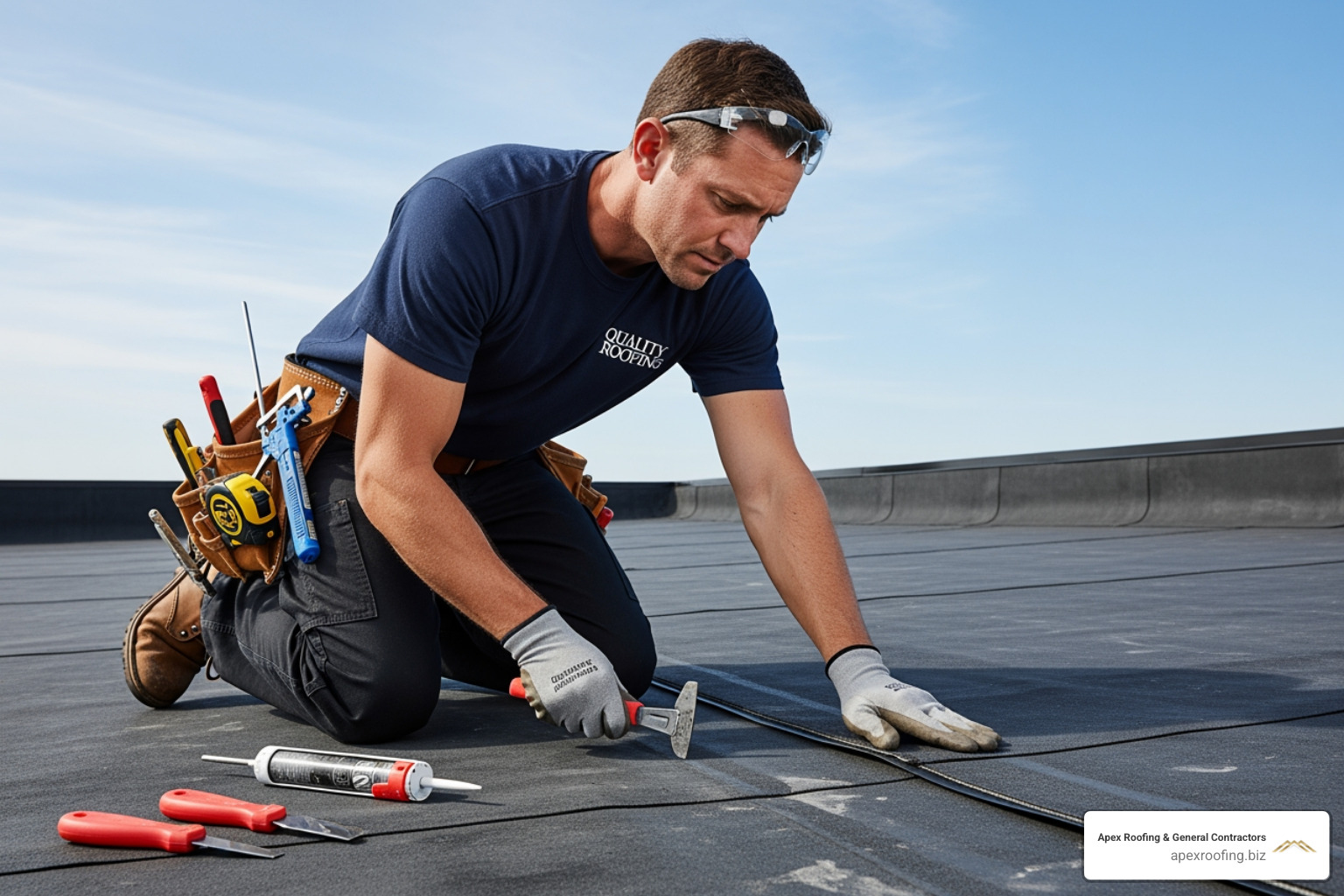
Inspect your roof twice a year (spring and fall) and after any severe storms.
- Check Seams and Flashing: Look for any lifting, cracking, or separation. These are the most common failure points.
- Clear Drainage Systems: Ensure gutters, scuppers, and drains are free of debris to prevent ponding water.
- Scan for Damage: Look for punctures, tears, or blisters in the membrane.
- Watch for Aging Signs: Brittleness or a chalky residue can indicate the membrane is losing its protective qualities.
- Remove Debris: Sweep off leaves and branches that trap moisture.
- Trim Overhanging Branches: Keep tree limbs at least six feet from the roof surface.
Following this routine protects your investment. For expert maintenance help, check our Roofing Services Bexar County page.
Critical Safety Precautions
Safety should always be your top priority when working on a roof.
- Use a Sturdy Ladder: Place it on firm ground and extend it three feet above the roofline.
- Wear Proper Footwear: Use soft-soled, non-slip shoes to avoid damaging the membrane.
- Avoid Bad Weather: Never work on a wet, icy, or windy roof.
- Work with a Spotter: Have someone on the ground to assist and call for help if needed.
- Be Aware of Power Lines: Maintain a safe distance from any overhead electrical lines.
- Use Fall Protection: For higher roofs or extensive work, fall protection equipment is essential.
If you feel unsafe at any point, call a professional. For residential repairs, visit our Residential Roof Repair Near Me page.
Frequently Asked Questions about Rubber Roof Leaks
Here are answers to common questions about a leaking rubber roof.
How long does a rubber roof patch last?
A properly applied EPDM patch can last for 10 years or more, becoming a permanent part of the roof. Longevity depends on thorough surface preparation, using high-quality compatible materials (patch, primer, adhesive, and sealant), and ensuring a complete seal around the edges.
Can you put a rubber roof coating over a leaking roof?
No. A coating should never be applied over an active leak, as it won’t fix the underlying problem. The leak must first be identified and properly repaired. Once the roof is watertight, a coating can be applied to provide a seamless protective layer, prevent future leaks, and extend the roof’s lifespan.
What is the average cost to repair a leaking rubber roof?
The cost to repair a leaking rubber roof varies. DIY patch kits for small tears can cost under $100. Professional repairs for minor issues typically range from $300 to $1,000. More extensive work, such as addressing multiple leaks or saturated insulation, can cost several thousand dollars, depending on accessibility, materials, and labor.
Your Partner for a Watertight Roof
A leaking rubber roof requires prompt action. This guide has provided the essential knowledge to identify signs, understand causes, choose the right repair method, and maintain your roof for maximum longevity. While a well-executed DIY patch can fix minor issues, professional expertise is invaluable for complex problems.
Professionally repaired flat roofs can last up to 50% longer than DIY fixes. This is due to experience, proper technique, and a holistic understanding of roofing systems. At Apex Roofing & General Contractors, our reputation is built on certified, reliable service and transparent communication. We adhere to all local building codes and industry best practices, ensuring every repair meets the highest standards.
From Helotes to Leon Valley, from Shavano Park to Alamo Heights, property owners trust us for comprehensive roof repair services that stand the test of time. We provide detailed inspections, honest assessments, and clear explanations of your options.
Don’t let a small leak turn into a major problem. If you’re dealing with a leaking rubber roof or want a professional evaluation of your roof’s condition, we’re here to help. Our team serves the entire San Antonio, TX area and is ready to provide the expert solutions you need to keep your property safe and dry. Contact us today at (726) 727-7663 for a free inspection and estimate.