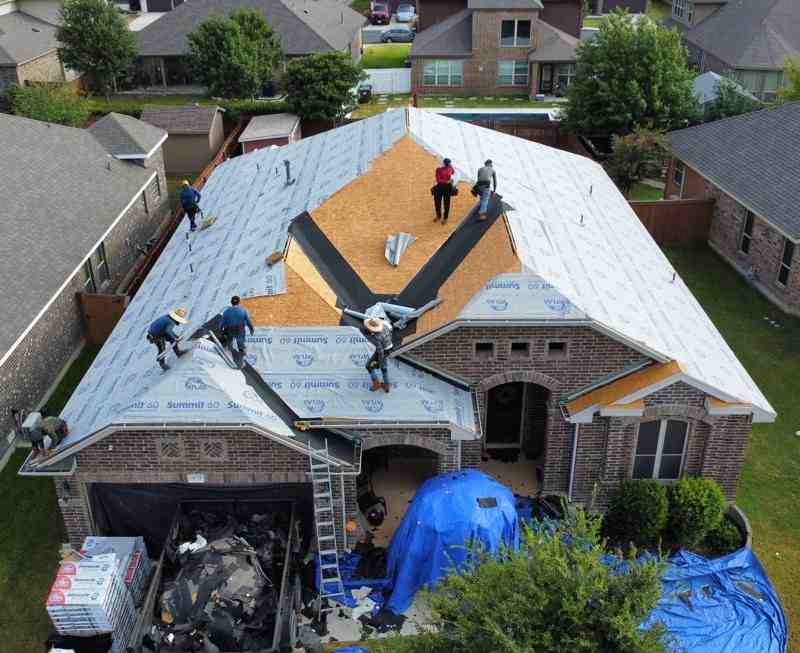
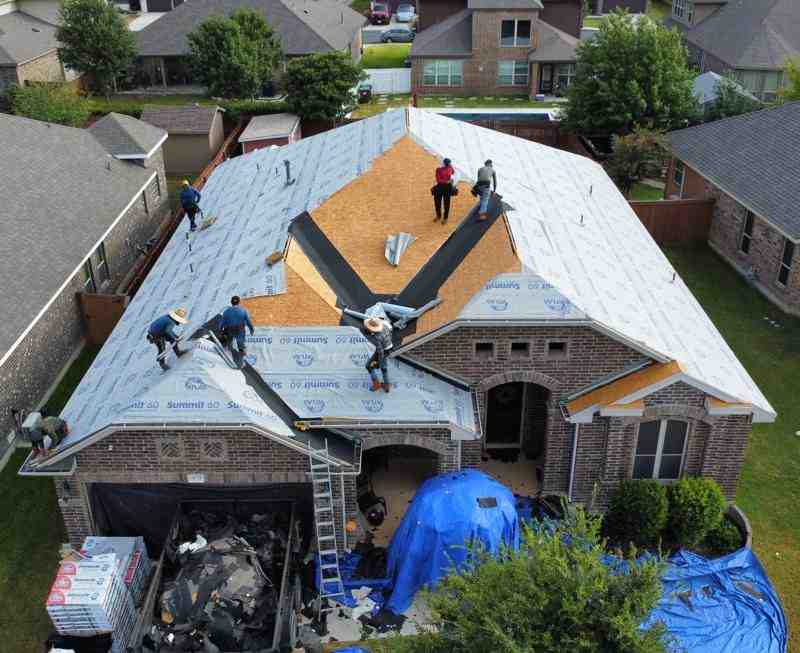
What Is an ACV Wind Policy — and Why It Matters for Your Roof
An acv wind policy pays you the depreciated value of your roof after wind damage — not what it costs to replace it today. If your roof is older, that gap can cost you thousands of dollars out of pocket.
Here’s the short version:
| ACV Wind Policy | RCV (Replacement Cost Value) | |
|---|---|---|
| Pays | Depreciated value of roof | Full replacement cost |
| Depreciation deducted? | Yes | No |
| Premiums | Lower | Higher |
| Out-of-pocket after claim | Higher | Lower |
| Best for | Newer roofs or tight budgets | Older roofs in storm-prone areas |
Example: A 15-year-old roof costs $20,000 to replace. Under an ACV wind policy, you might receive only $8,000 after depreciation — leaving you to cover the remaining $12,000 yourself.
Many San Antonio homeowners don’t realize what type of coverage they have until after the storm hits. And with insured storm losses nearly doubling from $29 billion in 2022 to $57 billion in 2023, insurers are moving aggressively toward ACV coverage — especially for roofs over 10–15 years old.
If you’ve recently had storm damage to your roof, knowing whether you have ACV or RCV coverage is the single most important factor in how much money you’ll actually receive from your claim.
I’m Carlos Yzaguirre, President of Apex Roofing & General Contractors in San Antonio — and after helping hundreds of Texas homeowners navigate acv wind policy claims, I’ve seen how this coverage gap catches people off guard. This guide will walk you through everything you need to know, so you’re never caught short after a storm.
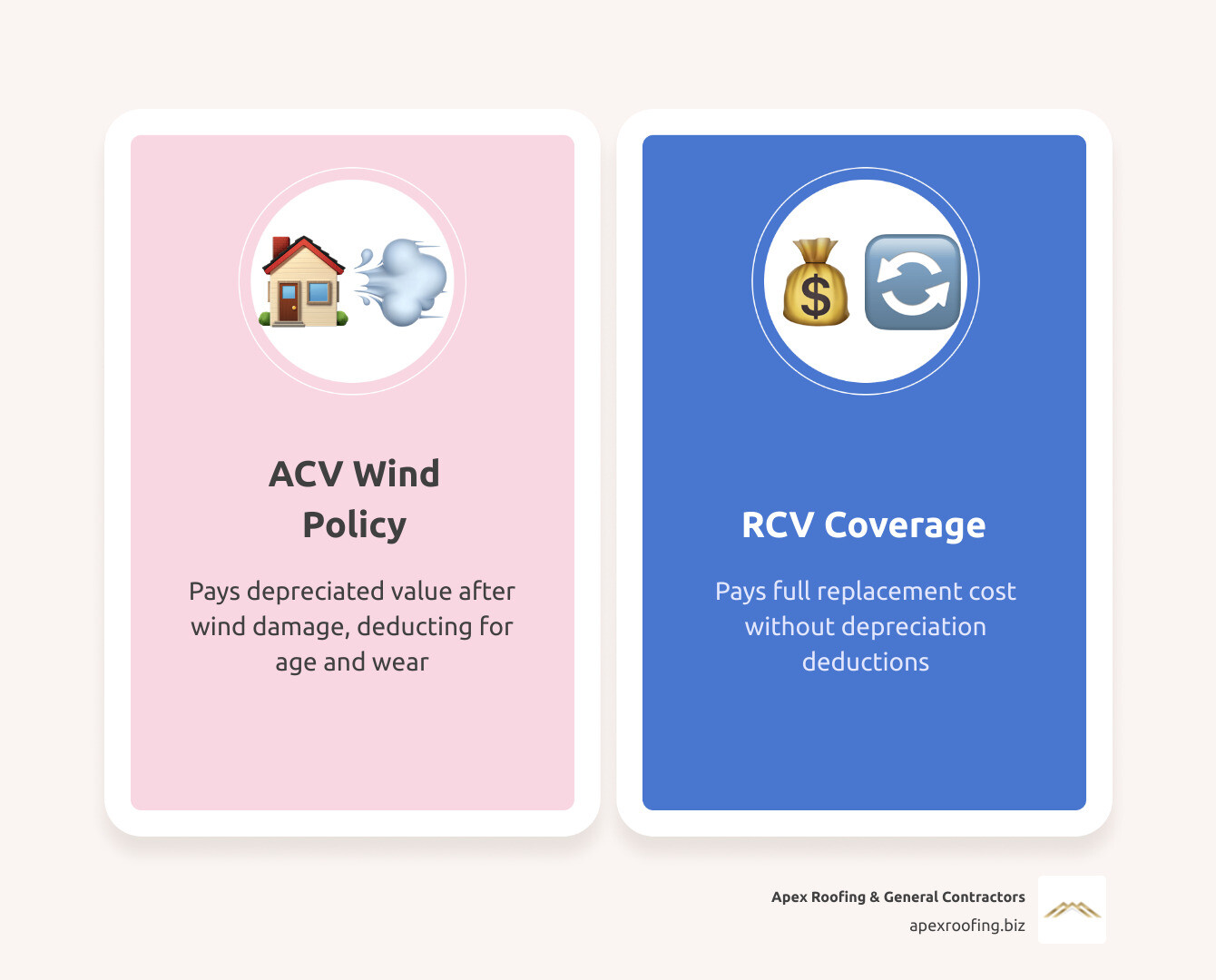
Basic acv wind policy vocab:
Understanding the ACV Wind Policy vs. RCV Coverage
When you buy homeowners insurance in San Antonio, you are essentially choosing how you want to be paid when disaster strikes. An acv wind policy stands for “Actual Cash Value.” In the insurance world, “actual cash” is a bit of a misnomer—it really means “what it’s worth right now, used and weathered.”
Conversely, Replacement Cost Value (RCV) is the “gold standard.” It is designed to put you back in the exact position you were in before the storm, providing a brand-new roof regardless of how old the damaged one was.
The biggest hurdle for homeowners with an acv wind policy is the sticker shock during a claim. Because the insurer is only liable for the market value of the materials at the time of loss, your payout is slashed by depreciation. While your monthly premiums are often lower with ACV, your out-of-pocket costs during a crisis are significantly higher.
Key Differences in Payout Structures
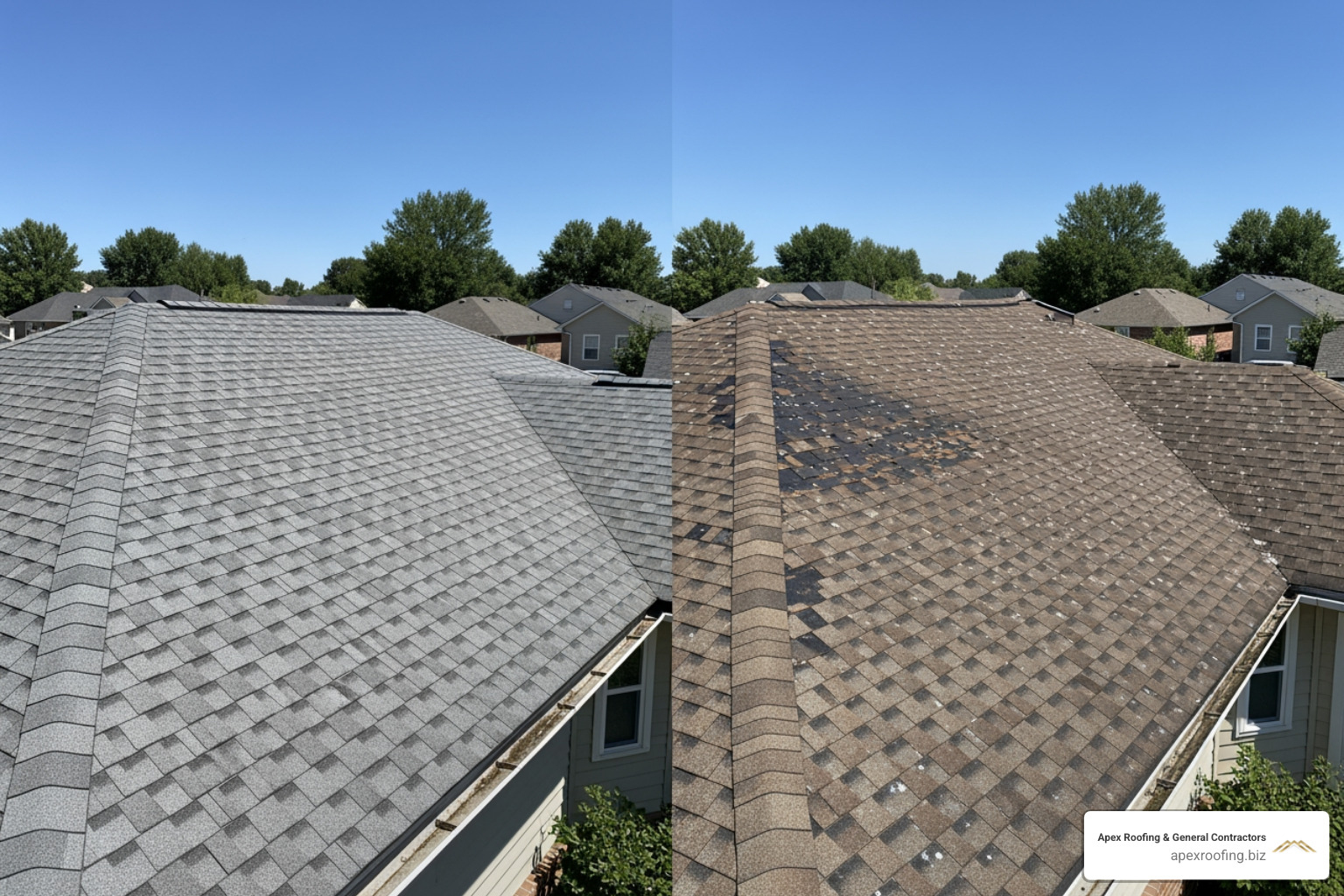
The primary difference lies in how the insurance company values your assets. Under an RCV policy, the insurer pays the current cost to replace the roof with materials of like kind and quality. Under an acv wind policy, the insurer calculates the replacement cost and then subtracts depreciation based on the roof’s age and condition.
According to the Office of Public Insurance Counsel (OPIC), these liability limits are set at the time the policy is issued or renewed. It is vital to check your “Loss Settlement” provisions to see which one applies to your roof.
Financial Implications for Homeowners
Choosing between these two is a balancing act of risk tolerance and budgeting.
- ACV Policies: Better for those who want the lowest possible monthly premium and have the savings to cover a $10,000+ gap if a storm hits.
- RCV Policies: Better for those who prefer predictable costs. You pay more monthly, but you know your only major expense during a claim will be your deductible.
Be aware that many mortgage lenders in Texas require RCV coverage to protect their investment. If you switch to an acv wind policy to save money, you might inadvertently violate your loan agreement.
How Depreciation and Age Slash Your Roof Payout
In the eyes of an insurance adjuster, a roof is a declining asset. From the moment the last shingle is nailed down, it begins to lose value. This loss in value is what we call depreciation.
Calculating Depreciation in an ACV Wind Policy
Insurance companies use a relatively simple math formula to determine your payout. They look at the “useful life” of the material—typically 20 to 25 years for standard asphalt shingles—and the current age of the roof.
If a $15,000 roof has a 20-year lifespan and is 10 years old, it has lost 50% of its value.
- Replacement Cost: $15,000
- Depreciation (50%): -$7,500
- ACV Payout: $7,500 (minus your deductible)
Factors like local weather patterns in San Antonio and the quality of the original installation can also influence this. For more technical details on how these calculations affect your specific situation, check out our guide on roof insurance claims. Some insurers even refer to IRS Publication 946 guidelines for general asset depreciation, though most use internal actuarial tables.
Why Roof Age Limits Matter
In recent years, we have seen a massive shift in the Texas market. Many insurers now implement a mandatory “age trigger.” Once your roof hits 15 years (or sometimes as early as 10 years), the carrier may automatically convert your RCV coverage to an acv wind policy upon renewal.
Insurers use satellite data and aerial imagery to track the age of your shingles. If they see significant wear or know the roof is nearing the end of its life, they will limit their risk by switching you to ACV. This prevents them from paying for a “free roof” that was already due for replacement due to old age.
The Impact of Wind and Hail Deductibles on Your Claim
Your deductible is the amount you agree to pay before the insurance company kicks in a single cent. In San Antonio, where hail is a regular visitor, understanding how these deductibles work is critical.
Hurricane and Named Storm Deductibles
In 19 states and D.C., including coastal regions of Texas, insurers apply separate deductibles for windstorms or named storms. These are rarely “flat” amounts (like $1,000). Instead, they are usually percentage-based, ranging from 1% to 5% of your home’s total insured value.
If your home is insured for $400,000 and you have a 2% wind/hail deductible, you are responsible for the first $8,000 of the repair. This applies before the depreciation from your acv wind policy is even calculated.
Recent policy changes in Texas have made it even more important for homeowners to monitor these percentages, as they can fluctuate yearly.
Calculating Your Total Out-of-Pocket Expense
To find your real cost, you have to look at “Coverage A” (Dwelling) on your declarations page.
- Start with the Replacement Cost: $20,000
- Subtract ACV Depreciation (e.g., 40%): -$8,000
- Subtract your Percentage Deductible (e.g., 2% of $300k home): -$6,000
- Final Insurance Check: $6,000
- Your Total Cost: $14,000
Under an acv wind policy, you are effectively paying for the “used” portion of your roof out of your own pocket.
Navigating the ACV Wind Policy Claims Process
Filing a claim under an acv wind policy requires a bit more legwork than a standard claim. Because the payout is lower, every dollar of documented damage counts.
Step-by-Step: Filing a Claim Under an ACV Wind Policy
- Immediate Inspection: Before calling the insurer, have a professional roofer conduct an inspection. We offer a free storm damage roof inspection to help you determine if a claim is even worth filing.
- Mitigate Damage: You are required to prevent further damage. This means tarping holes or covering broken skylights. Keep receipts for these temporary repairs!
- Document Everything: Take photos of the roof, the ground (for hail or shingle granules), and any interior leaks.
- The Adjuster Meeting: When the insurance adjuster arrives, have your contractor there. We speak the “language” of insurance and can ensure the adjuster doesn’t overlook critical components like flashing or ridge vents.
Recoverable vs. Non-Recoverable Depreciation
This is where many homeowners get confused.
- RCV Policies have “Recoverable Depreciation.” The insurer pays the ACV amount first, and once you provide a final invoice showing the work is done, they send a second check for the depreciation.
- ACV Wind Policies have “Non-Recoverable Depreciation.” The money they take out for age is gone forever. You will never see that second check.
Understanding these policy terms and depreciation is the difference between a fully funded project and a massive unexpected bill.
Why Insurers are Shifting to ACV for Storm Damage
You might wonder why insurance companies are becoming so “stingy.” The reality is tied to the staggering increase in severe weather. Between 2022 and 2023, insured losses from wind, hail, and tornadoes jumped from $29 billion to $57 billion.
The Role of Technology in Policy Changes
Insurers no longer rely solely on a guy with a ladder. They use:
- Aerial Imagery: High-resolution photos taken from planes or satellites.
- AI Underwriting: Algorithms that predict when a roof will fail based on its material and sun exposure.
- Claim History: If your neighborhood has had three hailstorms in five years, the carrier may mandate an acv wind policy for everyone on the block to stay solvent.
Managing Risk in Hail-Prone Markets
In San Antonio, hail is a major financial risk. Roof-related claims reached $31 billion in 2024, a 30% increase in just two years. By shifting to ACV, insurers are essentially saying they will no longer pay for the “maintenance” of your home. They will cover the storm damage, but they won’t pay for the 15 years of wear and tear you already got out of the roof.
Avoiding Pitfalls and Scams in Wind Damage Claims
When a storm rolls through San Antonio, “storm chasers” follow. These are out-of-state contractors who disappear as fast as they arrive.
Red Flags to Watch For
- Deductible Waiving: In Texas, it is illegal for a contractor to “waive” or “absorb” your insurance deductible. If they offer this, they are committing insurance fraud, and you could be held liable.
- High-Pressure Sales: If they want you to sign an “Assignment of Benefits” (AOB) before giving you an estimate, walk away. This gives them total control over your insurance check.
- Upfront Payments: Never pay more than a small deposit (usually 10% or the amount of your first insurance check) before materials are delivered to your yard.
For a full list of what to look for, see our hail damage roof claim guide.
Maximizing Your Legitimate Recovery
The best way to get a fair payout is through “supplementing.” If your roofer finds more damage during the tear-off process (like rotted decking), they can submit a supplement to the insurance company. Even with an acv wind policy, the insurer is often required to pay for these unforeseen “line items” to bring the roof up to local San Antonio building codes.
Frequently Asked Questions about ACV Wind Policies
Can I switch from an ACV wind policy to RCV?
Yes, in many cases you can, but there are catches. Most insurers will only offer RCV if your roof is less than 10 to 15 years old and in good condition. You will likely need to provide proof of a recent inspection or a full replacement. Switching will increase your annual premium, but it provides much better protection for the next storm.
Is an ACV wind policy cheaper than RCV?
Generally, yes. Because the insurance company is taking on less risk (by not promising you a brand-new roof), they charge lower premiums. However, the “savings” of $200 a year on your premium can be wiped out by a $10,000 depreciation deduction during a claim.
Does an ACV policy cover the full cost of labor?
This is a point of contention. In many acv wind policy settlements, insurers depreciate both the cost of materials and the cost of labor. They argue that the “service” of the roof has also depreciated. This is why ACV checks are often shockingly small.
Conclusion
Navigating an acv wind policy can feel like trying to catch a breeze with a net—it’s complicated and often leaves you empty-handed. At Apex Roofing & General Contractors, we believe in transparency. Whether you have an ACV or RCV policy, our goal is to provide a certified, reliable inspection that gives you the facts you need to talk to your adjuster.
We understand San Antonio building codes and the unique challenges of Texas weather. Don’t let your insurance claim get blown off course by a lack of information.
Schedule your Storm Damage Repair today and let us help you rebuild stronger.
For immediate assistance with your wind damage claim, free estimates, or to schedule a free inspection, call us at (726) 727-7663.