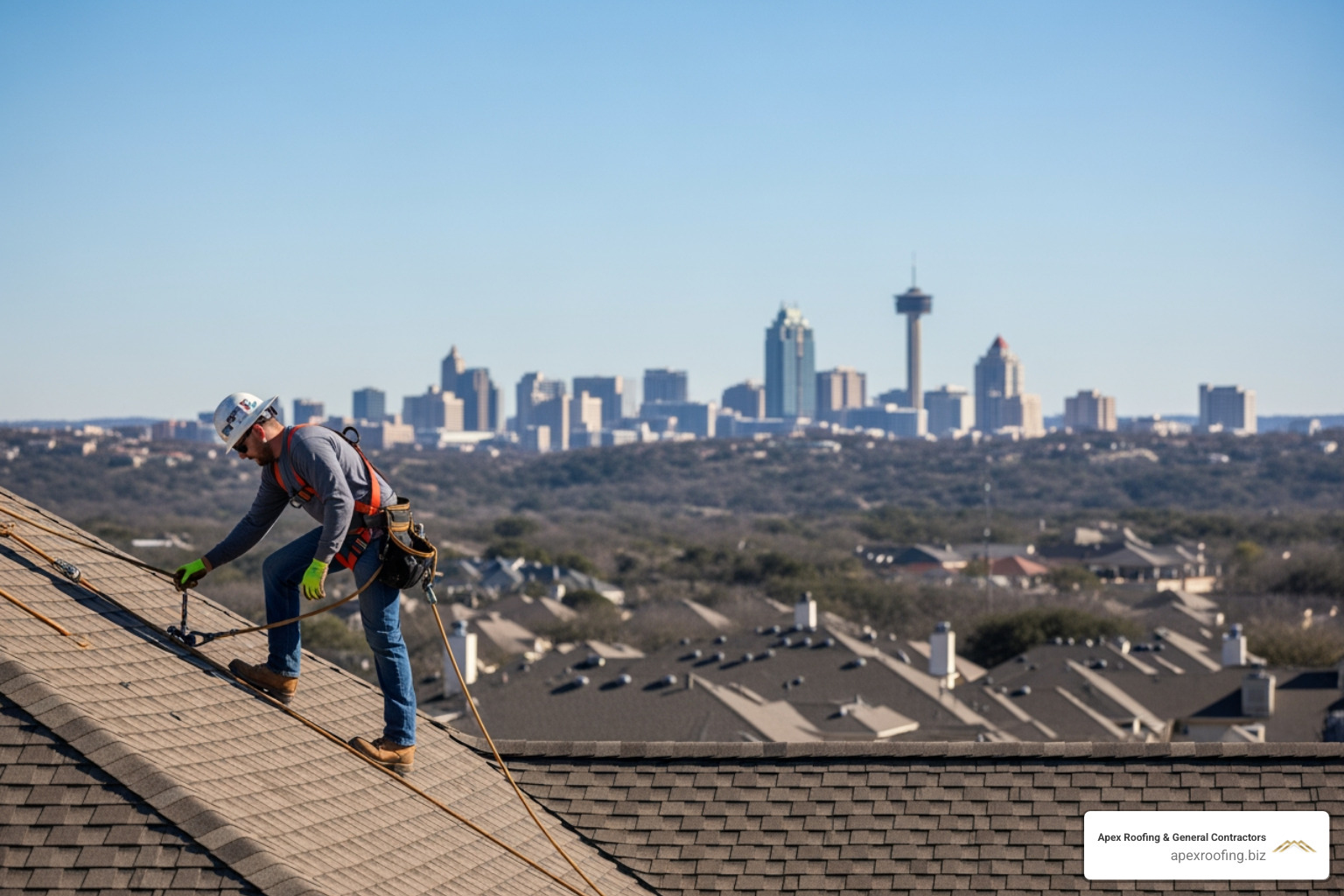
Why Single Shingle Replacement Matters for Your Home
Single shingle replacement is one of the most critical preventative maintenance tasks you can perform to protect your home from water damage, structural decay, and costly repairs. As a premier San Antonio roofing company, we know that you can replace just one damaged shingle yourself if the damage is isolated and your roof is easily accessible. For homeowners seeking reliable roofers in San Antonio, addressing these vulnerabilities quickly through expert roof repair services prevents minor issues from escalating into full roof replacements costing thousands of dollars.
Quick Answer: Can You Replace a Single Shingle?
- Is it possible? Yes, single shingle replacement is a common DIY repair for minor, localized damage
- Where to buy one shingle: Most stores sell bundles of 29 shingles, but check Home Depot, Habitat Restore, or ask local roofers for spares
- Time required: 15-30 minutes for one shingle; 3-5 hours for multiple repairs
- DIY vs. professional: DIY works for 1-10 shingles on low-slope roofs; call a pro for steep pitches, extensive damage, or insurance claims
- Leak risk: A missing shingle over a seam can leak immediately; underlayment may protect up to 60 days in non-critical spots
A single missing or damaged shingle creates an entry point for moisture that can penetrate your roof deck, leading to wood rot, mold growth, and interior water damage. In San Antonio’s climate, where intense UV exposure and sudden storms are common, addressing these vulnerabilities quickly prevents minor issues from escalating into full roof replacements.
Roof work causes 150,000 injuries annually according to safety data, making proper technique and safety equipment non-negotiable. While a single shingle repair is manageable for confident DIYers, knowing when to call professionals protects both your safety and your investment.
As Carlos Yzaguirre, President of Apex Roofing & General Contractors, I’ve guided countless San Antonio homeowners through assessing when single shingle replacement is sufficient versus when comprehensive repairs are needed. Our team combines advanced roofing technology with transparent communication to ensure every repair—from a single shingle to complete storm damage restoration—meets the highest standards of craftsmanship and durability.
Single shingle replacement terms to remember:
- cost to fix roof shingles
- how to repair a hole in a shingle roof
- how to repair blown off roof shingles
Assessing the Need for a Single Shingle Replacement
Before you climb the ladder, you must determine if your roof is a candidate for a simple fix or if you are looking at a more systemic failure. Not all damage is created equal, and misdiagnosing the problem can lead to “patching” a roof that actually needs a full replacement.
Identifying Critical Shingle Damage
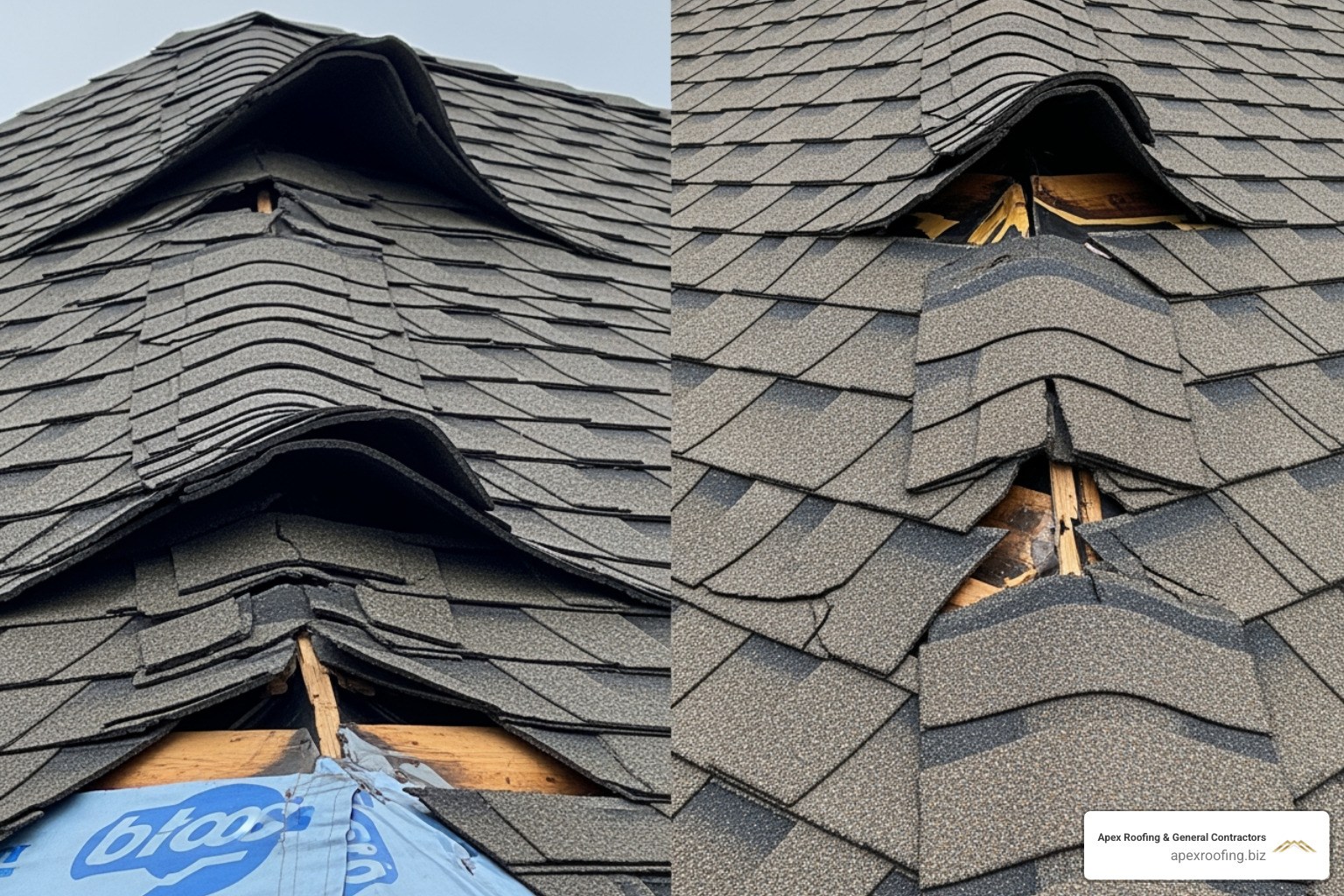
The first step in any single shingle replacement is a thorough visual inspection. You are looking for specific warning signs that a shingle has reached the end of its functional life:
- Curled Edges: Shingles that turn upward like potato chips are no longer shedding water correctly. This is often caused by aging, moisture in the attic, or poor initial installation.
- Cracked Surfaces: Cracks often occur due to thermal expansion and contraction. In San Antonio, the extreme heat can make shingles brittle over time.
- Missing Tabs: If a section of a 3-tab shingle has blown off, the underlying courses are exposed.
- Granule Loss: If you see “bald spots” on the shingle or find piles of granules in your gutters, the UV protection is gone.
For a deeper dive into diagnosing these issues, refer to our Shingle Repair Ultimate Guide. It is also vital to understand that weather impacts, such as preventing ice dams or managing high-heat wear, vary by season.
When to Repair vs. Replace the Entire Roof
A single shingle replacement is a localized solution for isolated incidents—think a fallen tree branch or a minor localized wind gust. However, we generally follow the “30% rule”: if more than 30% of your roof shows signs of damage, or if the roof is approaching its 20-year lifespan, a repair is likely a waste of money.
Architectural shingles typically last 25-30 years, while 3-tab shingles last 15-20 years. If you notice structural sagging, widespread blistering, or if your neighbors are all replacing their roofs (which usually indicates the neighborhood’s original roofs are reaching their expiration date), check out our Roof Shingle Replacement Complete Guide to weigh your options.
Essential Tools and Sourcing Materials
Success in roofing is 50% technique and 50% having the right gear. You cannot perform a clean single shingle replacement with just a standard hammer and a dream.
Where to Buy a Single Shingle Replacement
One of the biggest hurdles for DIYers is sourcing just one shingle. Most big-box stores like Home Depot or Lowe’s sell shingles in bundles of approximately 29 pieces. While buying a full bundle is practical (you’ll have spares for the next 20 years), it can feel like overkill for one repair.
Here are expert tips for finding a single shingle:
- Check Local “Restore” Shops: Habitat for Humanity ReStore locations often have loose shingles for sale.
- Ask Active Construction Sites: If you see a roofing crew in your neighborhood, they often have “scrap” shingles that are perfectly functional.
- Search Craigslist or Marketplace: Homeowners often list partial bundles for free or a few dollars.
- Visit Roofing Supply Houses: Call local supply houses in San Antonio and ask if they have any “busted bundles.” These are packs that broke during transport and are often sold by the piece.
Matching Color and Style for a Seamless Look
Matching a new shingle to an old roof is notoriously difficult. Even if you find the exact same brand and color, the existing shingles have likely faded due to Texas UV exposure.
- 3-Tab vs. Architectural: Ensure you know which type you have. 3-tab shingles are flat with cutouts, while architectural (laminated) shingles have a dimensional, layered look.
- Take a Sample: If possible, take a piece of the damaged shingle to the store to compare under natural light.
- The “North Side” Trick: If you can’t find a perfect match, some homeowners harvest a shingle from a less visible part of the roof (like a back corner) to use for the repair, then put the “mismatched” new shingle in the hidden spot.
For those dealing with older styles, our guide on replacing 3-tab shingles provides specific strategies for older material matching.
Step-by-Step Guide to Single Shingle Replacement
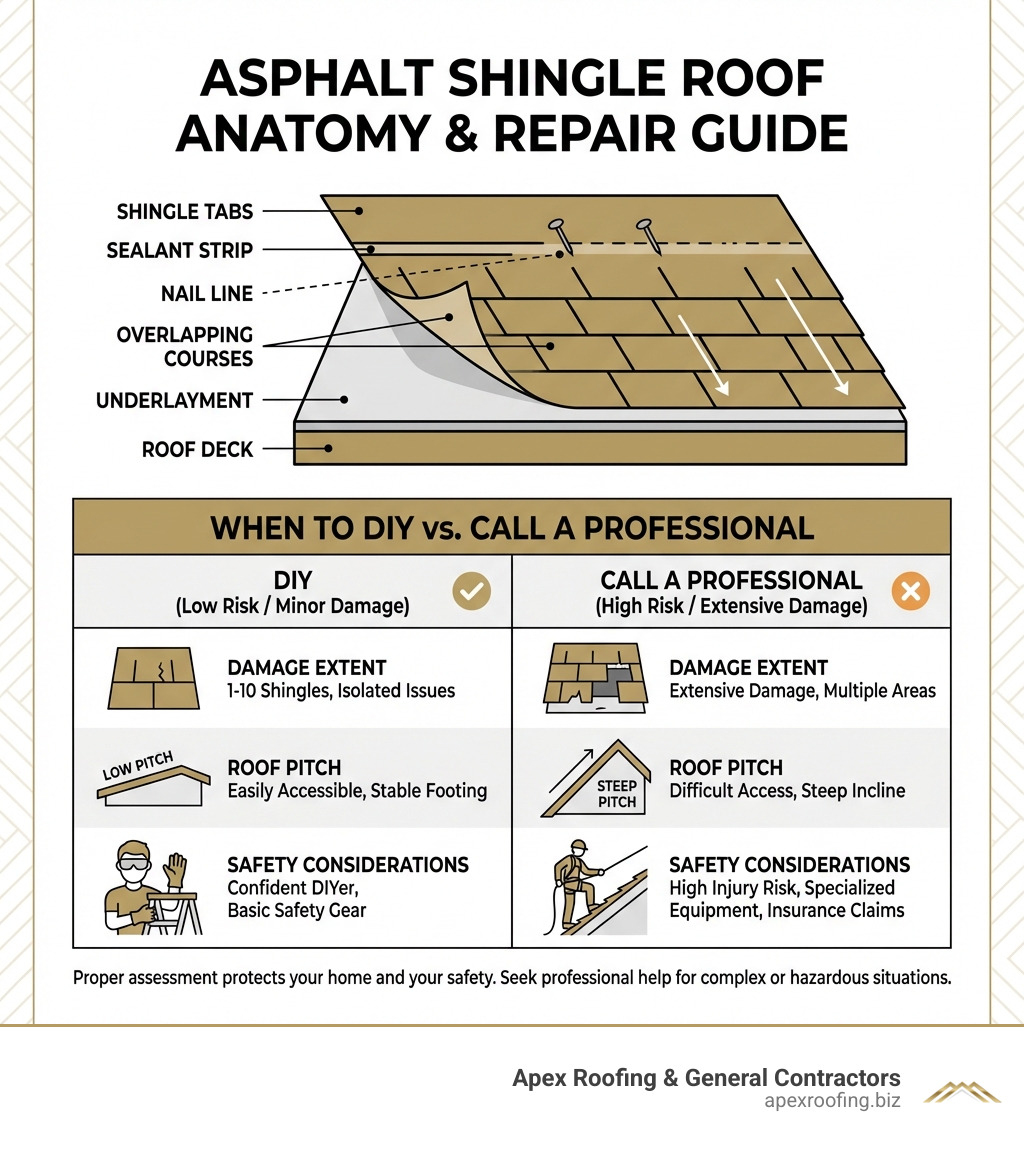
The secret to a successful single shingle replacement is understanding that shingles are not just nailed down; they are sealed together with a strip of asphalt adhesive. You have to break the seal before you can remove the nails.
Preparing the Area for Single Shingle Replacement
Timing is everything. Do not attempt this on a freezing morning (shingles will snap) or in the middle of a 100-degree San Antonio afternoon (the sealant will be too gooey and the shingles too soft to walk on). Aim for a dry day between 45°F and 85°F.
Clear any debris, such as leaves or twigs, from the repair area. If the shingle was blown off, ensure the underlayment is dry and intact. If the underlayment is torn, you may need to address a blown off roof shingles scenario which requires more intensive surface prep.
Removing the Damaged Shingle and Nails
- Break the Seal: Carefully slide a flat pry bar under the shingle above the damaged one. Gently lift to break the adhesive bond. You will need to do this for the shingles directly above and to the sides of the target.
- Locate the Nails: Shingles are typically held by a row of nails about 5-6 inches from the bottom edge. However, the shingle above it also has nails that pass through the top edge of your target shingle. This “double nailing” provides wind resistance.
- Pry the Nails: Slide the pry bar under the shingle, center it over a nail, and apply upward pressure. Once the nail pops up about half an inch, use the bar to pull it out completely.
- Remove the Shingle: Once all 4-6 nails are removed from the target shingle (and the nails from the course above that were pinning it down), the shingle should slide right out.
For visual learners, This Old House offers excellent imagery on the mechanics of nail removal.
Installing and Securing the New Shingle
- Positioning: Slide the new shingle into the gap. Ensure it aligns perfectly with the shingles on either side to maintain the water-shedding pattern.
- Nailing: Drive four 1¼-inch roofing nails into the designated “nail line” (the strip of tar). Nails should be 1 inch from each edge and spaced evenly. Do not overdrive the nails; they should be flush with the shingle surface.
- Re-nailing the Upper Course: Don’t forget to replace the nails you removed from the shingles above.
- Manual Resealing: Because you broke the factory seal, you should apply three small dots of asphalt plastic roof cement under the tabs of the new shingle and the shingles you lifted. Press down firmly to ensure a bond.
For more technical specs on nail placement, see our article on installing 3-tab asphalt shingles.
Safety Protocols and Common Mistakes to Avoid
Roofing is statistically one of the most dangerous DIY tasks. With 150,000 injuries per year, safety is not a suggestion—it is a requirement.
Avoiding Costly DIY Errors
Even a simple single shingle replacement can go wrong if you make these common mistakes:
- Wrong Nail Length: Use 1¼-inch nails. Shorter nails won’t grip the deck; longer nails can puncture through the roof sheathing and hit electrical wires or pipes in the attic.
- Ignoring the Overlap: Most shingles require at least a 2-inch overlap. Misalignment here will cause a leak.
- Overdriving Nails: If you bury the nail head into the shingle, the nail will eventually pull through, leaving the shingle loose.
- Working on Wet Roofs: Never, ever work on a roof that is damp. Even a little morning dew can make asphalt shingles as slippery as ice.
If you find yourself overwhelmed, it might be safer to consult a handyman for shingle repair rather than risking a fall.
Understanding Warranty and Insurance Risks
Before you start prying, check your roof warranty. Some manufacturer warranties stipulate that repairs must be performed by a certified contractor. A DIY single shingle replacement could technically void the wind or leak warranty for that section of the roof.
Furthermore, if the damage was caused by a storm, your insurance company may require professional documentation. “Patching” a roof yourself might make it harder to claim a full replacement later if more damage is discovered.
DIY vs. Professional Roofing: Costs and Timeline
Is it worth doing it yourself? Let’s look at the breakdown.
| Factor | DIY Single Replacement | Professional Repair |
|---|---|---|
| Direct Cost | $30 – $60 (tools + bundle) | $150 – $350 (minimum service call) |
| Time Investment | 1 – 3 hours (including shopping) | 30 minutes (on-site) |
| Tools Needed | Pry bar, hammer, nails, sealant | Included |
| Warranty | None (may void existing) | Workmanship warranty provided |
| Risk Level | High (falls/improper seal) | Low (insured professionals) |
Evaluating the Financial Impact
The primary driver for DIY is saving on labor. A professional service call in San Antonio typically starts around $150 to $350, even for a single shingle, because the contractor must cover insurance, travel, and overhead. If you already have the tools, your cost is just the price of a bundle of shingles. However, if you have to buy a ladder, pry bar, and safety harness, the cost to fix roof shingles professionally becomes much more attractive.
When to Call a Professional Roofer
We recommend calling us at Apex Roofing & General Contractors if:
- The Pitch is Steep: Any roof with a slope greater than 6:12 (6 inches of rise for every 12 inches of run) requires specialized fall protection.
- The Roof is High: Two-story or three-story homes are not the place for DIY beginners.
- Multiple Damages Exist: If you see more than 10 damaged shingles, there may be underlying deck rot.
- Insurance is Involved: We provide the necessary documentation to ensure your claim is processed correctly.
Frequently Asked Questions about Single Shingle Replacement
Can I buy just one shingle at a big-box store?
Generally, no. Most major retailers like Home Depot sell shingles only in full bundles of approximately 29 pieces. However, some locations may sell individual shingles from “broken bundles” at a discount if you ask a floor associate. Alternatively, check Habitat for Humanity ReStore or local roofing supply houses.
Will a single missing shingle cause my roof to leak immediately?
It depends on the location. If the missing shingle exposes a vertical seam or a nail head in the course below, it can leak during the very next rainstorm. While the underlayment (felt paper or synthetic) provides a secondary barrier that can last up to 60 days, it is not waterproof and should not be relied upon as a primary defense.
How long does it take to replace one shingle?
For a prepared DIYer with all tools on the roof, the actual replacement takes 15 to 30 minutes. However, a partial repair involving multiple shingles or tricky sections like valleys can easily take 3 to 5 hours.
Conclusion
Mastering the replacement of a single shingle is a vital skill for any homeowner looking to extend the life of their roof and prevent expensive water damage. While minor repairs are manageable for those comfortable with heights and basic tools, complex issues or steep slopes require the expertise of a certified team.
Apex Roofing & General Contractors provides professional, code-compliant roofing solutions throughout San Antonio, ensuring your home remains a safe haven. We pride ourselves on transparent communication and reliable service that meets all local building codes. For expert assistance or a comprehensive roof assessment, visit our residential roof repair page to schedule your inspection today. Whether you need a single shingle replacement or a complete system overhaul, we are here to help you protect what matters most. Contact us today for a free estimate and call (726) 727-7663 to schedule your free inspection.