Understanding Your Hail Damage Roof Insurance Claim
A hailstorm can leave behind extensive and costly damage, making a hail damage roof insurance claim a necessity for many homeowners. In 2022 alone, hailstorms resulted in over $3.5 billion in paid claims, with the average claim topping $14,700. For homeowners in San Antonio and across Texas—a state that consistently leads the nation in hail-related losses—understanding the insurance process is critical. A successful claim often depends on prompt action, thorough documentation, and knowing your policy’s details. When severe weather strikes, having access to reliable storm damage repair services is the first step toward a quick recovery.
This guide walks you through the entire process: documenting damage, filing the claim, meeting with an adjuster, understanding your settlement, and choosing a qualified contractor. You’ll also learn how to handle a denied claim and what you can do to protect your roof from future storms.
“I’ve helped countless San Antonio homeowners steer the complexities of the hail damage roof insurance claim process. Proper documentation and expert guidance can transform a stressful situation into a manageable one, ensuring you receive a fair settlement and quality repairs.”
— Carlos Yzaguirre, President of Apex Roofing & General Contractors
First Steps: Identifying and Documenting Hail Damage

After a hailstorm, your first step is to confirm and document any damage to build a strong foundation for your hail damage roof insurance claim. Hail damage isn’t always obvious from the ground and can be mistaken for normal wear, so knowing what to look for is essential.
What Are the Signs of Hail Damage on a Roof?
Hail damage varies by the size of the hailstones and the roofing material. According to the National Oceanic and Atmospheric Administration, hail is considered severe at 1 inch in diameter and becomes highly destructive at 1.5 inches. Look for these signs:
- Dents or “Bruises”: Random, unpatterned impacts on asphalt shingles that compromise the protective layer.
- Granule Loss: Dark, circular “bald spots” where the shingle’s protective granules have been knocked off.
- Cracked Shingles: Cracks radiating from impact points, especially on older, more brittle shingles.
- Damage to Metal Components: Dents on vents, flashing, skylight frames, gutters, and downspouts.
Pro Tip: Check for collateral damage to siding, window screens, A/C units, or cars. This provides corroborating evidence of a severe storm and strengthens your claim.
How to Document Damage for Your Claim
Thorough documentation is the most critical part of a successful claim. Think of it as building your case before you speak to an adjuster.
- Take clear photos and videos: Capture close-ups of individual impacts and wider shots of the entire roof. Place a ruler or coin next to the damage to show scale.
- Record the storm’s date and time: Insurance companies verify claims against weather reports, so an accurate timeline adds credibility.
- Photograph other property damage: Documenting damage to fences, siding, or vehicles proves the storm’s severity.
- Keep damaged materials: Save any shingle fragments or other loose pieces to show the adjuster.
- Prevent further damage: Use a tarp to cover damaged areas and prevent water intrusion. Failure to do so may give your insurer grounds to deny secondary damage claims. Save all receipts for temporary repairs, as these may be reimbursable.
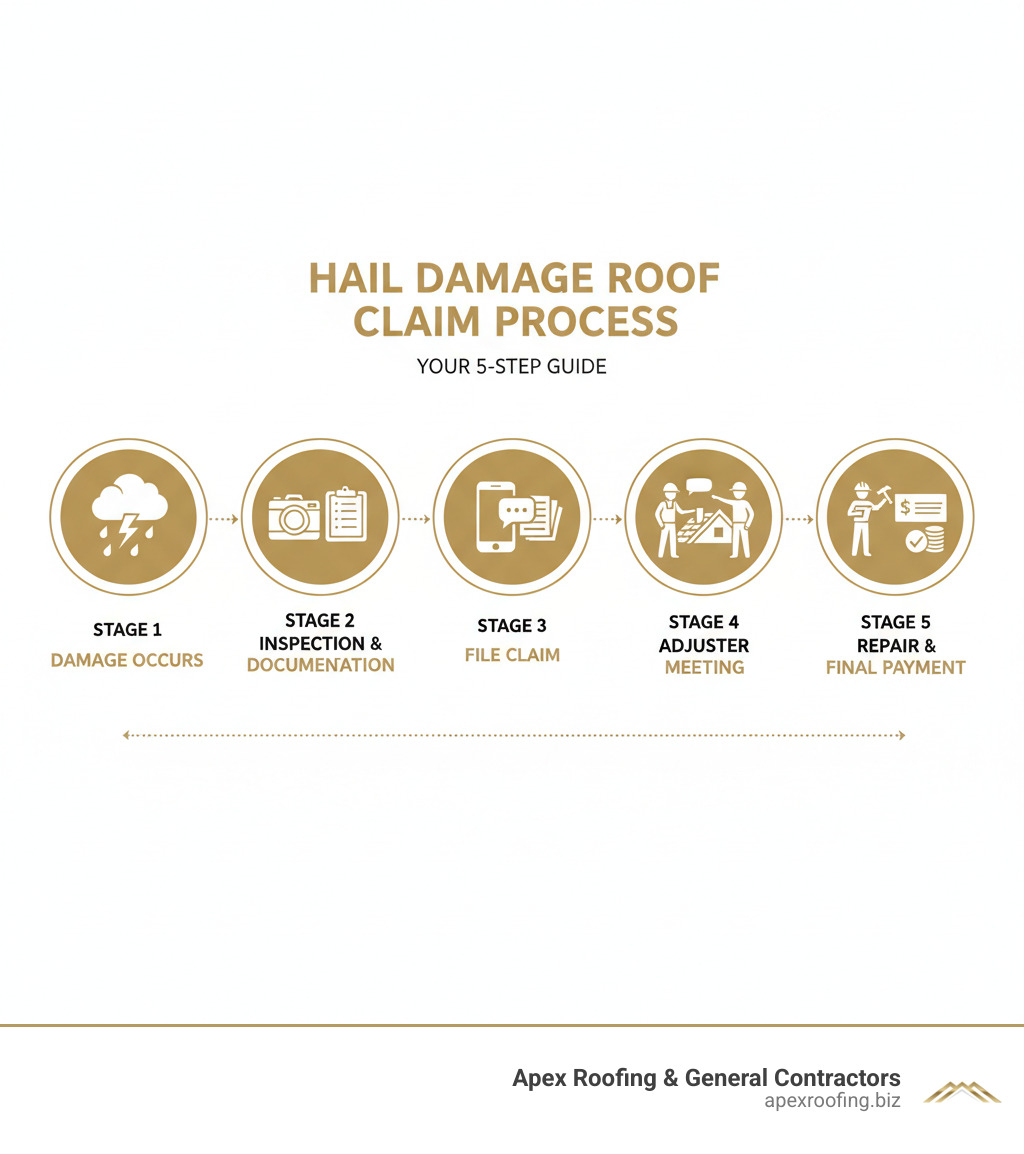
How to File a Hail Damage Roof Insurance Claim: A Step-by-Step Guide
Filing a hail damage roof insurance claim is a structured process. By following these steps, you can steer it efficiently and improve your chances of a fair settlement.

Step 1: Review Your Policy and Contact Your Insurer
Before filing, review your homeowners insurance policy to understand your coverage. Key items to check include:
- Dwelling Coverage: Ensure hail is a covered peril.
- Coverage Limits: Know the maximum amount your insurer will pay.
- Deductible: Identify your out-of-pocket cost. Many Texas policies have a separate, higher wind and hail deductible (often a percentage of your home’s insured value).
- Filing Deadlines: Most policies require claims to be filed within one year, but you should report damage immediately to avoid complications.
Once you’re prepared, contact your insurance company with your policy number and a clear description of the damage, referencing the date of the storm.
Step 2: Prepare for the Insurance Adjuster’s Visit
The adjuster’s inspection is a pivotal moment that heavily influences your settlement. To prepare:
- Schedule the visit when you can be present. This allows you to point out all areas of concern.
- Have a contractor present. This is one of the most important things you can do. A reputable roofer can identify subtle damage and communicate technical details to the adjuster, ensuring a comprehensive assessment.
- Provide all your documentation. Show the adjuster your photos, videos, and receipts for temporary repairs.
Walk the property with the adjuster and point out all known damage, not just on the roof but also on gutters, vents, and siding. Their job is to determine if the damage is hail-related and calculate the repair scope.
Step 3: Understanding the Settlement Offer
After the inspection, you’ll receive a settlement offer. It’s crucial to understand the terms, especially the difference between ACV and RCV.
- Actual Cash Value (ACV): This is the replacement cost of your roof minus depreciation for its age and condition. If your policy is ACV-only, you will not be reimbursed for the depreciation amount.
- Replacement Cost Value (RCV): This covers the full cost to replace your roof with new materials. RCV policies typically pay in two installments: an initial check for the ACV, and a second check for the withheld amount (recoverable depreciation) after you submit proof of completed repairs.
Carefully review the adjuster’s report and compare the settlement offer to estimates from reputable contractors. If there’s a significant discrepancy, you have the right to negotiate or request a re-inspection.
Navigating Financials: Deductibles, Costs, and Payouts
Understanding the financial side of your hail damage roof insurance claim is key to budgeting for repairs and avoiding surprises. Hail is the most common cause of property damage claims, costing an average of over $14,700 per claim, according to the Insurance Information Institute. For San Antonio homeowners, knowing these numbers helps manage expectations.
What is a Deductible and How Does It Work?
A deductible is the amount you pay out-of-pocket before your insurance coverage begins. While many are familiar with a standard fixed-dollar deductible (e.g., $1,000), policies in hail-prone states like Texas often include a separate wind and hail deductible.
This deductible is typically a percentage of your home’s insured value, usually between 1% and 10%. For a home insured at $300,000, a 1% deductible means you pay the first $3,000 of repair costs. A 2% deductible would mean you’re responsible for $6,000. This can be significantly more than a standard deductible. Your insurer will subtract this amount from the approved settlement before issuing payment.
Average Repair Costs and Insurance Payouts
Hail damage repair costs vary widely, but knowing the averages provides a useful benchmark. State Farm’s data shows the average residential hail claim is around $12,000. While minor repairs might cost a few hundred dollars, a full roof replacement can run into the tens of thousands.
Factors that influence the final cost include:
- Roof Size and Complexity: Larger or more intricate roofs cost more to repair.
- Roofing Material: Asphalt, metal, tile, and slate have different material and labor costs.
- Extent of Damage: The scope ranges from spot repairs to a complete replacement.
| Category | Average Cost/Payout | Details |
|---|---|---|
| Average Residential Hail Claim | $12,000 | What homeowners typically claim for residential hail damage. |
| Average Roof Repair Price | $4,250 | Average cost for hail damage roof repairs in the U.S. (ranges $375-$7,500). |
| Average Property Damage Claim | $14,700 | Average cost for all wind and hail losses (most common property damage claim). |
If your settlement offer seems significantly lower than quotes from reputable contractors, it’s a sign you may need to negotiate with your insurer.
After the Claim: Denials, Appeals, and Choosing a Contractor
Once you receive the adjuster’s report, your work may not be over. You might need to appeal a denial or, if approved, select the right contractor to perform the repairs.
What to Do if Your Hail Damage Roof Insurance Claim is Denied
A denied hail damage roof insurance claim is frustrating, but it’s not always the final word. You have the right to appeal.
First, read the denial letter to understand the specific reason. Common reasons for denial include:
- Wear and Tear: The insurer argues the damage is from age or poor maintenance, not hail.
- Policy Exclusions: Your policy may have limitations, such as a cosmetic damage clause.
- Insufficient Evidence: The insurer claims there isn’t enough proof the damage was caused by hail.
- Cost Below Deductible: The estimated repair cost is less than your deductible amount.
To appeal, start by gathering more evidence, such as weather reports confirming the storm, better photos, or a detailed report from an independent roofing contractor. You can also request a second inspection from a different adjuster. For complex disputes, a public adjuster works on your behalf to negotiate with the insurer. If you believe your insurer is acting in bad faith, you can file a complaint with the Texas Department of Insurance (TDI).
How to Choose a Reputable Roofing Contractor
After your claim is approved, selecting the right contractor is your most important decision. This choice protects your investment and ensures quality workmanship.
Look for a contractor who is:
- Local, Licensed, and Insured: A local presence means accountability. Always verify they carry both workers’ compensation and liability insurance to protect you from liability. Ask for certificates of insurance directly from their provider.
- Certified by Manufacturers: Certifications from brands like GAF or Owens Corning indicate a high level of training and quality.
- Well-Reviewed and Transparent: Check online reviews, ask for references from past clients, and review their portfolio.
A detailed estimate from certified roofing contractors in San Antonio is a must. It should clearly itemize:
- All materials (shingles, underlayment, flashing, etc.)
- Labor charges
- Detailed work specifications
- Approximate start and completion dates
- Payment procedures
- Building permit information
- Warranty details for both materials and labor
Be wary of unusually low bids, as they often signal substandard materials or cut corners. A quality roof is an investment in your home’s long-term protection.
Proactive Measures: Protecting Your Roof and Your Investment
While you can’t stop a hailstorm, you can take proactive steps to mitigate potential damage and ensure your insurance coverage is adequate.
How Can I Protect My Roof From Future Hail Damage?
Preventative measures can make your roof more resilient against hail.
- Perform Regular Roof Maintenance: Annual inspections can identify and fix weak spots before a storm hits, ensuring your roof is in optimal condition.
- Upgrade to Impact-Resistant Materials: When it’s time for a replacement, consider Class 4 rated shingles, which are designed to withstand impacts from hailstones up to 2 inches in diameter. The Insurance Institute for Business & Home Safety (IBHS) also rates shingles for hail resistance, and installing these materials may qualify you for insurance discounts.
- Trim Overhanging Tree Branches: This prevents branches from scraping your roof or becoming projectiles during a storm.
Understanding Wind and Hail Coverage Risks
Inadequate insurance can leave you financially exposed after a storm. Be aware of these risks:
- Policy Limits and Exclusions: If your coverage limits are too low or your policy excludes “cosmetic damage,” you could face significant out-of-pocket costs.
- Long-Term Effects of Unrepaired Damage: Ignoring hail damage can lead to leaks, mold, and structural problems. These secondary issues may not be covered if the initial damage was not addressed promptly.
- High Frequency in Texas: Texas consistently experiences the most hail events in the U.S. Severe convective storms, which produce hail, drive 50% to 80% of insured losses from these events, highlighting the critical need for proper coverage.
- High Deductibles: Percentage-based wind and hail deductibles can result in a substantial out-of-pocket expense. For certain coastal properties, coverage may be available through the Texas Windstorm Insurance Association (TWIA).
Frequently Asked Questions about Hail Damage Roof Claims
Homeowners often have similar questions when navigating the hail damage roof insurance claim process. Here are answers to the most common ones.
Will filing a hail damage claim raise my insurance rates?
Answer: In Texas and many other states, insurers are prohibited from raising your rates for a single weather-related (“no-fault”) claim. However, filing multiple claims in a short period (e.g., three in three years) can be seen as a higher risk and may lead to non-renewal or premium increases. For minor damage close to your deductible amount, it may be wise to pay out of pocket.
How long do I have to file a hail damage claim?
Answer: Most policies give you one year from the date of the storm to file a hail damage roof insurance claim. However, you should always report damage as soon as you find it. Waiting can make it harder to prove the damage came from a specific storm and may lead to secondary issues like leaks, which might not be covered.
What is the difference between Actual Cash Value (ACV) and Replacement Cost Value (RCV)?
Answer: This distinction is critical to your payout.
- Replacement Cost Value (RCV): Covers the cost to replace your roof with new, similar materials at today’s prices, without a deduction for depreciation. RCV policies usually pay in two parts: an initial payment for the ACV, and a second payment for the recoverable depreciation after repairs are complete.
- Actual Cash Value (ACV): Pays the replacement cost minus depreciation for the roof’s age and wear. With an ACV policy, you are responsible for the depreciated amount, which is non-recoverable.
Get Your Roof Restored by the Experts
Dealing with a hail-damaged roof is stressful, but you don’t have to steer it alone. From the initial inspection to managing your hail damage roof insurance claim and completing a high-quality restoration, a trusted expert makes all the difference.
At Apex Roofing & General Contractors, we are your advocates. We stand with you during the adjuster’s inspection, provide detailed documentation to support your claim, and deliver clear, itemized estimates to help you secure a fair settlement. Our team provides transparent communication and certified service to protect homes in San Antonio, Helotes, Leon Valley, Alamo Heights, and throughout Bexar County.
As a locally trusted, fully licensed, and insured company with certifications from GAF and Owens Corning, we ensure your roof is restored to the highest standard. If you need help with roof repair after a storm, don’t wait for minor damage to become a major problem.
Contact us today for a free estimate. Call (726) 727-7663 for a free inspection. Let us guide you through the insurance process from start to finish—because protecting your home is what we do best.