Why a Flat Roof Leaking at the Edge Demands Immediate Attention
A flat roof leaking at the edge is a critical warning that your property’s defense against water damage is compromised. Unlike other leaks, water entering the perimeter travels along structural elements and into walls, causing deceptive and destructive damage far from the entry point. For property owners, securing prompt and professional roofing services in San Antonio is the best way to address the root cause and prevent escalating repair costs.
Quick Answer: Common Causes and Immediate Actions
If you’ve found a leak at your flat roof’s edge, here’s what to know:
Most Common Causes:
- Failed or corroded flashing
- Damaged drip edge
- Deteriorated membrane at termination points
- Clogged gutters causing water backup
- Ponding water near the roof perimeter
Immediate Steps:
- Document interior and exterior damage with photos.
- Place buckets to catch drips and protect interiors.
- Clear gutters and drains if it is safe to do so.
- Call a professional for a thorough inspection.
- Check for mold in affected areas.
When to Act Fast: If you see spreading water stains, smell mustiness, or notice soft spots in walls, don’t wait. Edge leaks accelerate quickly as water naturally flows toward the roof’s perimeter. The research is clear: flashing is the top cause of flat roof leaks, and even a tiny tear can allow significant water intrusion.
Unlike leaks in the center of a flat roof, edge failures involve multiple components—the membrane, flashing, drip edge, and fascia. When one fails, water gets in, leading to rotted decking, compromised structural integrity, and costly repairs. Water should drain from a flat roof within 48 hours; if it doesn’t, a drainage issue is likely contributing to your edge leak.
As Carlos Yzaguirre, President of Apex Roofing & General Contractors, I’ve seen how a flat roof leaking at the edge can quickly escalate. Our team specializes in diagnosing these complex perimeter failures and delivering lasting, watertight solutions.
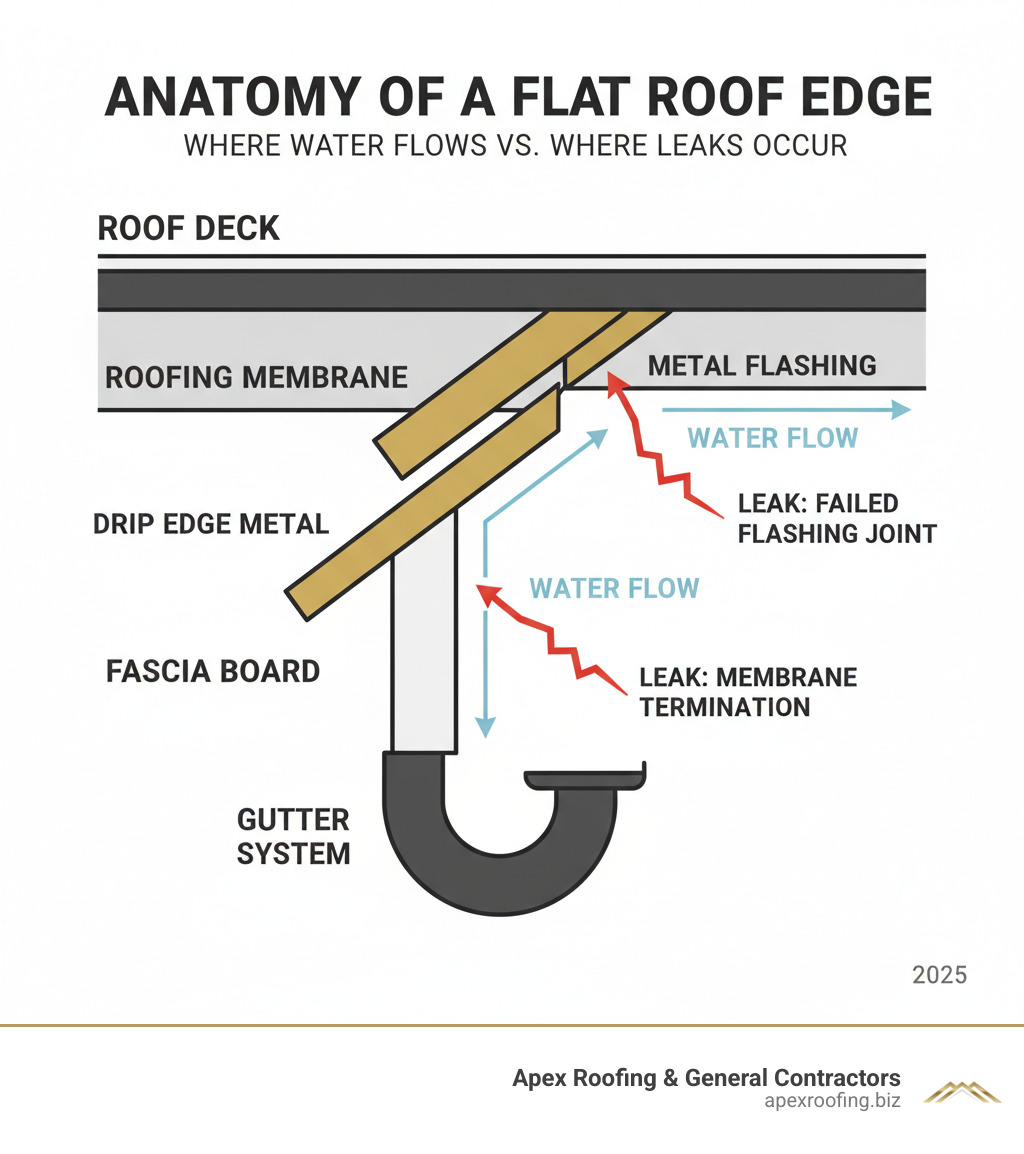
When a flat roof is leaking at the edge, the cause isn’t always obvious. The edges are critical transition points where the roof membrane meets vertical surfaces and directs water into the drainage system. These areas are complex and vulnerable. Identifying the true source of a leak can be difficult, but our expertise can help you pinpoint the problem and implement an effective solution.
First Signs: How to Spot an Edge Leak Before It Worsens
When your flat roof is leaking at the edge, the first signs usually appear inside your building, often far from the actual entry point. Water travels along beams and down wall cavities, making early detection crucial to preventing a small leak from becoming a major disaster. Learning to recognize these indicators can save you thousands in repairs.
Interior Warning Signs
Walk through your property and inspect areas near exterior walls and ceiling corners, where edge leaks typically first appear.
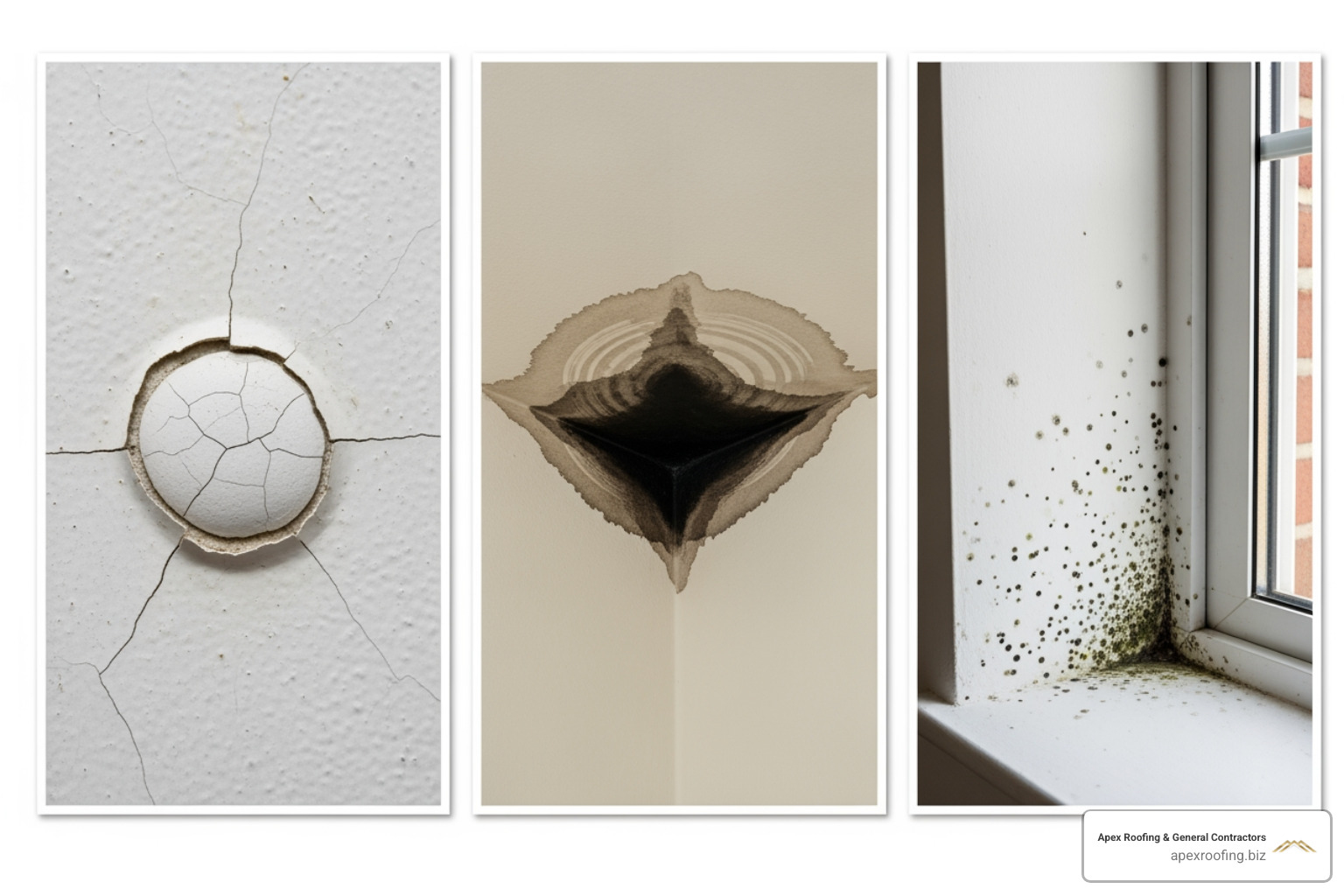
- Water Stains: Yellowish or brown discolorations on ceilings and walls are a primary clue. A small spot represents water that has already penetrated your roof and insulation.
- Peeling or Bubbling Paint: This indicates moisture is trapped behind the wall surface, causing the paint to lose adhesion. It’s common near windows and exterior walls.
- Musty Smell: A persistent damp or earthy odor means moisture is present in your walls or ceiling, even if you can’t see it. This is one of the earliest warnings.
- Visible Mold or Mildew: Black, green, or white fuzzy patches are a health hazard and definitive proof of a long-term moisture problem that needs immediate attention.
- Sagging or Soft Drywall: If drywall feels soft or begins to sag, it has absorbed a significant amount of water. A sagging ceiling is a serious safety hazard.
- Dripping Water: Active drips mean you are past the early warning stage and need to call a professional immediately.
Exterior Warning Signs
While interior signs confirm a problem, an exterior inspection can reveal the cause. Check your roof’s edge regularly, especially after storms.
- Damaged or Stained Fascia Boards: The fascia is the vertical board along the roof’s edge. Dark stains, soft spots, or rot indicate water is getting behind the drip edge. Addressing damaged fascia and soffits quickly prevents further structural damage.
- Clogged or Overflowing Gutters: When gutters are blocked, water backs up and pools at the roof’s edge, eventually seeping under the membrane. If water spills over the sides during rain, your gutters need cleaning.
- Visible Cracks or Tears: The membrane at the roof’s perimeter is under constant stress. Even a small tear near the edge is an open door for water.
- Loose or Corroded Flashing: Flashing seals the joints where the roof meets other surfaces. If it has pulled away, rusted, or bent, it is no longer watertight.
- Ponding Water Near Edges: Puddles that remain for more than 48 hours after rain indicate a drainage problem. This standing water puts constant pressure on seams and sealants.
- Vegetation Growth: Moss, algae, or small plants growing on the roof indicate areas where water sits too long, holding moisture against the membrane and creating pathways for water to enter.
Why is Your Flat Roof Leaking at the Edge? Common Causes Explained
When you find your flat roof leaking at edge, you’re dealing with a failure in the components designed to protect the building’s perimeter. These areas face relentless stress from weather, temperature swings, and water flow. Data shows that flashing failure is the single most common reason for roof leaks, and even a tiny flaw can allow significant water intrusion.
The Critical Role of Flashing and Drip Edges
Flashing and drip edges are your roof’s primary defense at its perimeter. Flashing seals joints where materials meet, while the drip edge guides water into gutters. Failure of these components is a leading cause of edge leaks.

- Improper Installation: If flashing isn’t overlapped correctly or drip edges are poorly primed, the roof’s integrity is compromised from day one.
- Damaged Flashing: Over time, flashing can be dented, cracked, or bent. Even galvanized coatings can wear away, allowing rust to form and create holes.
- Material Choice: Galvanized steel is durable but can rust if damaged. Aluminum is rust-resistant but less robust. Copper is a premium, long-lasting option.
- Membrane Shrinkage: As roof membranes age, they shrink, pulling away from flashing and creating gaps for water entry.
- Physical Damage: Debris, foot traffic, or pests can puncture or tear the membrane and flashing, creating an immediate leak point.
Membrane and Sealant Deterioration
The roofing membrane is your roof’s protective skin, and it degrades over time, especially at the edges.
- UV Ray Damage: Constant sun exposure makes membranes brittle and prone to cracking.
- Age-Related Brittleness: Membranes lose flexibility with age, leading to splits and cracks.
- Failed Sealant: Sealants around the perimeter have a finite lifespan; they dry out, crack, and lose adhesion.
- Poor Seams: Improperly joined membrane sections create weak points that allow water intrusion.
- Thermal Movement: Constant expansion and contraction from temperature changes stress the roof edges, causing cracks. This guide to common causes explains how various factors affect flat roofs.
- Blistering and Delamination: Trapped air or moisture can form blisters that stretch and crack the membrane. Delamination, or the separation of membrane layers, also compromises waterproofing.
Structural and Drainage Issues
Sometimes the problem lies with the underlying structure or drainage system.
- Ponding Water: Water that remains on a roof for more than 48 hours is a major problem. It accelerates material degradation and forces water through tiny imperfections.
- Clogged Gutters and Scuppers: When drains are blocked, water backs up onto the roof, overwhelming waterproofing and forcing its way into the building.
- Structural Settling: As a building settles, it can create low spots on the roof where water accumulates.
- Rotted Roof Decking: Persistent leaks can rot the underlying wood deck. A sagging, weakened deck is a structural emergency that requires immediate roof repair services.
Your Step-by-Step Guide to Fixing a Leaky Flat Roof Edge
When you find a flat roof leaking at the edge, the key question is whether to attempt a DIY fix or call a professional. While a minor, visible crack might be temporarily patched, most edge leaks involve failed flashing or hidden damage that sealant alone cannot fix. Attempting a complex repair without the right diagnosis often worsens the problem.
How to Repair a Minor Flat Roof Leaking at the Edge (DIY)
For a very small, accessible crack, a temporary DIY fix can buy you time. These are stopgap measures, not permanent solutions.
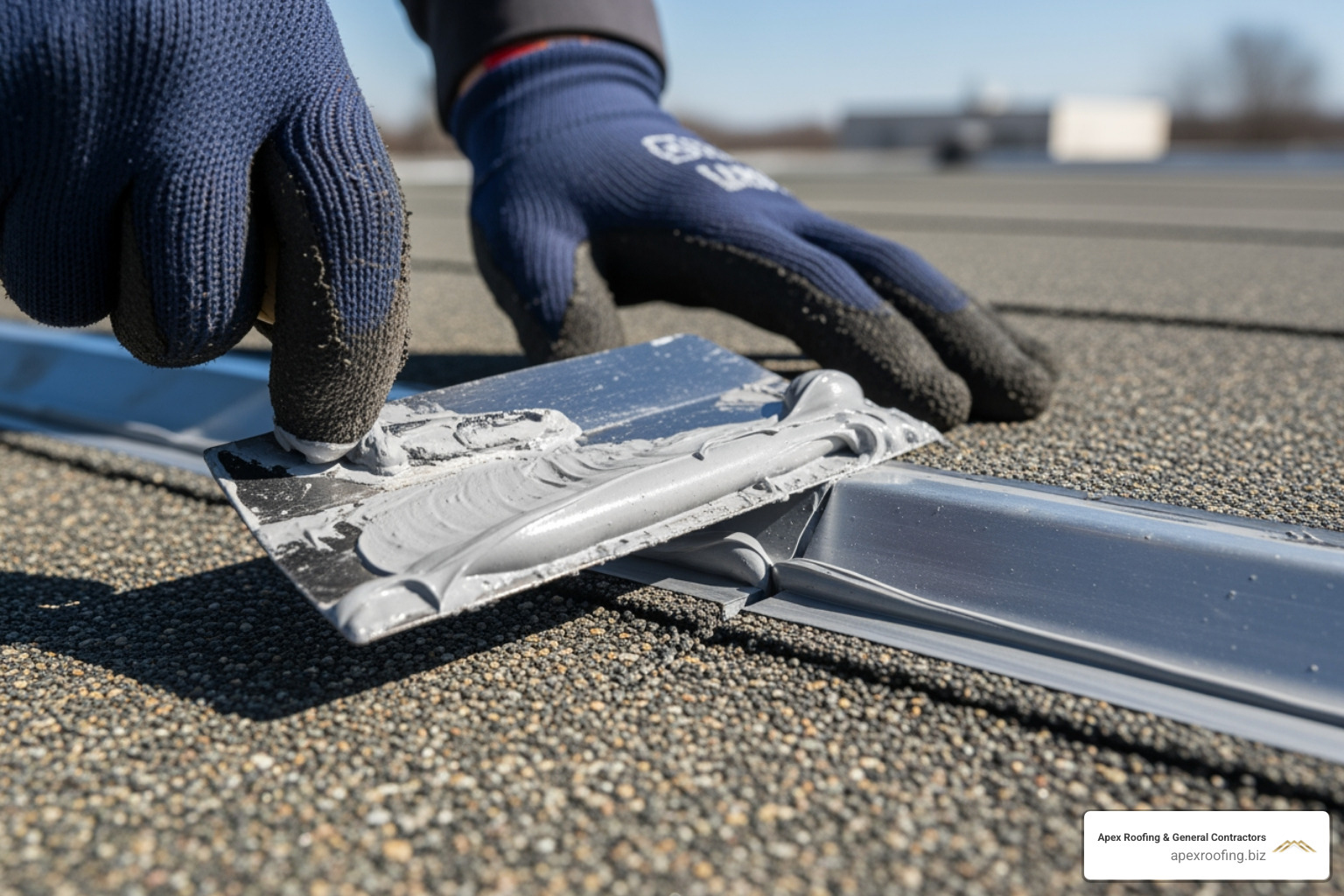
- Safety First: Never work on a wet, damaged, or high roof if you are uncomfortable. No repair is worth an injury.
- Clean the Area: Sealants require a clean, dry surface. Remove all debris, dirt, and loose material from the suspected leak area.
- Apply Roofing Sealant: For hairline cracks (1/8 inch or smaller), use a high-quality, flexible roofing sealant designed for your membrane type. Spread it slightly beyond the crack.
- Use Reinforcing Fabric: For larger cracks, apply sealant, press reinforcing fabric into it, and cover with a second layer of sealant. This creates a stronger patch.
- Patching Small Holes: Use self-adhesive roofing tape or a compatible membrane patch. Clean the area, apply primer if required, and press the patch firmly. Seal the edges with sealant.
Here’s a quick comparison of temporary solutions:
| Solution Type | Best For | Pros | Cons |
|---|---|---|---|
| Sealant/Caulk | Hairline cracks, minor gaps | Easy to apply, inexpensive | Very temporary, prone to cracking, not flexible |
| Roofing Tape | Small punctures, minor tears | Quick to apply, good initial adhesion | Can lift at edges, not for structural issues |
| Waterproofing Paint | Surface-level cracks, general coverage | Easy to apply, provides a protective layer | Not for active leaks, aesthetic only |
When to Call a Professional for a Flat Roof Leaking at the Edge
A DIY patch rarely solves the underlying problem. If you see the following signs, it’s time to call for a professional roof repair. Our San Antonio team can accurately diagnose the root cause and provide a lasting solution.
- Extensive Membrane Damage: Large cracks, widespread blistering, or delamination indicate the membrane has failed and needs professional repair or replacement.
- Loose or Damaged Flashing: Repairing or replacing flashing requires specialized tools and knowledge to ensure a watertight seal. This is not a DIY job.
- Signs of Structural Rot: Soft spots on the roof deck or rotted fascia boards are signs of significant water damage that threaten your building’s structural integrity.
- Multiple Leak Points: If water is entering at several locations, the entire edge system may be failing and require a comprehensive repair.
- Recurring Leaks After DIY Fixes: If a leak returns after you’ve patched it, the underlying cause has not been addressed. Continued patching can trap moisture and cause more damage.
- Safety Concerns: For any job involving heights, slippery surfaces, or unfamiliar materials, trust professionals with the right training and equipment. Give us a call at (726) 727-7663 to schedule an inspection.
Long-Term Prevention: Protecting Your Roof’s Perimeter
The best way to deal with a leak is to prevent it. Proper installation and consistent maintenance are the cornerstones of a long-lasting, leak-free flat roof, especially at its vulnerable edges. Proactive measures are always more cost-effective than reactive repairs.
The Importance of Proper Installation
A roof’s performance is determined on installation day. Correct installation of edge components is non-negotiable for preventing leaks.
- Correct Drip Edge Overlap: Drip edges must overlap by at least 2 inches to prevent water from seeping through joints and be installed to channel water into gutters.
- Proper Membrane Adhesion: The membrane must be securely adhered to the substrate and terminated at the edges to create a continuous, watertight seal.
- Watertight Seams: All seams must be expertly sealed, as they are a common failure point in heavy rains.
- Adequate Roof Slope: A minimum pitch of 1:40 is recommended to prevent ponding water, which accelerates the deterioration of edge components.
- Use of Quality Materials: Investing in high-quality membranes, flashing, and sealants ensures greater durability and resistance to UV damage and wear.
Essential Maintenance Checklist
Regular inspections are your best defense against a flat roof leaking at the edge. Perform these checks twice a year (spring and fall) and after major storms.
- Clear Debris from Roof Surface: Regularly remove leaves, branches, and dirt that can trap moisture and block drainage.
- Clean Gutters and Drains: Ensure all gutters, scuppers, and drains are free of clogs to prevent water from backing up onto the roof.
- Inspect Seams and Flashing: Examine all seams and flashing for cracks, lifting, corrosion, or loose fasteners.
- Check for Ponding Water: After rain, look for puddles that remain for more than 48 hours, as this indicates a drainage problem.
- Trim Overhanging Branches: Cut back branches that can drop debris or cause physical damage to the roof during storms.
Frequently Asked Questions about Flat Roof Edge Leaks
How long should flat roof flashing last?
Properly installed flashing can last 20 to 40 years, depending on the material. Galvanized steel and aluminum are common, while premium copper can last over 50 years. However, this lifespan can be shortened by harsh weather, physical damage, and improper installation, which is why regular inspections are critical. When protective coatings fail, rust can form, compromising the metal’s integrity and leading to leaks.
Can I just use caulk or sealant to fix a leak at the edge?
Using caulk or sealant is only a temporary fix for a very small, isolated crack. It is not a permanent solution for a flat roof leaking at the edge. The underlying cause—often failed flashing, membrane shrinkage, or structural issues—remains. Sealants eventually dry out and crack, allowing the leak to return, often after causing more hidden damage from trapped moisture. A professional diagnosis is required for a lasting repair.
Why is water showing up on my wall instead of the ceiling?
This is a classic sign of a leak originating at the roof’s perimeter. When water penetrates the edge, it often runs down the inside of an exterior wall, traveling along studs and through insulation. It may exit far from the entry point, appearing as a stain near a window, baseboard, or even on the floor. This makes locating the source challenging without professional tools and expertise. It also highlights the importance of addressing edge leaks quickly before water causes extensive, hidden damage within your walls.
Secure Your Property with Expert Roof Repair
A flat roof leaking at the edge is a serious issue that threatens your property’s structural integrity and can lead to costly interior damage and mold growth. While minor patches offer a temporary reprieve, a professional diagnosis and repair are essential to address the root cause and ensure a lasting solution.
For a comprehensive solution that guarantees peace of mind, trust the certified team at Apex Roofing & General Contractors. Our roofing experts in San Antonio are equipped with the knowledge and experience to tackle complex edge leaks, ensuring your roof is watertight and resilient against the Texas weather. Don’t wait for a small drip to become a disaster—call (726) 727-7663 for a free inspection and estimate, or schedule online to protect your investment and ensure your flat roof stands strong for years to come.