Why Concrete Roofs Leak – And What You Can Do About It
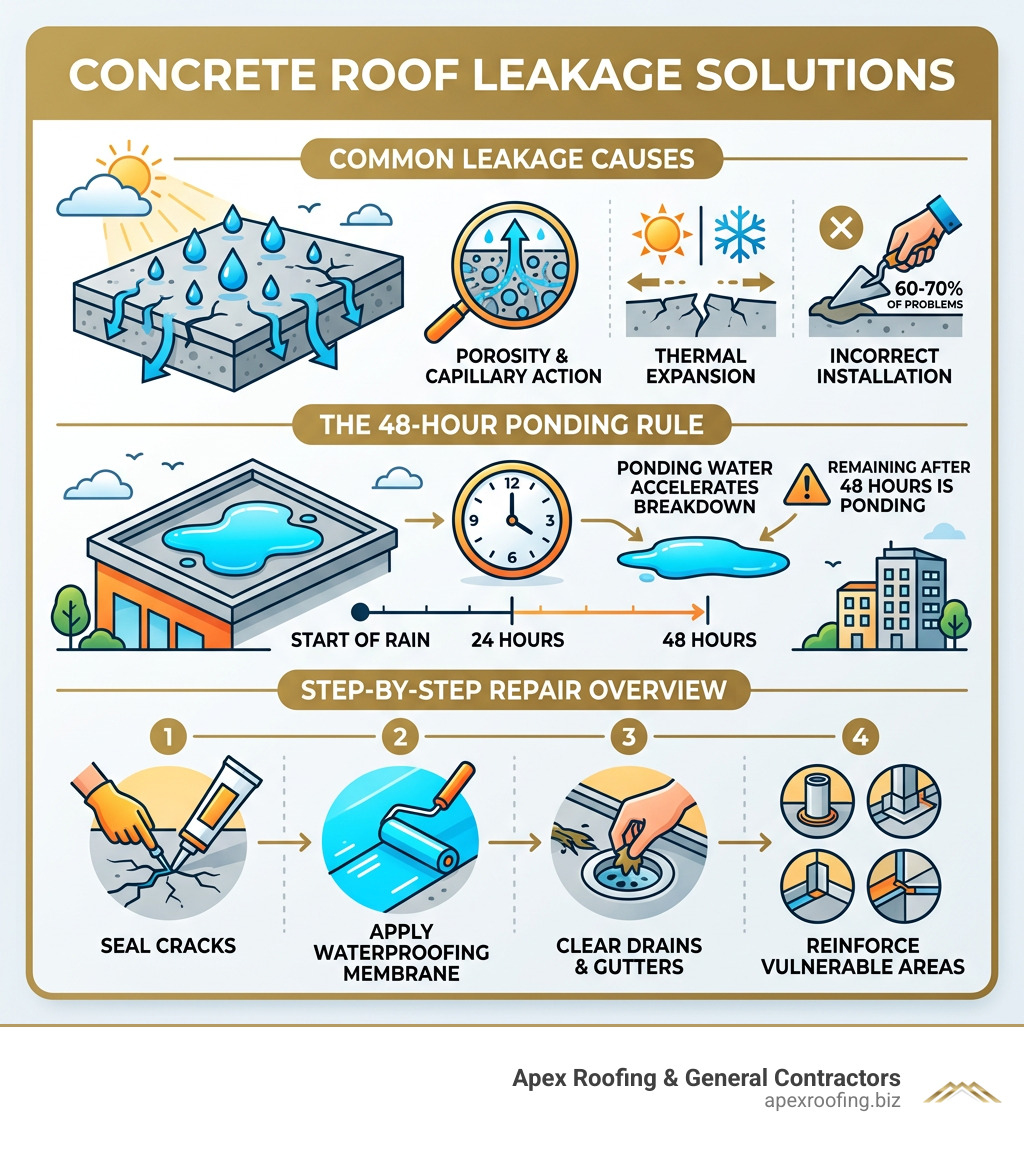
A lasting concrete roof leakage solution starts with one clear fact: concrete is not waterproof by itself. Water moves through pores, hairline cracks, and capillaries, even when the roof looks solid. If you want the problem fixed correctly from the start, the trusted roofing experts at Apex Roofing & General Contractors can help assess the cause and recommend the right repair.
Quick Solutions for Concrete Roof Leaks:
- Seal cracks with hydraulic cement or epoxy filler
- Apply a waterproofing membrane (elastomeric or polyurethane) in two coats over the entire surface
- Clear drains and gutters to eliminate ponding water
- Reinforce vulnerable areas – vents, pipes, corners, and joints
- Re-inspect and re-coat every 5-10 years to maintain protection
Concrete roofs are built to last 50 years or more – but only if the waterproofing system protecting them is properly maintained. The concrete structure itself can handle decades of wear. The waterproofing layer? That’s where things break down.
Here’s what makes concrete roofs vulnerable:
- Porosity: Concrete contains microscopic pores and capillaries that absorb water under pressure
- Thermal expansion: Daily heating and cooling causes the concrete to expand and contract, opening up cracks over time
- Capillary action: Water is literally pulled upward through tiny channels in the concrete – no hydrostatic pressure needed
And it’s often not the materials that fail first. An estimated 60-70% of roof leakage problems are caused by incorrect installation or application, not the materials themselves. That means most leaks are preventable.
One more number worth knowing: any water that remains on a flat concrete roof for more than 48 hours after rain is considered ponding water. That standing water accelerates material breakdown and puts real stress on your roof structure. For a general reference on how water intrusion affects buildings, the National Institute of Standards and Technology offers authoritative building science resources.
I’m Carlos Yzaguirre, President of Apex Roofing & General Contractors, and I’ve helped property owners across San Antonio find the right concrete roof leakage solution for everything from minor surface cracks to full waterproofing system failures. In this guide, I’ll walk you through exactly what causes these leaks, how to find them, and how to fix them – for good.
Simple guide to concrete roof leakage solution terms:
Understanding the Root Causes of Concrete Roof Leaks
To find a permanent concrete roof leakage solution, we first have to look at why concrete fails. Despite its reputation as a “rock-solid” material, concrete is actually quite dynamic. It breathes, moves, and—if not protected—absorbs liquid like a very hard sponge.
Porosity and Capillary Action
At a microscopic level, concrete is filled with tiny voids. If the water-cement ratio during construction was too high (exceeding 0.6 or 0.7), the concrete becomes excessively porous. Through capillary action, moisture is drawn into these tiny tunnels. Once inside, water can travel horizontally through the slab, meaning the drip you see in your living room might be coming from a crack twenty feet away.
Rebar Corrosion and Spalling
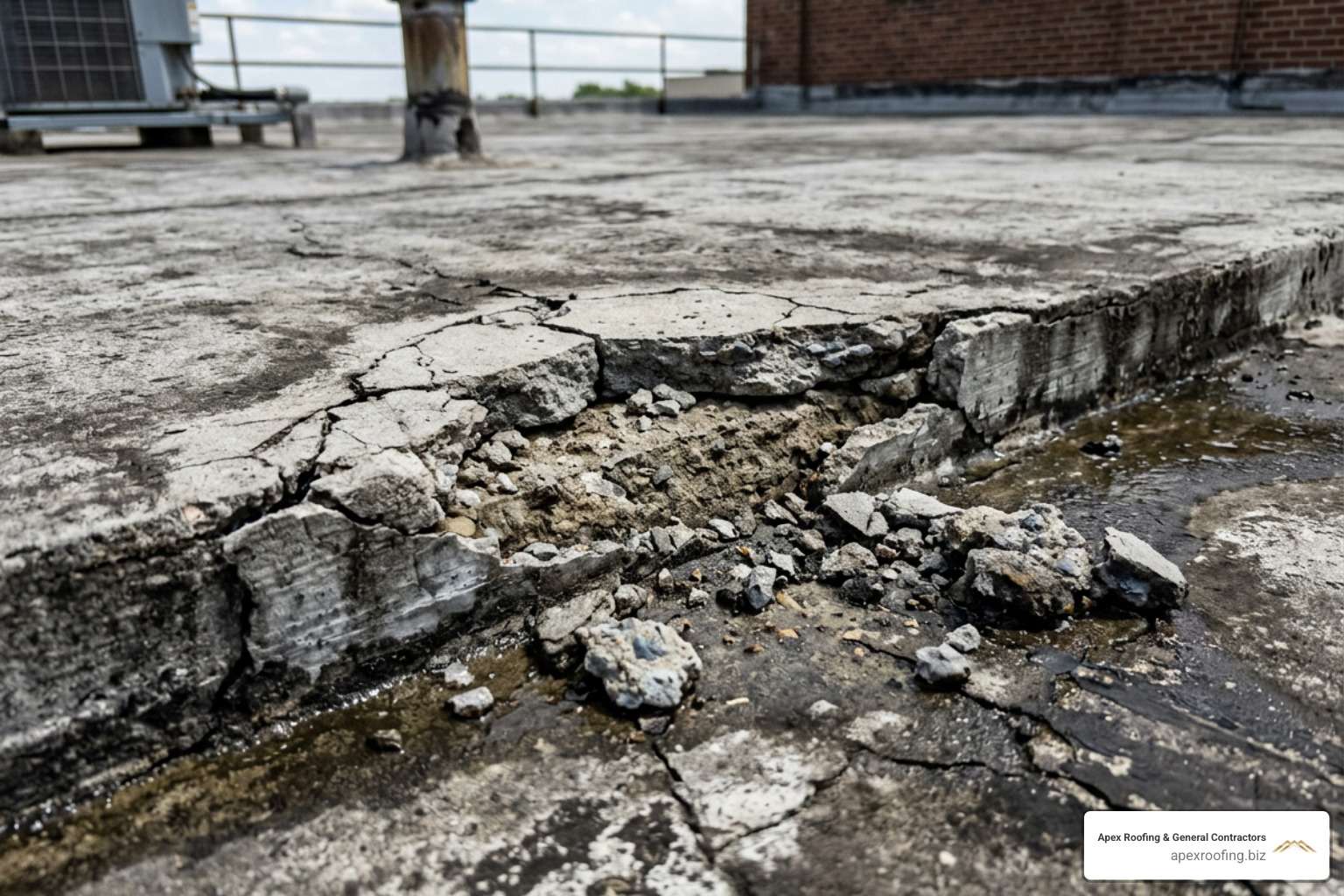
When water reaches the steel reinforcement (rebar) inside the concrete, the metal begins to rust. Rust occupies more space than steel, creating internal pressure that cracks the concrete from the inside out. This process, known as spalling, results in chunks of concrete falling away, further exposing the structure to the elements. You can learn more about these mechanics in our guide on Why is My Roof Leaking.
Structural Movement and Thermal Expansion
In San Antonio, our roofs face intense heat. Concrete expands when hot and contracts when cool. Without proper expansion joints, this “thermal stress” creates cracks.
- Crazing: A network of fine, shallow cracks on the surface, often caused by rapid drying during installation.
- Structural Shifts: As a building settles, the rigid concrete roof may crack if it cannot flex with the foundation.
- Freeze-Thaw Cycles: Even though our winters are mild, the occasional freeze causes trapped moisture to expand, widening existing cracks.
Installation Errors and Poor Drainage
Many issues start on day one. “Honeycombing” occurs when concrete isn’t vibrated properly during the pour, leaving large air pockets. Furthermore, if the roof wasn’t designed with a slight slope, water accumulates. Clogged drains are a leading cause of flat roof leaking at edge, where water backs up under flashings and into the building envelope.
How to Identify and Locate the Source of a Leak
Finding a leak on a concrete roof is often a game of “follow the water.” Because concrete is dense, water rarely travels in a straight line. It hits the slab, moves along a reinforcement bar or a structural joist, and finally drips where it finds a gravity-fed exit point.
Visible Signs of Water Intrusion
Before you head up to the roof, look for these internal “red flags”:
- Efflorescence: A white, powdery salt deposit on the ceiling. This happens when water dissolves minerals in the concrete and leaves them behind as it evaporates.
- Bubbling Paint or Peeling Wallpaper: Trapped moisture behind surface finishes is a classic sign of a slow leak.
- Musty Odors: Damp concrete is a breeding ground for mold and mildew.
- Algae or Moss: If you see green growth on the roof surface, it means water is sitting long enough to support life.
Finding the “Hidden” Leak Source
If the source isn’t obvious, professionals use advanced tools to find the culprit. At Apex Roofing, we often refer to our roof leak repair guide for diagnostic standards.
- Infrared Thermography: Thermal cameras detect temperature differences. Since wet concrete holds heat differently than dry concrete, a camera can “see” the moisture path inside the slab.
- Electronic Leak Detection (ELD): This involves using a low-voltage electrical current to find breaches in a waterproofing membrane.
- Flood Testing: We temporarily plug the drains and flood the roof with an inch of water to see if and where the leak activates.
The Step-by-Step Concrete Roof Leakage Solution
If you are ready to tackle the repair, follow this systematic approach. Skiping steps—especially cleaning—is why most DIY repairs fail within a year.
Preparing the Concrete Surface
You cannot seal a dirty roof. Dust, oils, and old peeling sealant will prevent new materials from bonding.
- Pressure Washing: Use a medium-pressure wash to remove grime. Avoid ultra-high pressure that could further damage fragile concrete.
- Mechanical Grinding: For stubborn areas or old coatings, a diamond grinder may be needed to reach “sound” concrete.
- V-Grooving: For visible cracks, use a small grinder to open the crack into a “V” shape. This creates more surface area for the sealant to grab onto.
- Moisture Testing: Ensure the slab is dry. Applying a waterproof membrane over a wet slab will cause “blistering” as the trapped water tries to evaporate.
Professional Concrete Roof Leakage Solution vs. DIY
While small cracks can be a weekend project, major waterproofing is high-stakes.
- Safety: Roofs are dangerous, and concrete surfaces can be incredibly slick when wet or covered in cleaning chemicals.
- Material Compatibility: Using the wrong sealant (like putting silicone over acrylic) can cause a chemical reaction that turns your roof into a sticky mess.
- Warranty: Professional repairs, like our San Antonio roof repair services, come with warranties that protect your investment. A DIY “patch” often costs more in the long run when it fails and causes interior damage. Check out our thoughts on handyman roof leak repair to see why specialized expertise matters.
Choosing the Best Materials for Sealing and Waterproofing
Not all sealants are created equal. The best concrete roof leakage solution depends on whether you are filling a crack or coating the entire surface.
| Material Type | Best For | Pros | Cons |
|---|---|---|---|
| Elastomeric | Whole-roof coating | High UV resistance, very flexible | Requires multiple coats |
| Polyurethane | Expansion joints | Incredible adhesion, tough | Harder to apply, sensitive to moisture during cure |
| Epoxy Resin | Structural cracks | Bonds concrete back together | Brittle; doesn’t handle thermal movement well |
| Hydraulic Cement | Active leaks | Expands as it sets, stops running water | Not flexible; only for rigid repairs |
Selecting a Long-Term Concrete Roof Leakage Solution
For a permanent fix, we recommend a Liquid-Applied Membrane system. This involves applying a base coat, embedding a reinforcement fabric (polyester mesh) over cracks and joints, and then applying a top coat. This creates a seamless, “rubberized” blanket over your roof. For more on permanent fixes, read Don’t Let a Leaky Ceiling Drip on Your Parade Quick Fixes and Permanent Solutions.
The Role of Primers and Admixtures
- Primers: These act as the “glue” between the old concrete and the new membrane.
- Crystalline Waterproofing: These admixtures contain hydrophilic technology. When they touch water, they grow crystals that plug the pores of the concrete from the inside.
Long-Term Prevention and Maintenance Strategies
A proactive approach is the only way to avoid the “bucket in the living room” scenario.
Managing Drainage and Ponding Water
Water is the enemy. If your roof is flat, you must ensure the drainage system is flawless.
- Tapered Insulation: If your roof has “low spots,” we can install tapered insulation panels under a new membrane to create an artificial slope toward the drains.
- Scupper and Gutter Maintenance: Clear debris after every major storm. A single plastic bag can block a drain and cause thousands of pounds of water weight to sit on your roof.
- The 48-Hour Rule: If water is still there two days after the rain stops, your drainage is failing.
Extending the Lifespan of Your Waterproofing System
A high-quality membrane should last 10–20 years, but you can stretch that with simple care:
- Bi-Annual Inspections: Check your roof every Spring and Fall.
- Top-Coat Reapplication: Every 5–10 years, apply a fresh “refresh” coat of UV-protective sealant.
- Debris Management: Don’t let leaves or dirt accumulate; they hold moisture against the membrane and can lead to plant growth (roots can punch through waterproofing!).
- Professional Monitoring: Get a roof leak repair estimate complete guide to understand the long-term costs of upkeep.
Frequently Asked Questions about Concrete Roof Leakage Solutions
How long does a concrete roof waterproofing system last?
A well-installed concrete roof waterproofing system typically lasts between 10 to 20 years, depending on the material, quality of installation, and environmental factors. Regular maintenance intervals and UV-reflective top-coats can significantly extend this lifespan.
Can I use roof cement for a permanent concrete repair?
Roof cement is generally considered a temporary fix, often referred to as the “duct tape” of roofing. Its brittleness and limited flexibility mean it’s prone to material failure and cracking as the concrete expands and contracts. It is not a viable long-term concrete roof leakage solution.
What should I do if I see ponding water on my roof?
Ponding water on a concrete roof should be addressed promptly, especially if it remains for more than 48 hours (the 48-hour rule). This indicates poor drainage and can lead to structural load issues and accelerated material degradation. A professional assessment is recommended to correct the slope or clear the drainage system.
Conclusion
At Apex Roofing & General Contractors, we specialize in providing the definitive concrete roof leakage solution for San Antonio property owners. We understand that a leaking roof is more than just a nuisance — it’s a threat to your building’s structural integrity. By combining certified technical expertise with high-performance materials, we ensure your “crying” roof is silenced for years to come.
We strictly adhere to local building codes and provide transparent communication throughout every repair or installation project. For reliable and lasting results, trust our professional roof repair services.
If you’re in the San Antonio area and need expert assistance with your concrete roof, visit our San Antonio roofers page to schedule a comprehensive consultation. Don’t wait for the next storm — let us protect your investment today. Contact us today for a free estimate and call (726) 727-7663 to schedule your free inspection.