Why Metal Roof Leaks Demand Immediate Attention
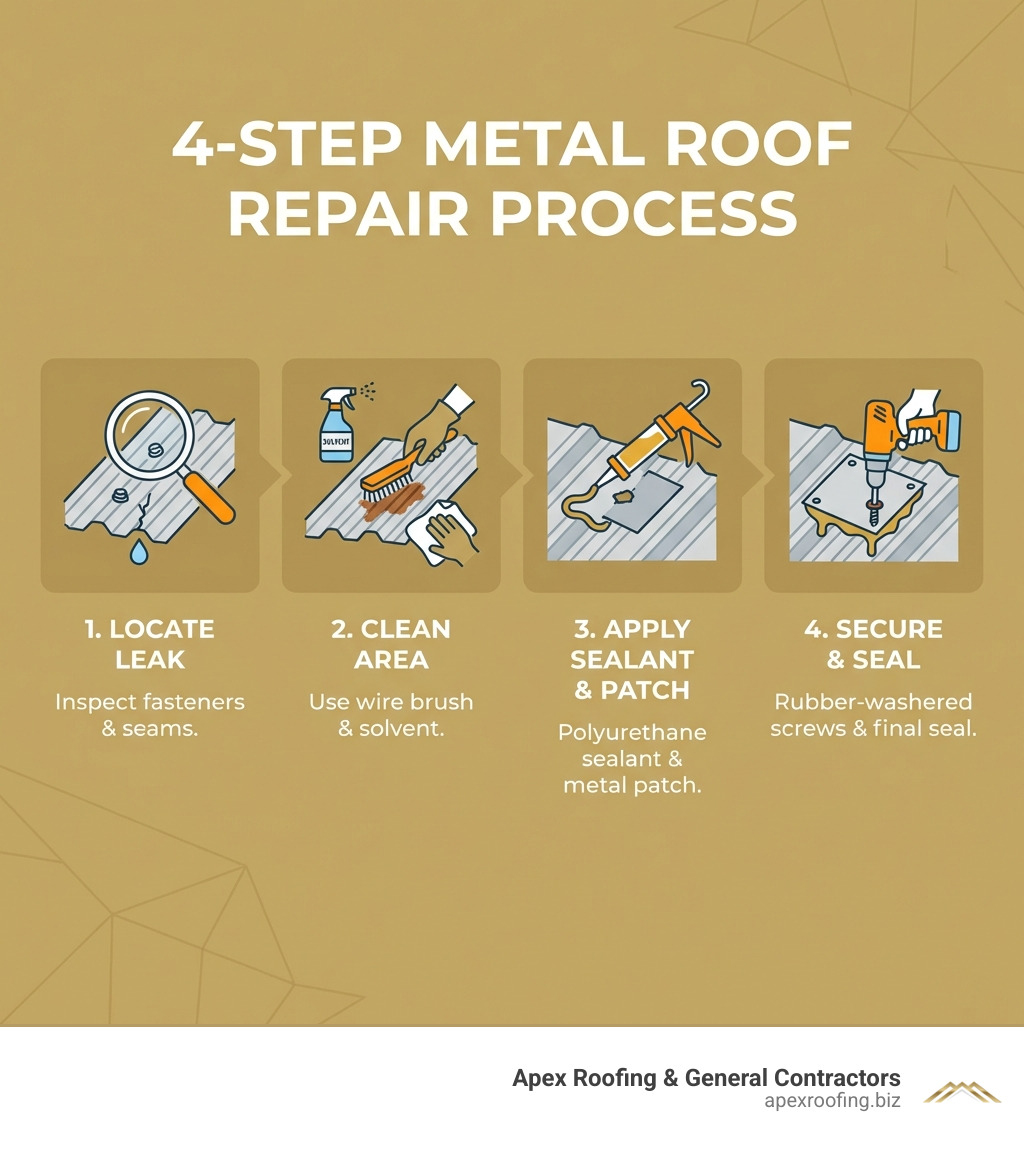
How to repair a leaky metal roof starts with understanding that most leaks originate from failed fasteners, worn sealants, or damaged seams—problems that worsen rapidly if ignored. Here’s the quick repair process:
- Locate the leak by inspecting fasteners, seams, flashing, and rust spots (water may travel along trusses before appearing inside)
- Clean and prepare the damaged area with a wire brush and solvent to remove rust, dirt, and old sealant
- Apply sealant and patch using polyurethane sealant or butyl tape, with metal patches for holes larger than 6mm
- Secure and seal with rubber-washered screws spaced 3-4 inches apart, ensuring sealant oozes from all edges
Metal roofs expand and contract with temperature changes—a challenge particularly acute in San Antonio’s intense heat. This constant movement causes screws to back out and washers to crack, creating entry points for water. Left unaddressed, a small leak can compromise insulation, damage ceilings, and lead to costly structural repairs.
Professional San Antonio roofing experts understand these regional challenges and the urgency of proper repairs. Water infiltration doesn’t just stain ceilings—it threatens your home’s structural integrity and can lead to mold growth within 24-48 hours.
I’m Carlos Yzaguirre, and as President of Apex Roofing & General Contractors, I’ve guided hundreds of San Antonio homeowners through how to repair a leaky metal roof, whether through DIY fixes or professional intervention. My team specializes in identifying the root causes of metal roof failures and implementing lasting solutions custom to South Texas weather conditions.
Essential how to repair a leaky metal roof terms:
Identifying the Source of Metal Roof Leaks
Finding the exact source of a leak on a metal roof is often the most difficult part of the job. Water is a sneaky traveler; it rarely drips straight down from the entry point. Instead, it often hits a purlin or a rafter and runs several feet before finally soaking your ceiling.

To effectively find where the leak is coming from, we recommend a multi-step inspection:
- The Attic Inspection: Head into your attic during a rainstorm with a flashlight. Look for damp insulation, water tracks on rafters, or “shiners”—nails or screws that look frosted or wet.
- The Hose Test: If it isn’t raining, have a partner stay inside while you gently run a garden hose over suspected areas on the roof. Start at the bottom (the eaves) and work your way up toward the ridge.
- Thermal Expansion Check: Look for fasteners that have “backed out.” Because metal roofs move so much in the San Antonio sun, screws can literally unscrew themselves over time.
- Failed Washers: Inspect the rubber neoprene washers on your screws. If they are cracked, dry-rotted, or flattened into a “mushroom” shape, they are likely letting water in.
- Rust Spots: Even small rust spots can hide pinholes. If you see orange streaks, you’ve found a potential entry point.
Ignoring these signs can lead to more than just structural issues. According to the EPA’s A Brief Guide to Mold, Moisture and Your Home, controlling moisture is the only way to prevent mold growth, which can begin in as little as 24 hours after a leak occurs.
Essential Materials for How to Repair a Leaky Metal Roof
Before you climb that ladder, you need the right “surgical” kit. Using the wrong materials—like standard hardware store silicone or roof cement—can actually trap moisture and cause the metal to rust faster.
We recommend gathering these essentials:
- Polyurethane Sealant: This is the gold standard. It’s UV-resistant, paintable, and stays flexible enough to handle the roof’s movement.
- Butyl Tape: Essential for sealing seams and under patches.
- Metal Snips: For cutting your patch material to the perfect size.
- Wire Brush: To scuff the surface for better adhesion.
- Replacement Screws: Specifically #10 or #12 metal roofing screws with fresh EPDM rubber washers.
- Cleaning Solvent: To remove oils and old caulk.
For a detailed list of fastener types, check our Patch Screw Holes Metal Roof Guide.
How to Repair a Leaky Metal Roof: The 4-Step Process
Once you’ve identified the culprit, it’s time to perform the repair. Whether you are dealing with a small puncture or a failed fastener, the methodology remains largely the same. The goal is to create a “sandwich” of sealant that can withstand the extreme expansion and contraction cycles of a Texas summer.
The most common mistake homeowners make is simply squirted caulk over a leak. Without proper surface preparation, the sealant will peel off within a few months. Proper How to Repair Metal Roof Leaks requires a mechanical bond between the sealant and the metal.
Step-by-Step Guide for How to Repair a Leaky Metal Roof
Follow these four steps for a repair that lasts:
- Clean the Area with Solvent: Use a cleaner like Simple Green or a dedicated solvent to remove all dirt, algae, and oils. The metal should be “squeaky clean.”
- Scuff the Metal with a Wire Brush: You need to create “tooth” for the sealant. Lightly scuff the area where the patch or sealant will sit. Be careful not to remove the entire protective galvanized coating, just the surface shine.
- Apply Sealant and Patch: Apply a generous bead of polyurethane sealant around the perimeter of the hole. If the hole is larger than 6mm (about 1/4 inch), cut a metal patch that overlaps the hole by at least 2 inches on all sides. Press the patch into the sealant until it oozes out from the edges.
- Secure with Fasteners: Use sheet metal screws to secure the patch every 3 to 4 inches. Ensure the screws penetrate the underlying metal panel but avoid hitting the roof deck if possible, as this can create new leak points if the roof shifts.
Advanced Repair Techniques for Seams and Flashing
Sometimes the leak isn’t a simple hole; it’s a failure where two pieces of metal meet. Seams and flashing are high-stress areas because they are where the most movement occurs.
Seam Failure: On corrugated roofs, seams can “separate” over time. To fix this, we often use a “membrane” approach. This involves a layer of sealant, a layer of fabric mesh, and another layer of sealant. This creates a reinforced bridge that moves with the roof.
Flashing Replacement: If the flashing around your chimney or vent pipe is rusted through, patching it is only a temporary fix. It is often better to remove the old flashing and install a new “boot” or metal flashing kit. Always use butyl mastic tape between the flashing and the roof panel for a watertight gasket.
| Sealant Type | Pros | Cons | Best Use |
|---|---|---|---|
| Polyurethane | High UV resistance, paintable, very durable | Longer cure time (1 week) | General repairs, patches, flashing |
| Silicone | Waterproof, stays flexible | Not paintable, doesn’t stick to itself | Small gaps, temporary fixes |
| Butyl | Excellent gasket properties, never fully hardens | Low UV resistance (must be covered) | Under seams, under flashing |
For more on specialized techniques, refer to the guide on How to Repair Metal Roof.
Safety and Maintenance: Preventing Future Leaks
Working on a metal roof is inherently dangerous. Metal is slippery when dry and like an ice rink when wet or dusty. Furthermore, the edges of metal panels are razor-sharp.
We cannot stress safety enough. According to OSHA’s Protecting Roofing Workers, falls are the leading cause of death in construction. If you are doing a DIY repair:
- Wear a Harness: Use a fall-arrest system anchored to a structural member.
- Non-Slip Shoes: Specialized soft-sole roofing shoes provide the best grip.
- Check the Weather: Never work on a roof if rain is in the forecast or if it’s windy.
- Ladder Safety: Ensure your ladder extends 3 feet above the roof edge and is tied off.
To avoid having to climb the roof in the first place, practice preventative maintenance. Clean your gutters twice a year to prevent water from backing up under the eaves, and trim any tree branches that could scratch or puncture the panels. If you’re unsure about the state of your roof, hiring Metal Roofers San Antonio for an annual inspection can save you thousands in the long run.
DIY vs. Professional Repair Costs
Is it worth doing it yourself? For a single backed-out screw or a small puncture from a fallen branch, a DIY fix is very cost-effective. You can buy the materials for under $100.
However, larger issues like widespread rust or leaking seams across the entire roof often require professional equipment. According to HomeGuide, the average cost for professional metal roof repair ranges from $500 to $3,000, depending on the severity.
| Repair Type | DIY Cost (Materials) | Professional Cost (Average) |
|---|---|---|
| Patching a Hole | $50 – $100 | $150 – $600 |
| Fixing Leaks/Seams | $75 – $150 | $700 – $1,500 |
| Rust Treatment | $100 – $300 | $1,500+ |
While DIY saves money upfront, a professional repair usually comes with a warranty and ensures that your homeowner’s insurance remains valid. You can find more detailed breakdowns at HomeAdvisor.
Professional Solutions for How to Repair a Leaky Metal Roof
When a roof is “tired” but not quite ready for replacement, we offer advanced solutions:
- Roof Coating Systems: A fluid-applied silicone or acrylic membrane that covers the entire roof, effectively turning it into a single, seamless piece of rubber. These can add 10-20 years to a roof’s life.
- Panel Replacement: If a single panel is beyond repair due to rust, we can cut it out and install a new matching panel.
- Fastener Overhaul: We can replace every screw on the roof with a larger diameter screw (“oversized”) to ensure a fresh, tight seal in the existing holes.
If you are in the South Texas area, our Metal Roofers San Antonio Texas team can provide a comprehensive assessment of which professional solution fits your budget.
Frequently Asked Questions about Metal Roof Repair
What is the best sealant for a metal roof?
The best sealant is a high-quality polyurethane sealant. Unlike silicone, polyurethane adheres better to the Kynar finishes found on many metal roofs and can be painted to match your roof color. It remains flexible through the 100-degree temperature swings common in San Antonio.
How long do metal roof repairs last?
A well-executed patch with polyurethane sealant and mechanical fasteners can last 10 to 20 years. However, the surrounding roof will continue to age. Temporary fixes like “cool roof” coatings over a single leak usually only last 2-5 years before they crack due to expansion.
Can I walk on a metal roof to fix a leak?
Yes, but you must be careful. Always walk on the “flats” of the panel, not the ribs or seams, as this can cause the metal to “oil can” or dent. Try to stay over the purlins or rafters (usually indicated by the rows of screws) where the roof is most structurally sound.
Conclusion
A leaky metal roof doesn’t have to mean a total replacement. By following the 4-step process—locate, clean, patch, and secure—most homeowners can handle minor repairs. However, when the leaks become widespread or the height of the roof becomes a safety concern, it’s time to call in the experts.
At Apex Roofing & General Contractors, we take pride in serving the San Antonio and South Texas community with transparent, code-compliant roofing services. Whether you need a simple Residential Roofs / Metal Roofs repair or a full system overhaul, we are here to help. We offer free estimates to help you plan your project with confidence.
Don’t let a small drip turn into a major disaster. Contact us today at (726) 727-7663 for a free inspection and a watertight solution you can trust.
Apex Roofing & General Contractors San Antonio, TX Phone: (726) 727-7663 Web: https://apexroofing.biz