Why Storm Damage Roof Replacement Doesn’t Have to Break the Bank
Storm damage roof replacement is one of the most financially daunting challenges a homeowner can face, but it doesn’t have to drain your savings. The most affordable path forward involves three key steps: immediately documenting all visible damage, filing a comprehensive homeowners insurance claim with professional support, and choosing a reputable local contractor who can advocate on your behalf. With support from a certified, reliable roofing service, most homeowners find their insurance policies cover sudden storm damage from wind, hail, and falling debris—potentially covering the full $8,500+ average cost of a new roof, minus your deductible.
After a severe storm hits San Antonio, many homeowners panic at the thought of replacement costs. The reality is that your insurance policy is designed to protect you from exactly this scenario. The challenge isn’t the cost itself—it’s knowing how to steer the claims process correctly. A missed step can lead to a denied claim or a payout that falls short of actual repair costs.
The difference between paying thousands out-of-pocket versus having your roof fully covered often comes down to:
- Taking immediate action to document and report damage
- Understanding what your policy actually covers (and what it doesn’t)
- Working with an experienced contractor who can meet with insurance adjusters
- Avoiding common claim denial triggers like delayed reporting or poor documentation
- Knowing when to appeal and how to strengthen your case
I’m Carlos Yzaguirre, President of Apex Roofing & General Contractors, and I’ve guided countless San Antonio homeowners through the storm damage roof replacement process, helping them maximize their insurance benefits and restore their homes with minimal out-of-pocket expense. Our team specializes in storm damage assessment and works directly with insurance adjusters to ensure every legitimate repair is covered. When you need a reliable partner for your residential roof replacement after a storm, we’re here to help.
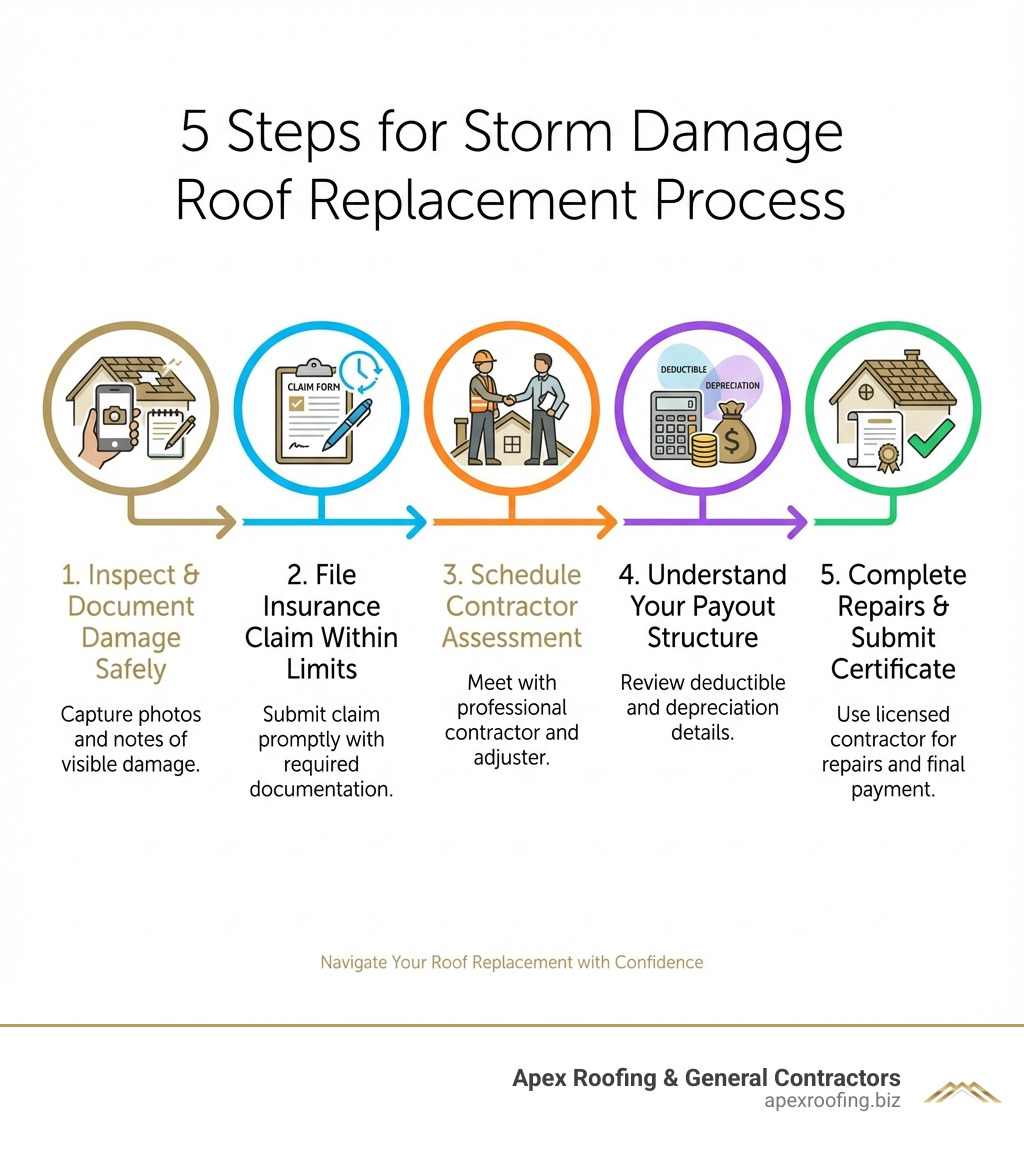
Step 1: Immediate Actions to Take After a Storm
The moments after a storm are critical for both your safety and the success of your future insurance claim. Taking swift, correct action can prevent further damage and lay the groundwork for a smooth replacement process.
Assess and Document the Damage Safely
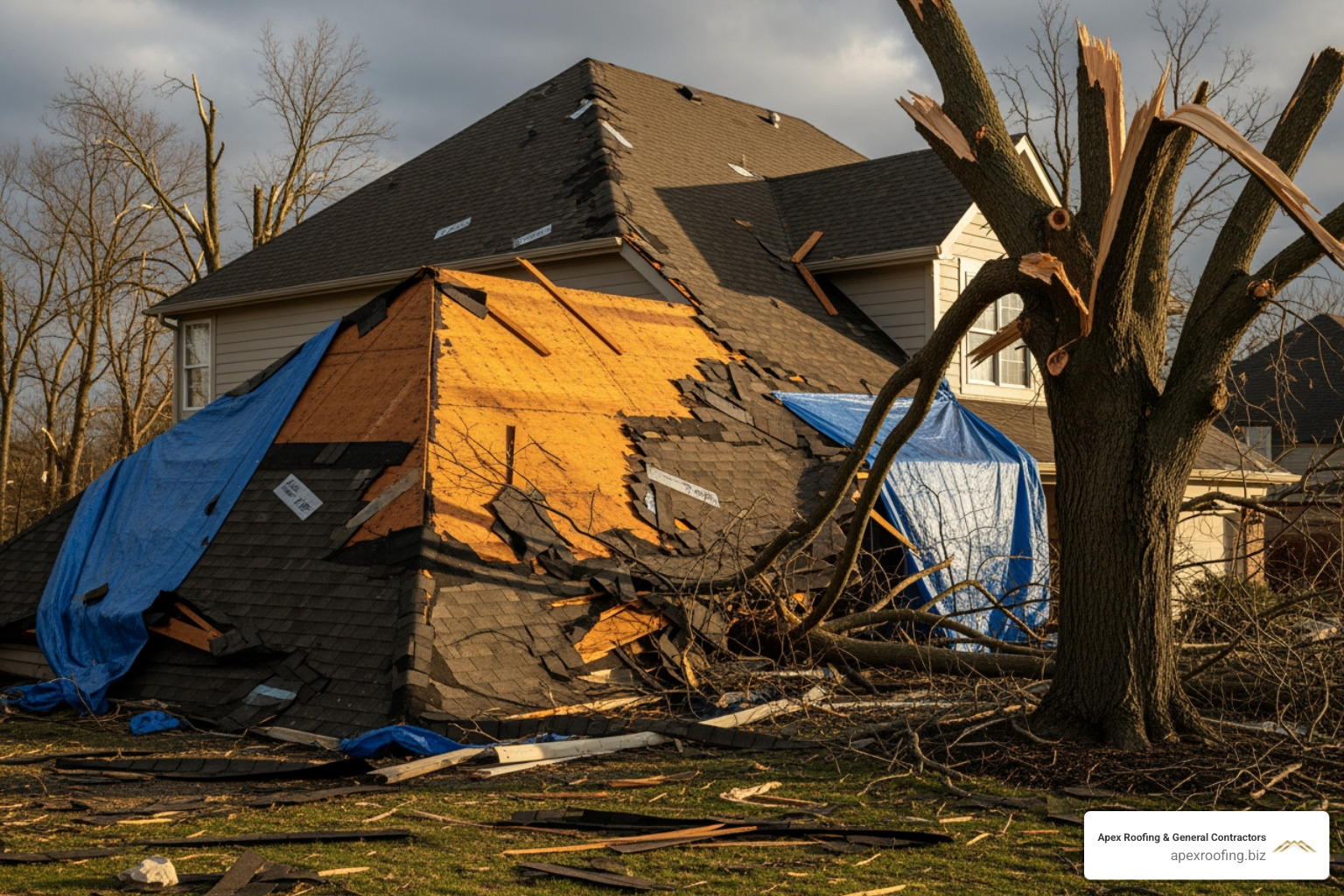
First and foremost, your safety and the safety of your family are paramount. Do not attempt to climb onto a damaged roof, especially if there’s standing water, downed power lines, or structural instability. After a severe storm, your roof could be weakened, or there could be live wires on the ground or roof. Always prioritize safety.
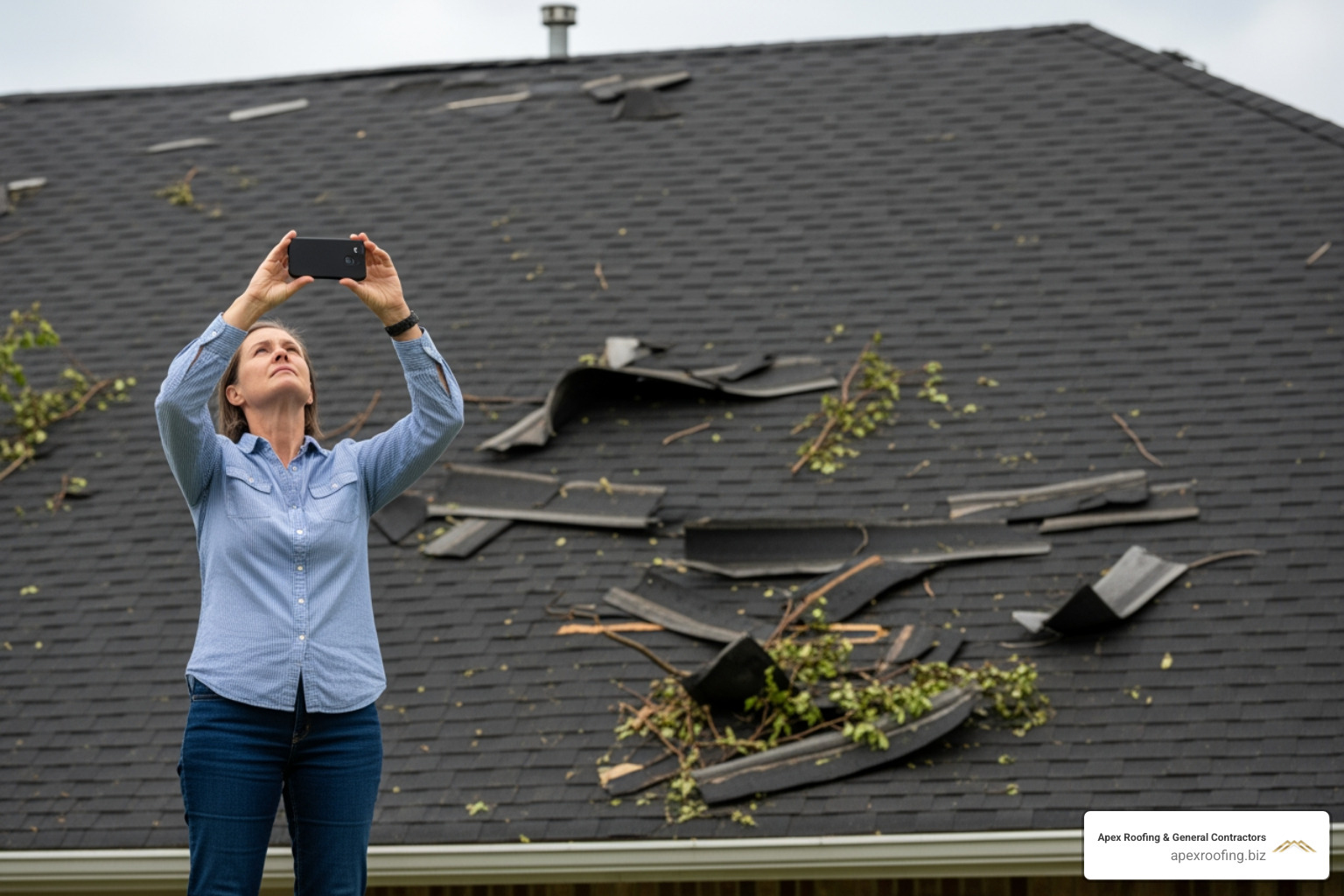
Once it’s safe to venture outside, our first recommendation is to perform an initial visual inspection of your roof and property from the ground. Look for tell-tale signs of storm damage. Start by noting the exact date and time the storm occurred—this detail is crucial for your insurance claim. Then, systematically photograph everything you see. This includes:
- Missing or Curled Shingles: High winds, classified as 74 mph or greater (hurricane-force) or even 39-54 mph (gale-force), can easily tear shingles from your roof or lift their edges, compromising the watertight seal.
- Dents on Gutters, Downspouts, or Metal Flashing: These are often clear indicators of hail damage. Hailstones can travel as fast as 100 mph, leaving their mark even if the roof itself doesn’t immediately show obvious damage.
- Debris on the Ground: Look for granules from your shingles in gutters or around your home. Granule loss, often caused by hail, exposes the underlying asphalt to UV rays and weather, accelerating wear.
- Damage to Siding, Windows, and Other Exterior Features: These can corroborate the severity of the storm and support your roof damage claim.
- Water Stains or Sagging Ceilings Inside: If you notice wet spots on interior ceilings or walls, or sagging areas in your attic, this is a sure sign of a leak that needs immediate attention.
Documenting everything with clear, dated photos and even videos is your first line of defense in the insurance process. It provides undeniable proof of the damage and its timing. For a comprehensive guide on what to look for, you can refer to an excellent Roof Storm Damage Checklist [What To Do After A Storm].
Perform Emergency Temporary Repairs
Once you’ve safely documented the damage, your next step is to mitigate any further issues. This means preventing water from entering your home and causing secondary damage like mold, rot, or electrical hazards. Even if you plan on a full storm damage roof replacement, these temporary measures are vital.
- Tarping Exposed Areas: If you have missing shingles or visible holes, covering the exposed areas with a waterproof tarp is critical. This helps prevent rain from entering your home. While you might be tempted to do this yourself, it’s often best left to professionals, especially if the roof is steep or the damage is extensive. Our team offers emergency tarping services to secure your home quickly.
- Placing Buckets Under Leaks: For interior leaks, strategically placed buckets can collect dripping water and prevent damage to your floors and belongings.
- Boarding Windows: If severe winds or flying debris have broken windows, boarding them with plywood can prevent further water intrusion and secure your home.
- Keeping Receipts for Temporary Repairs: Any money you spend on temporary repairs, including tarps, plywood, or professional services, should be carefully documented with receipts. Your insurance policy may cover these costs, and they serve as proof that you took reasonable steps to prevent further damage.
Acting quickly to prevent additional damage is often a requirement of your insurance policy. Neglecting to do so could jeopardize your claim, so it is vital to take these temporary measures seriously while you arrange for a professional inspection and permanent repairs.
Step 2: Maximizing Your Insurance Claim for Storm Damage Roof Replacement
Your homeowners insurance is your most powerful tool for an affordable roof replacement. However, the process requires careful navigation and thorough preparation. An approved claim is the single most effective way to cover the cost, which on average is over $8,500.
Understanding Your Homeowners Insurance Coverage
Most homeowners insurance policies are designed to cover sudden and accidental damage to your property, including your roof. For residents of San Antonio and surrounding areas like Helotes, Leon Valley, and Alamo Heights, understanding the specific “perils” covered by your policy is crucial.
- Covered Perils: Typically, policies cover damage from:
- Wind Damage: This is a major concern in our region. Hurricane-force winds (74 mph or greater) or even gale-force winds (39-54 mph) can cause significant damage, from missing shingles to structural issues.
- Hail Damage: Hailstorms, though often brief, can cause extensive damage to roofs by cracking or denting shingles, dislodging granules, and compromising the integrity of various roofing materials.
- Falling Debris: Damage caused by falling trees or other debris during a storm is generally covered.
- Exclusions: It’s equally important to know what your policy doesn’t cover. Common exclusions include:
- Wear and Tear: Gradual deterioration of your roof due to age and normal use is not covered. If your roof is old and simply worn out, an insurer may deny a claim, even if a storm exacerbates existing issues.
- Lack of Maintenance: If damage is found to be a direct result of neglected maintenance (e.g., clogged gutters causing water backup, unaddressed minor leaks), your claim could be denied.
- Roof Age and Condition: The age of your roof significantly impacts coverage. Roofs under 10 years old might be covered for full replacement cost, while older roofs (sometimes over 20 years) may only be covered for their depreciated value or have limited coverage.
- Actual Cash Value (ACV) vs. Replacement Cost Value (RCV): This is a critical distinction.
- Actual Cash Value (ACV): This pays for the cost of replacement minus depreciation. Essentially, it’s what your roof is worth today. You’ll typically receive an ACV check first to begin repairs.
- Replacement Cost Value (RCV): This covers the full cost of replacing your roof with new materials of similar quality, without deduction for depreciation. If you have an RCV policy, you’ll receive the depreciation amount in a second check after the repairs are completed and verified. This is often the “cheapest” way to get a storm damage roof replacement as it covers the full cost.
What Documentation is Crucial When Filing a Claim?
When it comes to filing a successful insurance claim, preparation is key. The more evidence and information you provide, the smoother the process tends to be. We always advise our clients to gather the following:
- Dated Photos and Videos: As mentioned, these are your visual proof. Capture wide shots of your home, close-ups of specific damage, and any interior signs of leaks. Include timestamps if possible.
- Professional Inspection Report: Before you even call your insurer, get a free roof inspection from a reputable contractor like us. We can identify both obvious and hidden damage, providing an expert assessment that lends credibility to your claim.
- Written Repair Estimates: Obtain detailed, itemized estimates for the repair or replacement work. These should clearly outline the scope of work and associated costs.
- Proof of Regular Maintenance: While lack of maintenance can lead to denial, proof of consistent upkeep can strengthen your case, demonstrating you’ve been a responsible homeowner.
- Copy of Your Insurance Policy: Keep this handy. It contains all the details about your coverage, deductibles, and claim procedures.
The Role of a Professional Roofing Contractor
A professional roofing contractor is more than just someone who fixes roofs; they are a crucial ally in the insurance claim process, especially for a storm damage roof replacement.
- Expert Damage Assessment: We have the training and experience to identify all types of storm damage, including subtle issues that an untrained eye might miss. Our detailed assessments ensure nothing is overlooked.
- Meeting with the Insurance Adjuster: We can meet with your insurance adjuster on-site during their inspection. This allows us to point out all damage, explain the scope of necessary repairs, and advocate for your best interests. We speak their language and can ensure a fair assessment.
- Providing Accurate Estimates: Our team provides comprehensive, itemized estimates that insurance adjusters require, streamlining the claim process and preventing disputes over costs.
- Ensuring Code Compliance: Local building codes in San Antonio, Shavano Park, and Terrell Hills dictate specific requirements for roof repairs and replacements. We ensure all work meets these standards, which is vital for both safety and maintaining insurance coverage.
- Advocating for the Homeowner: We act as your advocate, working to ensure your claim is processed fairly and that you receive the maximum payout allowed by your policy. Our goal is to make your storm damage roof replacement as stress-free and affordable as possible. For more insights on dealing with hurricane-related roof damage, refer to this guide: What to Do after Hurricane Roof Damage.
Step 3: Navigating the Payout and Avoiding Common Pitfalls
Once your claim is filed, understanding the financial mechanics and potential roadblocks is key. Knowing what to expect can help you avoid delays and denials.
How Deductibles and Depreciation Impact Your Payout
Understanding how your deductible and depreciation affect your insurance payout is essential for planning your finances for a storm damage roof replacement.
- Policy Deductible: This is the amount you are responsible for paying out-of-pocket before your insurance coverage kicks in. For example, if your deductible is $1,000 and the approved repair cost is $10,000, your insurer will pay $9,000.
- Actual Cash Value (ACV) and Recoverable Depreciation: If your policy is ACV, the payout will be the depreciated value of your roof. However, if you have a Replacement Cost Value (RCV) policy (which we highly recommend for comprehensive protection), the process involves a “two-check system”:
- First Check (ACV): Your insurer will initially send a check for the actual cash value of the damaged roof, minus your deductible. This allows you to start the repair process.
- Second Check (Recoverable Depreciation): Once the storm damage roof replacement is complete, and you’ve submitted proof of completion (like a contractor’s invoice and a certificate of completion), your insurer will issue a second check for the depreciation amount. This covers the difference between the ACV and the full replacement cost. This second check is what makes RCV policies so valuable, ensuring you get the full cost of a new roof.
Common Reasons Roof Insurance Claims Are Denied
Even with proper documentation, claims can sometimes hit a snag. Being aware of the most common reasons for denial can help you avoid them:
- Pre-existing Damage: If the adjuster determines the damage existed before the storm, or if the storm merely exacerbated old, unaddressed issues, your claim might be denied. This highlights the importance of regular maintenance.
- Insufficient Evidence: A lack of clear, dated photos or a professional assessment can lead to denial. The insurer needs proof the damage occurred during the claimed storm event.
- Neglected Maintenance: If your roof shows signs of severe wear and tear, or if crucial maintenance (like cleaning gutters or repairing minor leaks) was ignored, the insurer may argue that poor upkeep, not the storm, was the primary cause of damage.
- Filing Too Late: Many policies have time limits for filing claims after a storm, sometimes as little as one year. Delaying can lead to your claim being denied outright.
- Policy Exclusions: Certain types of damage or roofing materials might be excluded from your policy. Always review your policy carefully.
- Unclear Cause of Damage: If the cause of the damage cannot be definitively linked to a covered peril (like wind or hail), the claim may be denied.
How to Appeal a Denial: If your claim is denied, don’t despair! You have options. We recommend:
- Request a Second Opinion: Ask your insurance company for a different adjuster to re-evaluate the damage.
- Recruit a Public Adjuster: These professionals work for you, not the insurance company, and can help negotiate on your behalf.
- Seek Legal Help: If all else fails, legal counsel can provide guidance on further action.
Homeowners should be cautious when dealing with adjusters, as their primary responsibility is to their company. Having a trusted contractor like Apex Roofing & General Contractors by your side can make all the difference.
Step 4: Proactive Measures to Reduce Future Risks
Protecting your home doesn’t stop after a repair. Taking proactive steps can strengthen your roof against future storms and potentially lower your insurance risks.
Regular Maintenance and Pre-Storm Preparation
An ounce of prevention is worth a pound of cure, especially when it comes to your roof. Regular maintenance can extend your roof’s lifespan and make it more resilient to the next storm that rolls through Bexar County.
- Annual Professional Inspections: We recommend scheduling a professional roof inspection at least once a year, ideally in the spring or fall. Our experts can identify potential vulnerabilities, such as loose or cracked shingles, damaged flashing, or worn-out sealant, before they turn into major problems during a storm.
- Gutter Cleaning: Clogged gutters can cause water to back up, leading to fascia damage, wood rot, and even ice dams in colder climates (though less common in San Antonio, heavy rains can still cause overflow). Keep them clear of leaves and debris.
- Trimming Overhanging Trees: Tree branches that hang over your roof pose a significant risk during high winds. They can scrape shingles, drop debris, or even fall onto your roof, causing severe damage. Trim them back to reduce this hazard.
- Securing Loose Objects: Before a storm hits, secure anything on your property that could become airborne and damage your roof or home, such as patio furniture, garbage cans, or decorative items.
For more comprehensive tips on preparing your home for severe weather, the federal government offers excellent resources: Learn more hurricane preparedness tips at Ready.gov. While hurricanes are less common inland, the preparedness advice is valuable for any severe storm.
Choosing Storm-Resistant Roofing Materials
If your storm damage roof replacement is approved, it’s an ideal opportunity to upgrade to more resilient materials that can better withstand future weather events in our San Antonio service areas.
- Impact-Resistant Shingles (Class 4): These shingles are specifically designed to resist damage from hail and wind-driven debris. They undergo rigorous testing and are rated Class 4 for impact resistance (UL 2218), meaning they can withstand the impact of a 2-inch steel ball dropped from 20 feet without cracking. Many insurance companies offer discounts for installing Class 4 shingles.
- Metal Roofing Benefits: Metal roofs are an increasingly popular choice for their durability and longevity. They can last up to 50 years, are highly resistant to wind, hail, and fire, and often lead to lower home insurance premiums due to their reduced risk profile.
- Upgraded Underlayment: Beneath your shingles or metal panels, a high-quality synthetic underlayment provides an extra layer of protection against water intrusion, especially important if primary roofing materials are compromised during a storm.
- Fortified Roofing Standards: While often associated with coastal regions, the principles of “Fortified Roofing” (such as improved attic ventilation, sealed roof decks, and strong perimeter fastening) can be applied to any roof replacement. These standards are proven to make homes significantly more resistant to severe weather.
Investing in these upgrades during your storm damage roof replacement can be a smart long-term decision, protecting your home and potentially saving you money on future insurance premiums.
Frequently Asked Questions about Storm Damage Claims
We often hear similar questions from homeowners in San Antonio, Leon Valley, and Fair Oaks Ranch after a significant storm. Here are some of the most common ones.
Will filing a claim for storm damage increase my insurance premium?
This is a common concern, and the answer is usually no. Filing a claim for an “Act of God,” such as damage caused by a wind or hail storm, should not cause your individual premium to increase. Insurance companies base rates on regional risk, so if a widespread storm occurs that affects many homes in an area like San Antonio, rates for the entire region might rise due to increased risk, regardless of whether you personally filed a claim. However, your individual claim for storm damage should not be the sole reason for a premium hike. If it is, you should question and dispute it.
Can I choose my own roofing contractor for an insurance-funded replacement?
Absolutely! You have the right to choose your own licensed and insured roofing contractor. While your insurance company may provide a list of “preferred vendors,” you are not obligated to use them. It is crucial to select a reputable local contractor you trust, one who has experience with insurance claims and understands local building codes in areas like Shavano Park and Terrell Hills. We believe in empowering homeowners to make informed choices for their homes.
What are the consequences of delaying my storm damage roof replacement?
Delaying necessary repairs after storm damage can lead to a cascade of costly problems. What starts as a minor issue can quickly escalate:
- Water Infiltration: Even a small leak can lead to significant water damage inside your home, affecting drywall, insulation, electrical systems, and personal belongings.
- Structural Rot and Mold Growth: Persistent moisture can cause wood rot in your roof deck and attic framing, compromising the structural integrity of your home. It also creates a perfect breeding ground for mold, which can be a health hazard and expensive to remediate.
- Electrical Hazards: Water and electricity don’t mix. Leaks can damage electrical wiring, posing fire risks or causing power outages.
- Insurance Complications: Perhaps most critically, delaying repairs can complicate future insurance claims. If a subsequent storm causes more damage, your insurer may deny the new claim, arguing that the pre-existing, unrepaired damage was the primary cause. This effectively turns a covered loss into an out-of-pocket expense.
Acting promptly not only protects your home but also preserves your insurance coverage for future unforeseen events.
Get Your Storm Damage Inspected by a Trusted Professional
Navigating a storm damage roof replacement can be complex, but you don’t have to do it alone. The most cost-effective path is to use your insurance correctly, and that starts with a professional, honest assessment. A certified contractor can document the damage, meet with your adjuster, and ensure all work is done to code, maximizing your claim and protecting your home. For homeowners in the San Antonio, TX area, the team at Apex Roofing & General Contractors provides the expertise needed to restore your peace of mind. If you suspect your roof has been damaged, we invite you to learn more about our roof replacement services or call (726) 727-7663 for a free inspection. We provide free estimates to help you get your home back in top shape.