Why Acting Fast on Metal Roof Leaks Saves You Thousands
Metal roofs can last 40 to 50 years, but even the most durable materials can leak. For San Antonio homeowners, knowing how to repair metal roof leaks promptly is crucial to prevent a small drip from turning into major water damage. Left unaddressed, a minor leak can compromise your walls, ceilings, insulation, and even your home’s structure. As San Antonio’s trusted roofing experts, Apex Roofing & General Contractors knows that quick action is the key to protecting your investment and saving thousands.
Quick Repair Steps:
- Locate the leak – Trace interior water stains to the roof exterior.
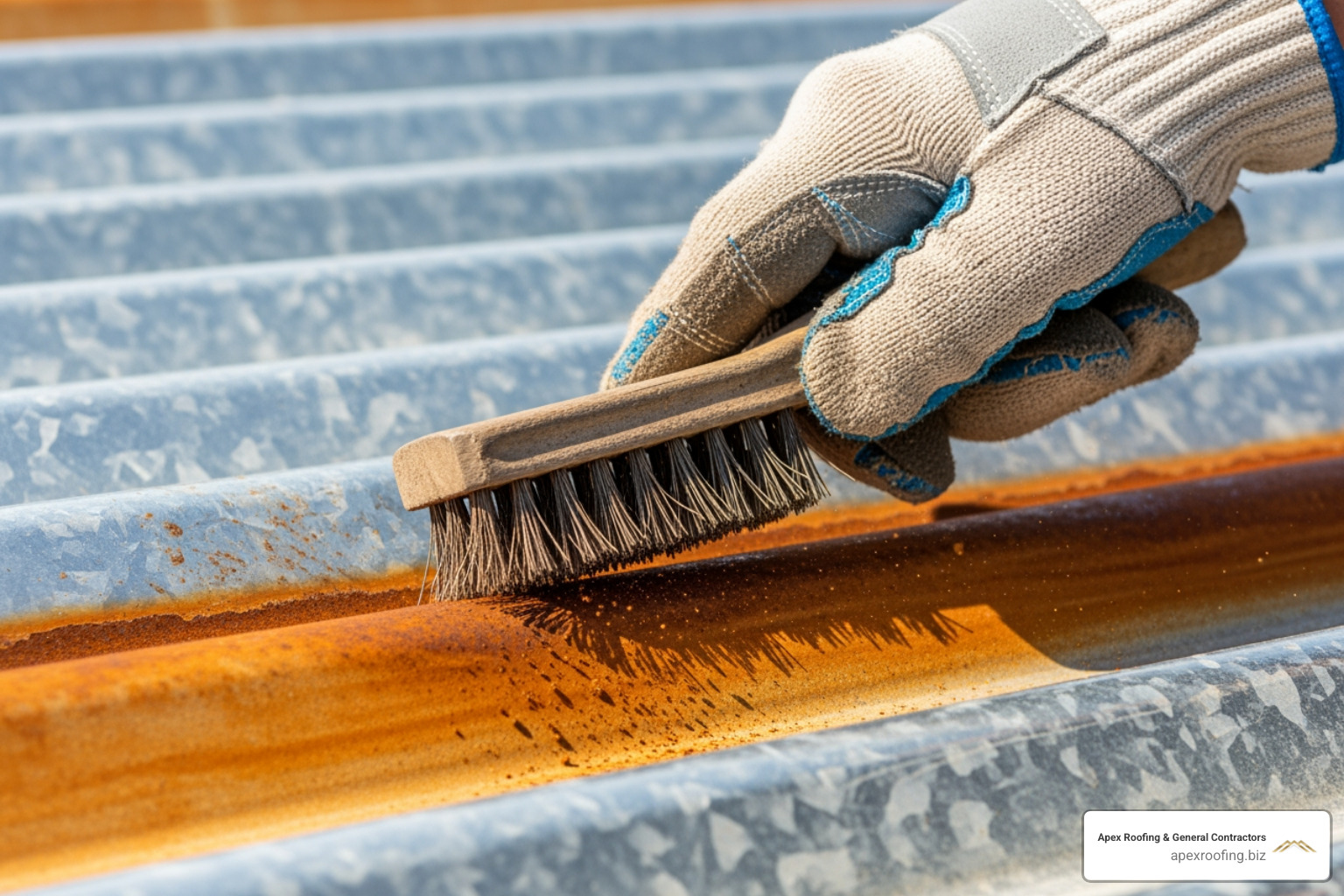
- Clean thoroughly – Use a wire brush to remove rust, debris, and old sealant.
- Tighten/replace fasteners – Install new screws with rubber washers.
- Seal small damage – Apply urethane or silicone sealant to cracks.
- Patch large holes – Secure a metal patch with screws and sealant.
- Test the repair – Spray with water and check inside for leaks.
Whether your roof needs a simple fastener replacement or a more involved patch job, this guide walks you through the process. Professional metal roof installation and repair ensures your system performs as designed for decades.
DIY repairs typically cost $50 to $200 for materials, while professional repairs range from $300 to $1,000 or more. As Carlos Yzaguirre, President of Apex Roofing & General Contractors, states, “Understanding how to repair metal roof leaks correctly is the difference between a quick fix and recurring problems that drain your wallet.”
Handy how to repair metal roof leaks terms:
First, Pinpoint the Problem: Common Causes and Signs of a Leak
A metal panel itself rarely leaks; the issue is almost always with installation, damage, or aging components. Identifying the root cause is the most critical step. Water can travel along trusses or seep down walls, so the interior stain may not be directly below the roof entry point. A thorough inspection is always necessary.
Common Causes of Metal Roof Leaks
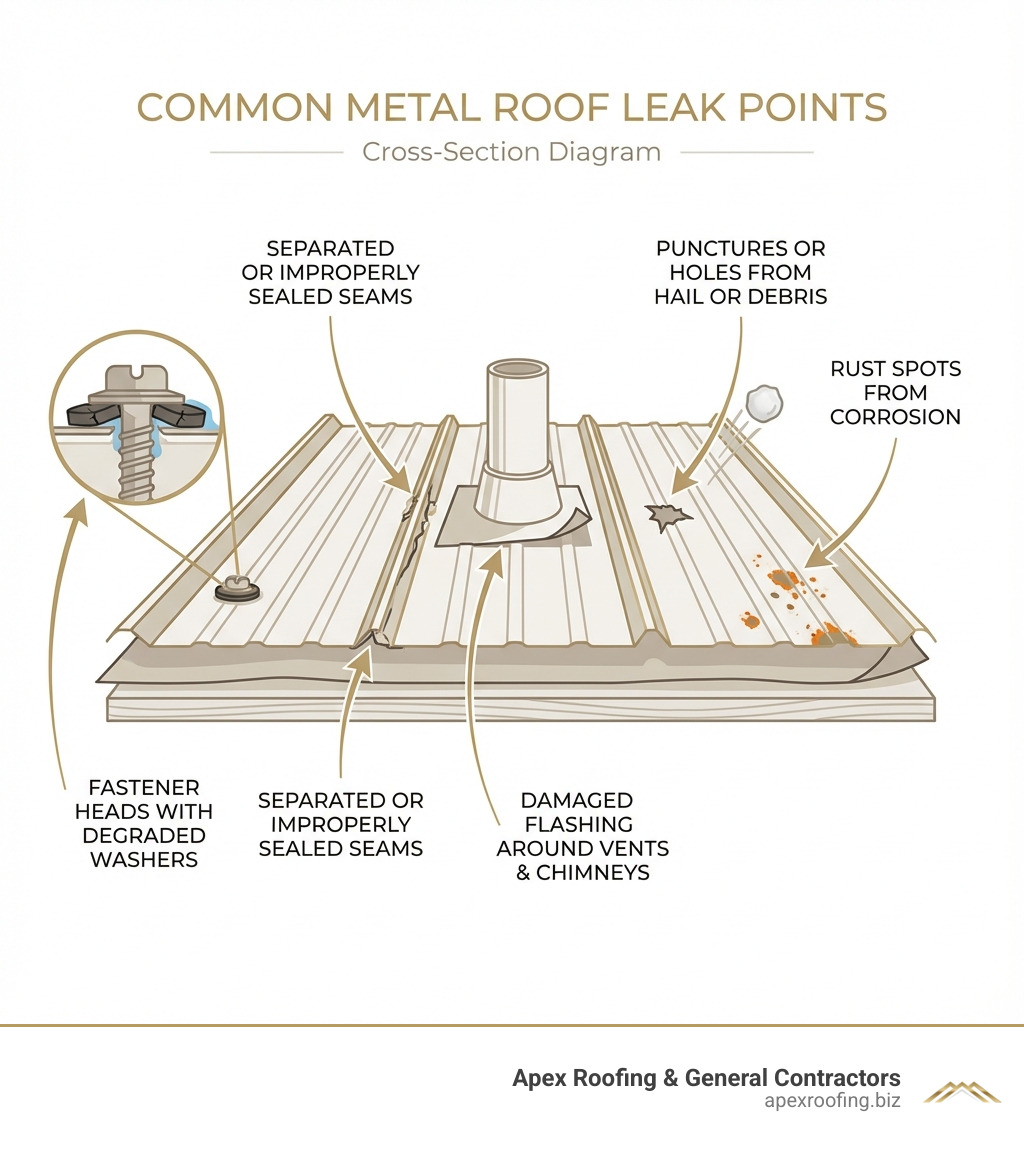
- Improper Installation: Many leaks stem from installation errors like misaligned panels, incorrect fastening, or poor flashing. These create weaknesses that thermal expansion can expose over time.
- Loose or Degraded Fasteners: The rubber washers on roofing screws degrade from UV exposure and temperature changes, allowing water to seep in. Screws can also back out, creating small openings.
- Failing Seams or Flashing: Sealant on seams where panels join can degrade. Flashing—the metal strips sealing areas around chimneys, vents, and valleys—can also get damaged or corrode, creating a path for water.
- Panel Damage: Hail can create punctures, falling debris can cause dents, and strong winds can lift panels. Corrosion can also create holes where protective coatings have worn off.
- Debris Buildup: Leaves and twigs trapped in roof valleys or gutters can hold water against the roof surface, allowing it to find and enter tiny imperfections.
- Age and Weathering: Decades of exposure to the elements cause materials to degrade, sealants to crack, and fasteners to loosen, leading to leaks if not addressed through maintenance.
Telltale Signs of a Leak
Catching a leak early dramatically reduces damage and cost. Look for these signs:
- Water Stains on Ceilings or Walls: Discoloration or streaks on interior surfaces are the most obvious sign of a roof leak.
- Dripping or Puddles in the Attic: Check your attic periodically for active drips, standing water, or damp insulation, which reveal leaks before they reach finished ceilings.
- Mold or Mildew Growth: Mold in the attic or on upper walls indicates a persistent moisture problem and a health hazard.
- Rust or Corrosion Spots: While some surface rust is cosmetic, spots around fasteners or seams can signal thinning metal and a potential breach.
- Damp Insulation: Wet insulation loses its effectiveness and can lead to mold and structural rot if not addressed.
- Peeling Paint Near the Roofline: Moisture trapped in walls can cause paint to bubble or peel, signaling a leak higher up on the roof.
Gearing Up for the Job: Safety, Tools, and Materials
A successful repair starts with safety and having the right equipment. Metal roofs can be slippery, especially when wet, and their reflective surface can create glare on sunny days.
Essential Safety Precautions
Your safety is paramount. Do not attempt roof repairs if you’re uncomfortable with heights or if conditions are unsafe.
- Work on a dry roof: Metal is extremely slippery when wet. Avoid working after rain or when dew or frost is present.
- Use a sturdy ladder: Ensure your ladder is secure, extends three feet above the eave, and rests on a level surface.
- Wear non-slip, soft-soled shoes: Good grip is crucial, and soft soles help prevent scratching the metal.
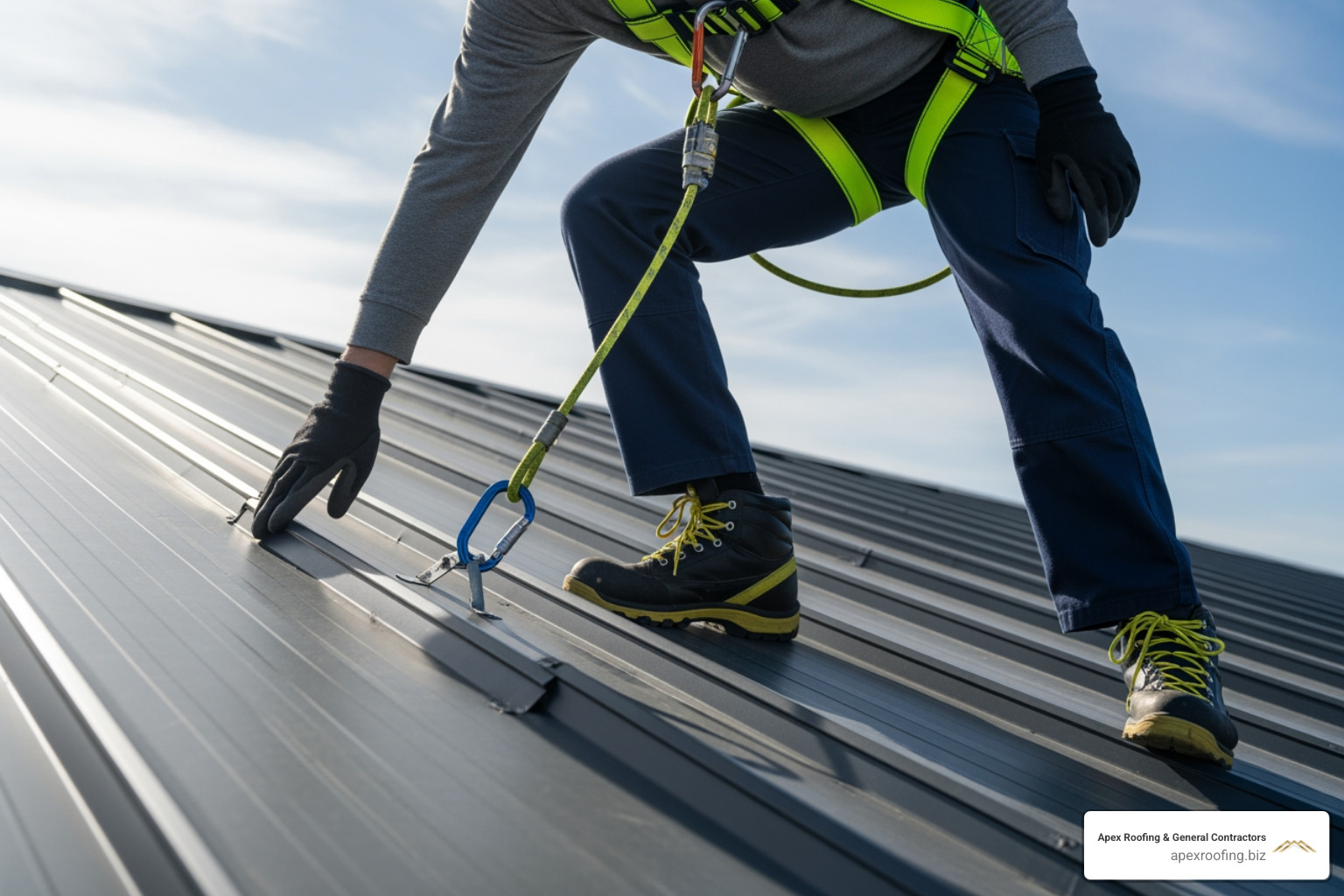
- Use a safety harness on steep pitches: A fall protection system is non-negotiable for roofs with a significant incline. If you don’t have one, call a professional.
- Never work alone: Have someone nearby who can help in an emergency.
- Be aware of power lines: Metal conducts electricity, so maintain a safe distance from overhead lines.
Essential Tools and Materials for How to Repair Metal Roof Leaks
Gather everything before you get on the ladder to make the process smoother.
Tools:
- Safety gear: Gloves, safety glasses, safety harness.
- Ladder: Stable and tall enough for safe access.
- Wire brush: For cleaning rust and debris.
- Putty knife: For applying and smoothing sealant.
- Caulking gun: For applying sealants.
- Cordless drill/driver: For fasteners.
- Metal snips: For cutting patch material.
- Measuring tape
- Clean cloths and solvent (e.g., mineral spirits).
Materials:
- Urethane or silicone-based roof sealant: Choose a high-quality sealant rated for metal roofing that offers flexibility and UV resistance.
- Butyl tape: An adhesive, flexible tape for sealing seams and fasteners.
- Replacement roofing screws with washers: Use screws designed for metal roofing with a bonded rubber washer for a watertight seal.
- Metal patch material: Galvanized steel or aluminum sheets that match your roof’s gauge and color.
Using incompatible materials can cause galvanic corrosion, creating new leaks. For material specifications, refer to industry guides like the MCA Installer Training Manual.
A Step-by-Step Guide on How to Repair Metal Roof Leaks
With your gear ready and the problem identified, you can begin the repair. Thorough preparation is the key to a lasting fix.
Step 1: Locate and Clean the Damaged Area
This first step ensures your repair will adhere properly and seal the leak.
- Trace the leak: Start from the interior water stains and trace them to the highest point of moisture. The exterior leak source may be higher up on the roof.
- Inspect the exterior: On the roof, carefully inspect the area above the interior damage and several feet around it. Look for loose fasteners, cracked sealant, damaged flashing, or rust.
- Clean the area: Use a wire brush to vigorously scrub away all rust, old sealant, and debris. This is critical for proper adhesion.
- Wipe with solvent: Use a cloth with mineral spirits to wipe the area clean of any grease or dust. Let it dry completely before proceeding.
Step 2: How to Repair Metal Roof Leaks from Loose Fasteners or Seams
Loose fasteners are a top cause of metal roof leaks.
- Check all fasteners: Inspect every screw in the leak area for raised heads, rust, or cracked rubber washers.
- Tighten loose screws: Use a drill to snug up loose screws. Do not overtighten, as this can damage the panel or strip the screw.
- Replace damaged screws: Remove any screw with a brittle or missing washer and replace it with a new roofing screw of the correct size.
- Seal leaking seams: After cleaning, apply a continuous bead of urethane sealant or a strip of butyl tape along the entire seam, pressing firmly to ensure full adhesion.
Step 3: Apply Sealant to Cracks and Small Holes
For minor punctures and hairline cracks, a quality sealant is often enough.
- Apply sealant: Use a caulking gun to apply a generous bead of metal-roof-specific sealant directly over the crack or hole.
- Smooth the sealant: With a putty knife, smooth the sealant to push it into the damage and feather the edges. This helps shed water and improves durability.
- Allow to cure: Let the sealant cure fully according to the manufacturer’s instructions before exposing it to rain.
Step 4: Patch Larger Holes or Damaged Sections
For damage too large for sealant alone, a Metal Roof Patch is necessary.
- Cut a metal patch: The patch should be at least 2 inches larger than the hole on all sides. Round the corners to prevent them from catching debris.
- Prep the surfaces: Clean and scuff the roof area around the hole and the underside of the patch with a wire brush to improve adhesion. Wipe clean with solvent.
- Apply sealant: Apply a thick bead of sealant around the edge of the hole on the roof panel.
- Press the patch into place: Firmly press the patch onto the sealant. Sealant should ooze out from all sides, indicating a good seal.
- Secure with screws: Install new roofing screws every 2-3 inches around the patch’s perimeter to fasten it securely to the roof panel.
- Seal the edges and screws: Apply a final layer of sealant over the patch edges and all screw heads for complete protection.
DIY vs. Professional Repair: Knowing When to Call for Help
While this guide can help you tackle minor repairs, it’s crucial to recognize when a leak is beyond your skill set or poses a safety risk. Knowing when to call the experts can prevent further damage and save you money in the long run.
When to Call a Professional
Some leaks are too complex, dangerous, or extensive for a DIY approach. Call a professional if:
- You find extensive damage or multiple leak sources.
- You are uncomfortable working at heights or the roof has a steep pitch.
- A DIY repair might void your roof’s warranty.
- You suspect structural damage, such as sagging or widespread rot.
- You need an Emergency Roof Leak Fix during a storm.
Cost of DIY vs. Professional Repair
Understanding the financial implications helps you make an informed decision.
| Repair Type | Cost | Pros | Cons |
|---|---|---|---|
| DIY Repair: | $50 – $200 (materials only) | Cost-effective for small, simple jobs | Risk of improper repair, safety hazards, no warranty on work |
| Professional Repair: | $300 – $1,000+ (or more for complex issues) | Expertise, safety, warranty on work, proper diagnosis | Higher initial cost |
While DIY is cheaper upfront, a professional repair includes trained expertise, proper safety protocols, and a warranty, ensuring the job is done right the first time. For a detailed Roof Leak Repair Estimate Complete Guide, it’s best to consult with local experts.
Protect Your Investment: Preventative Maintenance Tips
The best repair is the one you never have to make. Regular maintenance prevents most leaks from starting, saving you headaches and money. A professional preventative maintenance visit can start around $150.
- Inspect regularly: Check your roof twice a year and after major storms. Look for loose fasteners, rust, or failing sealant to catch problems early.
- Keep it clean: Clear leaves and debris from gutters and roof valleys. Trapped debris holds moisture against the roof, which can lead to corrosion.
- Trim tree branches: Overhanging branches can scratch the roof’s protective coating or fall and cause panel damage.
- Check sealants: Inspect the sealant around flashing, vents, and chimneys for cracking or shrinking, and reapply as needed.
- Address rust immediately: Clean small rust spots with a wire brush, apply a rust-inhibiting primer, and seal the area to prevent the rust from perforating the panel.
Frequently Asked Questions about Metal Roof Leak Repair
What is the best sealant for a metal roof?
The best sealants are 100% silicone or urethane-based products made specifically for metal roofing. They offer the flexibility needed for metal’s expansion and contraction, plus excellent UV resistance and adhesion for a durable, watertight seal. Always choose a product explicitly labeled for metal roofing.
Can you put new metal roofing over old?
In some cases, a metal roof-over (retrofit) is possible, but it requires a professional assessment. The decision depends on local building codes and the structural integrity of the existing roof. A roof-over can save on tear-off costs but is a complex job that must be done correctly to ensure proper ventilation and support.
How long does a metal roof repair last?
The longevity of a repair depends on the quality of materials and workmanship. A professional repair using high-grade materials can last for many years, often for the remaining life of the roof. A quick DIY fix with improper materials may only last a season before failing and leading to more significant problems.
Your Trusted Partner for Metal Roof Repair
Fixing a leak correctly is vital to protecting your home’s value and structural integrity. While this guide covers the basics, complex issues require a professional touch. For homeowners seeking reliable Metal Roofers San Antonio, choosing a certified and experienced team is crucial. Apex Roofing & General Contractors has the expertise to diagnose and perform lasting repairs, ensuring your roof remains secure for years to come. We offer certified, reliable service with transparent communication in San Antonio, Helotes, Leon Valley, Alamo Heights, Fair Oaks Ranch, Shavano Park, Terrell Hills, and throughout Bexar County. If you’re facing a stubborn leak, call Apex Roofing & General Contractors at (726) 727-7663 to schedule your free inspection and receive a free estimate.