Why Understanding Roof Insurance Coverage Matters
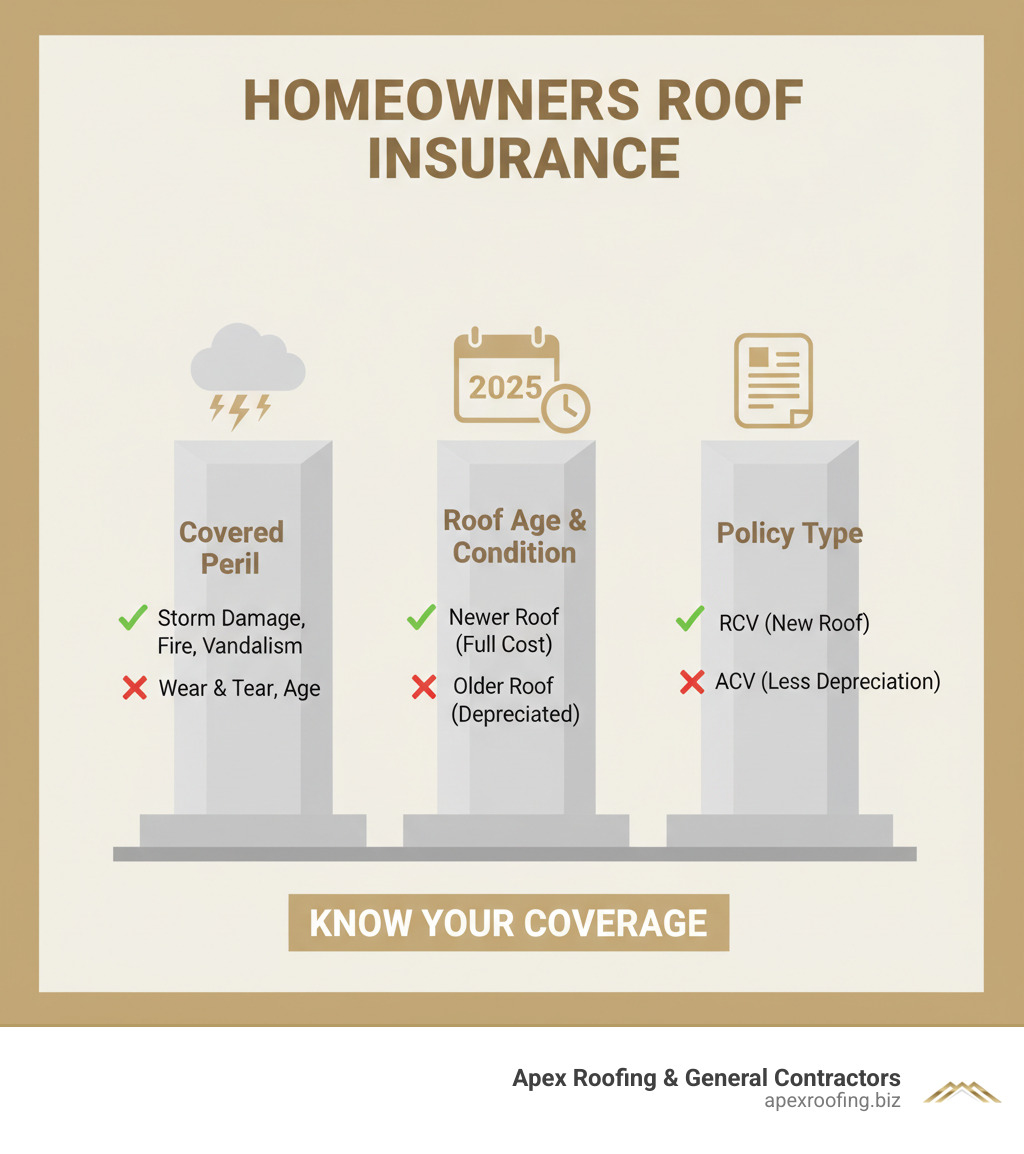
After a Texas storm, many homeowners ask: does homeowners insurance cover a new roof? The answer is nuanced, but critical. Insurance typically covers replacement for damage from sudden events like wind, hail, or fire, but not for gradual aging or neglect. For San Antonio homeowners, knowing the difference can save you from a $15,000 out-of-pocket expense on a roof replacement. At Apex Roofing & General Contractors, we’ve helped hundreds of residents steer this process. The key factors determining your coverage are:
- Cause of Damage: Storms and accidents are covered; wear and tear is not.
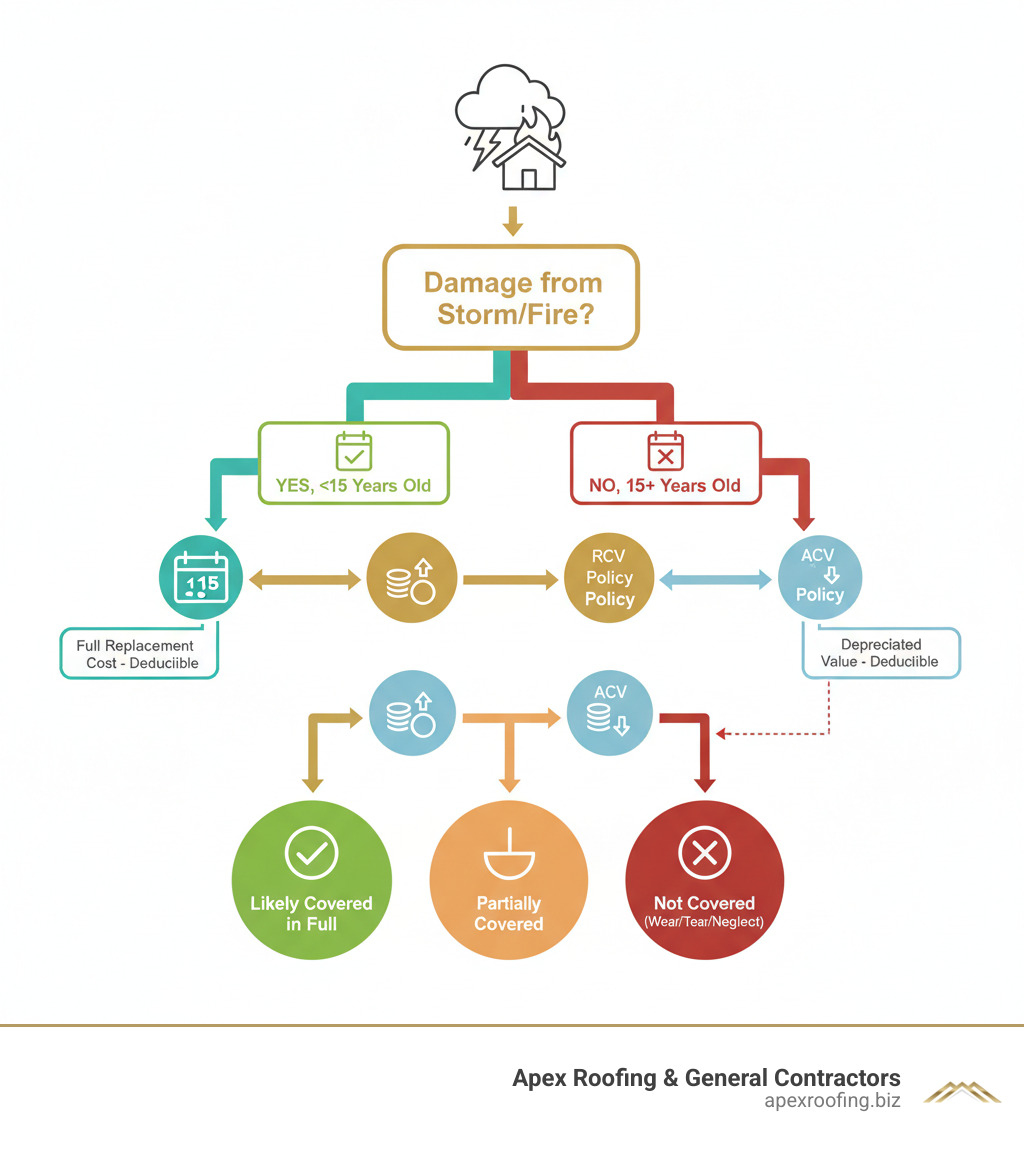
- Roof Age: Newer roofs often get full replacement cost, while older roofs (15+ years) may only receive depreciated value.
- Policy Type: Replacement Cost Value (RCV) covers a new roof, whereas Actual Cash Value (ACV) subtracts depreciation.
- Policy Exclusions: Neglect, poor maintenance, and pre-existing issues are typically excluded.
- Deductible: This is the amount you pay before your coverage kicks in.
Navigating the claims process after storm damage can be overwhelming. Dealing with adjusters, paperwork, and contractors is stressful, and a misstep can cost you thousands. This guide provides the essential knowledge to manage your claim confidently and ensure your roof is properly restored.
Understanding Your Homeowners Insurance Policy for Roof Coverage

Before you can answer does homeowners insurance cover a new roof, you must understand your policy. This contract details what your insurer will and will not pay for. As roofing professionals, we’ve seen many homeowners surprised by their coverage terms.
Your policy’s dwelling coverage protects your home’s structure, including the roof. Most standard policies cover damage from specific, sudden, and accidental perils. In Texas, this typically includes windstorms and hailstorms, the most common causes of roof damage in San Antonio. Fire, lightning, falling trees, and vandalism are also generally covered.
Exclusions are just as important. Wear and tear from normal aging is not covered, as insurance protects against unexpected events, not the natural lifespan of materials. Neglect is also a common reason for claim denial. If you ignored obvious damage or skipped routine maintenance, your insurer can refuse to pay. Other typical exclusions include faulty workmanship from a prior job, pest damage, and mold or rot not directly caused by a covered peril. As the Texas Department of Insurance notes, it’s best to understand your policy before you need it.
Actual Cash Value (ACV) vs. Replacement Cost Value (RCV)
The amount you receive for a damaged roof largely depends on whether you have an Actual Cash Value (ACV) or Replacement Cost Value (RCV) policy. This distinction can mean a difference of thousands of dollars.
Replacement Cost Value (RCV) is the preferred coverage. An RCV policy pays the full cost to replace your damaged roof with a new one of similar quality, without deducting for depreciation. Insurers typically pay this in two parts: first, you get the Actual Cash Value (the depreciated amount). After you complete the replacement and provide proof, the insurer releases the remaining funds, known as recoverable depreciation.
Actual Cash Value (ACV) policies only pay the depreciated value of your roof at the time of loss. For example, if a $20,000 roof replacement is needed for a 10-year-old roof that has depreciated by 50%, an ACV policy would pay only $10,000 (minus your deductible). You would be responsible for the remaining $10,000 plus the deductible. With an RCV policy, you would eventually receive the full $20,000 (minus your deductible) after the work is done.
Deductibles: What You’ll Pay Out-of-Pocket
Your deductible is the amount you pay before your insurance coverage begins. In Texas, many policies have two types of deductibles.
Your standard deductible is a flat dollar amount (e.g., $1,000 or $2,500) that applies to most claims. However, most Texas policies include a separate wind and hail deductible. This is usually a percentage of your home’s insured value, commonly 1% or 2%. For a home insured at $300,000, a 1% deductible is $3,000. It’s crucial to know this amount before filing a claim.
Be wary of any roofer who offers to “waive” or “pay” your deductible. This practice is illegal insurance fraud in Texas. At Apex Roofing, we operate with full transparency regarding all costs, including your deductible.
Does Homeowners Insurance Cover a New Roof? The Deciding Factors
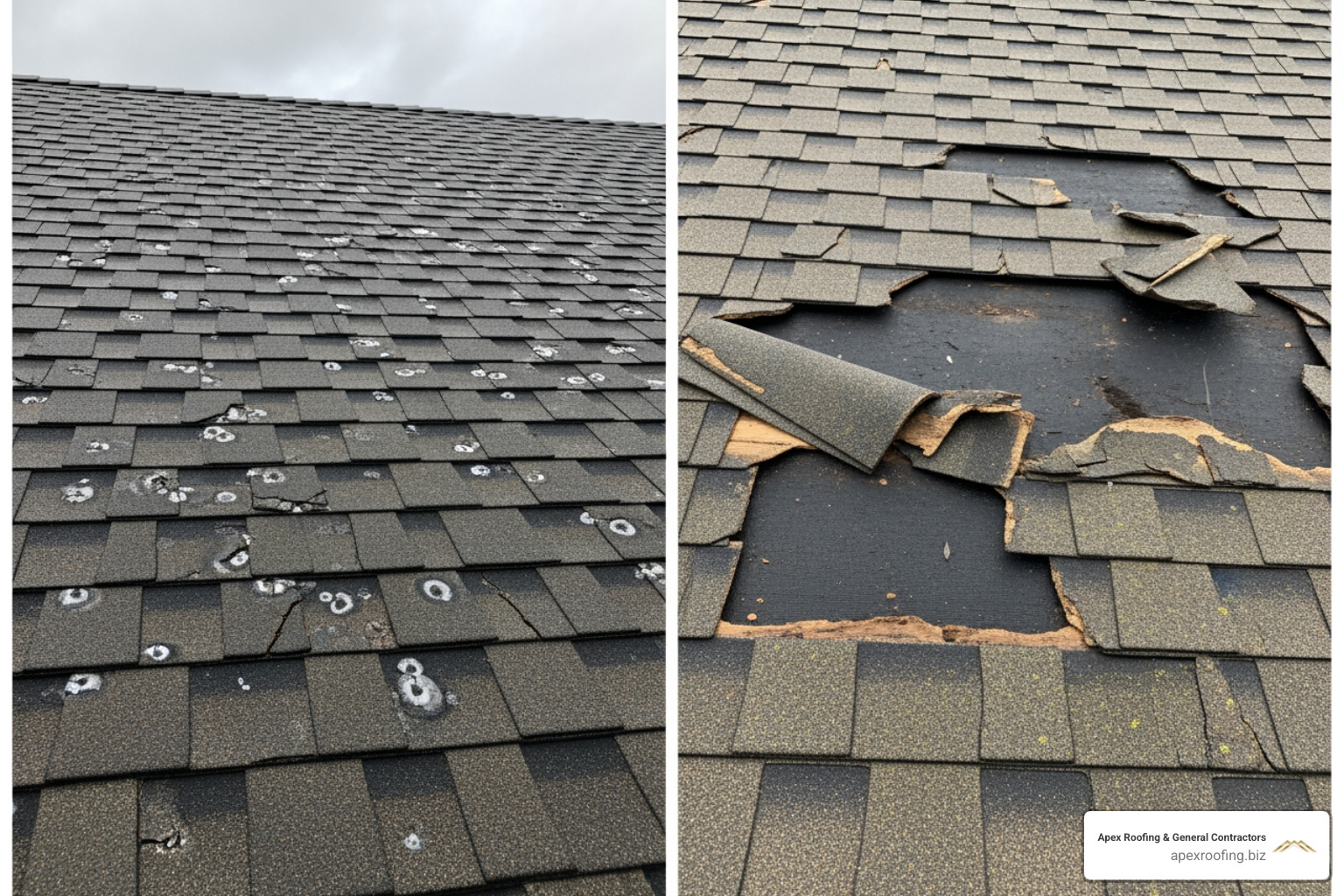
So, does homeowners insurance cover a new roof? The answer depends on three factors: the cause of damage, your policy’s terms, and your roof’s age. Insurers want to know if the damage was sudden and accidental, like from a storm, or if it resulted from gradual decline.
What Types of Roof Damage Are Typically Covered?
Homeowners insurance is designed to protect you from unexpected events. In the San Antonio area, this most often means weather-related damage.
- Storm Damage: This is the most common reason for roof claims. It includes wind damage, where gusts lift or tear shingles, and hail damage, where hailstones bruise or crack roofing materials. You can learn more about what hail damage looks like on a roof in our detailed guide.
- Fire Damage: Damage from a house fire or wildfire is covered.
- Falling Objects: A tree or large branch crashing onto your roof is a covered event.
- Vandalism: If your roof is intentionally damaged, your policy typically covers the repairs.
The common thread is that these events are sudden, unavoidable, and caused by an external force.
What Causes of Roof Damage Are Generally Excluded?
An insurance policy is not a maintenance plan. It will not pay for problems that develop slowly or result from neglect.
- Old Age and Normal Wear and Tear: As a roof ages, its materials naturally degrade. Shingles become brittle, crack, and lose granules. This gradual deterioration is a homeowner’s responsibility.
- Lack of Maintenance: If you fail to perform routine upkeep, such as cleaning gutters or addressing small leaks, an insurer may deny your claim for resulting damage.
- Faulty Workmanship: Your policy will not cover failures caused by a poor installation or repair from a previous contractor.
- Pest Damage: Damage from termites, squirrels, or other animals is typically not covered.
- Mold and Rot: Unless directly caused by a covered, sudden event, mold and rot from long-term moisture issues are usually excluded.
Many homeowners underestimate roof age, which can lead to unexpected out-of-pocket costs when a claim is filed.
How Does the Age and Condition of Your Roof Affect a Claim?
Your roof’s age is a critical factor for insurers. Different materials have different lifespans; for example, standard asphalt shingles last about 15-20 years, while metal roofs can last 40-70 years. As a roof ages, its value depreciates.
For older roofs (often 10-15+ years), insurers frequently offer only Actual Cash Value (ACV) coverage. This means a claim payout will reflect the roof’s depreciated value, not the full cost of replacement. In some cases, insurers may refuse to cover very old roofs at all without a professional inspection and required repairs.
An older roof can also lead to higher insurance premiums. Homeowners with a new roof pay, on average, 19% less for insurance than those with a 20-year-old roof. Understanding when your roof needs replacement is key to maintaining insurability and managing costs.
The Step-by-Step Guide to Filing a Roof Damage Claim
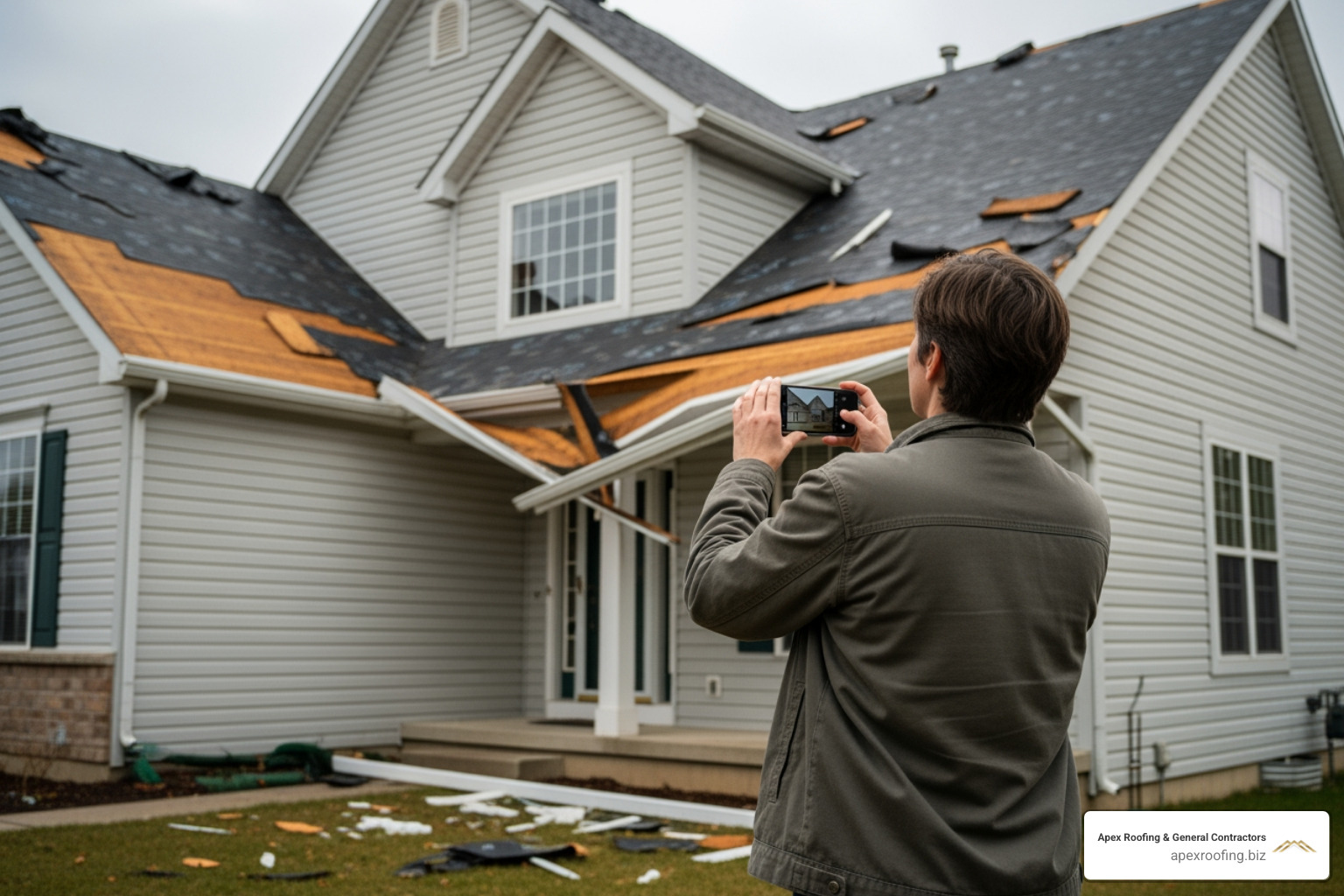
Filing a roof damage claim can be straightforward if you follow a clear process. Success hinges on thorough documentation. You’ll need photos and videos of the damage, receipts for temporary repairs, detailed contractor estimates, your policy number, and the date of the damage. The more evidence you gather, the stronger your claim will be.
Step 1: Ensure Safety and Make Temporary Repairs
Your first priority is safety. Do not climb on a damaged roof. However, your policy requires you to take reasonable steps to prevent further damage. This often means tarping the roof to stop water intrusion, which can lead to more extensive interior damage and mold. Keep all receipts for materials used in these emergency repairs, as they are typically reimbursable. Our guide on emergency roof repair provides more detail on these critical first steps.
Step 2: Document the Damage and Get a Professional Inspection
Once it is safe, document everything. Take clear photos and videos of all visible damage from multiple angles, including close-ups of shingles, flashing, and gutters. Also, photograph any interior water stains. Write down the date and time of the storm and any specific observations you made.
Next, contact a reputable local roofing contractor for a professional inspection. An experienced roofer knows what insurance adjusters look for and can identify subtle storm damage that might otherwise be missed. At Apex Roofing, our roof inspection services provide the detailed written assessment and accurate estimate you need to present to your insurer.
Step 3: Review Your Policy and Contact Your Insurer
Before calling your insurer, review your policy to understand your coverage limits, deductibles (both standard and wind/hail), and exclusions. This knowledge will empower you in conversations with your insurance company.
Contact your insurer promptly to report the claim. You will be assigned a claim number; keep it for all future communications. Be cautious of “storm chasers”—out-of-town contractors who appear after severe weather. Roofing scams are not uncommon, and these individuals often perform shoddy work and disappear. Always choose a contractor with a local presence, proper licensing, and a solid reputation.
Step 4: Meet the Adjuster and Review the Settlement
Your insurer will send an adjuster to inspect the damage and determine the payout. We strongly recommend having your roofing contractor present for this meeting. Your roofer can point out all storm-related damage, ensuring it is properly documented in the adjuster’s report.
The adjuster will create a damage assessment and provide a settlement offer. Carefully compare this with your contractor’s estimate. If the offer is insufficient, you have the right to challenge it by supplementing the claim. Your contractor can assist by providing detailed justification for the additional costs, such as missed line items or code-required upgrades. This is a common part of the process, and an experienced contractor knows how to steer it effectively on your behalf. Our guide on how to find a good roofer near me can help you choose a qualified advocate.
Maximizing Your Claim and Lowering Future Costs
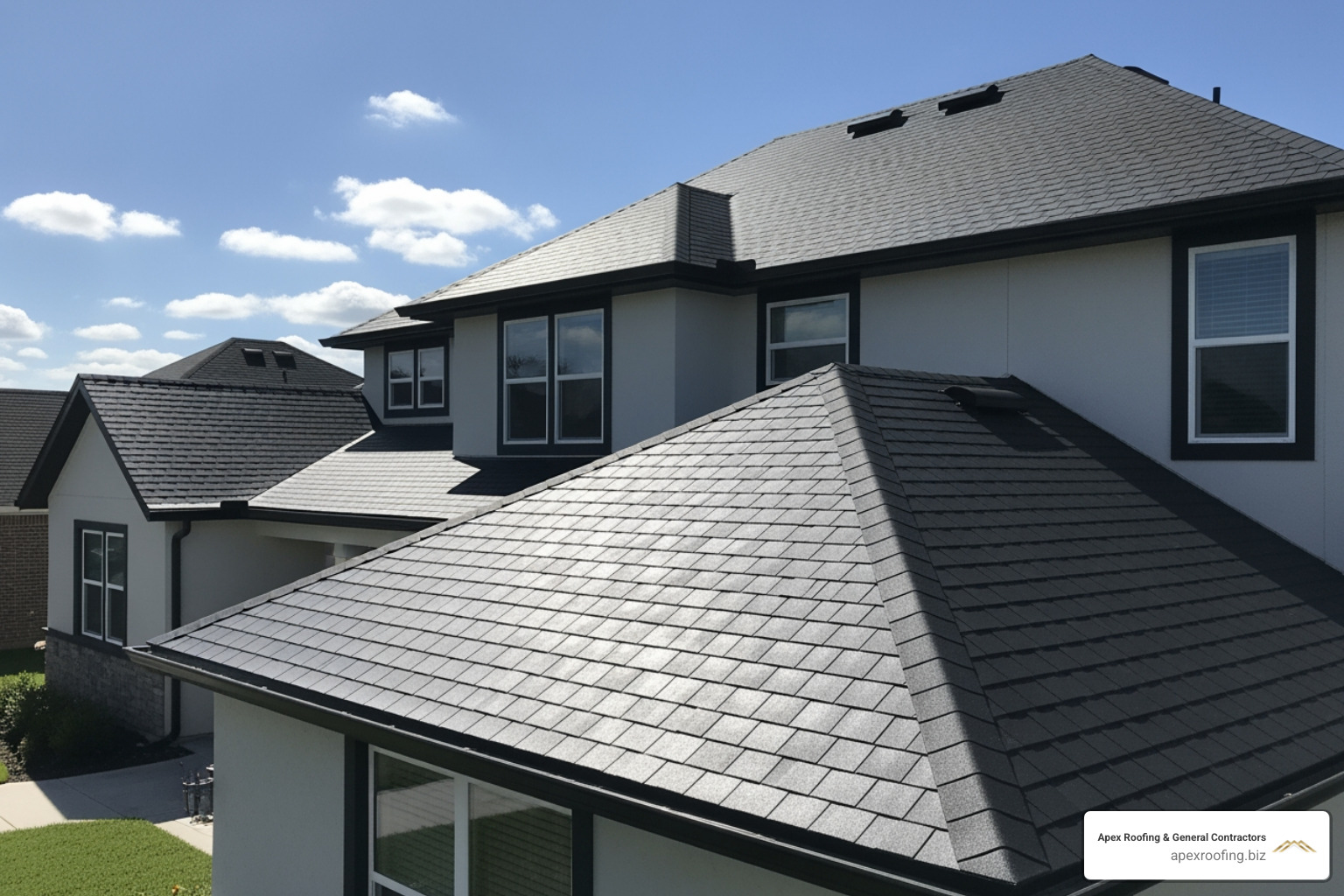
After your claim is approved, a new roof not only restores your home’s protection but can also lead to future savings. Understanding how to leverage your new roof for lower insurance costs is a smart financial move.
Can a New Roof Lower Your Homeowners Insurance?
Yes, a new roof can significantly reduce your homeowners insurance premiums. Insurers view a new roof as a lower risk, which often translates to lower rates. On average, homeowners with a brand new roof pay 19% less for insurance than those with a 20-year-old roof.
Your choice of materials also plays a role. Installing impact-resistant shingles or other durable materials designed for Texas weather can qualify you for additional discounts. According to Angi, discounts for durable roofs can range from 5% to 35%. Always notify your insurer after a roof replacement and provide them with documentation of the new materials and installation date to secure any available discounts.
Enhancing Your Coverage with Roof Endorsements
For improved protection, consider adding endorsements (or riders) to your policy. These provide coverage that standard policies may not include.
- Extended Replacement Cost: This adds an extra percentage (typically 20-25%) to your dwelling coverage limit. It provides a buffer if rebuilding costs spike after a widespread disaster.
- Guaranteed Replacement Cost: This is the most comprehensive option, committing your insurer to pay the full cost to rebuild your home, even if it exceeds your policy limit.
- Ordinance or Law Coverage: This is crucial for older homes. It covers the extra costs required to bring your roof up to current San Antonio building codes during a replacement, an expense standard policies often exclude.
Frequently Asked Questions about Roof Insurance Claims
Navigating an insurance claim often raises questions. Here are concise answers to the most common concerns we hear from San Antonio homeowners.
Will filing a roof claim raise my insurance premium?
Filing a claim can lead to a premium increase, but it’s not guaranteed. Key factors include:
- Your Claim History: Multiple recent claims signal higher risk and are more likely to trigger a rate increase than a single claim after many years.
- Severity of Damage: A major claim for a full replacement has more impact than a minor repair claim.
- Area-Wide Claims: After a major storm affects an entire region, insurers may raise rates for everyone in that area, regardless of individual claims.
- Insurer Guidelines: Some companies offer “claim forgiveness” for a first claim. It’s wise to weigh the repair cost against your deductible and the potential for a rate hike before filing.
Can I choose my own roofing contractor for the replacement?
Yes, you have the legal right to choose your own contractor. You are not obligated to use a roofer from your insurer’s “preferred network.” Working with a local, trusted, and certified roofing contractor ensures you have an advocate working for your best interests. A contractor you choose will focus on a complete, quality repair rather than the cheapest fix, and they will be accountable to you for the quality of their work.
What happens if the insurance check is less than the roofer’s estimate?
This is a common scenario that can be resolved. If the initial insurance offer is too low, the next step is supplementing the claim. An adjuster’s initial estimate may miss necessary line items, underestimate local labor costs, or fail to account for code-required upgrades. Your contractor can submit a supplemental claim with detailed documentation to justify the additional costs.
This process involves direct communication between your roofer and the adjuster to reconcile the differences. If a gap remains after the supplement, you may need to cover some costs out-of-pocket or explore financing options with your contractor to ensure the job is done right.
Your Partner for Insurance Claims in San Antonio
Navigating a roof insurance claim is far less daunting with the right partner. A successful outcome depends on understanding your policy, documenting all damage, and working with a trusted roofing professional who can advocate on your behalf.
A knowledgeable roofer does more than just repairs; they guide you through the entire claims process. We identify all storm-related damage, provide accurate estimates that stand up to scrutiny, and communicate with adjusters to ensure your claim is fully honored. Our goal is to see your home restored to its pre-storm condition and to ensure you receive the full compensation you’re entitled to under your policy.
For homeowners throughout the San Antonio area—from Alamo Heights to Helotes—Apex Roofing specializes in storm damage restoration and insurance claim assistance. We have a proven track record of helping clients successfully manage their claims and maximize their settlements.
When your roof is damaged, time is of the essence. Delaying an inspection can lead to further damage that may not be covered. Don’t wait to see if a small leak will worsen. Call Apex Roofing at (726) 727-7663 to schedule a free inspection and receive a free estimate to protect your home.