Why Commercial Roofing Systems Matter for Your Building
Roofing for commercial buildings is one of the most critical infrastructure decisions a property owner will make. The right system protects your investment, controls operational costs, and ensures business continuity. As expert commercial roofing contractors in San Antonio, we know these systems differ fundamentally from residential roofs, facing unique challenges from flat designs, heavy equipment, and extreme weather. This guide provides a comprehensive overview to help you steer your options and make an informed investment.
Quick Answer: Primary Commercial Roofing Types
- Single-Ply Membranes (TPO, PVC, EPDM): Flexible sheets with TPO leading the market; known for energy efficiency and fast installation.
- Metal Roofing: Durable panels with a lifespan of 50+ years and exceptional fire and wind resistance.
- Modified Bitumen: Asphalt-based roofing improved with flexible polymers.
- Built-Up Roofing (BUR): Traditional multi-layer “tar and gravel” roofs known for toughness.
- Green & Protected Membrane (PMR/IRMA): Sustainable systems that extend membrane life and offer environmental benefits.
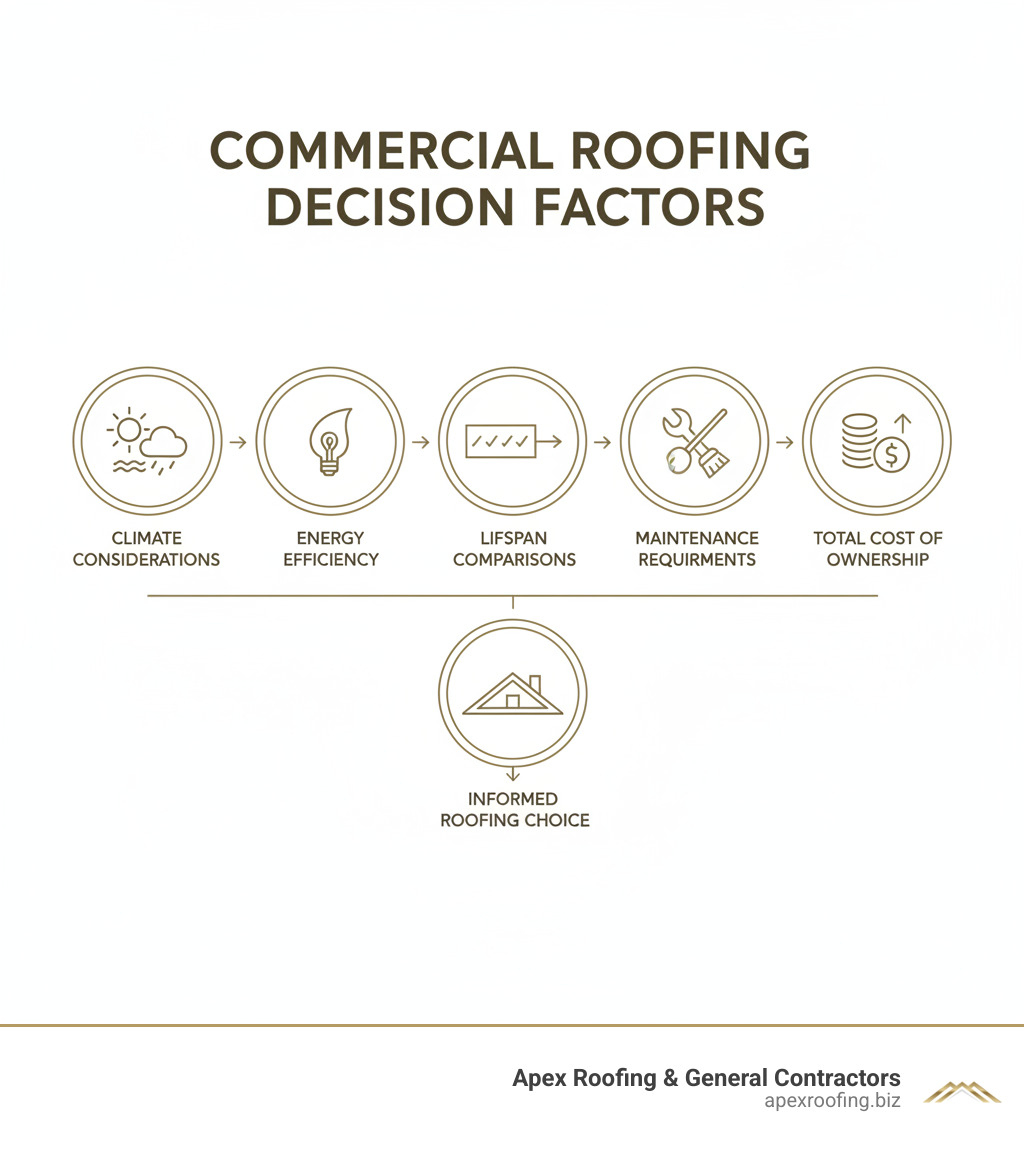
Your roof is more than a cover—it’s a complex system that must withstand Texas heat, UV exposure, hail, and high winds. A poorly matched system leads to frequent repairs, energy waste, and premature replacement. In San Antonio’s climate, reflective “cool roof” systems like white TPO or metal can significantly reduce cooling costs. Lighter single-ply systems are ideal for buildings with structural weight limitations.
As Carlos Yzaguirre, President of Apex Roofing & General Contractors, I’ve guided numerous San Antonio property owners through these complexities. Since co-founding Apex in 2022, I’ve seen how the right roofing decision transforms a building’s performance and protects its value for decades.
An Overview of Primary Commercial Roofing Systems
When evaluating roofing for commercial buildings, understanding the core systems is your first step. Each type offers a unique balance of longevity, energy savings, and cost. As a commercial roofing contractor in San Antonio, we’ve seen how matching the right system to your building’s needs, budget, and our local climate prevents costly headaches.

| System Type | Lifespan (Years) | Initial Cost (Relative) | Maintenance Needs | Puncture Resistance | Energy Efficiency |
|---|---|---|---|---|---|
| Single-Ply Membranes (TPO, PVC, EPDM) | 20-30 | Medium | Low-Medium | Medium (EPDM can be less) | High (TPO/PVC) |
| Metal Roofing | 50+ | High | Low | High | High |
| Modified Bitumen | 20 | Medium | Medium | Medium | Medium-High |
| Built-Up Roofing (BUR) | 20 | Medium | Medium | High | Medium |
| Green & Protected Membrane (PMR/IRMA) | 30+ | High | High (Green) | High | Very High |
Single-Ply Membranes (TPO, PVC, EPDM)
Single-ply membranes dominate the modern commercial roofing market due to their efficient installation and reliable performance. According to the NRCA, TPO (Thermoplastic Polyolefin) captures 40% of the new construction market. These systems deliver excellent value and are installed faster and more safely than traditional multi-ply roofs.
- TPO Roofing: The most popular choice, its white reflective surface is ideal for reducing cooling costs in the Texas heat. It’s a cost-effective, energy-efficient solution.
- PVC Roofing: Known for superior resistance to fire, chemicals, and punctures, PVC is a durable choice for roofs with high traffic or exposure to harsh conditions. Warranties often extend up to 30 years.
- EPDM Roofing: Often called “rubber roofing,” EPDM is a budget-friendly option with solid weather resistance. Its seams are sealed with adhesives, unlike the heat-welded seams of TPO and PVC.
Installation methods include mechanically attached, fully adhered, or ballasted, allowing for flexibility based on the building’s structure and budget. For more details, see our guide on the 3 types of commercial flat roofs.
Metal Roofing
For ultimate longevity, a metal roof is an outstanding investment, with a lifespan often exceeding 50 years. Its reflective surface provides excellent solar reflectivity, lowering cooling costs in San Antonio’s hot climate. Metal roofs are also low-maintenance, highly durable, and carry a Class A fire rating—the highest available. They are fully recyclable, making them a sustainable choice. Aesthetic options like standing seam or corrugated panels can fit any building style. Learn more about how to choose the right roof for your business in San Antonio.
Modified Bitumen
Modified Bitumen is an evolution of asphalt roofing, improved with polymers for greater flexibility and durability. This multi-ply system offers excellent tear resistance and is a reliable middle ground between traditional BUR and single-ply membranes. The two main types are SBS (Styrene-Butadiene-Styrene), which adds rubber-like flexibility, and APP (Atactic Polypropylene), which improves heat tolerance. Installation can be done via torch-down, cold-applied adhesives, or self-adhered sheets.
Built-Up Roofing (BUR)
Known as “tar and gravel” roofs, BUR systems have protected buildings for over a century. They consist of multiple alternating layers of asphalt and reinforcing fabrics, topped with a layer of gravel. This creates a thick, redundant, and highly puncture-resistant waterproof barrier. With an average lifespan of 20 years, BUR is a time-tested, durable option, especially for roofs with heavy foot traffic. The Asphalt Roofing Manufacturers Association offers more details on these systems.
Green & Protected Membrane Roofing (PMR/IRMA)
These innovative systems prioritize sustainability and extended membrane life.
- Green Roofs: A vegetative layer is grown on the roof, which manages stormwater, reduces the urban heat island effect, and improves thermal insulation. These systems require a structure capable of supporting the extra weight (15-20 pounds per square foot) and need ongoing maintenance. The Green Roofs for Healthy Cities organization is a great resource.
- Protected Membrane Roofing (PMR/IRMA): This “inverted” system places insulation above the waterproofing membrane, shielding it from UV rays, temperature swings, and physical damage. This protection extends the roof’s longevity to 30+ years.
Key Factors Influencing Your Roofing for Commercial Buildings
Choosing the right system requires a holistic approach that accounts for your building’s use, location, and financial goals. A proper commercial roof installation in San Antonio must address these critical factors to deliver lasting value.
Climate, Location, and Building Usage
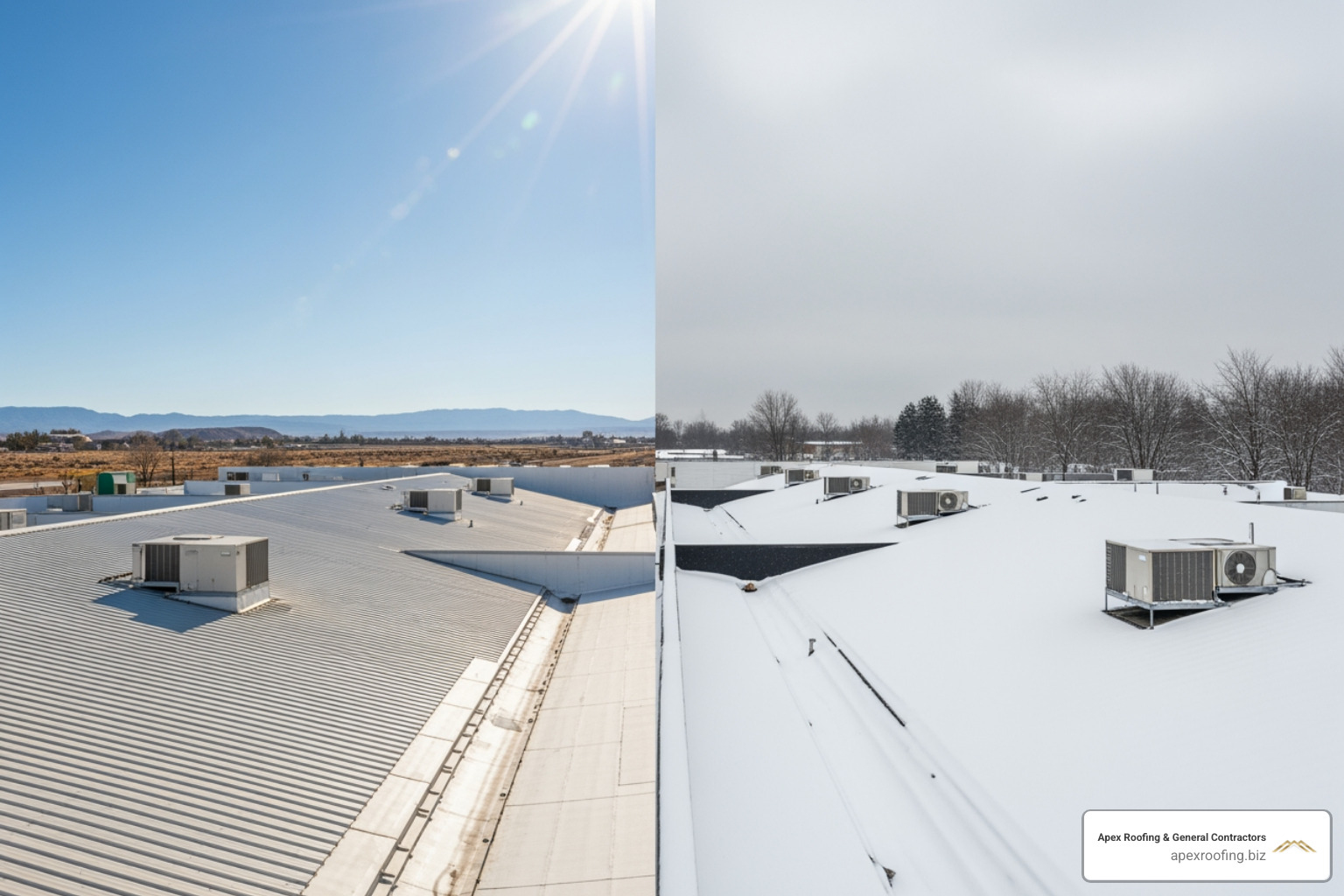
A roof’s performance is directly tied to its environment. In San Antonio, your roof must be prepared for:
- Texas Heat and UV Exposure: Intense sun degrades materials and increases cooling costs. Reflective materials are essential.
- Hail Impact Resistance: Materials rated for Class 4 impact resistance (UL 2218) can prevent devastating damage from hailstorms.
- Wind Uplift: Systems must be installed to meet or exceed local wind speed requirements to prevent peeling or damage during thunderstorms.
Building usage also matters. A roof with heavy foot traffic from HVAC maintenance needs a more puncture-resistant system like a thick PVC membrane or BUR. Our expertise in providing roofing services in San Antonio ensures we recommend systems proven to withstand these local challenges.
Energy Efficiency and Sustainability
A modern commercial roof can significantly lower your building’s operational costs.
- Cool Roofs: Materials with high solar reflectance, like white TPO or coated metal, can reduce cooling energy consumption by 10-15%. The Cool Roof Rating Council (CRRC) provides verified performance data.
- Insulation: High-quality insulation like Polyisocyanurate (polyiso) is critical. Its effectiveness is measured by its R-value; a higher R-value means better thermal resistance and greater energy savings.
- Sustainability: Choices like recyclable metal roofing or stormwater-managing green roofs can contribute to LEED certification and demonstrate corporate responsibility.
Long-Term Costs: Maintenance, Lifespan, and Warranty
The true cost of a roof extends far beyond the initial price. A lifecycle cost analysis often reveals that a more expensive upfront system with a longer lifespan and lower maintenance needs is the better long-term investment.
- Maintenance Needs: Metal roofs require minimal upkeep, while green roofs need regular horticultural care. All roofs benefit from routine professional inspections.
- Typical Lifespan: Lifespans range from 20 years for BUR to 50+ years for metal. Choosing a system that aligns with your long-term plans for the property is key.
- Warranty Coverage: It’s vital to understand the difference between a manufacturer’s warranty (covering material defects) and a contractor’s warranty (covering workmanship). Unauthorized repairs can void your coverage, so always use a licensed professional. For more information, see our guide on navigating emergency roof repairs.
Advanced Considerations: Components, Coatings, and Safety
A high-performing roof is a complete system. Ancillary components, safety protocols, and structural integrity are just as important as the primary membrane for ensuring long-term performance.
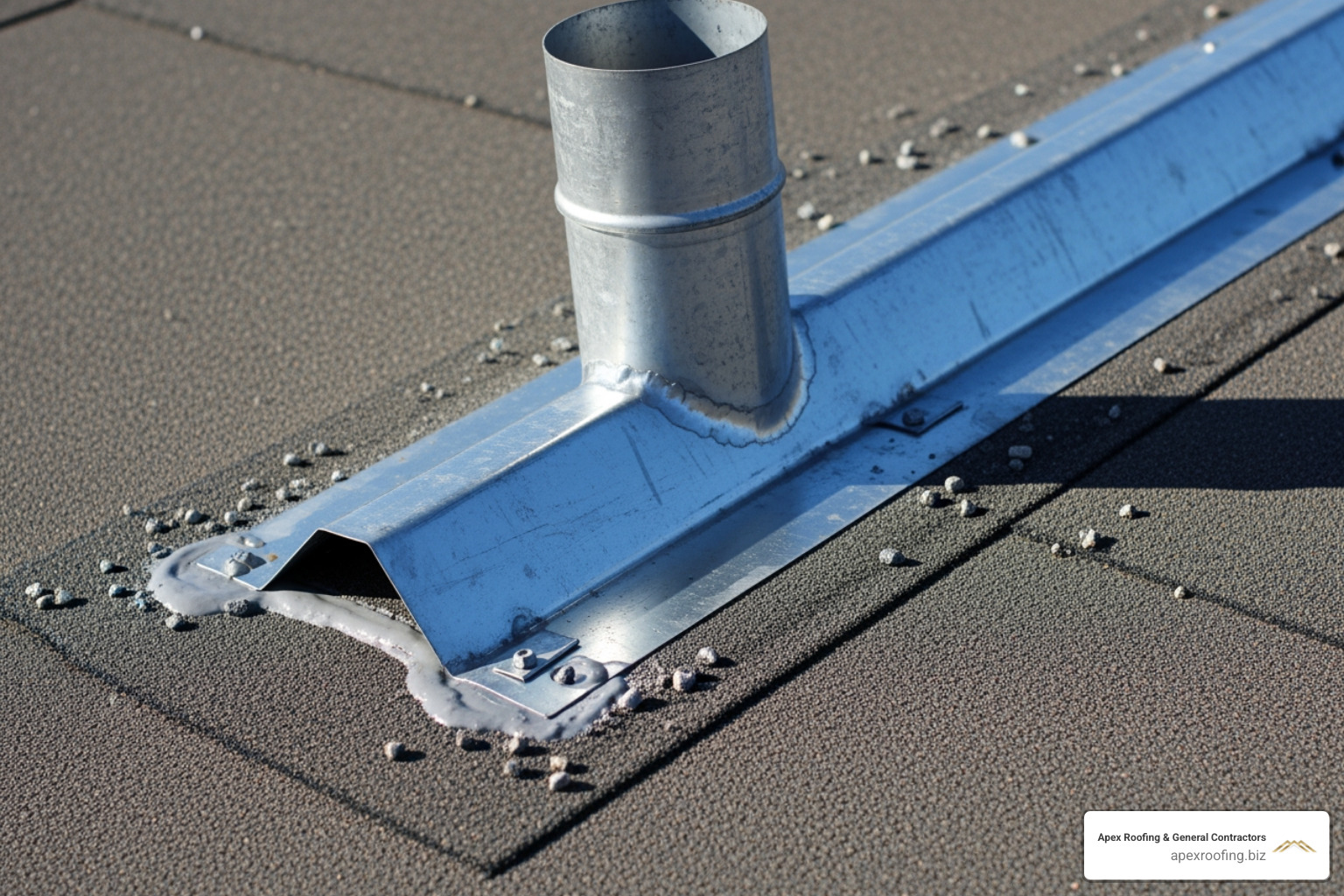
The Role of Coatings, Flashings, and Accessories
- Roof Coatings: Liquid-applied silicone or acrylic coatings can restore an aging roof, seal minor leaks, and improve reflectivity. This is often a cost-effective alternative to a full replacement.
- Flashings: These materials seal the joints where the roof meets walls, curbs, vents, and pipes. Failed flashing is one of the most common sources of leaks.
- Accessories: Essential components include drains for water removal, walkways to protect the membrane from foot traffic, and edge metal for a secure, finished perimeter.
Safety, Fire Resistance, and Structural Integrity
- Safety: Professional roofing contractors must adhere to strict OSHA requirements for fall protection to ensure a safe installation.
- Fire Resistance: Roofs are rated Class A, B, or C for fire resistance, with Class A being the highest. Metal and gravel-surfaced BUR systems typically achieve a Class A rating, offering the best protection.
- Structural Integrity: The building’s structure must be able to support the weight of the roofing system. Heavy systems like BUR or green roofs require a structural assessment to confirm the building has adequate load-bearing capacity.
Choosing a Qualified Commercial Roofing Contractor
Proper installation is the single most important factor in a roof’s performance. When selecting a contractor, verify they have:
- Licensing and Insurance: Protects you from liability.
- Manufacturer Certifications: Ensures expertise and access to the best warranties.
- Local Experience: Demonstrates familiarity with local codes and climate challenges.
- A Strong Project Portfolio: Provides proof of quality work.
- A Documented Safety Record: Shows commitment to a safe job site.
The NRCA provides guidance on how to select a contractor, and working with a certified commercial roofing contractor is the best way to protect your investment.
Frequently Asked Questions about Commercial Roofing
What is the typical lifespan of a commercial roof?
The lifespan of roofing for commercial buildings depends on the material and maintenance. A definitive answer is:
- Built-Up Roofing (BUR) & Modified Bitumen: ~20 years.
- Single-Ply Membranes (TPO, EPDM, PVC): 20-30 years.
- Protected Membrane (PMR/IRMA) & Green Roofs: 30+ years.
- Metal Roofing: 50+ years, often lasting the life of the building.
Regular professional maintenance is crucial to achieving these lifespans.
How do I know if I need a roof replacement or just a repair?
A professional inspection from a licensed roofing contractor is the only way to get a certain diagnosis. However, you likely need a replacement if you see widespread issues like extensive blistering, cracking, or leaks in multiple areas. If your roof is past its expected lifespan, replacement is usually the most cost-effective path.
A repair is often sufficient for localized problems, such as a single puncture, a failing piece of flashing, or minor storm damage. A roof coating can also be a good option to extend the life of an aging but still functional roof.
How much does a new commercial roof cost?
The cost of a new commercial roof is not a fixed number; it depends on roof size, material choice, insulation needs, and the condition of the existing structure. As a general guideline, you can expect costs to range from $7-$12 per square foot for single-ply systems to $10-$20+ per square foot for metal roofing. Green roofs carry the highest initial investment.
The only way to get an accurate price is with a detailed, on-site estimate. To get a transparent quote custom to your building, call Apex Roofing & General Contractors at (726) 727-7663.
Your Partner in Commercial Roofing
Choosing the right roofing for commercial buildings is a major decision that impacts your property’s safety, budget, and efficiency for decades. By understanding the primary systems, key decision factors, and the critical importance of professional installation, you can make a confident and informed choice.
For building owners in San Antonio and across Bexar County, partnering with an experienced, certified contractor is the final, crucial step. At Apex Roofing & General Contractors, we combine deep knowledge of Texas’s climate challenges with a commitment to superior workmanship and transparent communication. We ensure your roof is a high-performing asset, not a recurring liability.
Our team is ready to help you assess your building, steer material options, and understand the true lifecycle costs of your investment. We ensure full compliance with all local codes and manufacturer specifications to protect your property and your warranty.
Ready to protect your investment with a roofing system built to last? Call us today at (726) 727-7663 to schedule your free inspection and receive a free estimate.